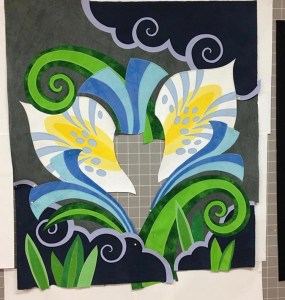
Project à la Jane Sassaman

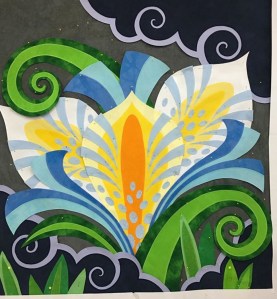
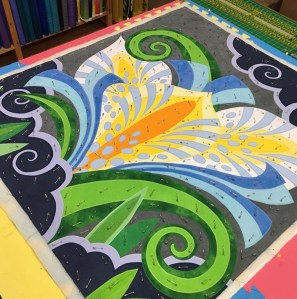
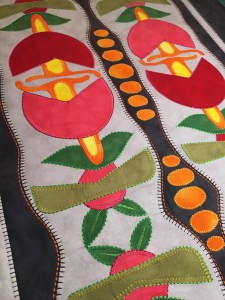
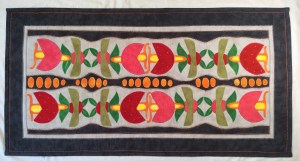
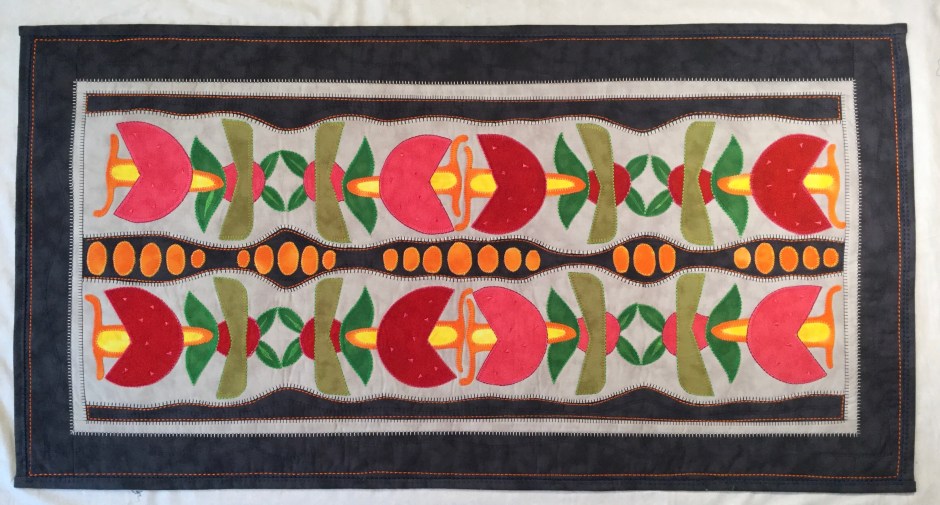
Jane Sassaman is a designer , quilt artist and business woman .Her work is based on large florals and she mainly uses solid coloured fabrics and sewing machine techniques to enhance her work. Her work is vibrant and graphically exclusively her own .

http://www.janesassaman.com

She has a specific method to creating her fabulous quilts and I will take you on that journey !
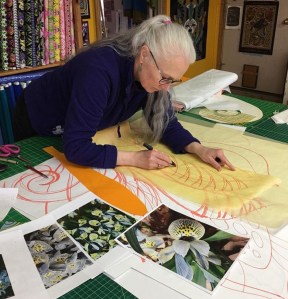
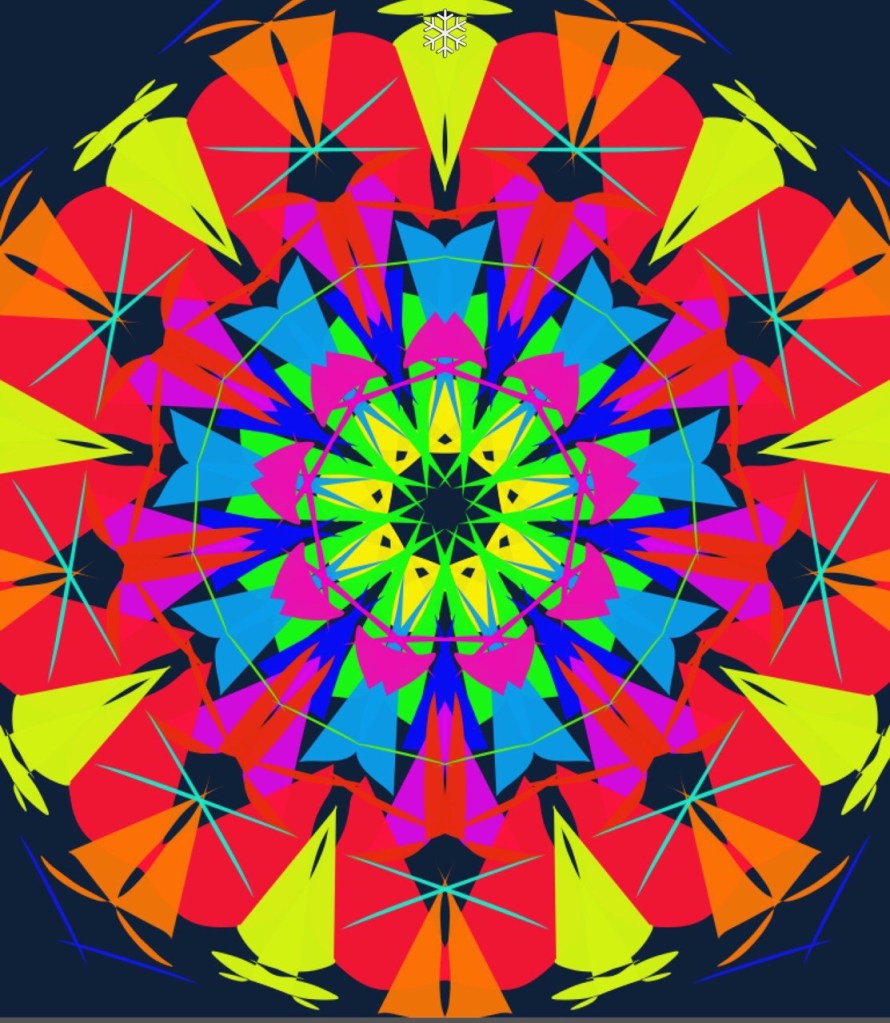
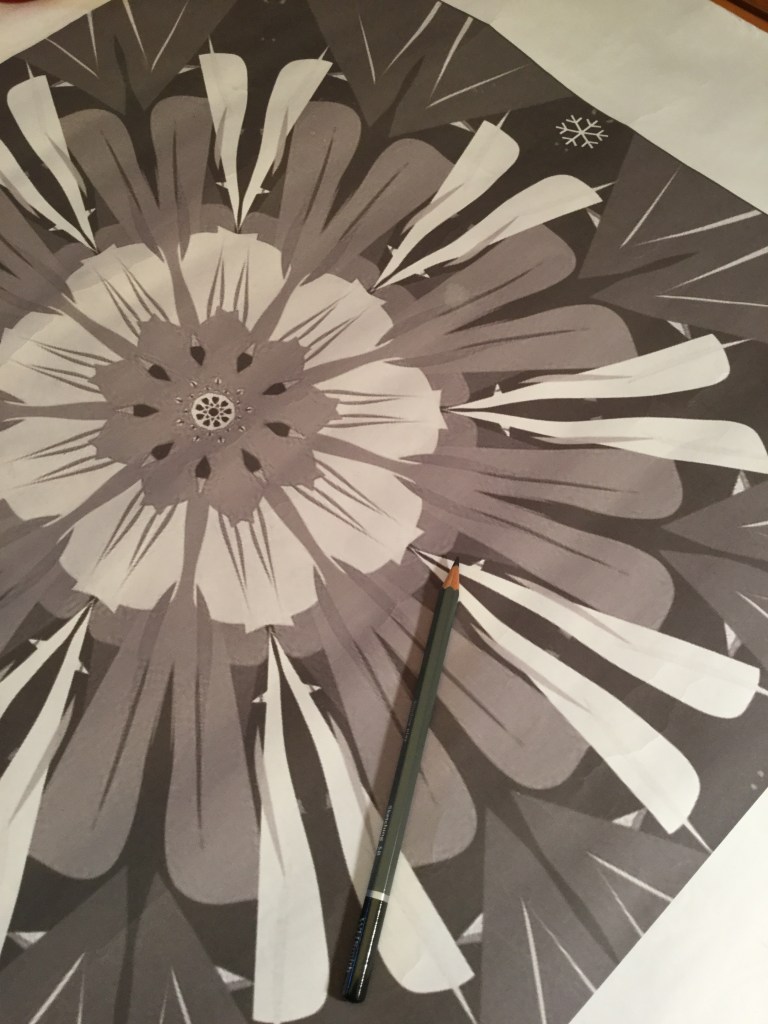
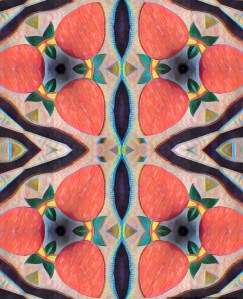
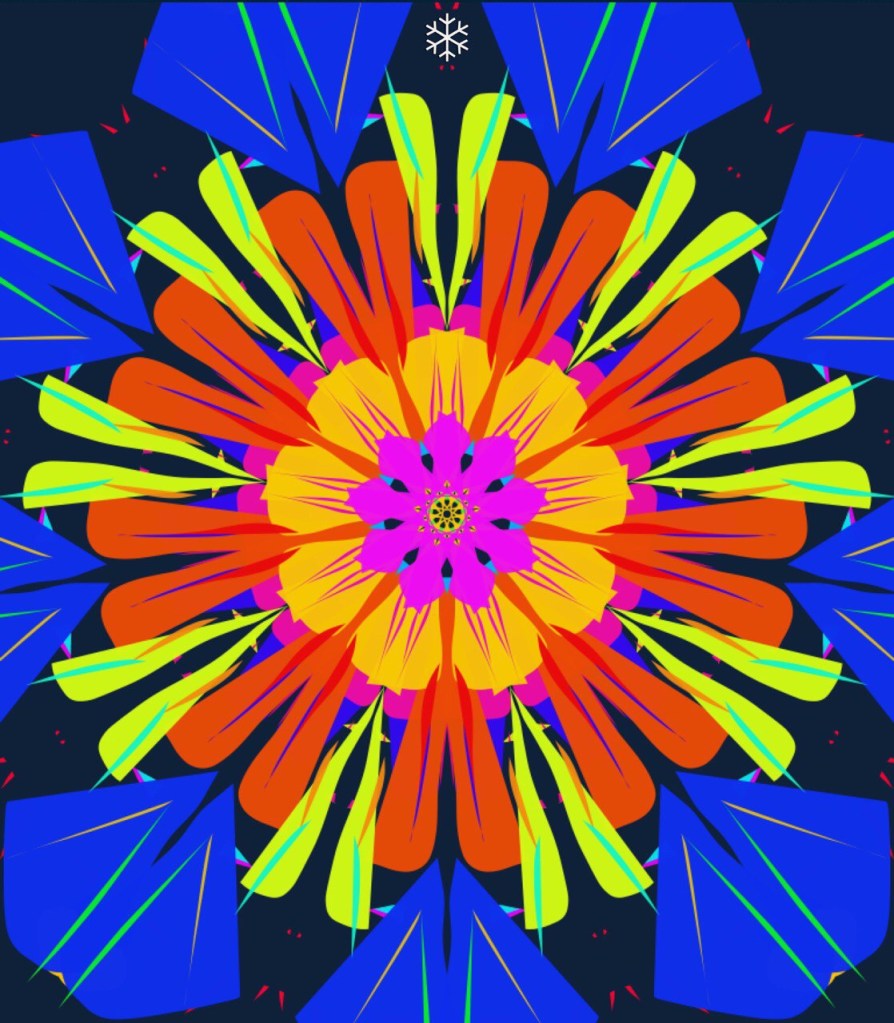
I have been looking for a project to teach Janes method using an app to create individual designs . Many students need a pattern before they take on work so in order to push them to be a little more creative without too much fear of design and the drawing board. I have developed a way for each student to create their own organic design using this Kaleidoscope App and therefore each piece is different .

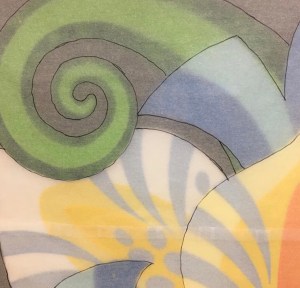
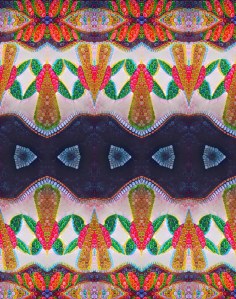
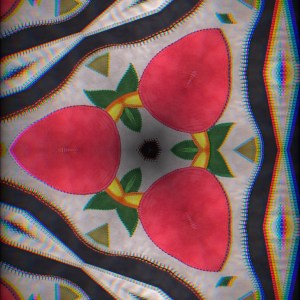
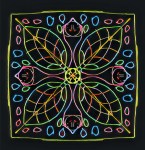
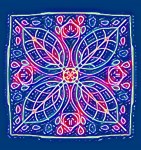
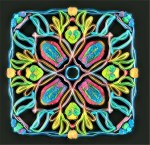
The project begins by uploading the Kaleidoscope app and drawing a design on it .This is easy as you just make some simple colour and pen selections and drag your finger on and around the screen of your device .It can be filmed on the app itself and then by taking a screenshot of the app in motion many different designs can be “screenshot”!

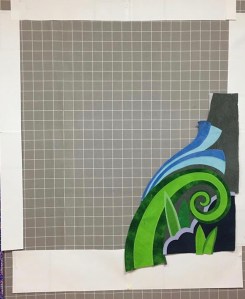
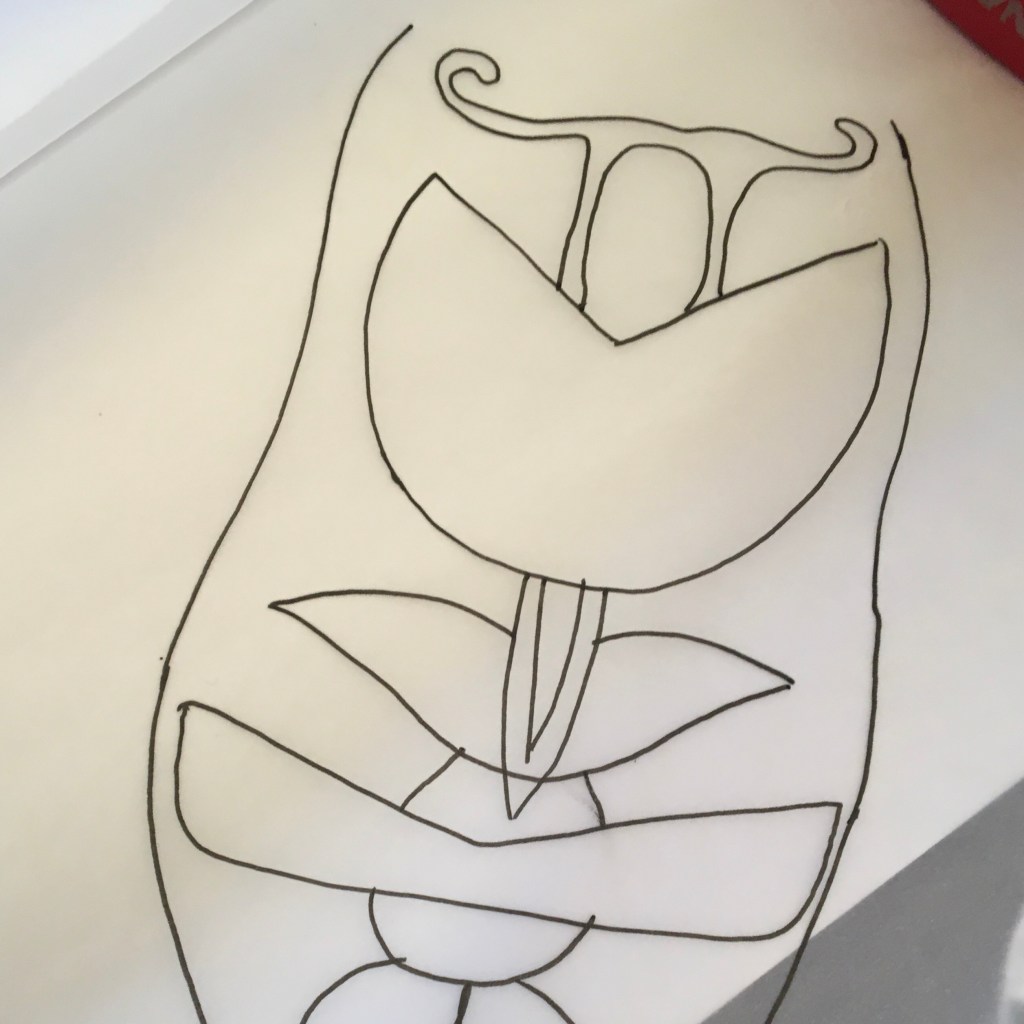
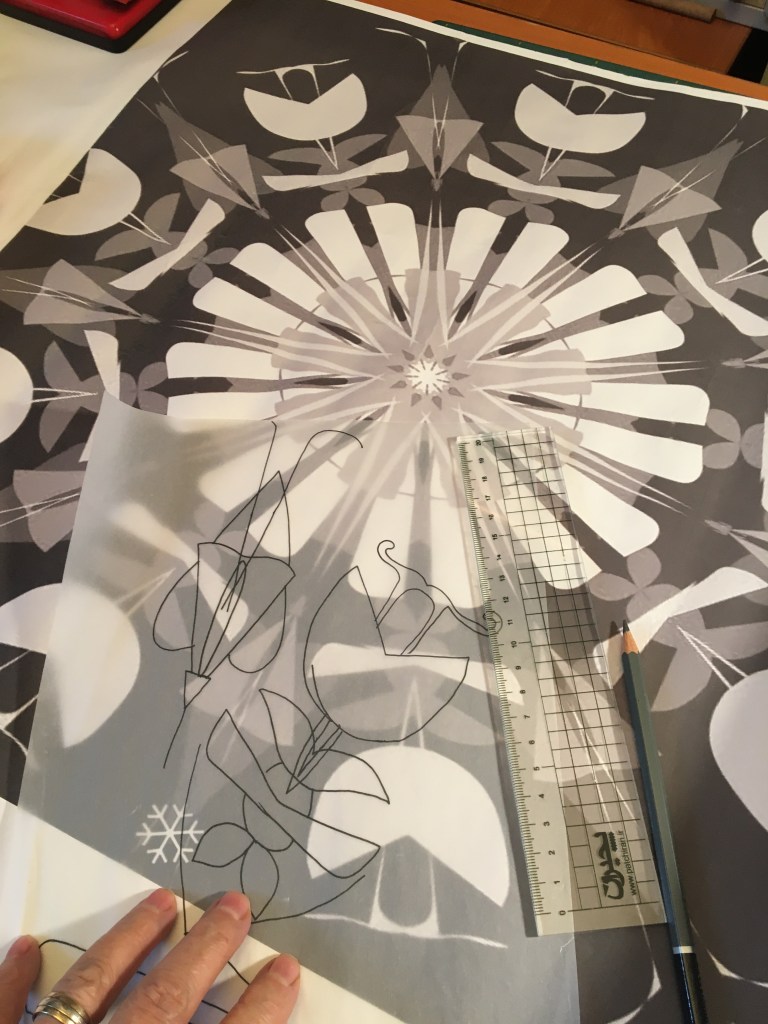
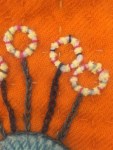
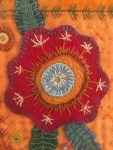
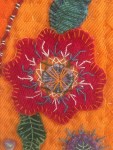
You could ,of course just work with the screenshot and use it as an appliqué design or as I have done ,you could extract floral or organic shapes and work with them to make a new design .

If you watch the video clip on Instagram you will see how it is possible to take a screenshot of many different designs .

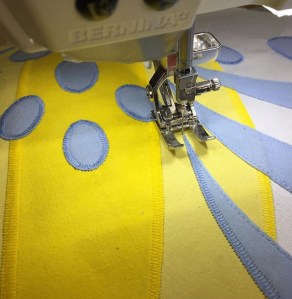
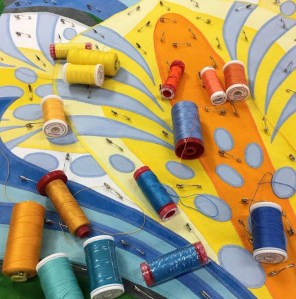
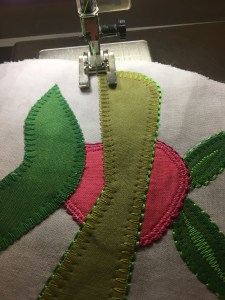
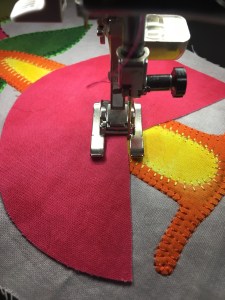
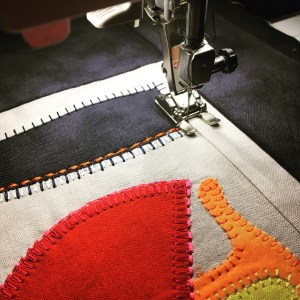
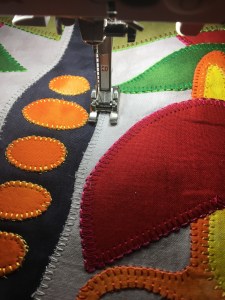
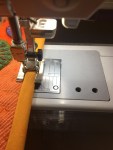
You can never really appreciate someones work until you have tried the techniques yourself and realize how much effort has gone into it and why it works. It is so with Janes work ! I have always loved her work , the boldness of the colour and the design as well as her use of the sewing machine and its decorative stitches but also its tools. Jane is the master of machine tools . She uses the machine to its utmost and I appreciate that as Bernina Machines are expensive machines but have superb tools , so why not use them well. For instance, when using decorative stitches you must always begin at the beginning of the stitch process .Bernina have a tool for that – the pattern begin button ! You must always make sure you secure the starter threads and the final threads – securing function button . Using the speed control always helps as does the needle down position . Using the thread path you can move your needle to the easiest position to sew , while using the presser foot designed for your needs .The open toe appliqué presser foot is a great foot to have and also the open toe walking foot . The mirror image button comes in very handy so you do not have to keep turning your work around . And last but not least , the free hand system which allows you to lift and place the presser foot by knee actions keeping your hands free to control the work.

I always try to get the use of these functions over to my students and this is most certainly a project for anyone who wants to master the machines tools. Make the best of your machine ! This is not to say you cannot do this kind of work on any other machine , you most certainly can … but it may just try your patience a little !

Digitals
Playtime

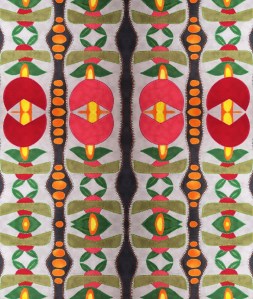
It is impossible to turn on these apps and not play ! I am messing around with ideas of how to turn this technique into a Mini quilt …30cm x 30cm

Ode to Attar of Neyshabur

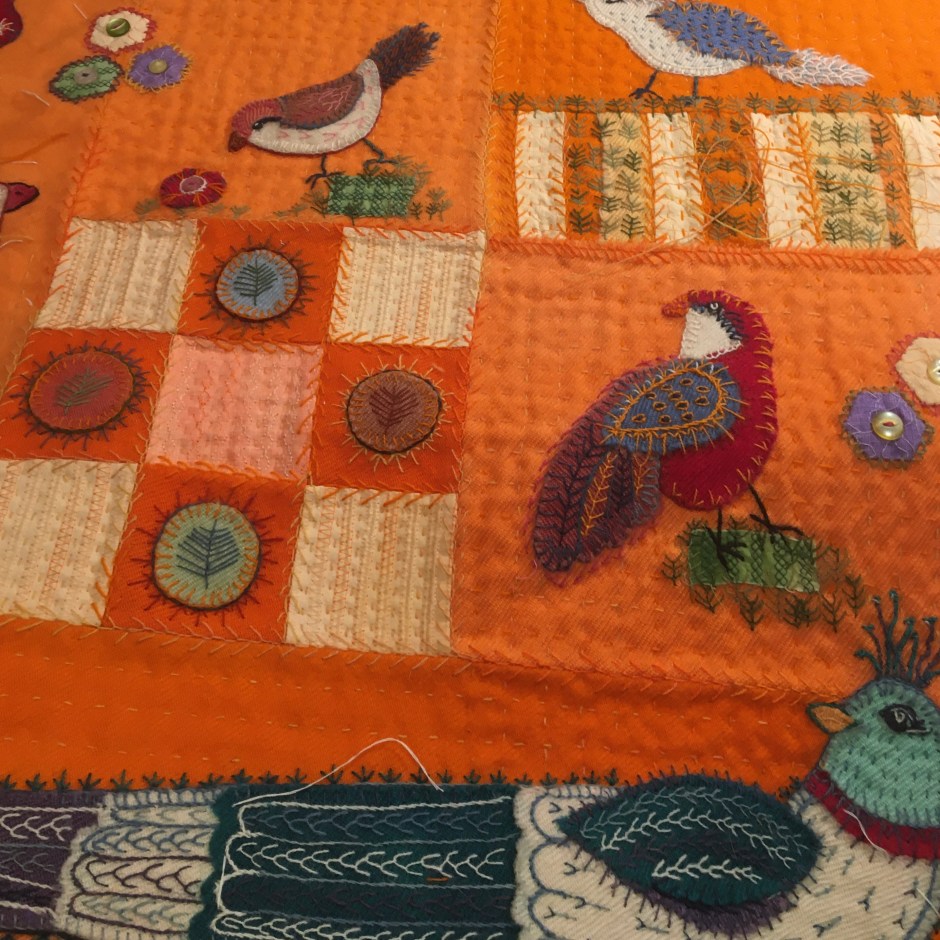
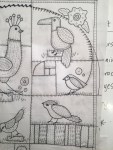
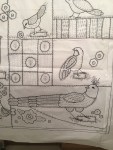
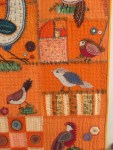
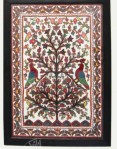
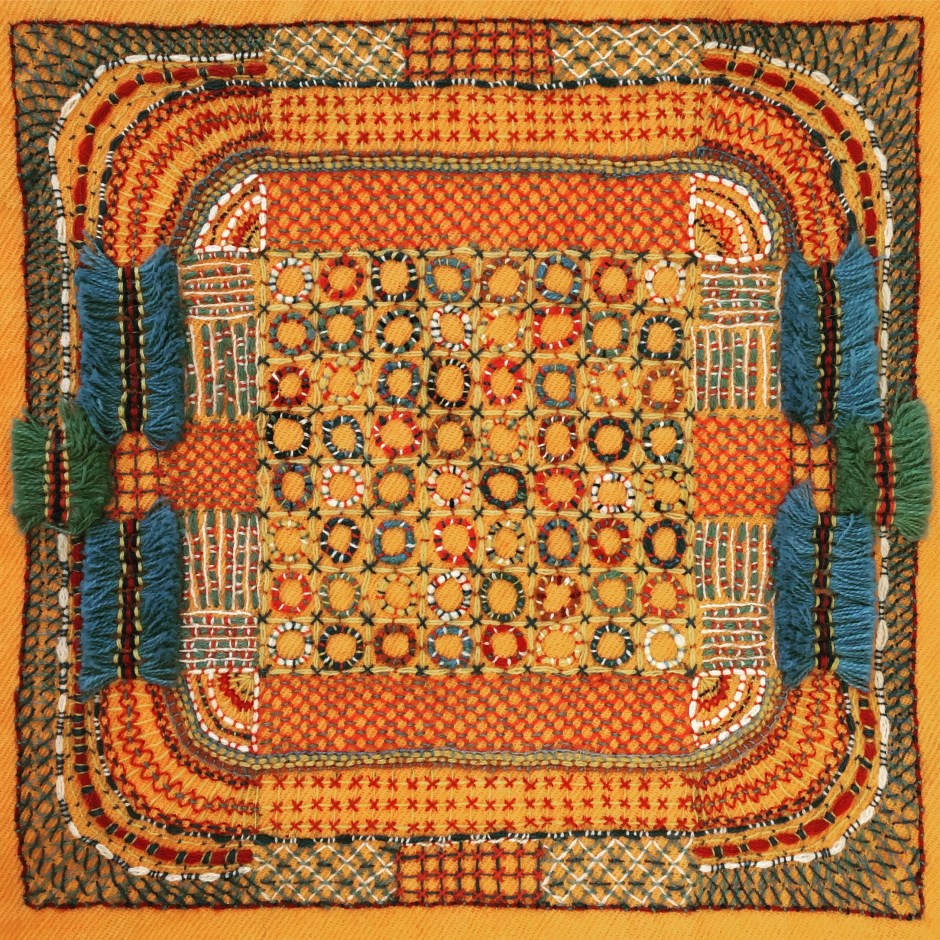
A designer needs to be objective and work to a brief . That is what I did with this Folk Art Project. It was not easy as I am not necessarily a Folk Art kinda gal ! But I love embroidering on wool , I love and respect Sue Spargos work and I adore the Iranian Pateh Doozi . During the course of the project I have gained so much more respect for Folk Art and I thoroughly enjoyed designing and stitching this wall quilt .
The Brief :

1.Design a piece related to research done on Sue Spargos Folk Art work and the research done on the Iranian folk craft Pateh Doozi which is stitched on wool.

2.Use Sues methods and translate them with the equipment and materials readily available in Iran.
3.Reflect design ideas , stitching and colour of the Iranian craft but in a more modern and playful way .

4.Create a piece that will encourage new interest in the folk art from both angles and lead young and more traditional stitchers to begin researching, learning and innovating.

5.Use App.Ollogy as a design aid.

6.Use the Fibonacci Sequence as a layout of the design .

Read this very interesting article on Folk Art and its importance as a way of conveying a community’s cultural identity.

https://en.wikipedia.org/wiki/Folk_art

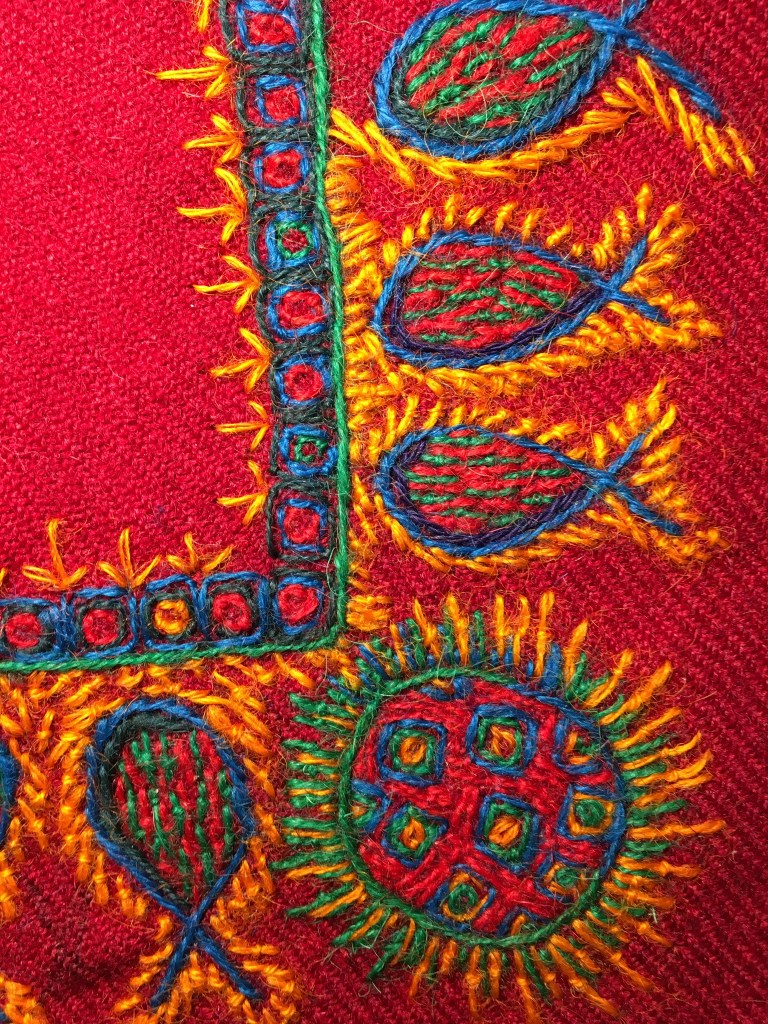
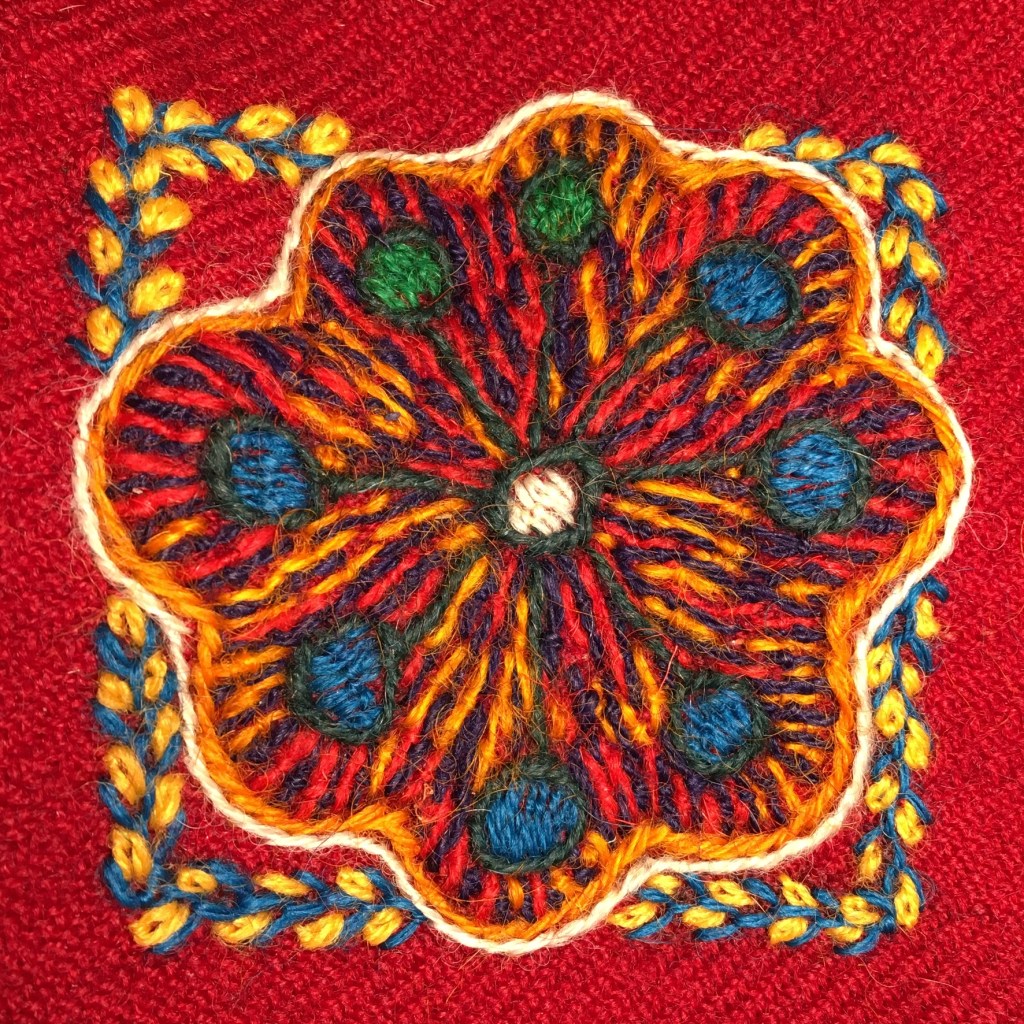
Contemporary Pateh Panel (40×40 cm)

Contemporary Pateh Sampler

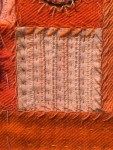
Going back to where it all began with the contemporary Pateh Sampler . It seems so long ago now but its like being reacquainted with an old friend! As you can see I have used a combination of the stitches from Pateh Doozi, modern Pateh and simple embroidery stitches in the Folk Art Quilt project.

https://dzignpatch.com/2019/02/03/contemporary-pateh/

Digital Designs

Update on the Folk Art Wall Hanging

“ The Conference of the Birds’ written by the Persian philosopher and poet Farid ul’ Din Attar in 1177 is a tale about a group birds embarking on a pilgrimage to find the illustrious Simorgh .They need to pass 7 valleys to get there. Along the way each of their strengths and weaknesses are revealed as are the obstacles or stimulus allowing them to reach enlightenment. Only thirty birds arrive at the journeys end and realize they are the ‘Simorgh’ themselves, a reflection of enlightenment.

Simorgh in Farsi is not only the name for Phoenix but also means 30 birds … si = 30 and morgh ………bird.

https://en.wikipedia.org/wiki/The_Conference_of_the_Birds

… and on a much less serious note I have decided to name this piece ‘The Conference of the Chicks” !

The Stitches

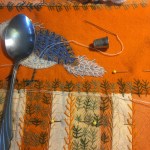
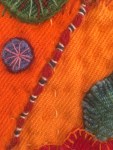
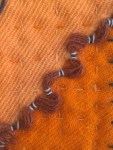
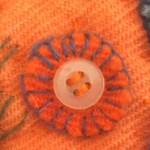
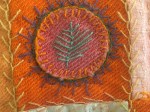
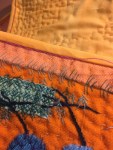
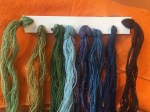
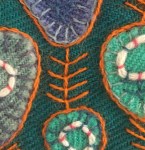
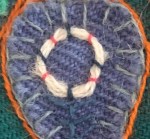
I have used a combination of both traditional embroidery stitches and Pateh Doozi stitches .Sue Spargo uses a large library of stitches with cotton and silk threads but the woolen yarns do not allow such complex manipulation so I have been limited to playing around with , size , direction and spacing .

Motifs

Folk Art represents the life of the local community and has strong roots in traditional folk law and cultural heritage.

https://dzignpatch.com/2018/09/29/embroider/

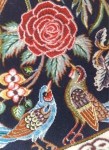
“Gol o’ Bol Bol” or “Gol o’ Morgh” is a very old and prominent motif in Iranian art and Literature , it translates as The Rose and the Nightingale. In Persian literature the rose serves as a literary metaphor for perfection , beauty and the Beloved with the nightingale as the Lover .The rose is proud , beautiful and often cruel while the nightingale sings endlessly of his longing and devotion .As a decorative theme it was used predominantly from the Safavid period onward to beautify all manner of objects from ceramics , manuscripts, miniature paintings and woodwork. The red rose is Irans national flower.

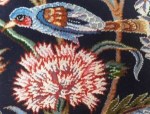
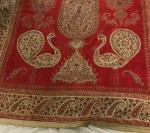
I have included birds from the simple sparrow to the proud peacock. The Peacock has a very great significance in Iranian culture that can be traced back to the Achaemenid era when it is believed to have been imported from India where it originated . It symbolizes power and monarchy as we can see in the Peacock Throne which was taken from India in 1739 to Iran by Nader Shah and is now part of the Iranian Crown Jewels in the National Archives. We can see peacocks in many of the older Pateh pieces and of course it is a pleasure to design with …so much colour and beauty !

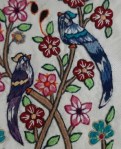
The Parrot and the Mina bird are symbols of intelligence and the Parrot especially is admired for its wit . Smaller parrots and always portrayed in pairs as love birds .

The butterfly is also very symbolic in Iranian poetry representing the soul itself and its sacrifice for its Beloved either spirituality or physically , it could be a lover , a passion , a nation…. In literature the butterfly or moth singes its wings as it gets too close to the candle flame as the light is hypnotic ,it cannot help itself.

The Robin is for me and Christmas! Although it is said that The Magi , the three wise kings came from Persian and were Zoroastrian holy men who followed the Stars.

Mono Prints

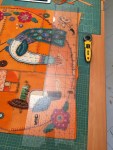
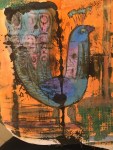
This is a continuation of the Folk Art Quilt . I needed a break from the embroidery which is heavy work ! Lost of concentration ! I needed something freer and decided to do some mono prints of the birds to give me an idea of the floral patterns to come , the colours and placement . Apart from that it was just a couple of days drawing and messing around with colour , paint and creative textures .

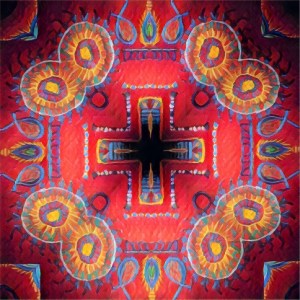
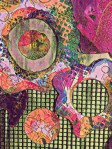
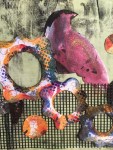
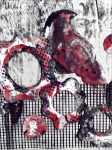
After working , I tooks photos of the prints and used App.Ollogy to create some digital designs. The photo of the stencils turned out the best! https://dzignpatch.com/2019/02/11/digitally-designed-textiles/

Quilting the panels will bring some discipline to the design I think , as the mark making and colour was very spontaneous.