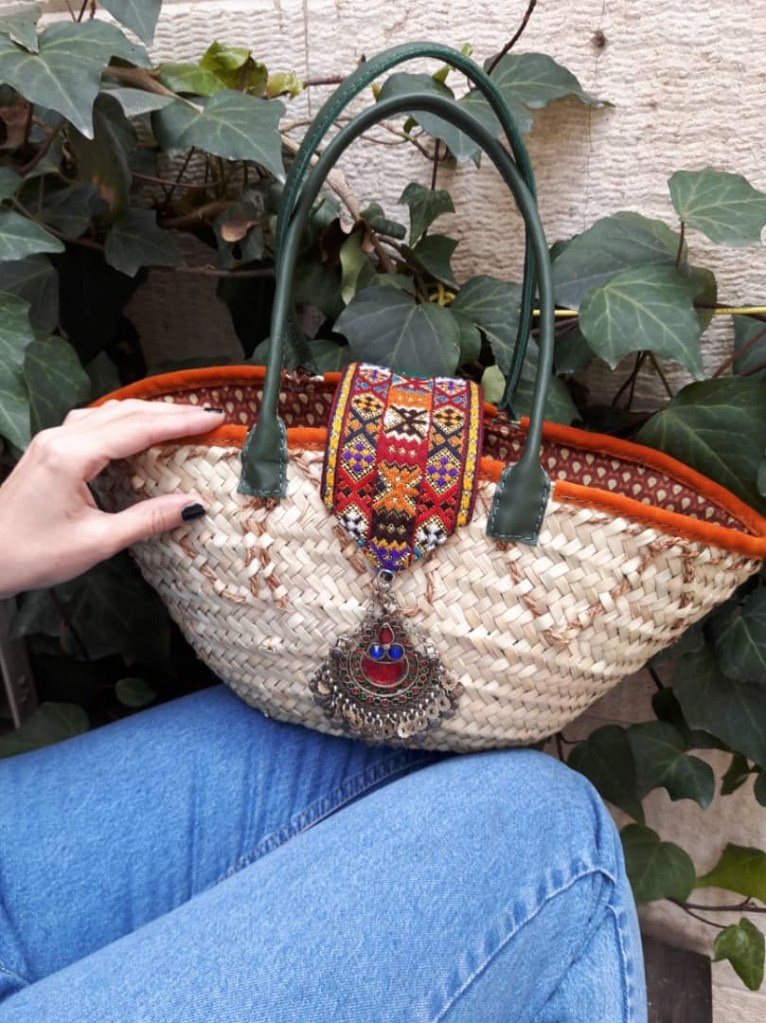
This is an exciting new project combining the talents of Iranian Artisans . The baskets are woven in the Kavir Mesr desert near Kashan and in Mazandaran near the Caspian Sea . The embroidery is Baluchi by Lili Hassani , a young Iranian Embroidery designer who lives in Tehran . Leather handles, accessories and lining have been added.
Dzignpatch is committed to bring these young artisans together and designing items that can be sold in Europe .This will not only employ and train more artisans but is up keeping with our policies of empowerment and self sufficiency.
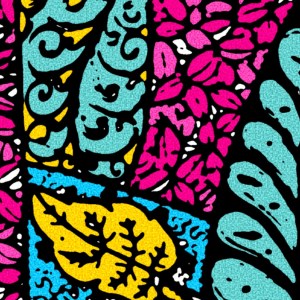
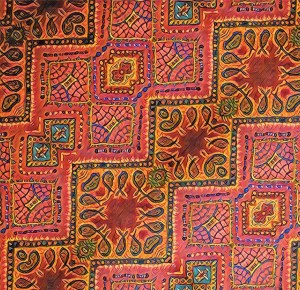
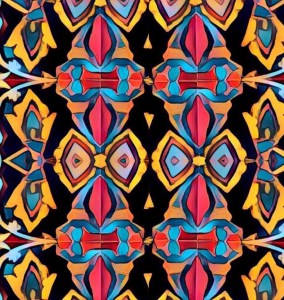
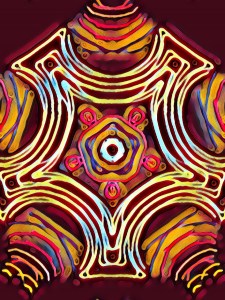
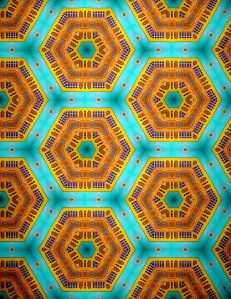
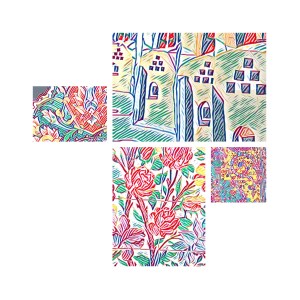
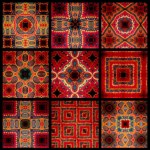
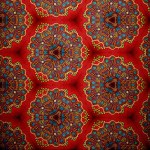
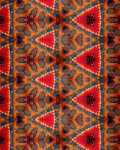
Using photos of my work and ‘App.Ology’ as I call it , the amount of designs I can create is endless!
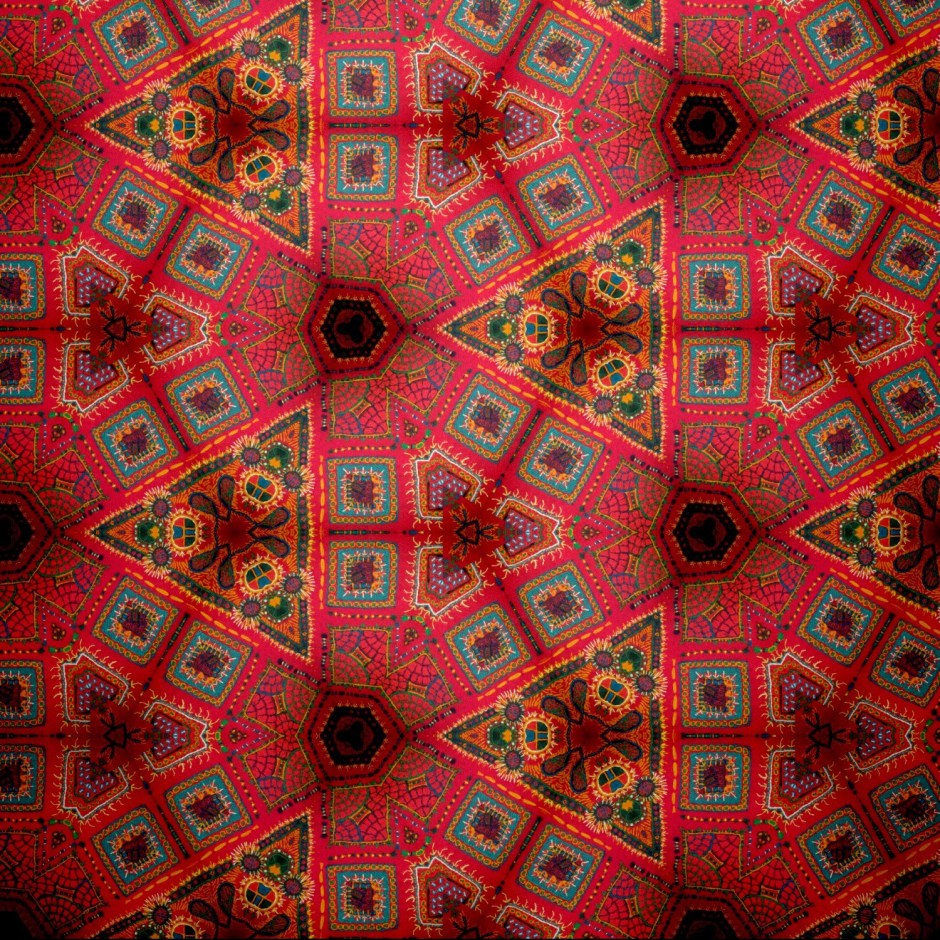
What is App.Ology ? It it the name I gave to the process of using various apps in sequence to achieve different effects .
I had to choose a topic for a course I am doing and kept having to explain the process so I named it App.Ology so the assessors would know what I was talking about . I am trying to work out a formula to use but the possibilities are incredible! The combinations are infinite and the visual effects depends on the original source, which Apps they go through , which filters etc… Chance and coincidence play a big part in the designs and the introduction of new apps makes for even more exciting effects. I have been successful at harnessing the outcome to a certain extent and use ideas to re design from.I think I will be busy with App.Ology for some time….
I use App.Ology as part of the design process. I have a source, a drawing or piece of work , photograph it … and play with combinations of Apps . I can then derive various new designs from the result …and then repeat the process till I feel I have exhausted the creative process and patterns begin to repeat . It never fails to amaze me how far I can go with each source.
Here are the icons of the apps I am using . The majority of these apps are free and I have limited myself to the free versions so far . All the photos or prints that are named ‘Digital’ are a version of these apps.
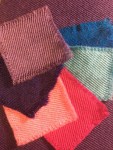
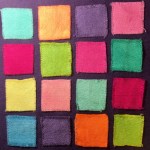
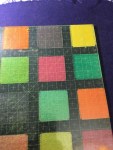
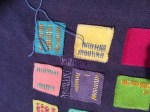
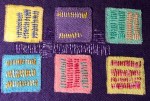
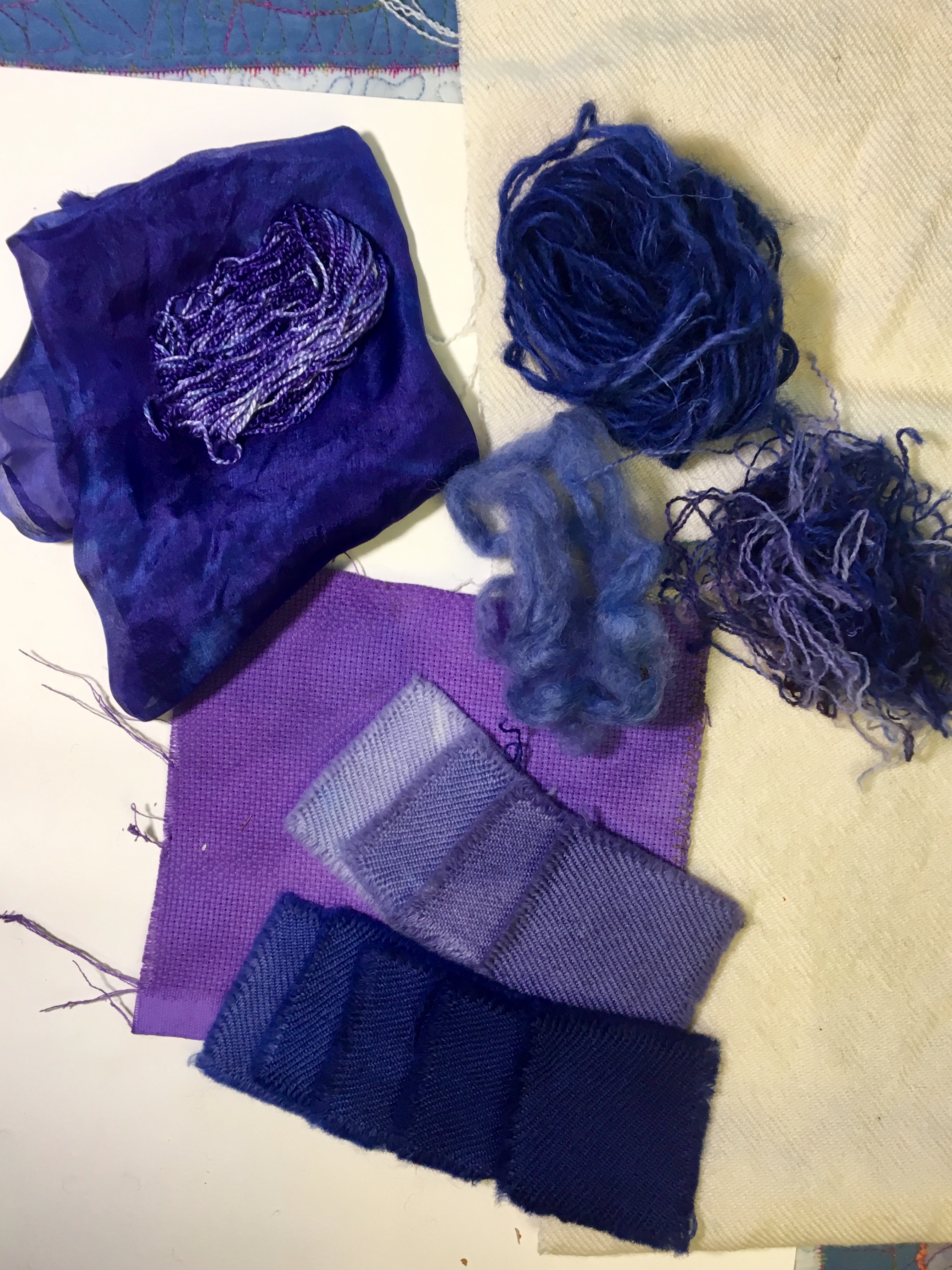
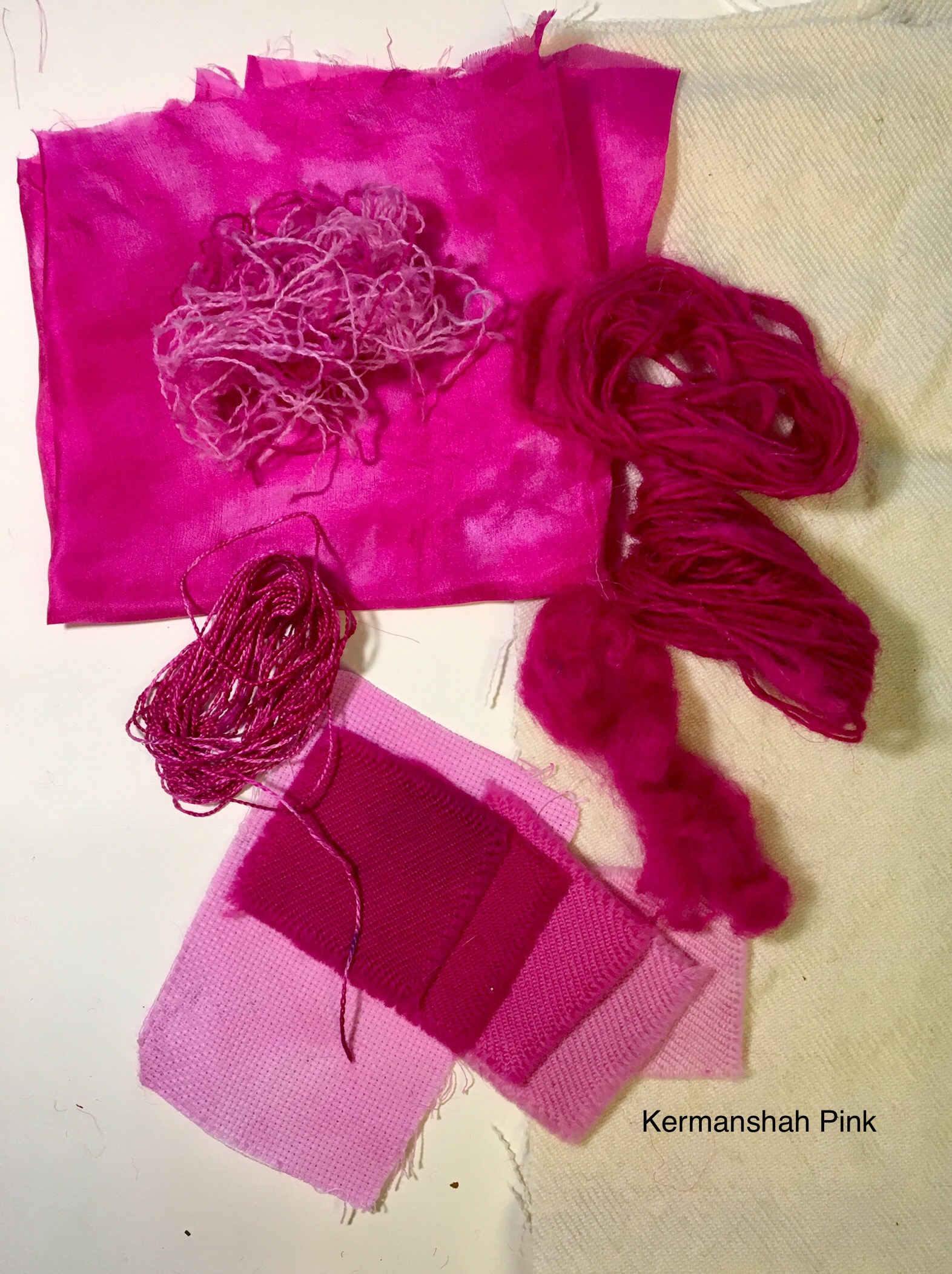
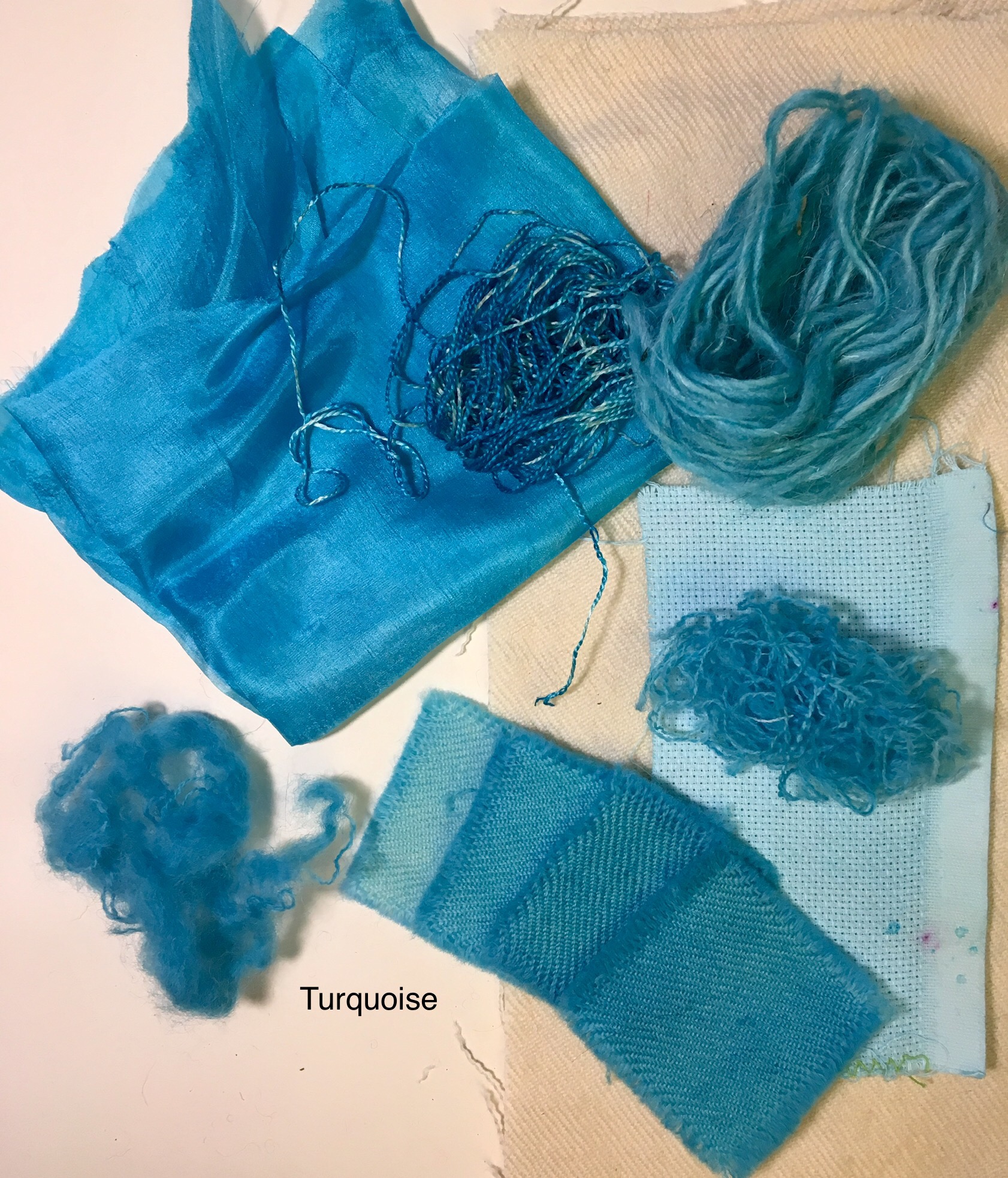
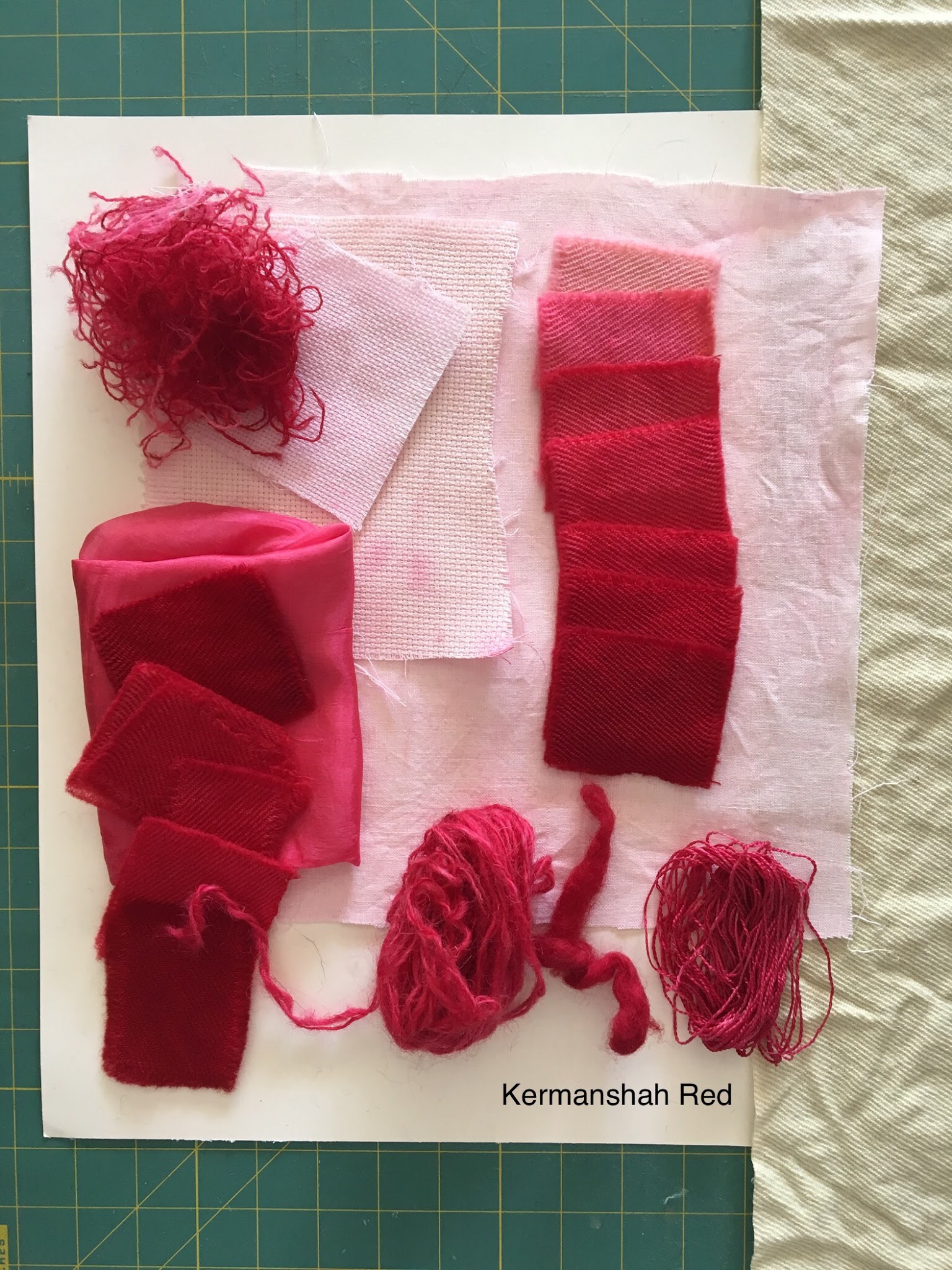
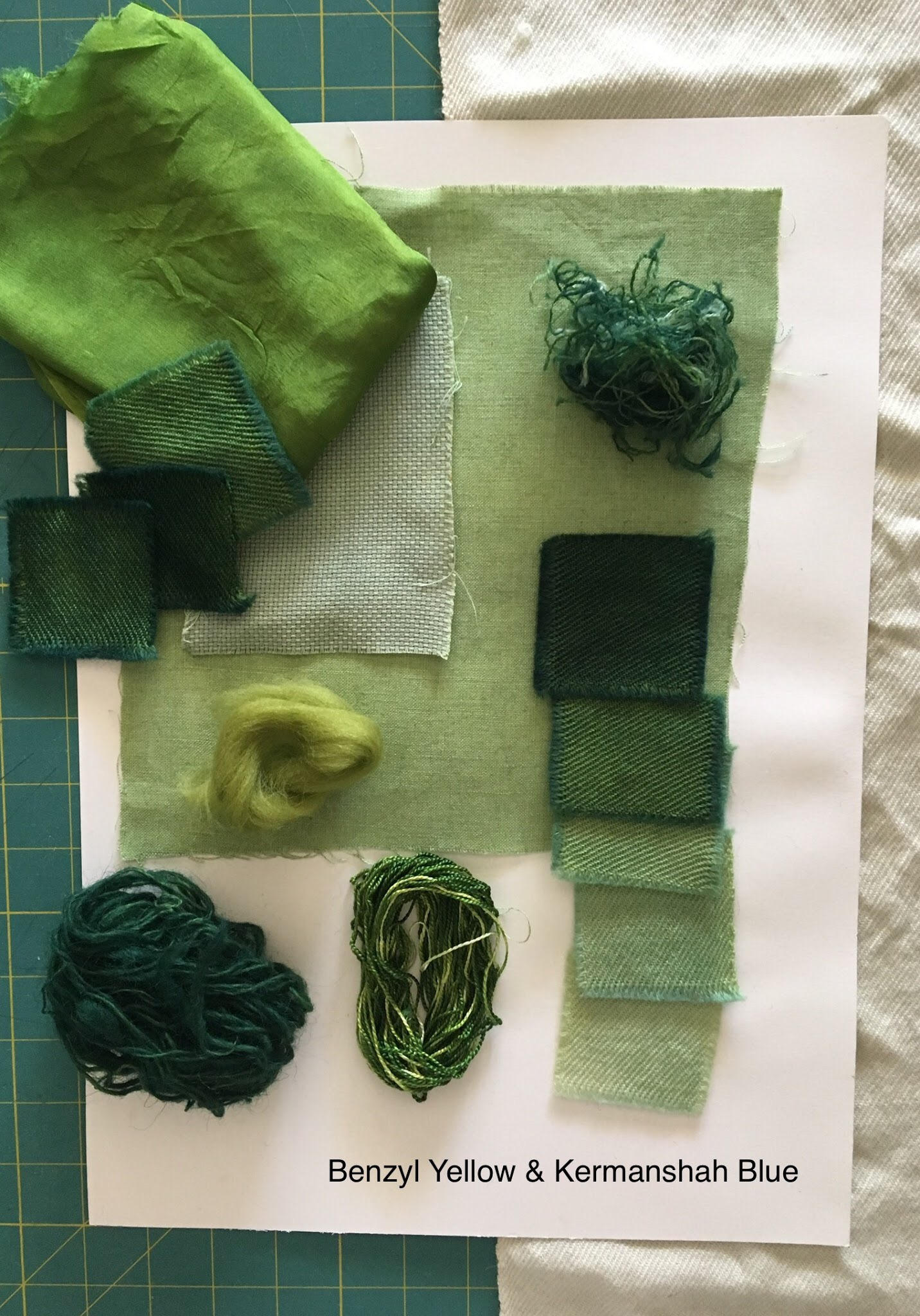
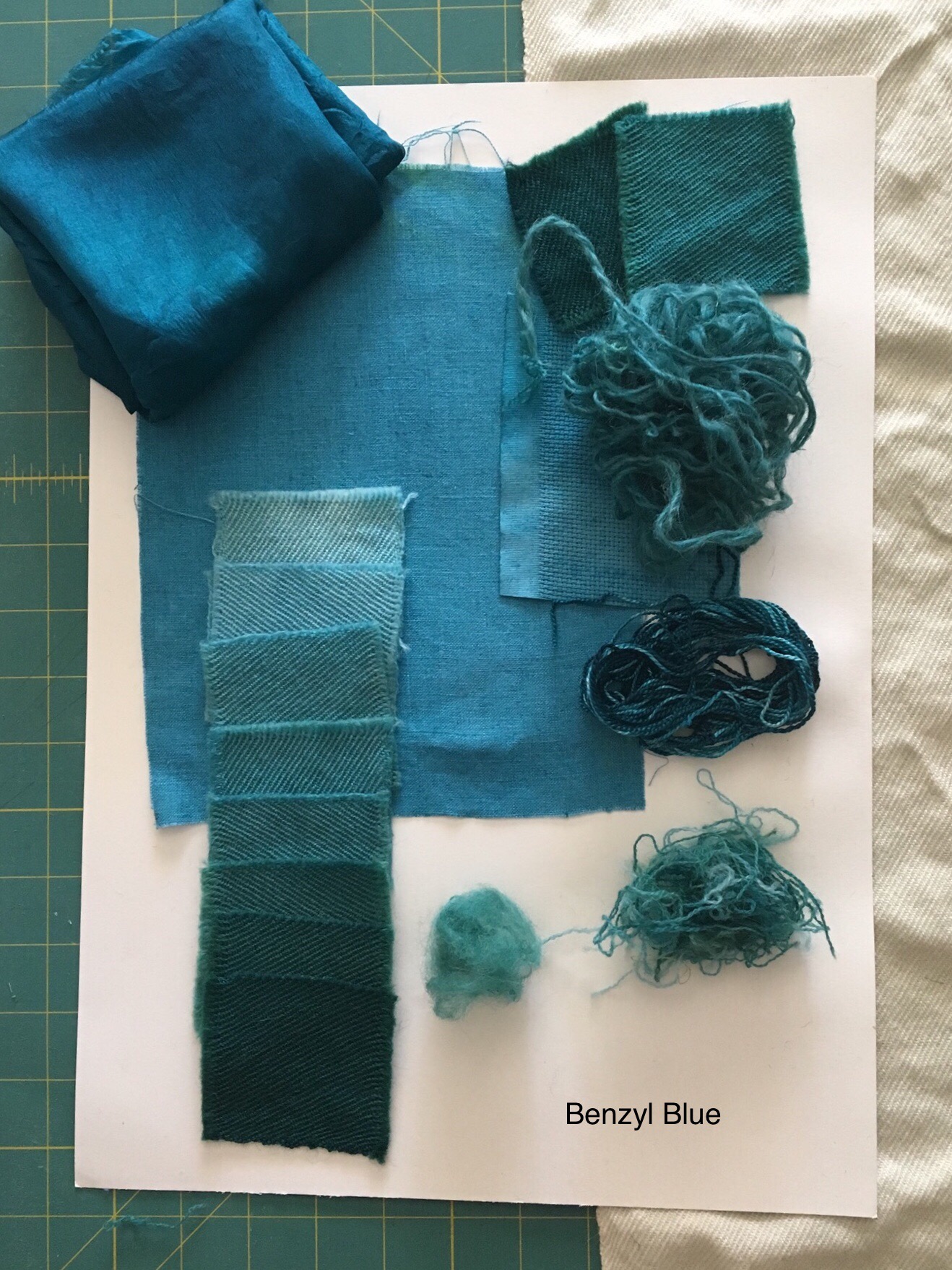
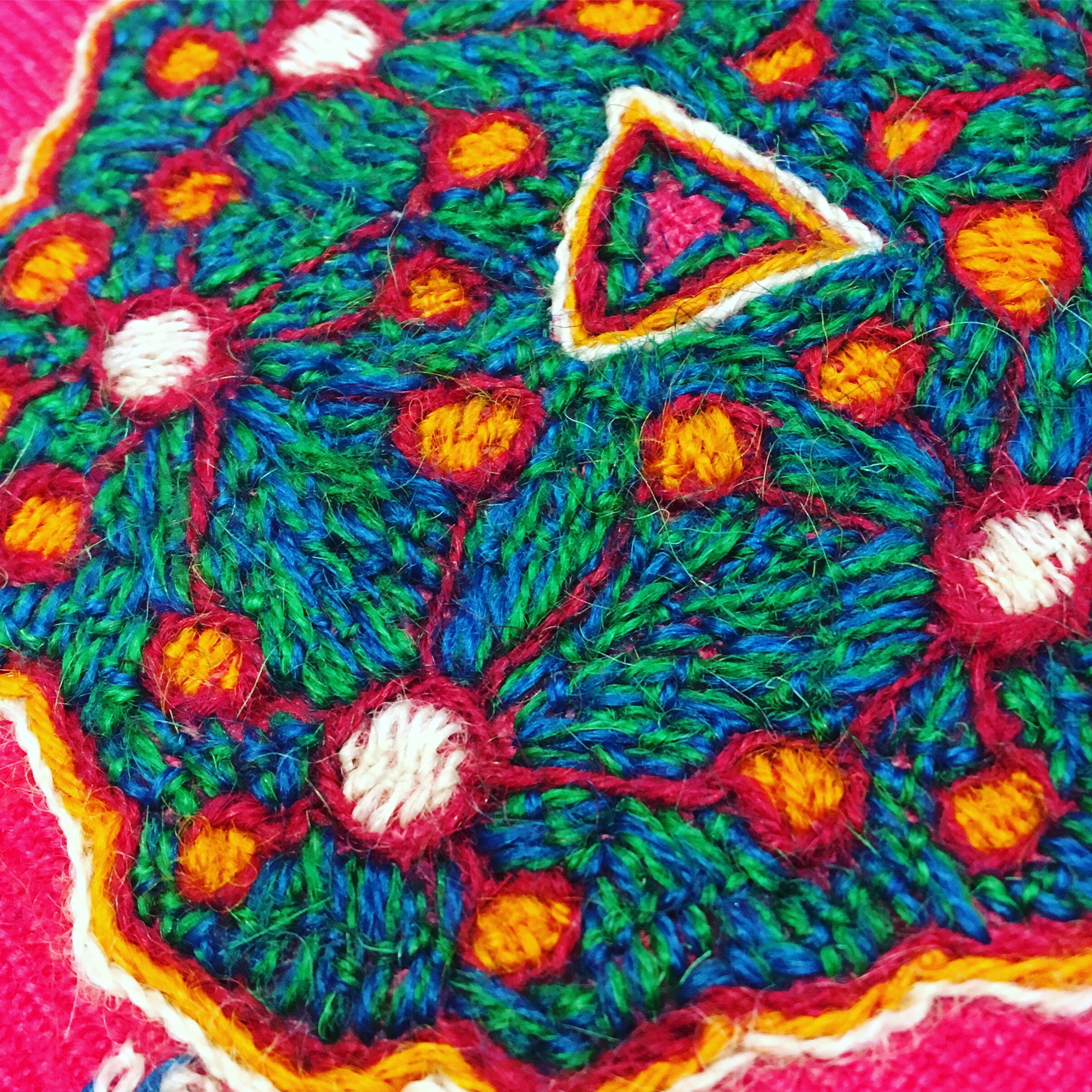
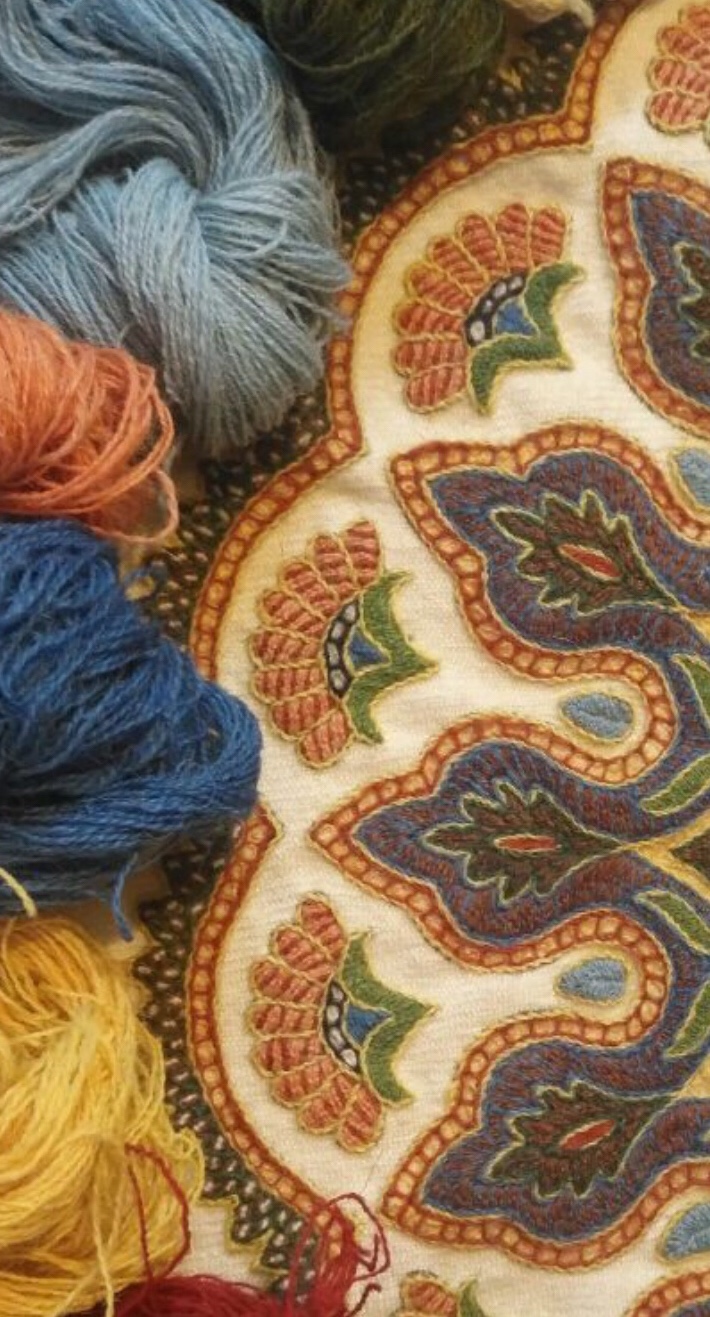
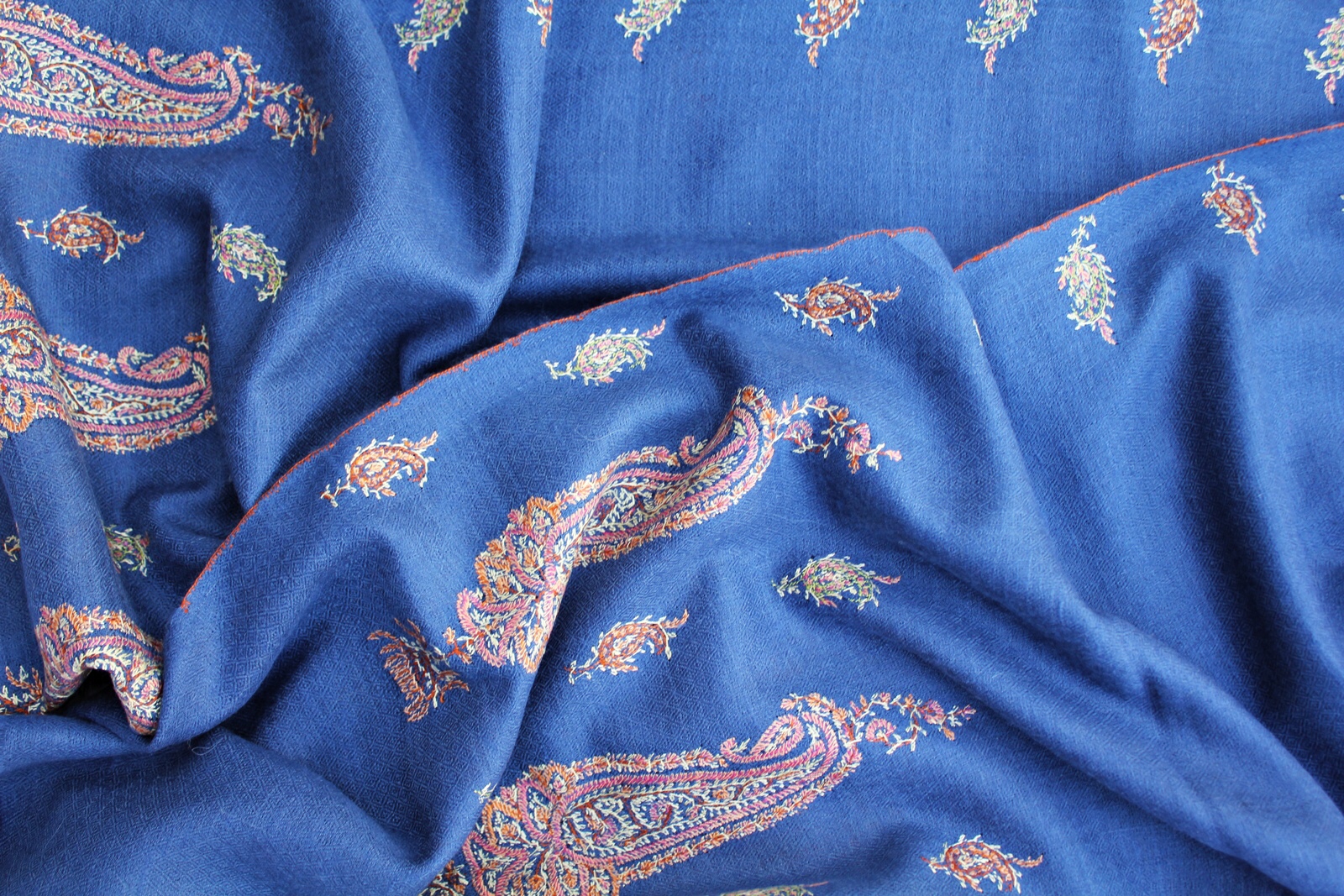
This is the beginning of a new project using fabric and stitches from the previous Pateh Doozi project and giving a new colour scheme and complete make over . The Pateh Shawl or Ariz , as the fabric is called , dyes beautifully and this sampler is less about the stitches and more about the colour ! The silk threads are hand dyed too. Working with these fabrics and yarns by hand is extremely satisfying and sumptuous to handle .
Making choices The colour blocks Trimming offUsing freezer paper to attach Squaring offStitching Detail Detail
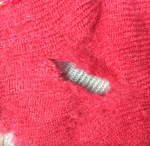
I slit the wool in order to create a hole Then felted it by putting it in the automatic washing machine at a high water temperature . Then I reverse appliqué wool on the back to see through the slit … a bit weird!
After felting Detail Detail Detail Digital Digital
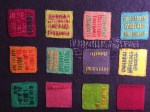
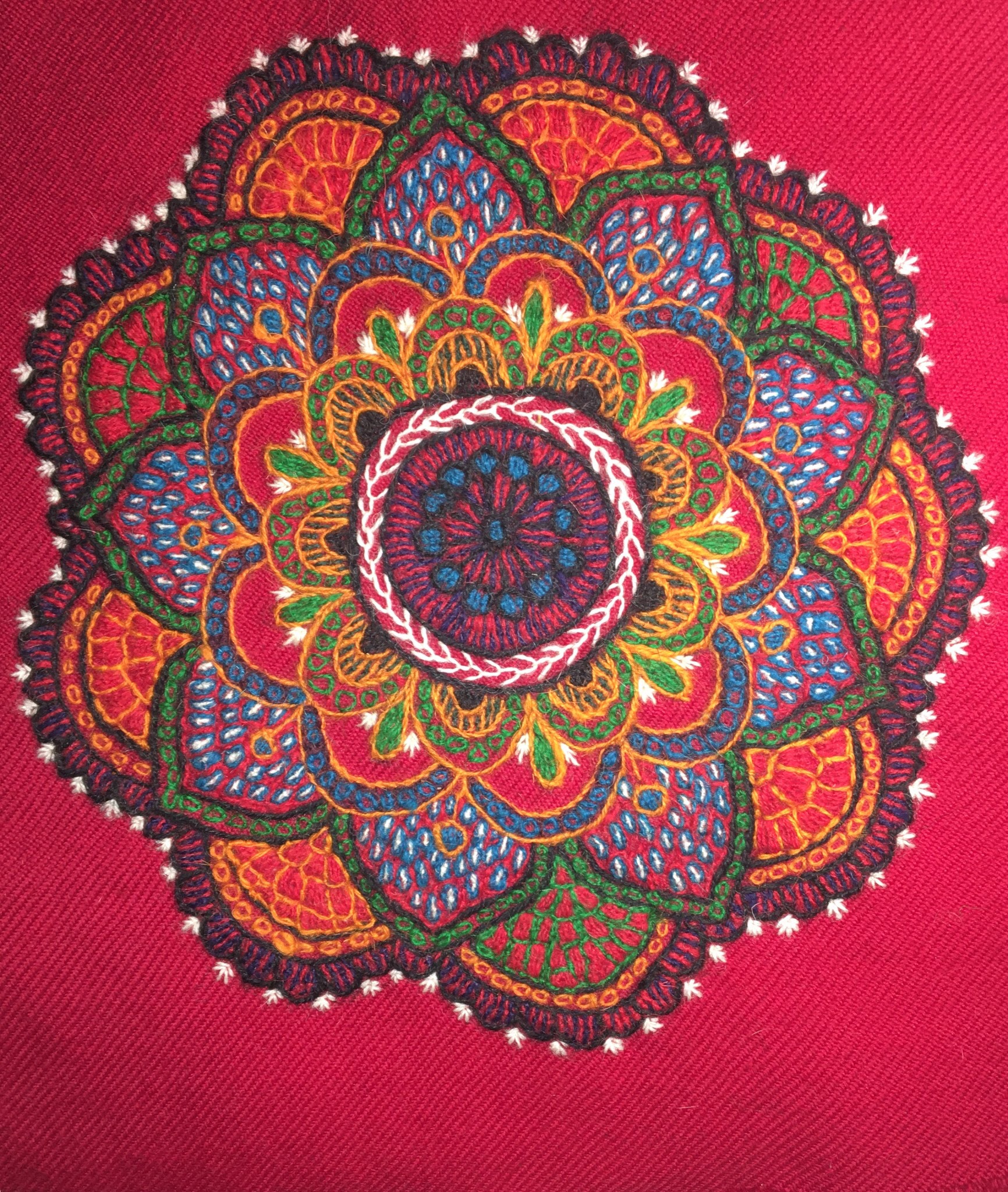
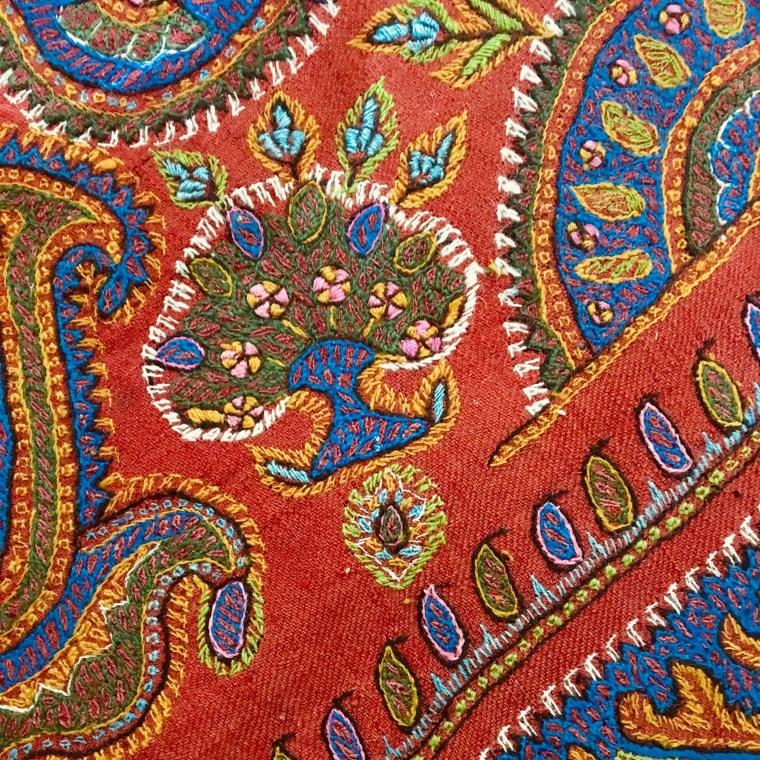
This is a Contemporary Pateh Sampler . I have derived over a hundred new designs from it ! It uses the same fabrics and yarns with the traditional Pateh Stitches but has a modern twist .
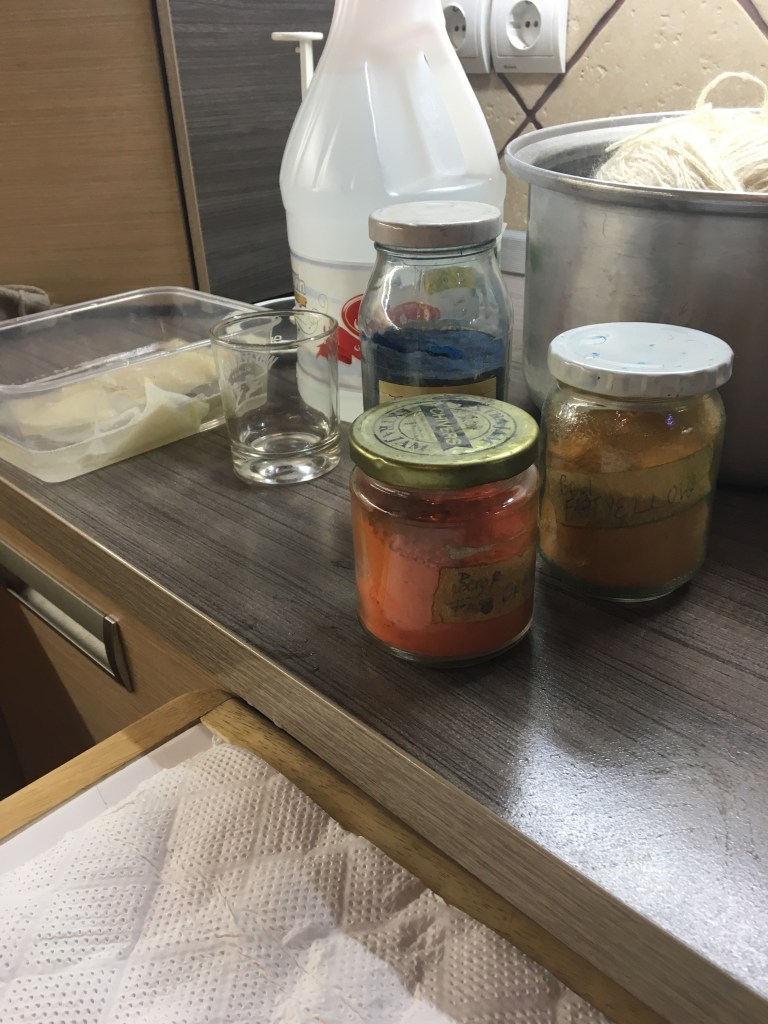
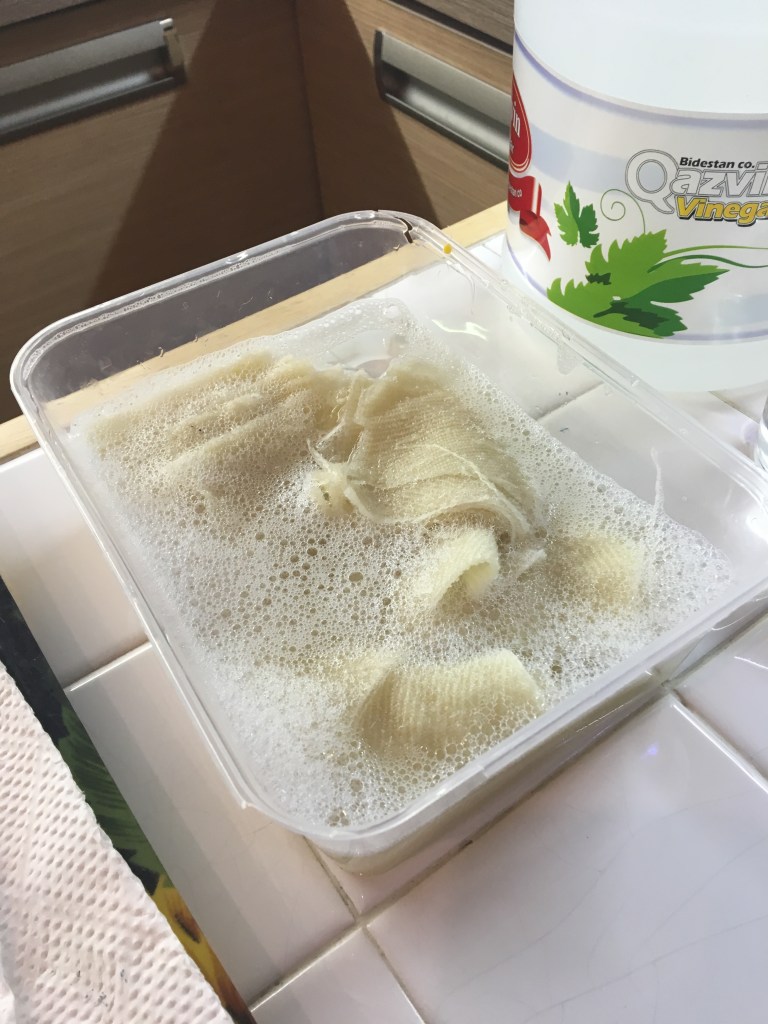
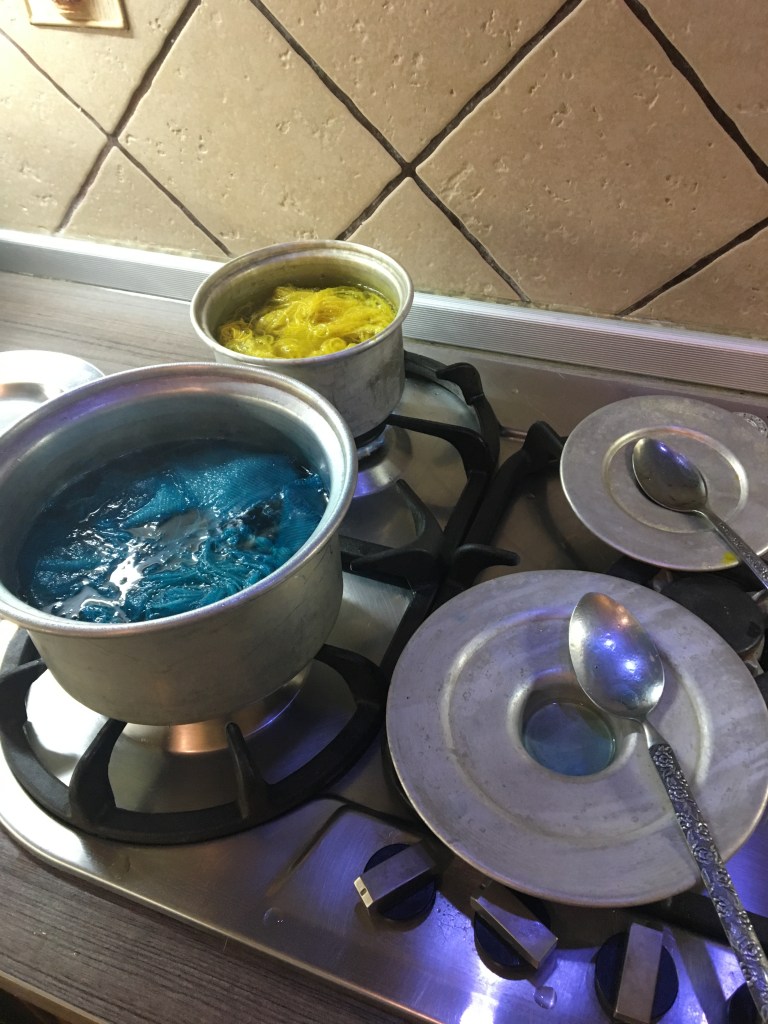
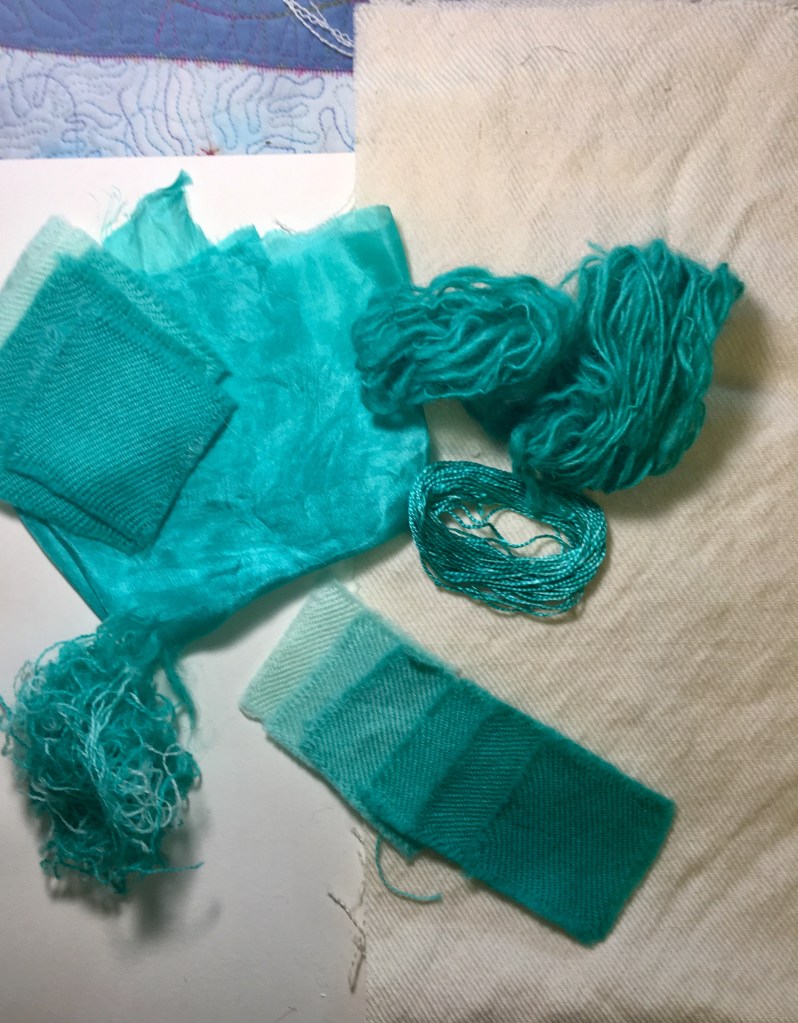
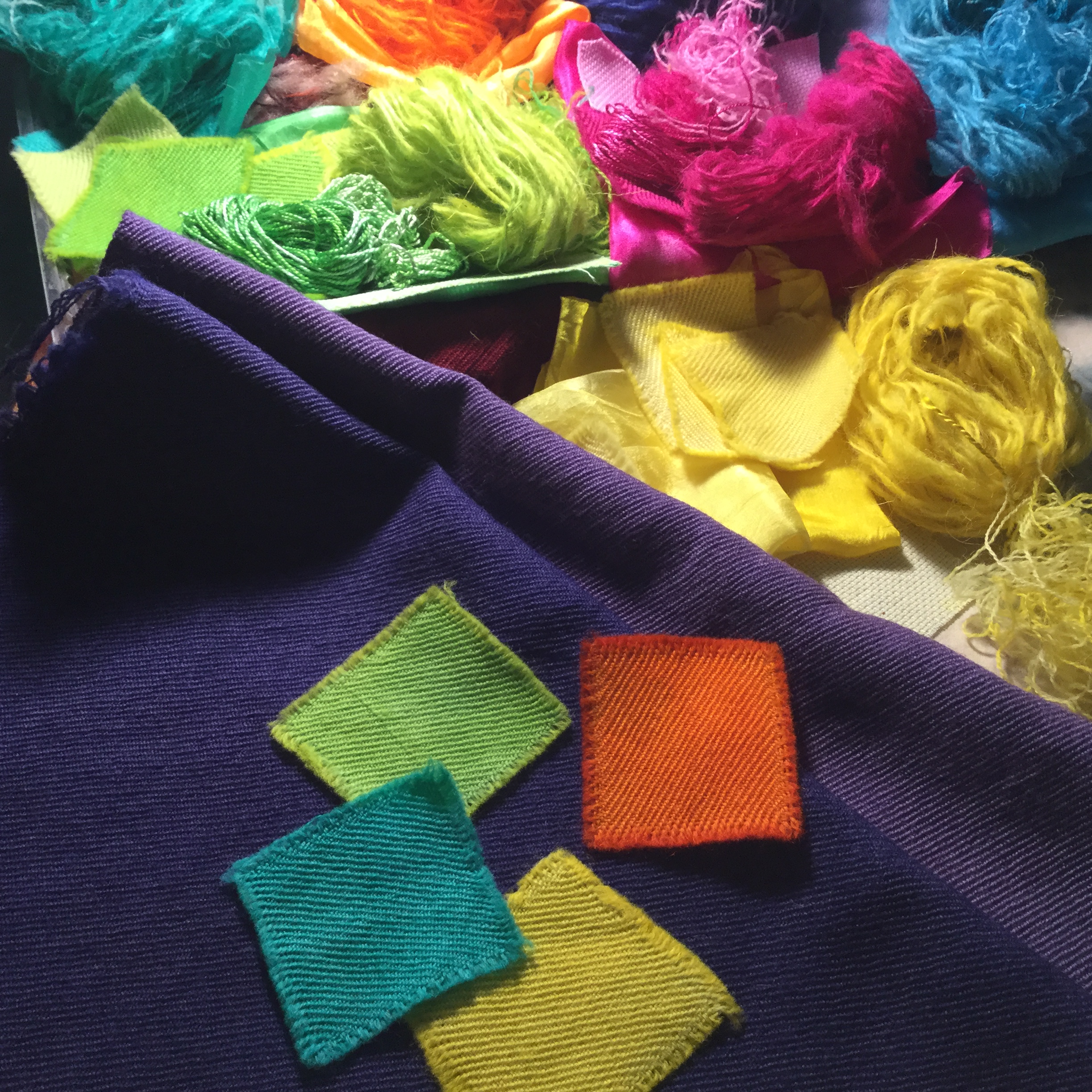
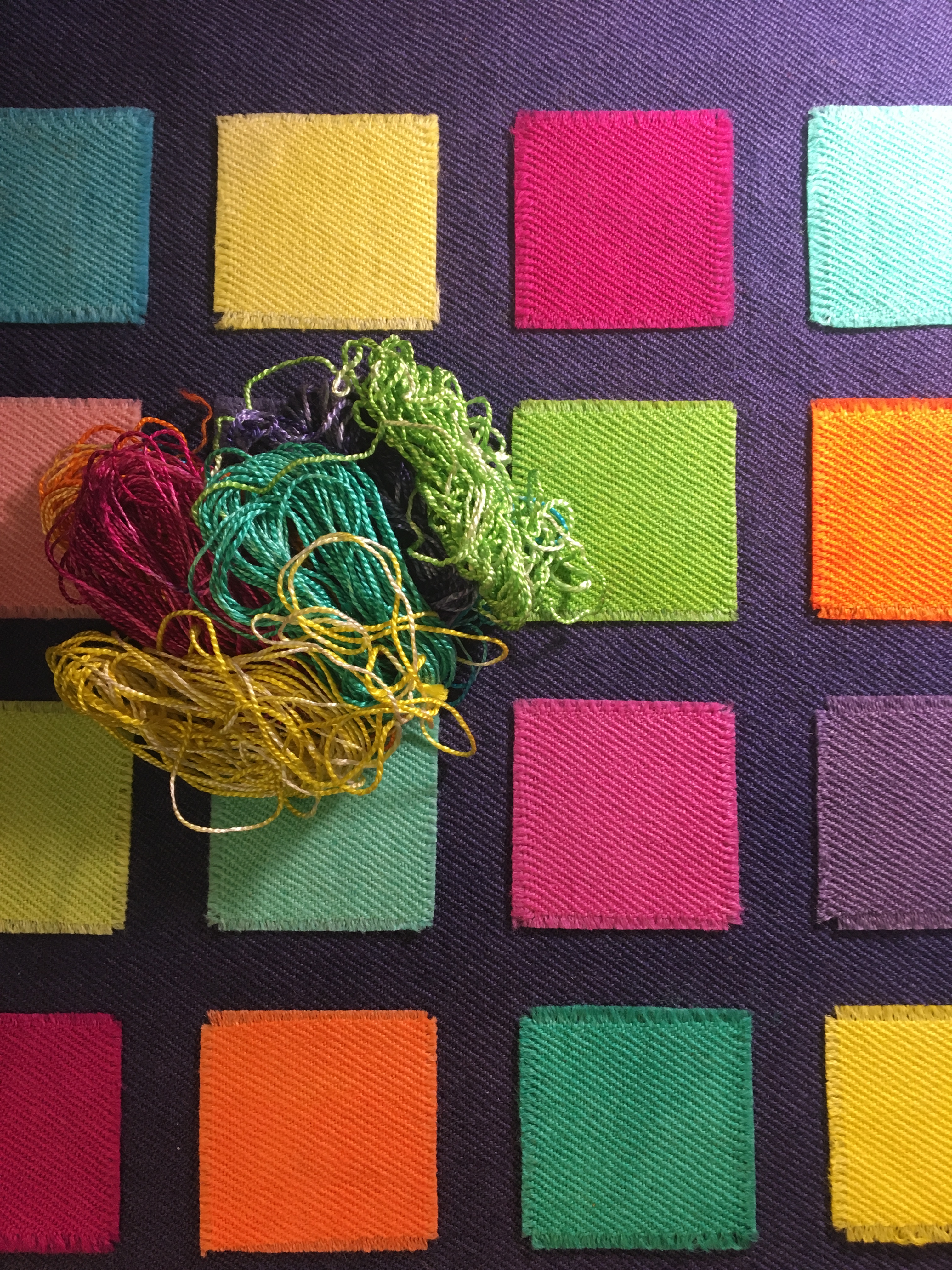
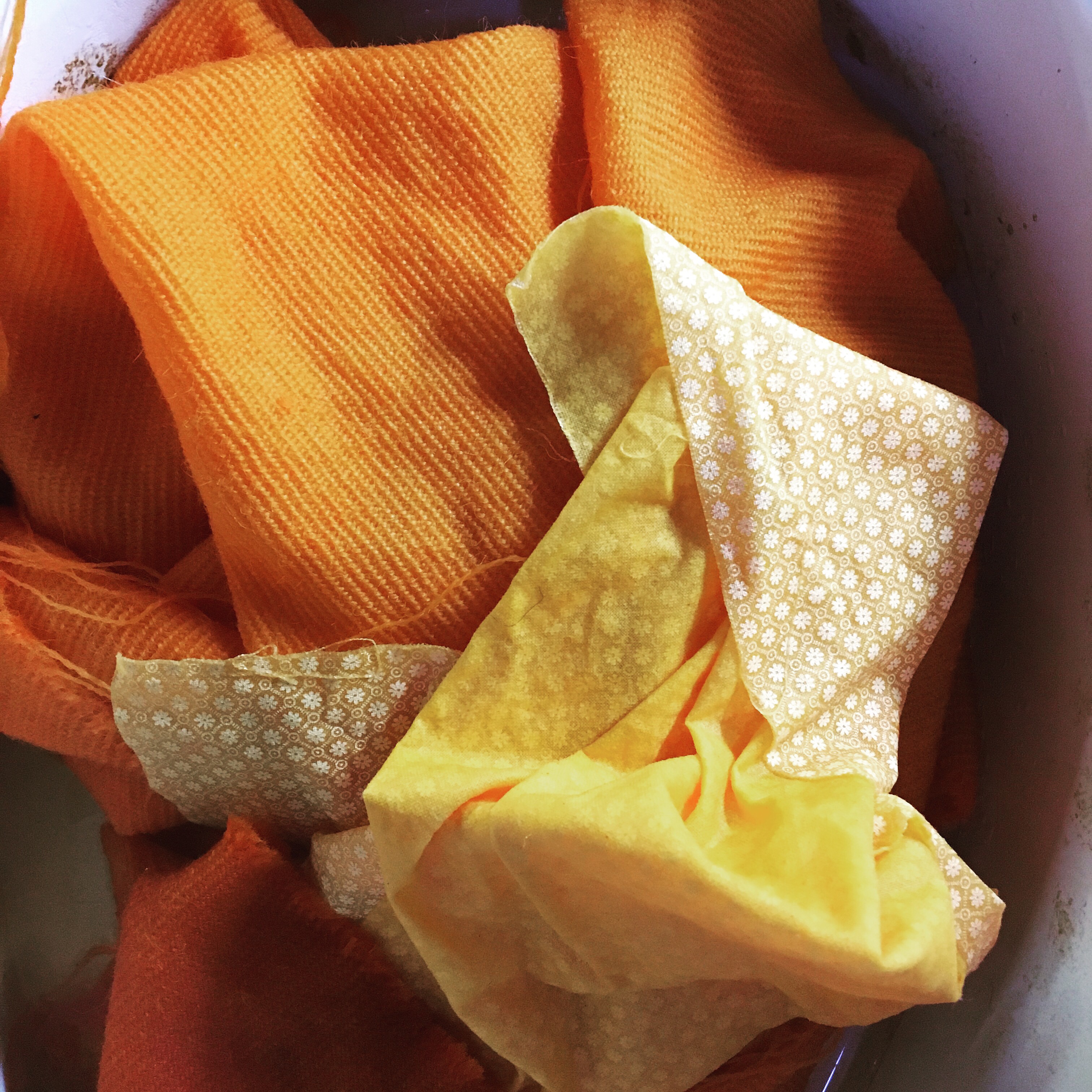
Dyeing the woolen twill fabric which is traditionally used for Pateh Doozi ,I created a new colour scheme . I also dyed a variety of yarns and fibres to use in further projects which made the project even more fun ! I really wanted to see how well the fabric would dye and experiment with possibilities. The woolen Arriz fabric takes the dye extremely well.
Health & Safety in the Dye Lab
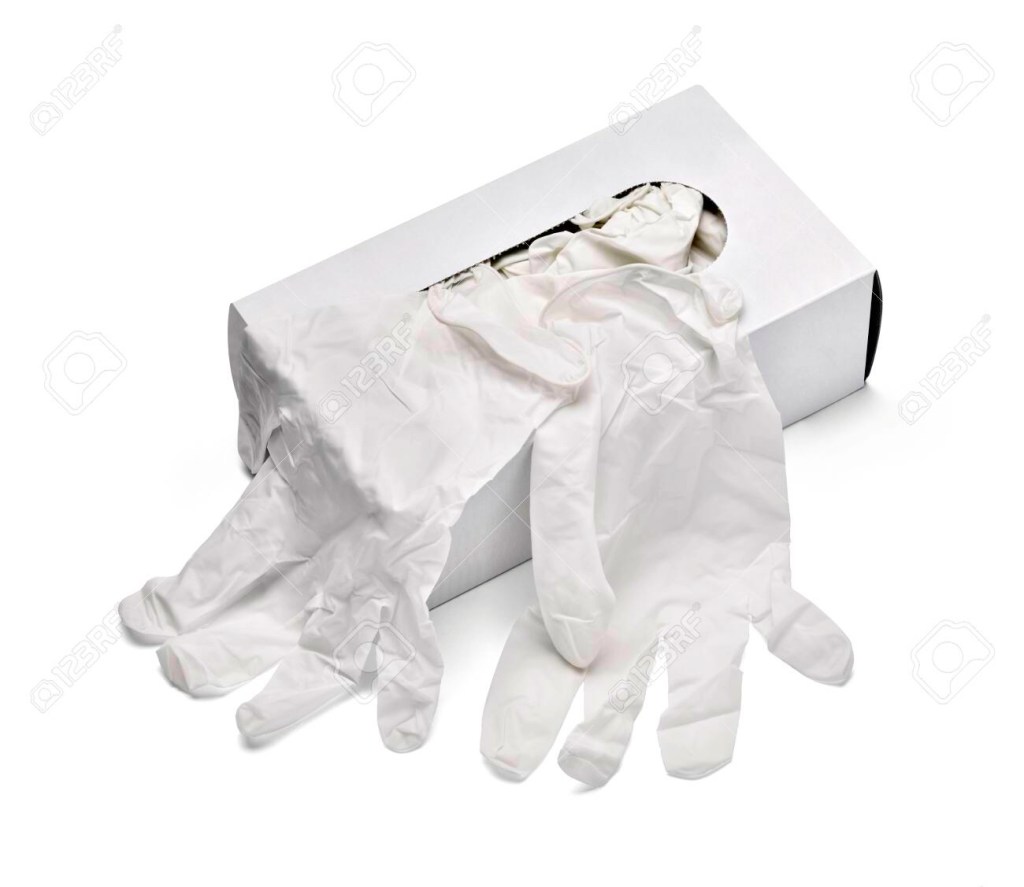
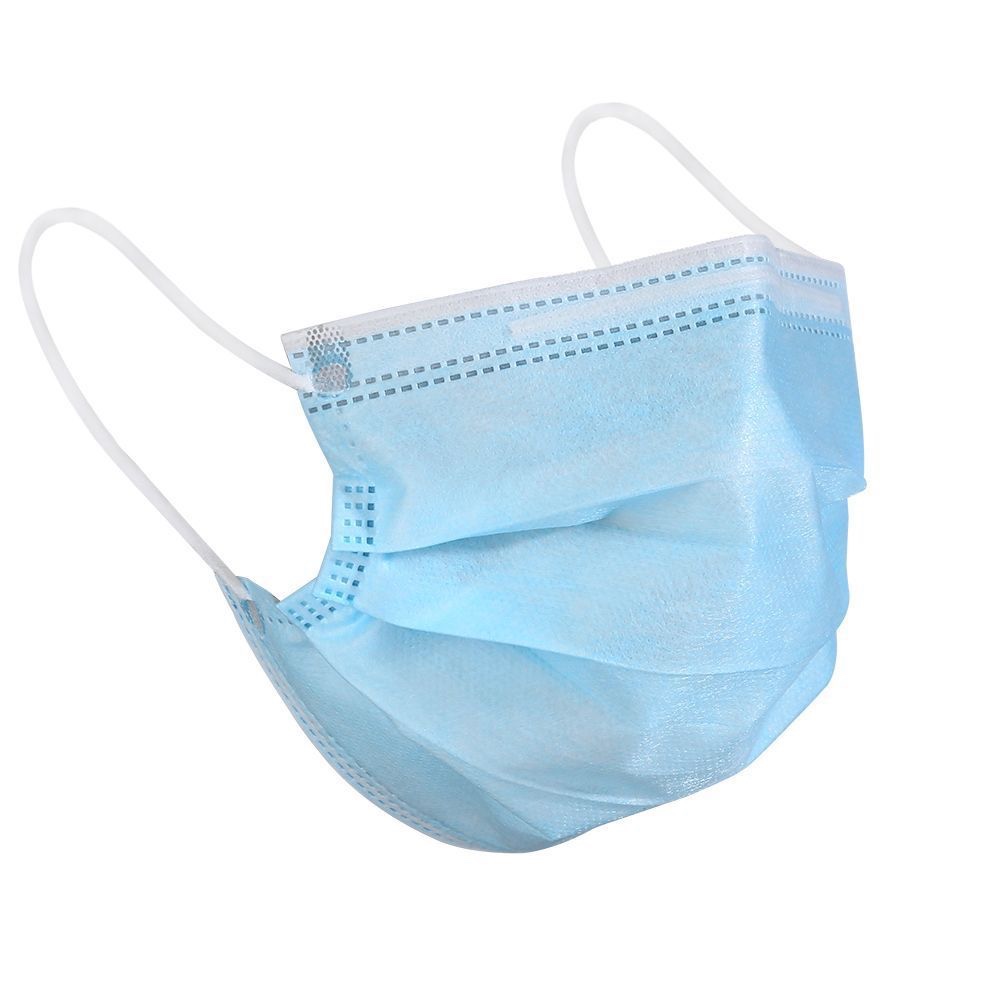
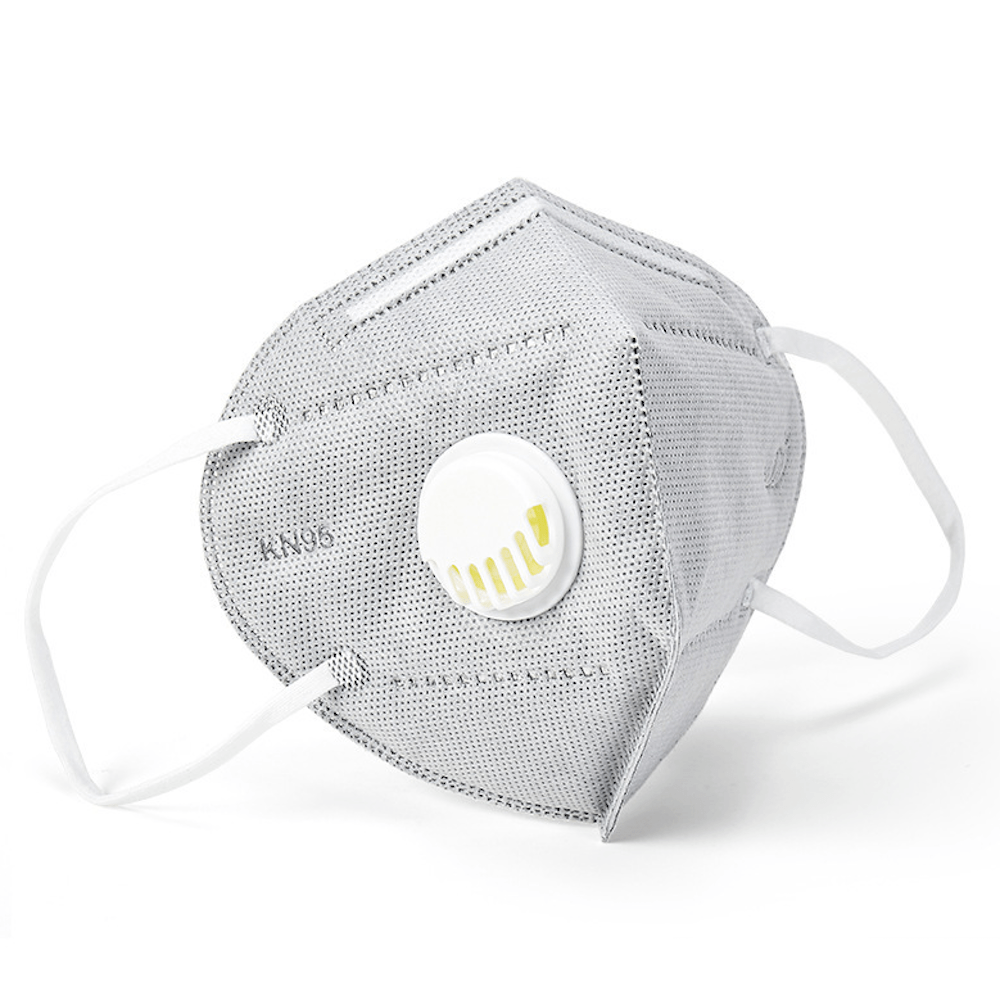
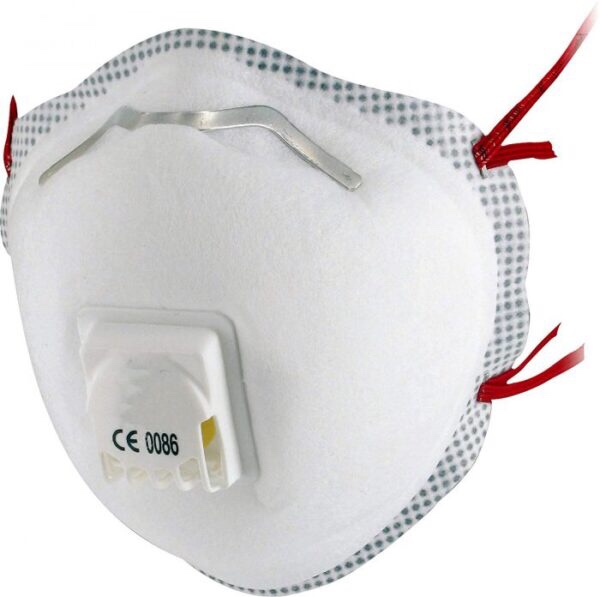
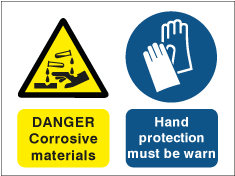
Safety in the dye lab is an absolute requirement for all dyeing activity whether it be in your own kitchen , in an educational establishment or in a factory . Personal safety as in exposure to chemical particles from dye and mordant substances can be dangerous for the skin and also inhaling therefore the lungs and throat. Wearing a protective face mask , preferably the N95 mask will prevent any inhalation and must be worn when handling all kinds of chemical substances. Protective gloves and protective glasses are also a requirement . I personally do not use protective glasses but I am only dyeing in small quantities but exposure to chemicals can cause irritation and burning to the skin and eyes .Protective gloves should be latex as thick washing up gloves can make you clumsy …and you do not want that when you are dealing with boiling dye baths and chemicals.
Ventilation is also a very important factor in the dye lab . Make sure he space you are working in is well ventilated by extractor fans and open windows .This will also prevent inhalation of irritable and poisonous fumes .
Chemicals , dyes and dangerous substances should be kept in a safe place away from children at all times. They also should be labeled properly.
Having a First Aid Box or Cabinet is imperative and it should include the minimal of : liquid antiseptic / pain killers/ sterile gauze / sterile cotton / burn cream / band aid
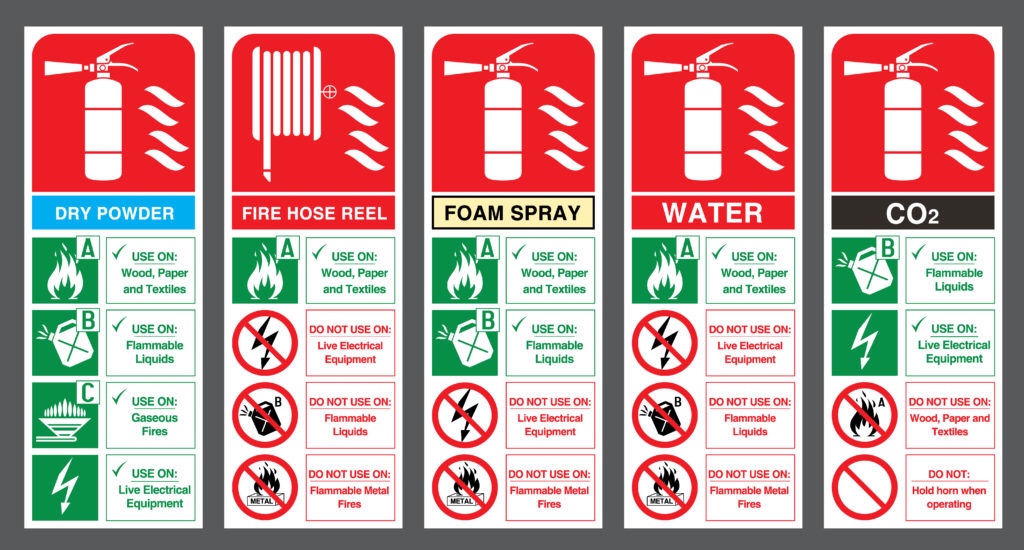
Fire extinguishers should be readily available and placed in obvious places. If you are working in educational establishments staff should be trained and well aware of how to use the fire extinguishers. If you are dyeing at home you can obtain small portable extinguishers to have at hand …. and not at the back of a kitchen cupboard somewhere!That goes for all safety equipment!
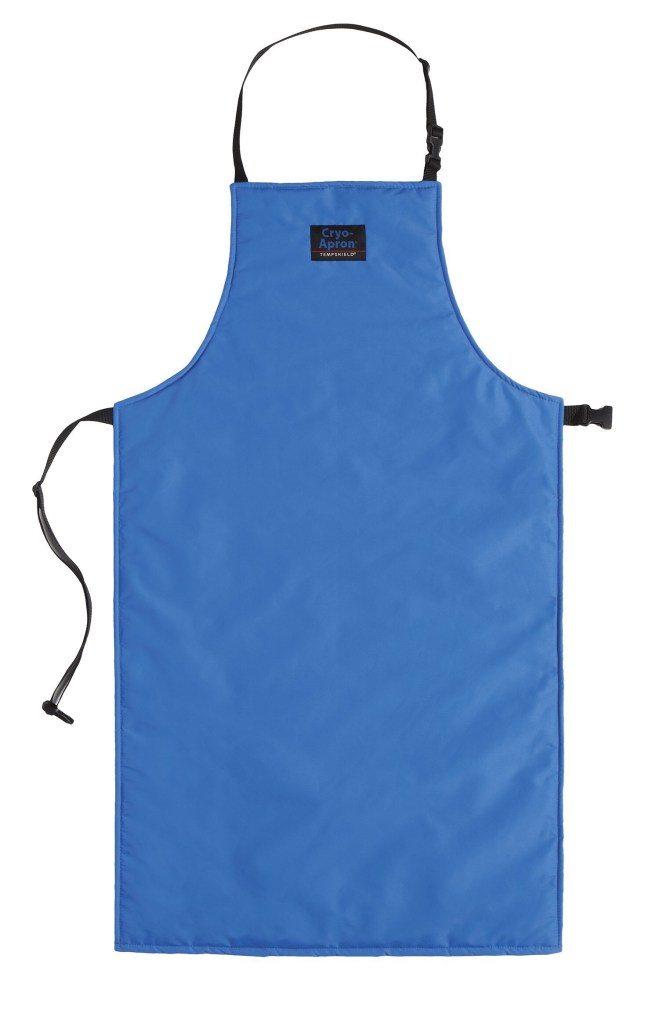
Protective aprons should also be used not only to provide protective from chemicals bit also prevent colour from getting on you clothes.
When dyeing at home have utensils that are separate from any used for cooking as dye leaves traces in pans and on spoons that can be dangerous and long term exposure may cause cancer.Use wooden or plastic spoons if possible , these do not conduct heat and are easily soaked in a bleach product to remove any stains . If you are using metal spoons always use a pot holder to stir your dye bath .The handles get extremely hot.
Dyeing can be very rewarding but you need to vigilant and keep safety in mind at all times.
Safety Measures for Covid 19
It is 2020 ! Corona virus safety is first and foremost on our minds and regulations should be in place in factories, educational establishments and your own homes.If you are teaching establish rules and regulations before students arrive so they come prepared with the correct PPE , disinfectant and their own equipment. If any student shows signs of infection postpone workshop until the proper tests have been proven negative.
Keep gatherings and classes to a minimum , of possible one on one teaching or teaching on line . Wear protective masks at all times .Be careful to use your own personal equipment , cutter, mat , sewing machine etc…. to avoid any possible contamination. Have regular periods to wash hands in accordance to Covid 19 Prevention Regulations.
Keep the rooms well ventilated and if possible windows open .
Disinfect all classroom worktops , door handles ,equipment and personal belongings after the workshop .
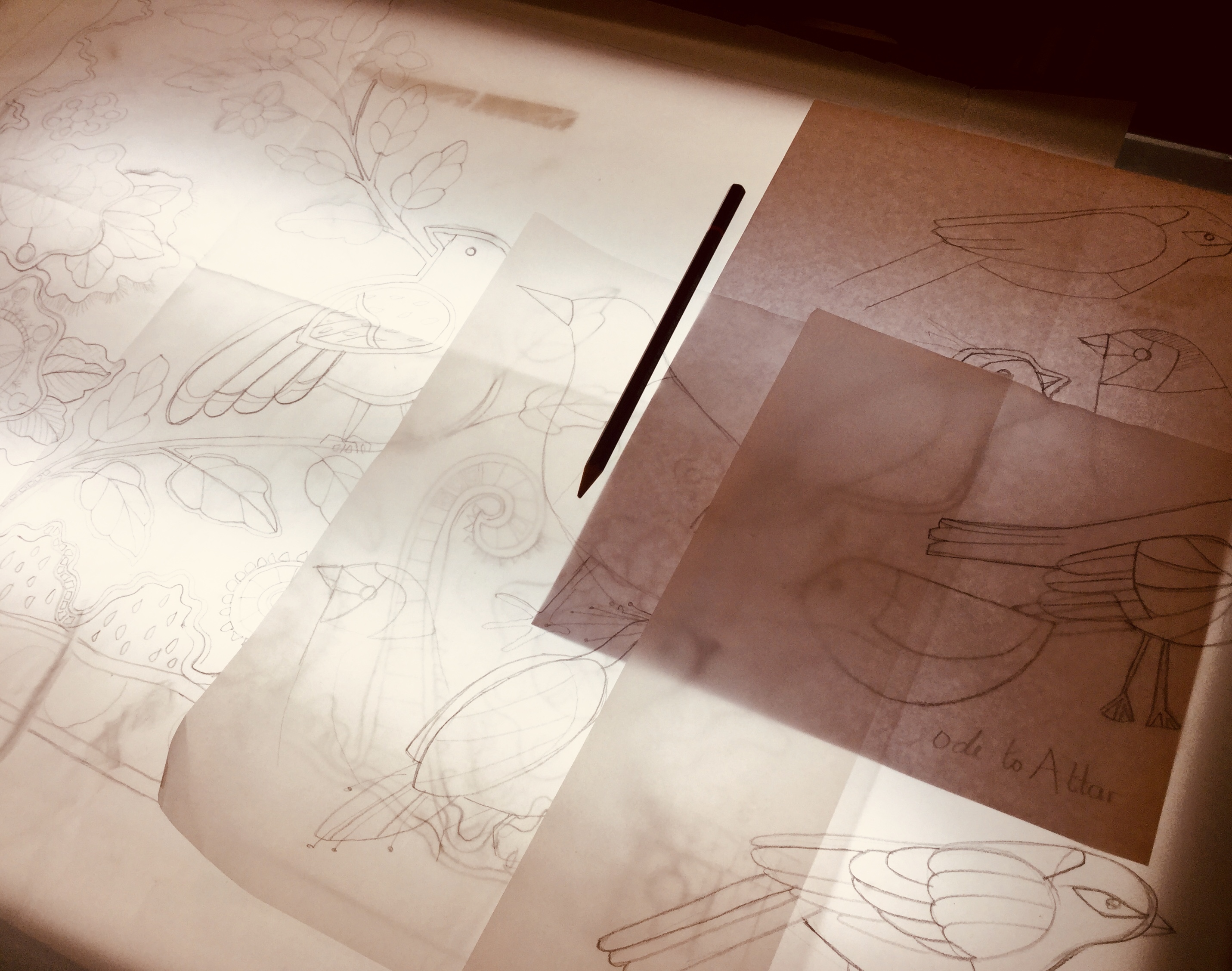
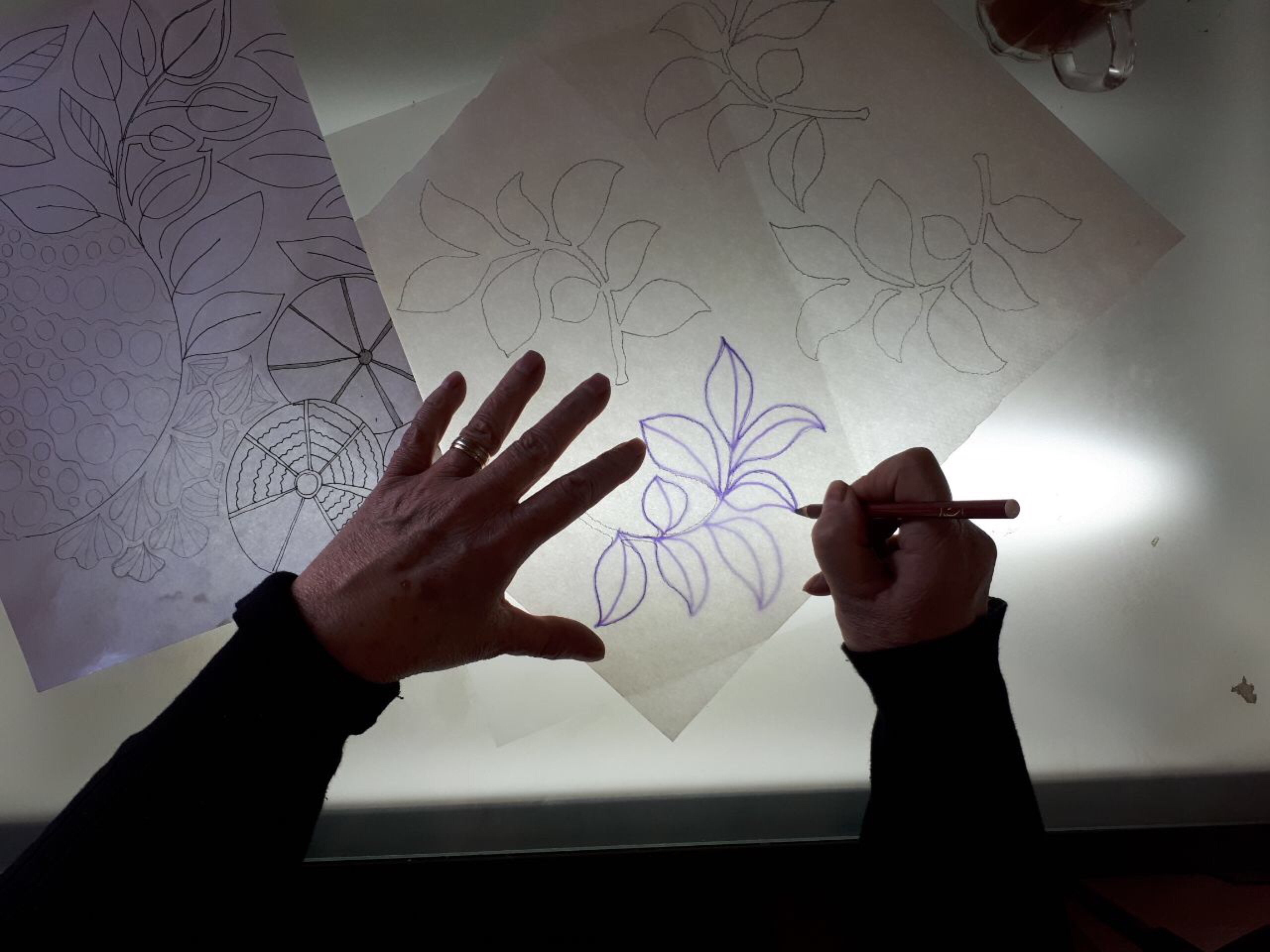
I began by drawing birds and flowers in order to get some shapes and designs that I can use later on .For me all design work starts from the drawing. With the use of App.Ollogy I can stylize and transform the … creating more drawings and designs .
Working on new designs
The Drawingboard
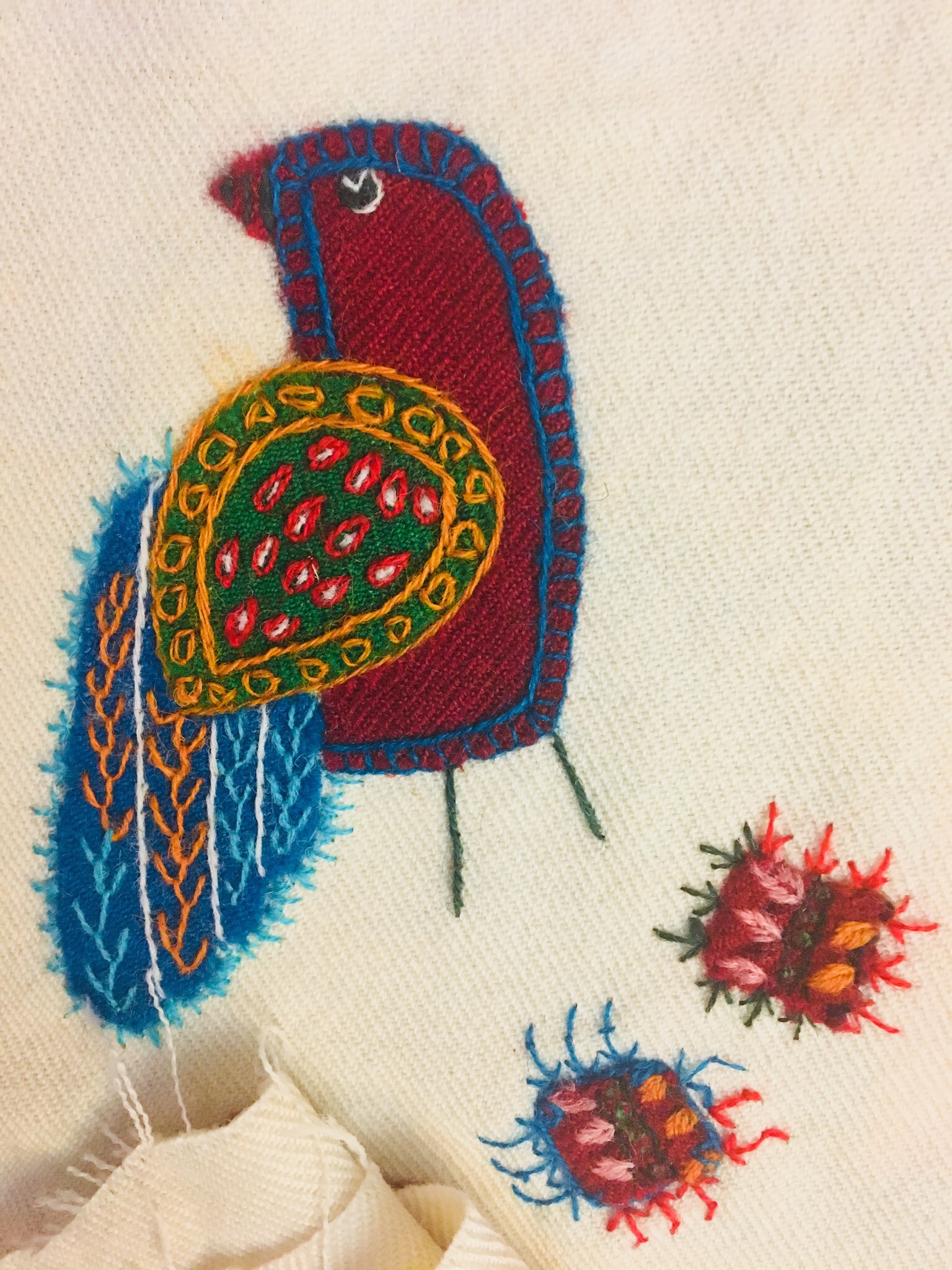
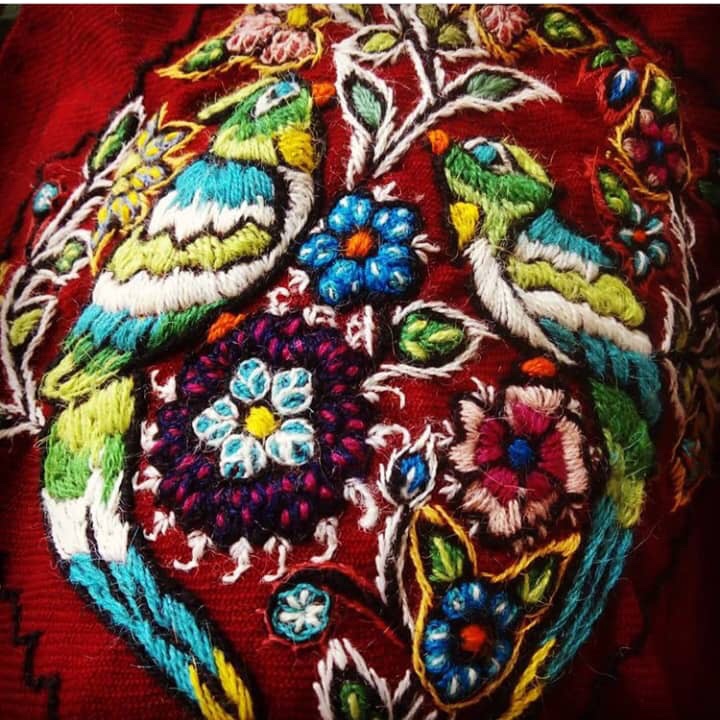
Working on birds …felted then embroidered on wool.
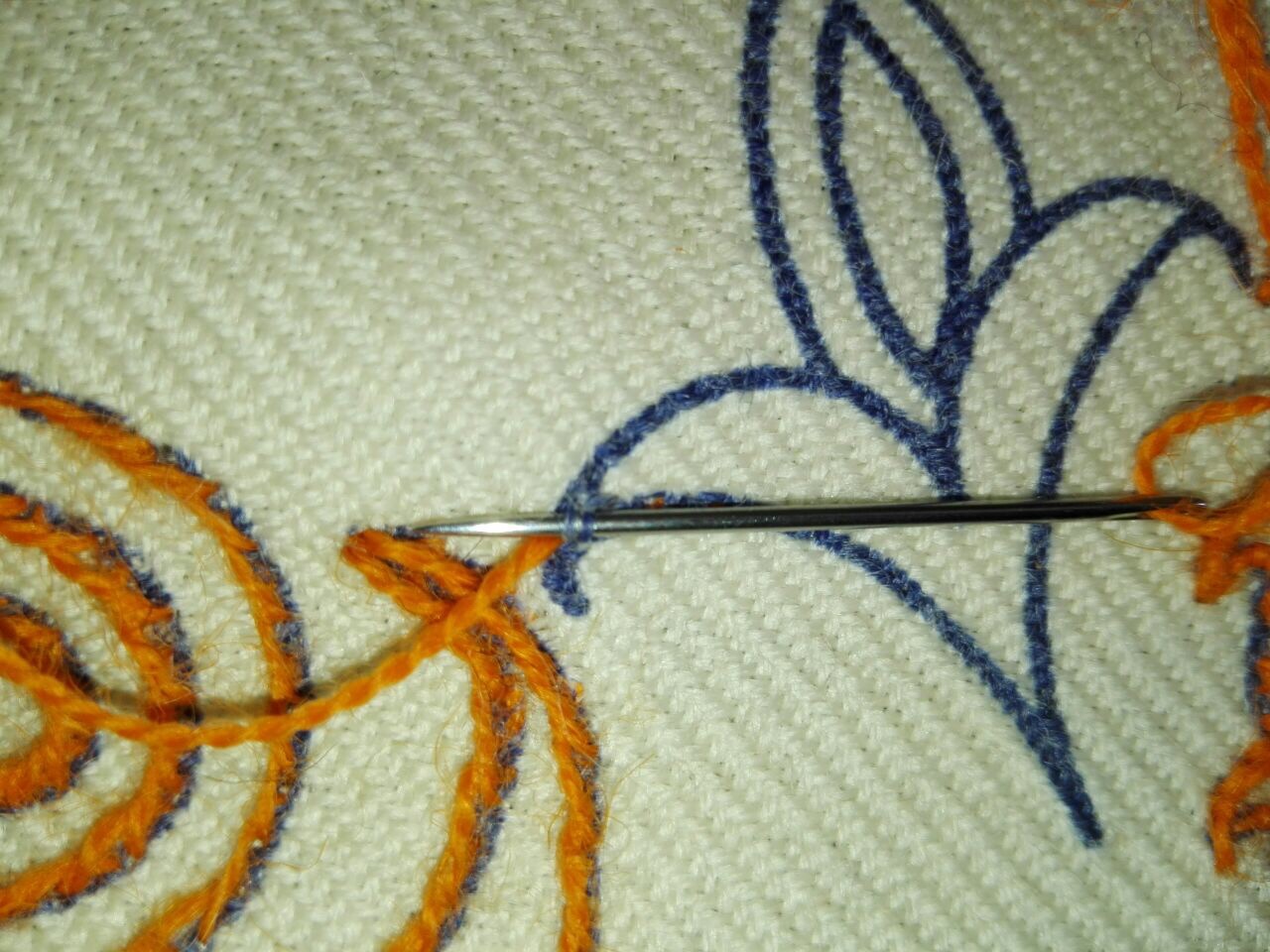
Sagheh doozi – stem stitch is usually used as outline stitch
Petk chahargoosh – a geometrical square shape
Petk Sehgoosh – a geometrical triangular shape
Ab Doozi – a long ( 1 to 2 cm ) couched stitch
Matn doozi – the use of ab doozi to fill in the background
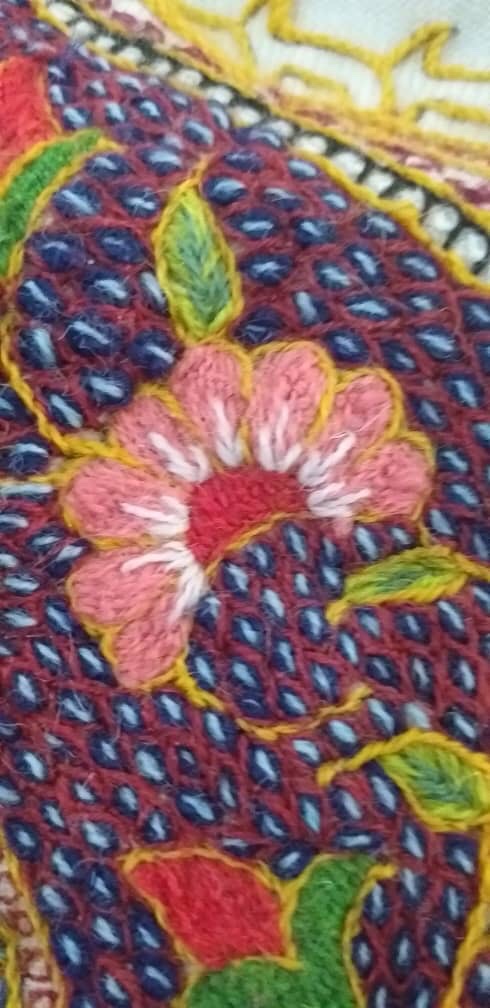
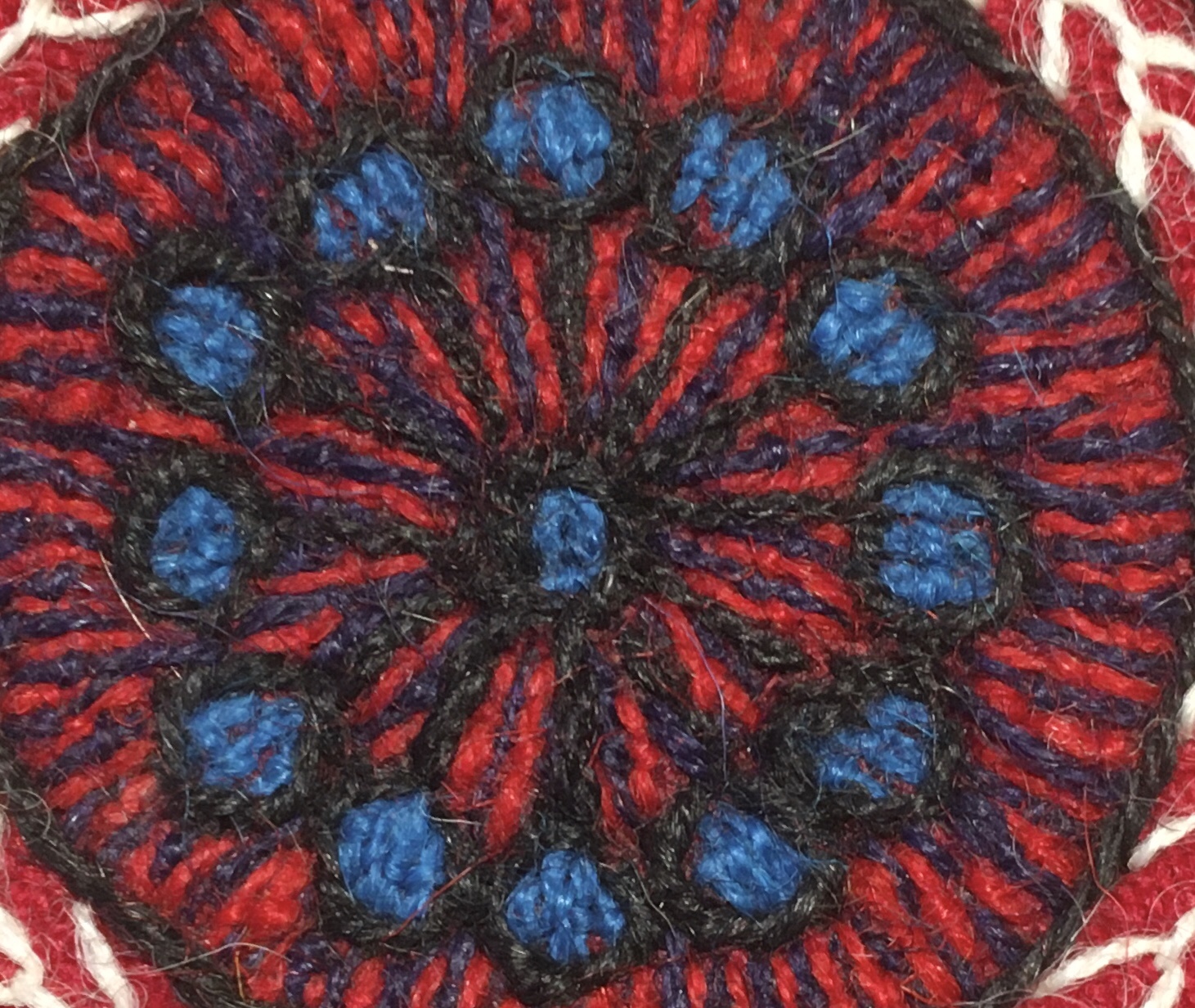
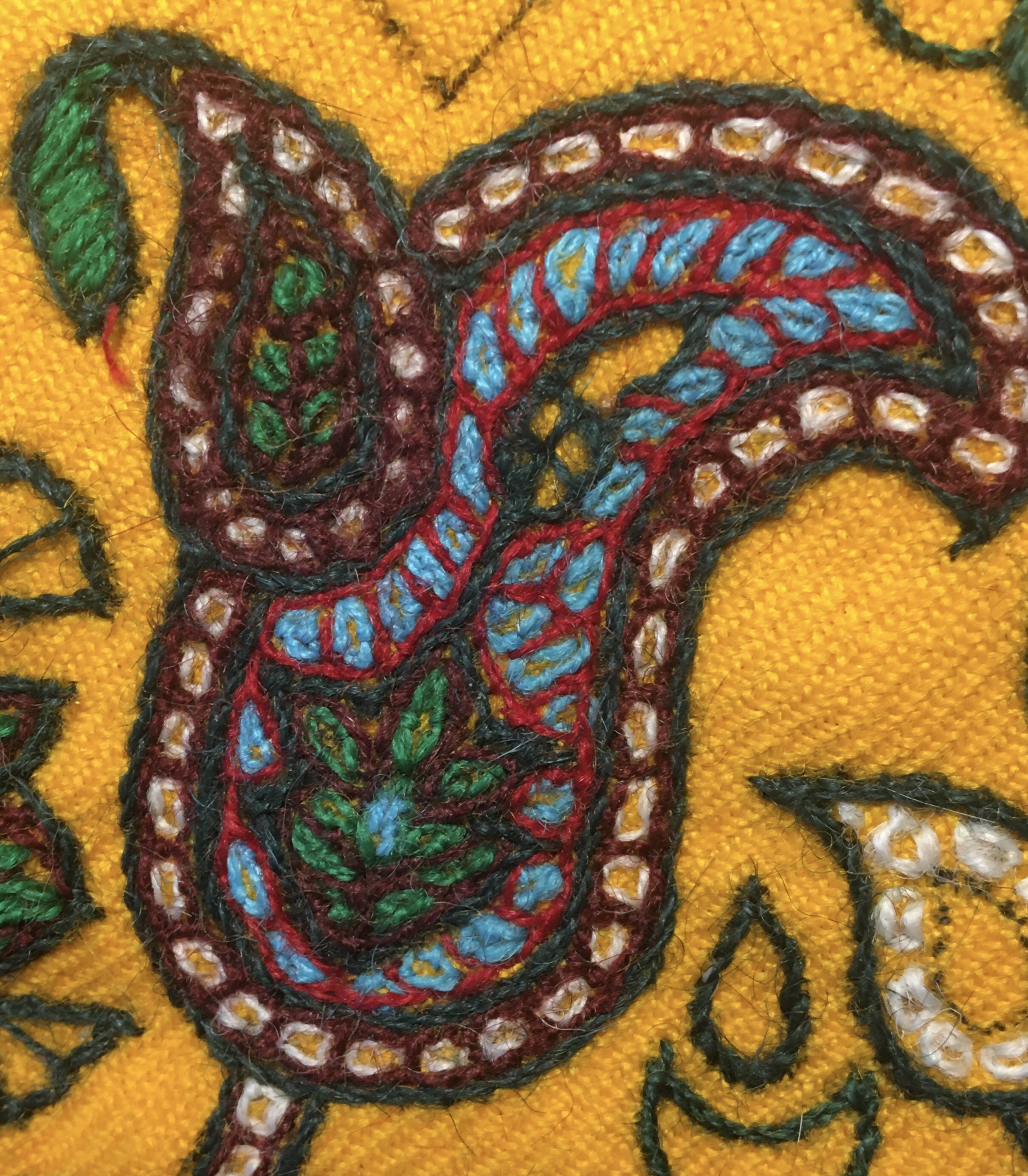
Negin doozi – jewel stitch is an intricate combination of ab doozi as to create a jewel like motif with a stitch in one colour enclosed by another on each side .
Gharjar doozi -is a combination of ab doozi creating a grid
To por doozi – fill in stitch like satin stitch
Barg Doozi – is a variety of stitches used to contour shapes
Dookht Jaadoui – magic stitch is done by twisting two yarns together and stitching the Ab Doozi stitch with them . It creates a very rich effect. For instance , making the first couch stitch in red and filling in the background with blue creates a purple effect .Twisting red and blue together and doing all the stitching with both creates the same but at twice the speed! It is considered cheating but personally I love it !
Petk chahargoosh/saghe doozi/to por doozi
Negin Doozi/the spots
Petk Chahargoosh/ negin doozi
To por doozi/ barg doozi
Ab Doozi
Gharjar Doozi
Sagheh Doozi/ stem stitch
Magic stitch
Stem stitching comes first
Negin Doozi
There are a variety of stitches been added to modern pateh doozi by younger and less traditional stitchers like feather and rope stitch. The modernization of Pateh Doozi is causing concern for some traditionalists .’Fantasy’ stitches, colours and designs as they are called are creeping in. Like most things in Iran , people are on the defensive when it comes to change but there have been several renaissances due to various factors like economics and the market place to political factors. For instance , there was a great Pateh renaissance in the Pahlavi era as Farah Pahlavi, the late Shahs wife encouraged and supported arts and craft revival . My own personal opinion is that change is good and progress happens as long as we understand and respect the crafts history and recreate it with the same quality of workmanship . The craft has exploded during the last year and many young stitchers are appearing with the spread of Instagram . They are making little cottage industries selling their crafts and the equipment for it as well as teaching on line. Items from necklaces, tissue boxes , hand bags and purses are being made , even shoes. It is incredible ! A new respect for the crafts is appearing and long needed and it can be a great source of income and support.
The Fabric & Yarns
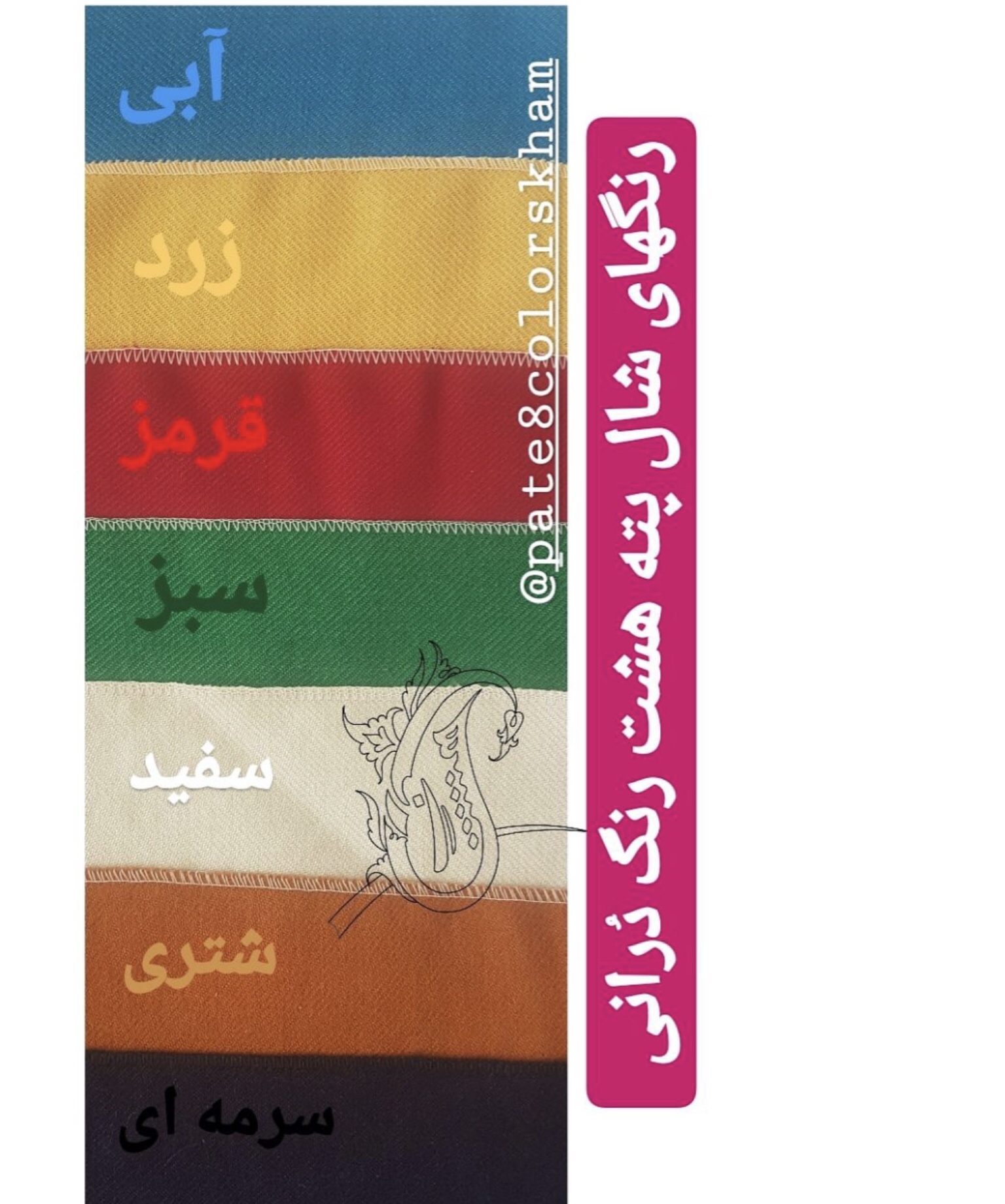
The wool ariz is a locally woven fabric usually woven at 90cm wide and you can buy it by the metre. It comes in red and white , turquoise, saffron, navy blue and green. It is a twill weave .This has alway puzzled me as it is not a stable fabric and can be pulled and distorted on the bias very easily and therefore it is practically imposing to embroider straight lines on ! But On reflection, maybe straight lines are few and far between ! It is a medium weight fabric and easily embroidered on .It has a great handle and very pleasing to work with .
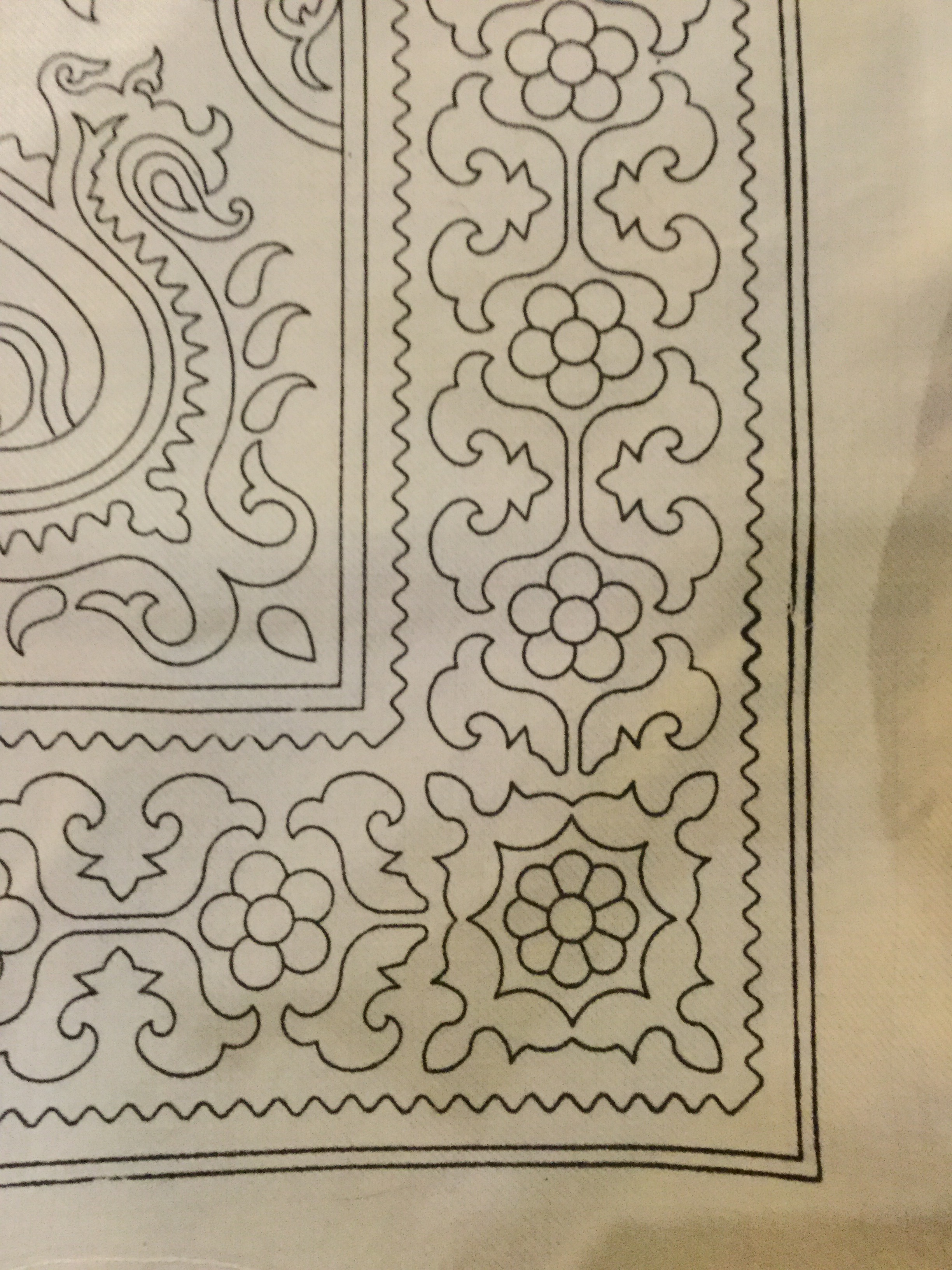
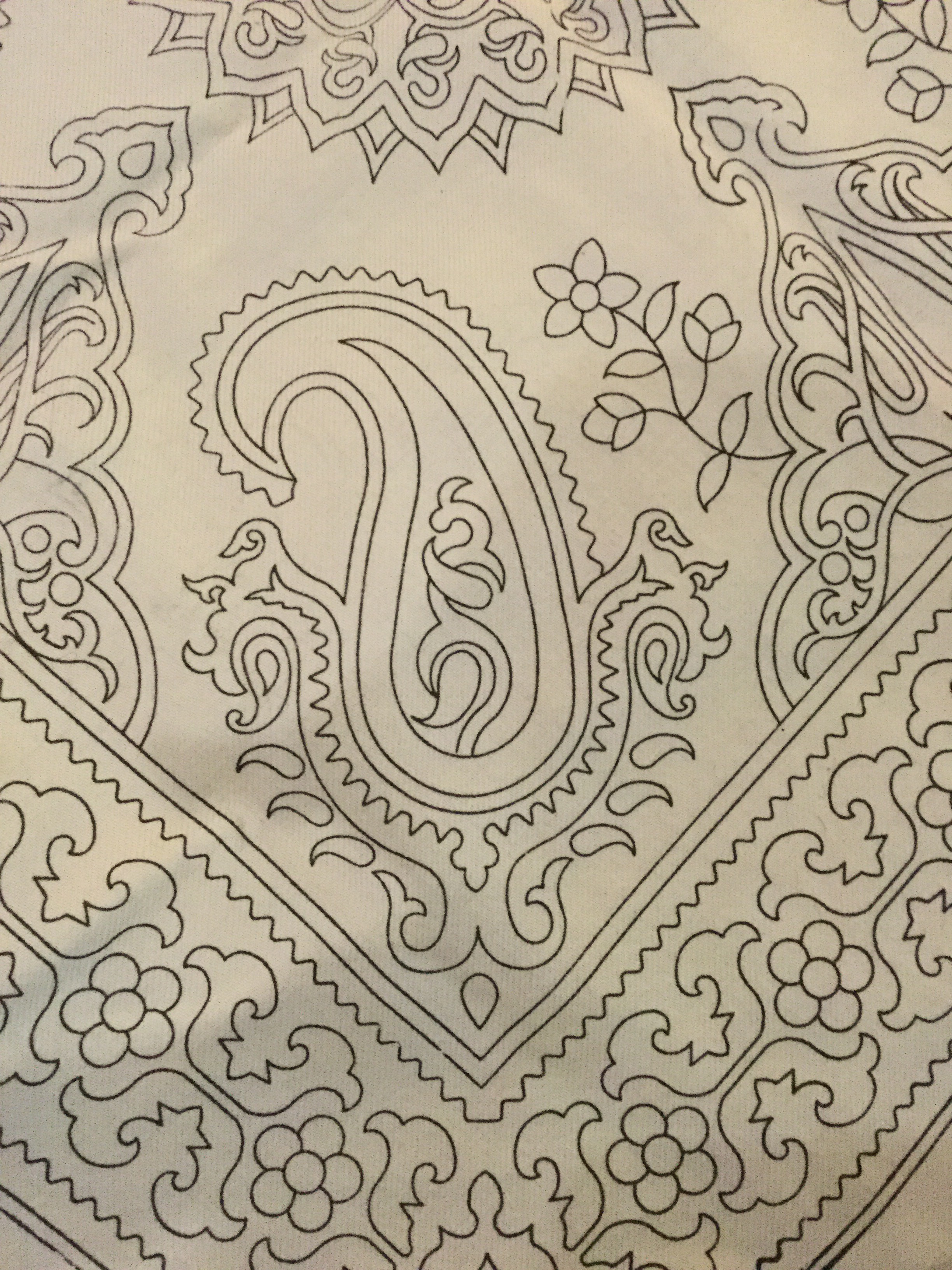
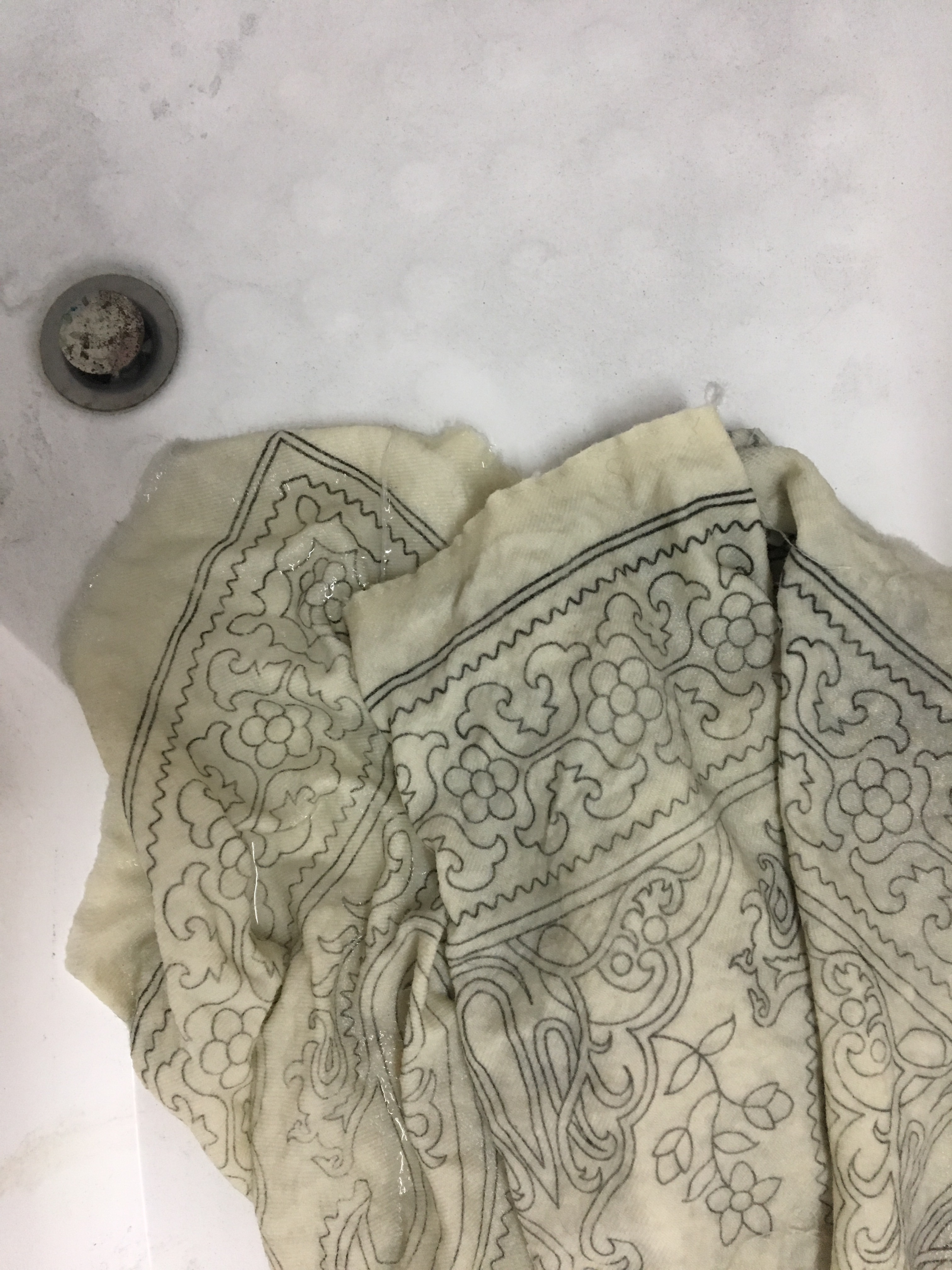
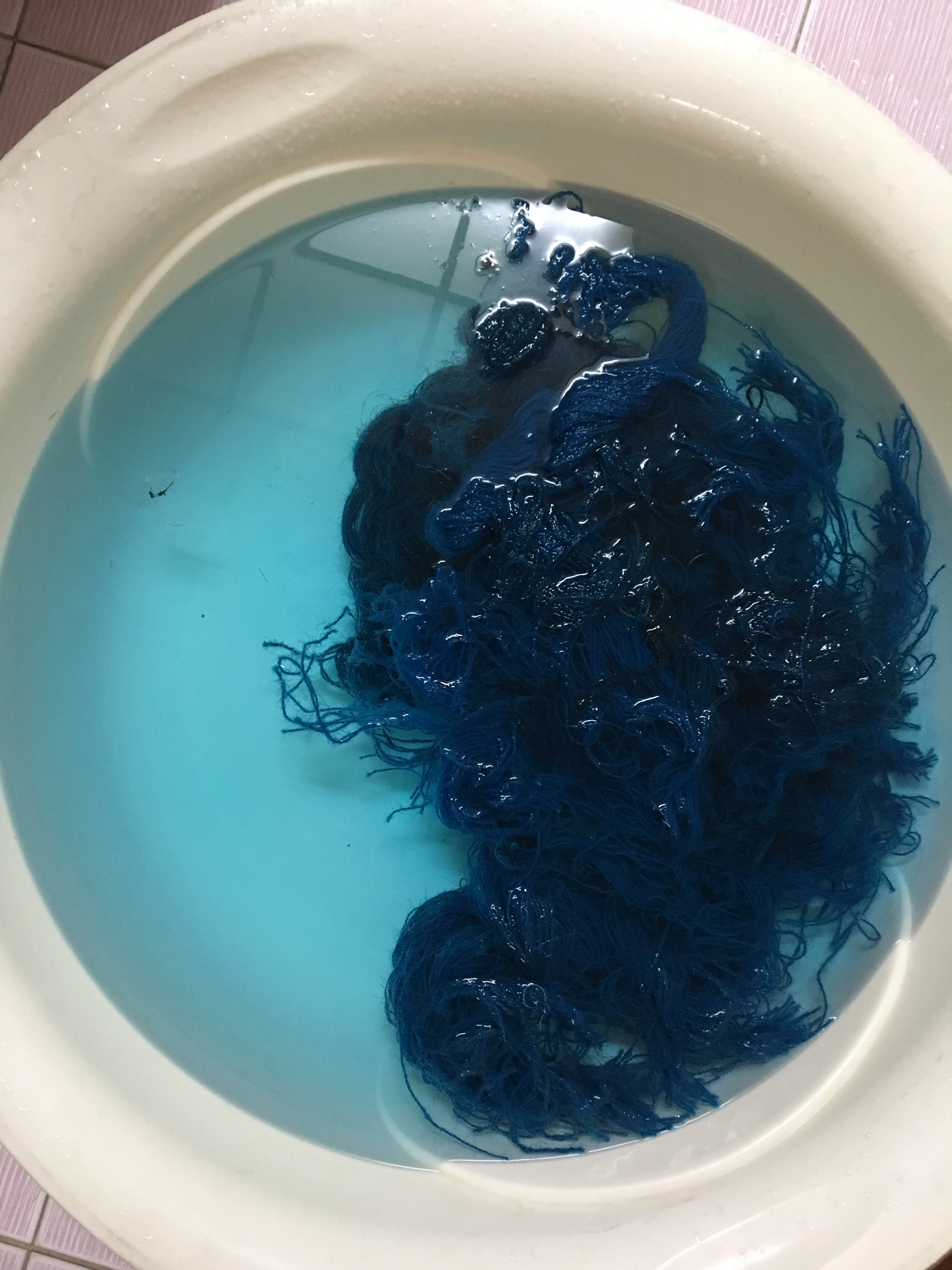
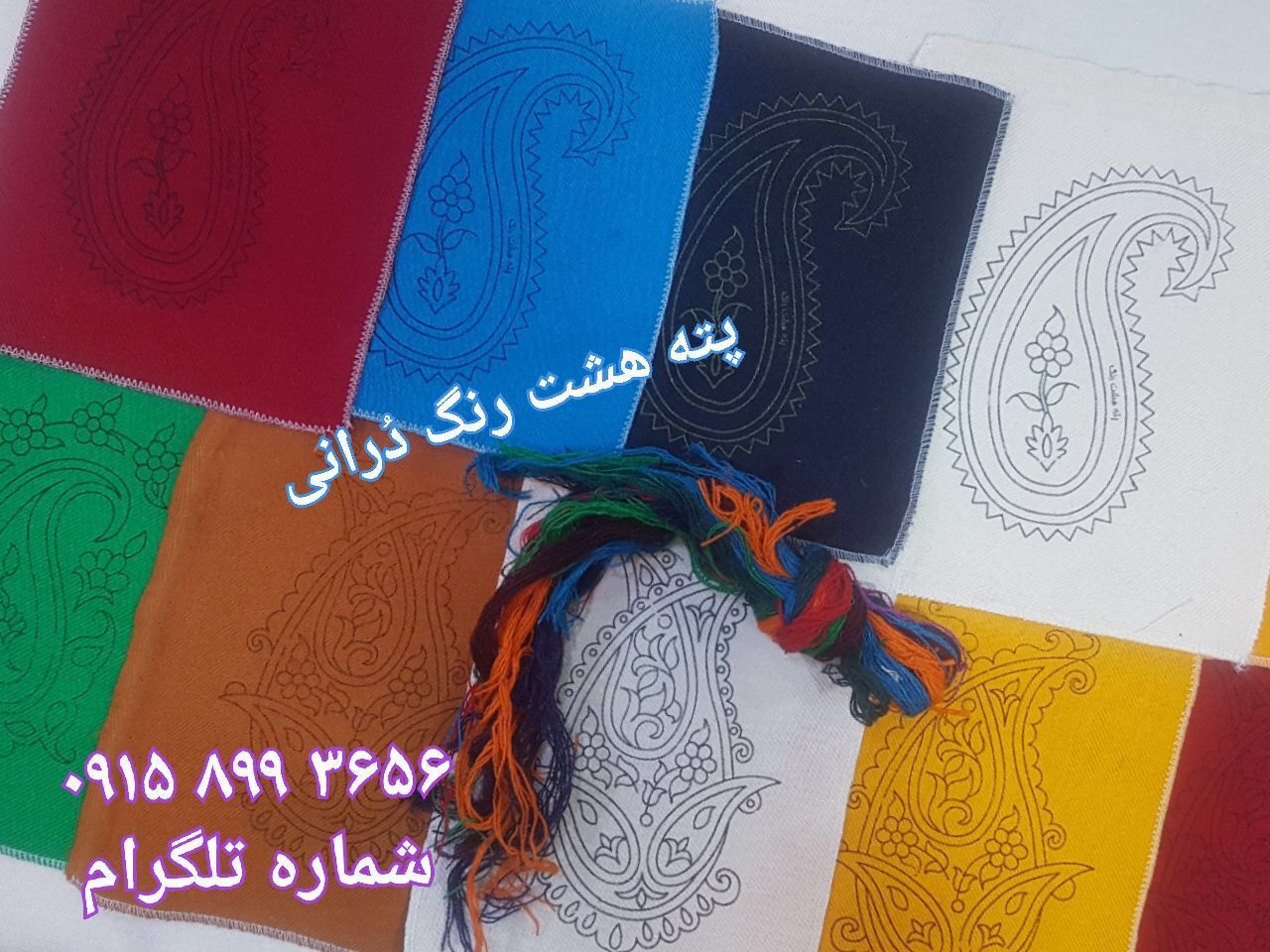
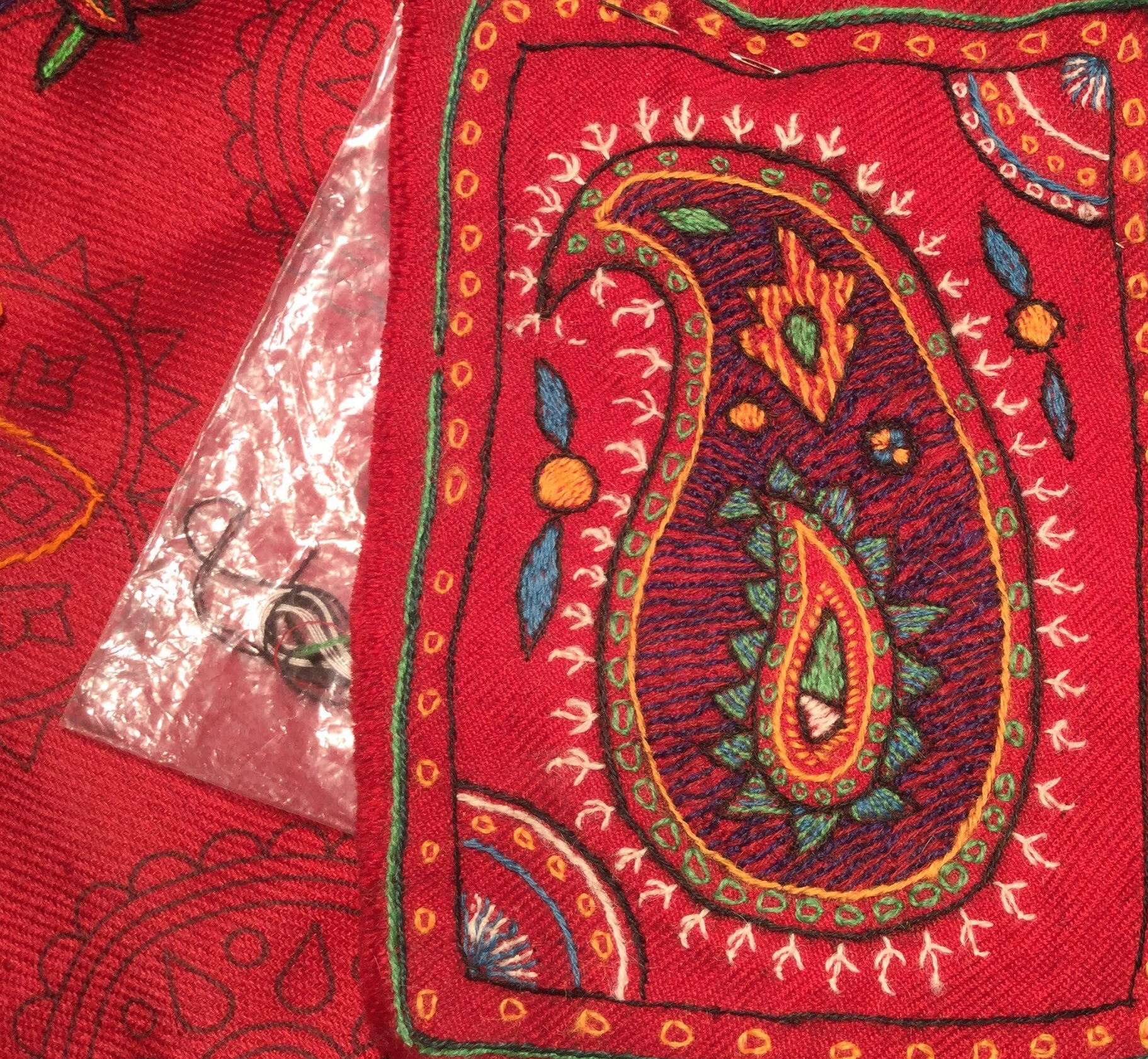
Packs are available in assorted colours and yarns from suppliers in Kerman . The designs are printed onto the fabric ready to sew. In the past the designs would have been transferred either freehand or with a stencil marked with charcoal. It is appropriate to wash both the fabric and the yarns before use. The black ink tends to spread during stitching so it is best to wash away the excess before hand. The yarns may bleed dye so washing before use will prevent running when the piece is cleaned.
Design printed on arriz shawl
Washing the printed fabric
Washing the yarns
Using fabric softner for final rinse
Traditional naturally dyed colours
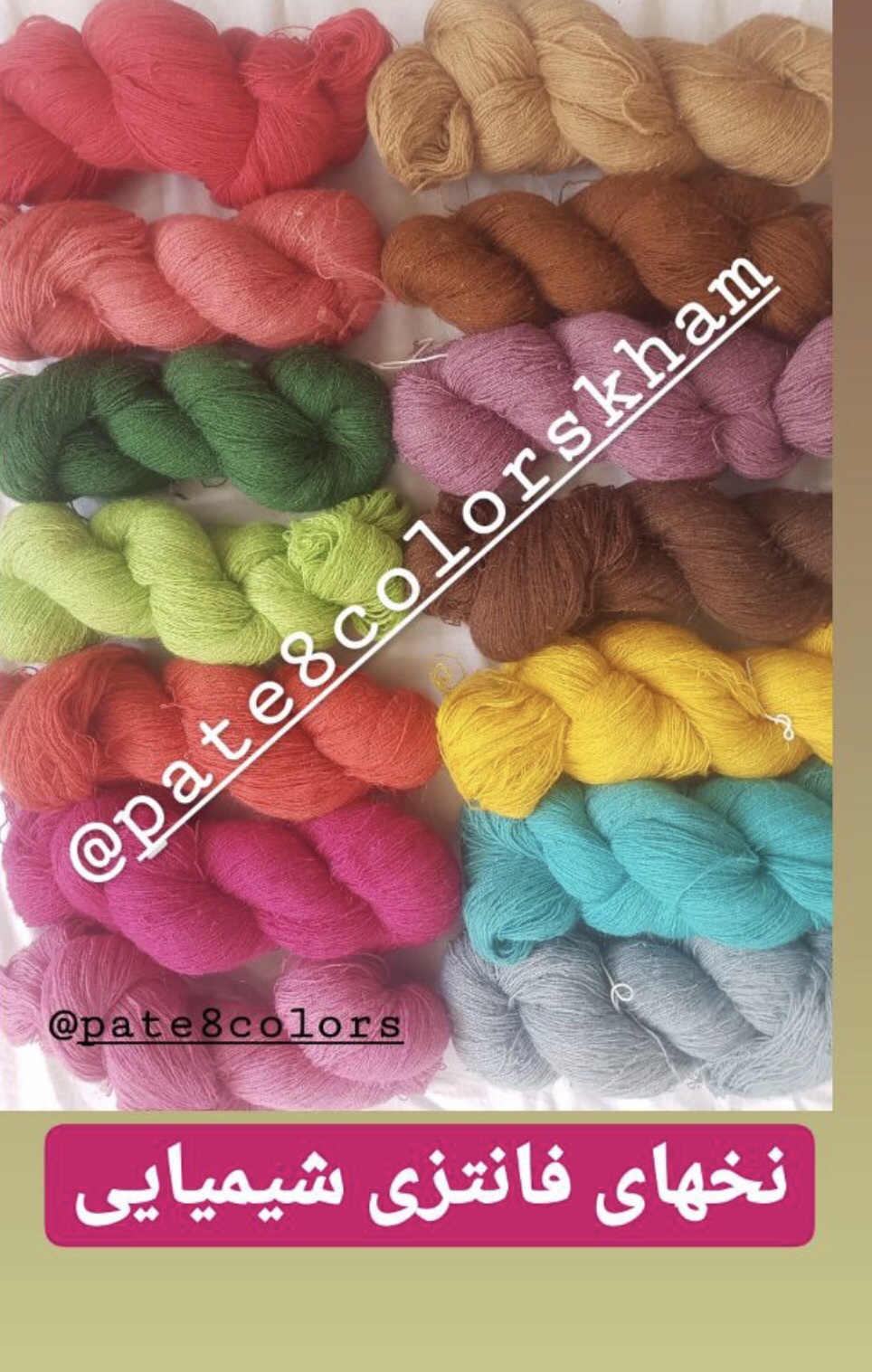
Traditional chemically dyed colours
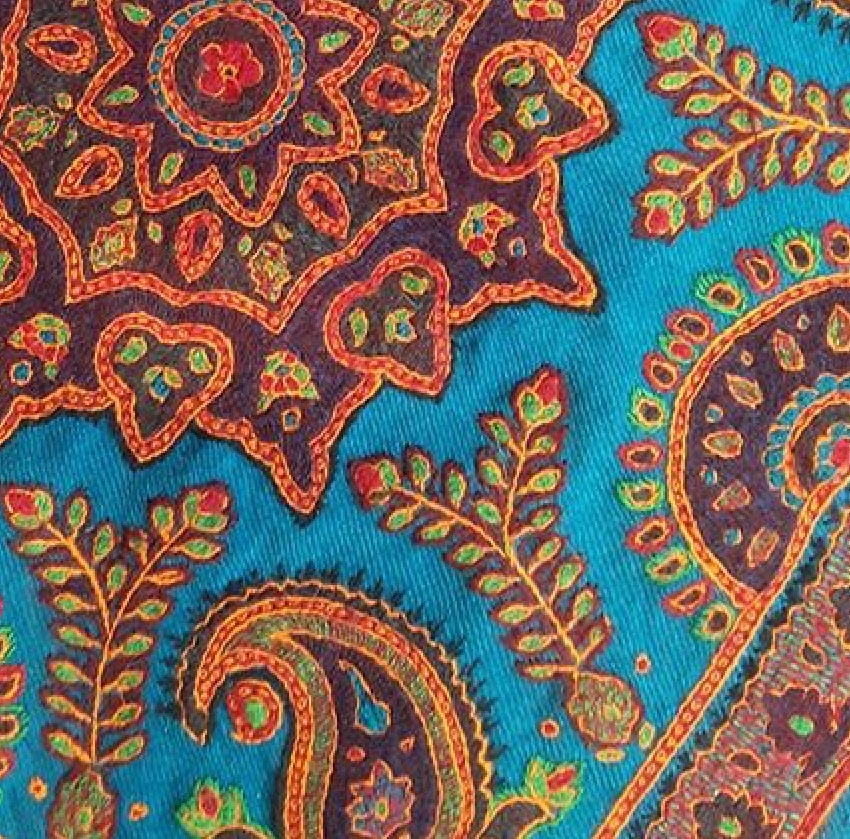
Fantasy naturally dyed colours
Fantasy chemically dyed colours
Background colour choice
Packs
The Designs & Motifs
The designs are divided into four categories, Flowers and Florals , Geometrical, Katibé or Cornice and Birds .
1 – Flowers and Florals : Gol va Boteh designs are flowers including Shah Abbasi flower motif from the lotus flower, water lilies ,carnations, sunflowers and iris.They are incorporated with the Boteh design which is the shape we have come to know as Paisley.
Eight petal flower / pre islamic motif
Carnations
Antique Pateh/ sunflower motif
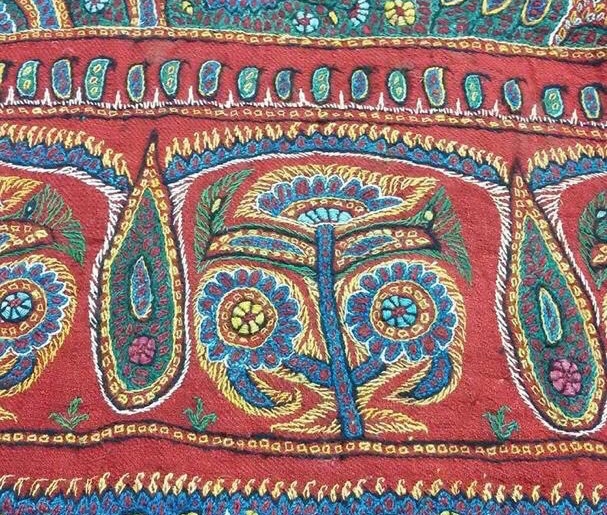
Contemporary Floral Pateh Doozi
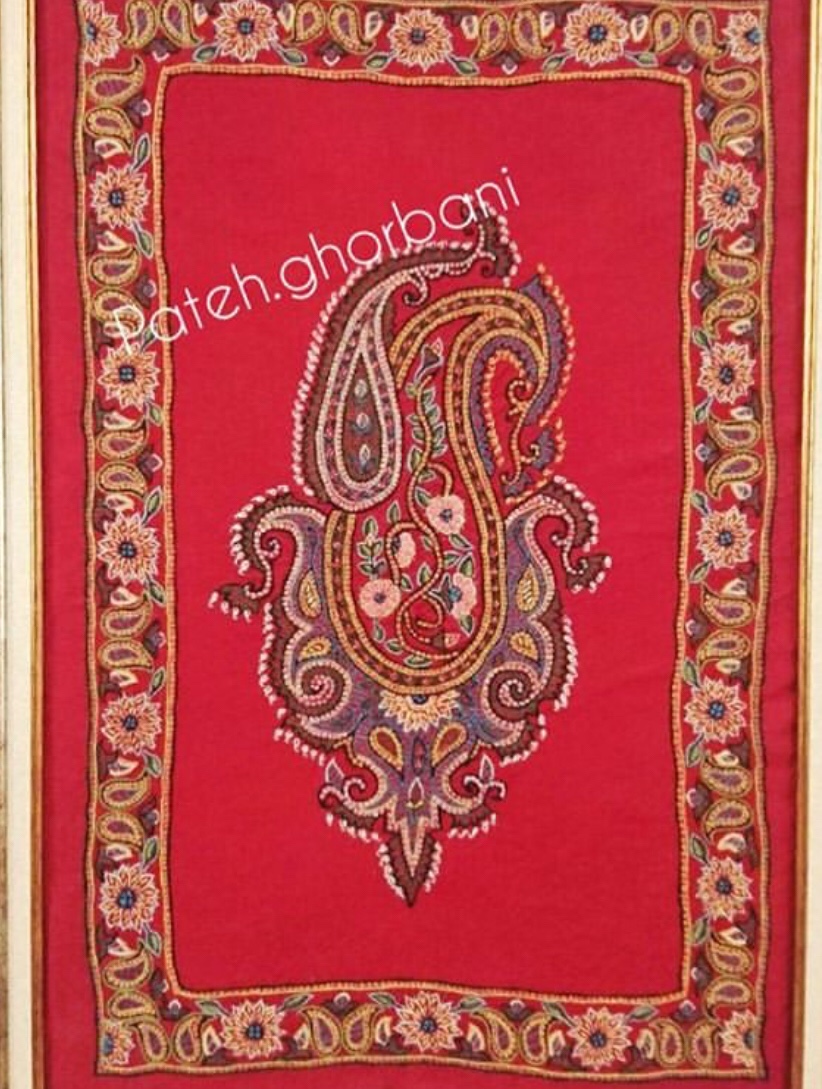
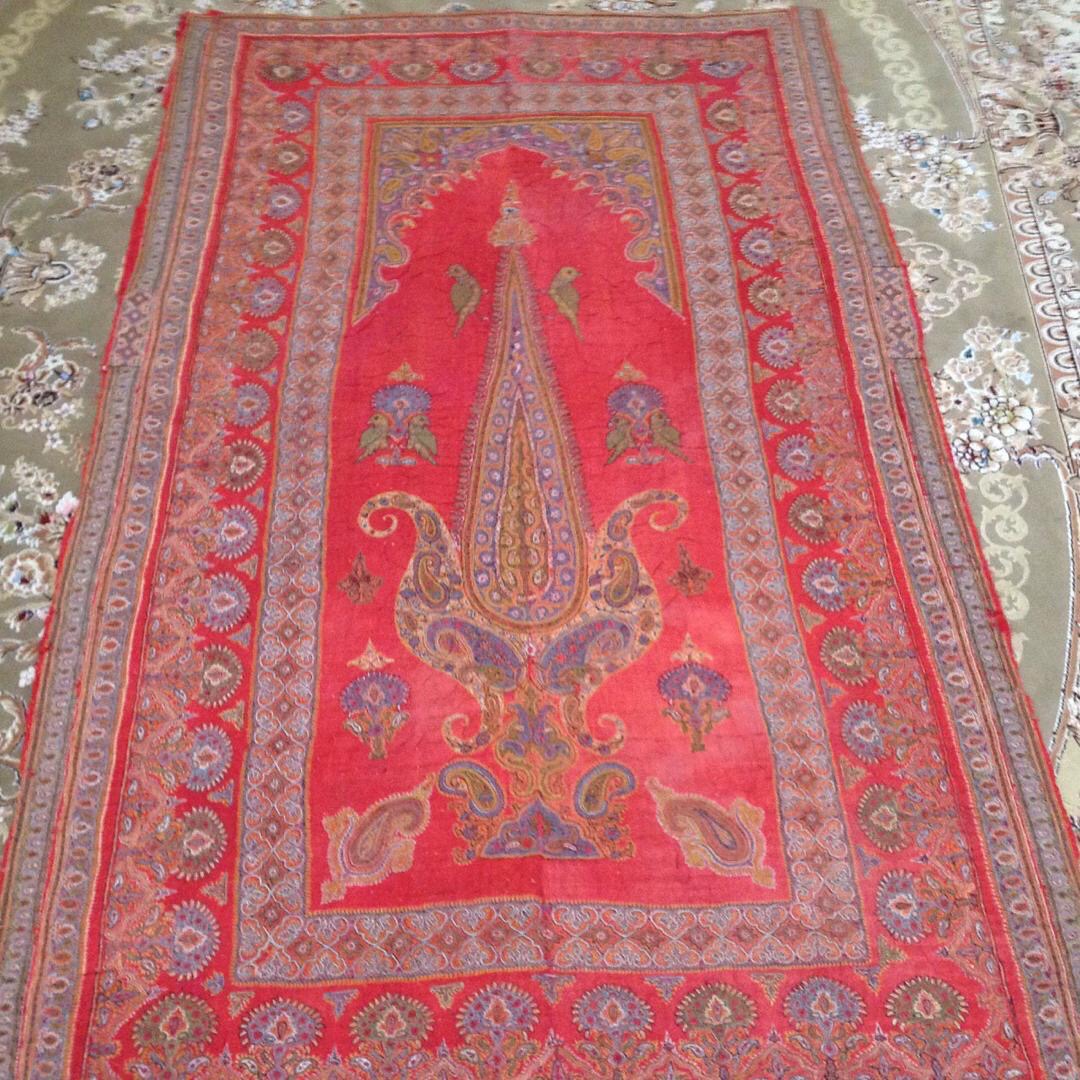
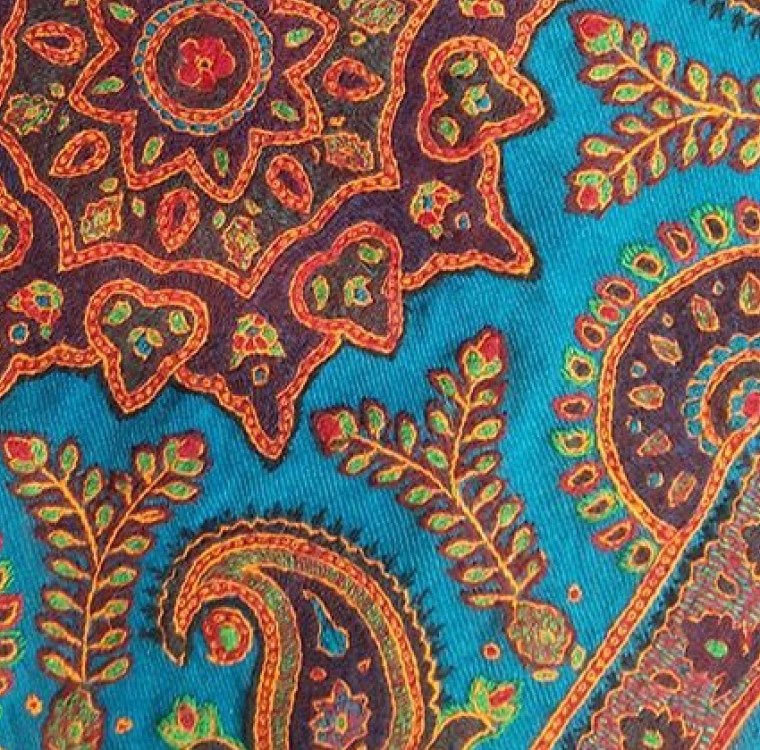
The Boteh design originates from the pre islamic design and motifs of a cypress tree . It has taken on a curl at the top over the years but used to be straight. it can still be seen in designs for prayer mats and is called Boteh Badaami which means almond shaped. This shape comes in various configurations , one of which is Mother and Child which is a large Boteh and a small one in arms as it were. There can be more than one child Boteh on the design . There is also. Boteh Motif called Ghar va Ashti which means to sulk and to reconciliate ! They are usually back to back or all facing in a one direction repeat. Botehs can be used in the border designs . There is also a motif which shows the smaller Boteh inside a larger one which means God and the inferior Human .
Boteh Badaami
Boteh with a curl
Boteh Baadami
Antique Pateh from the Ghajar period with Mother and 2 Child Botehs
Mother and Child
Mother and Child
Ghar va Ashti Botehs
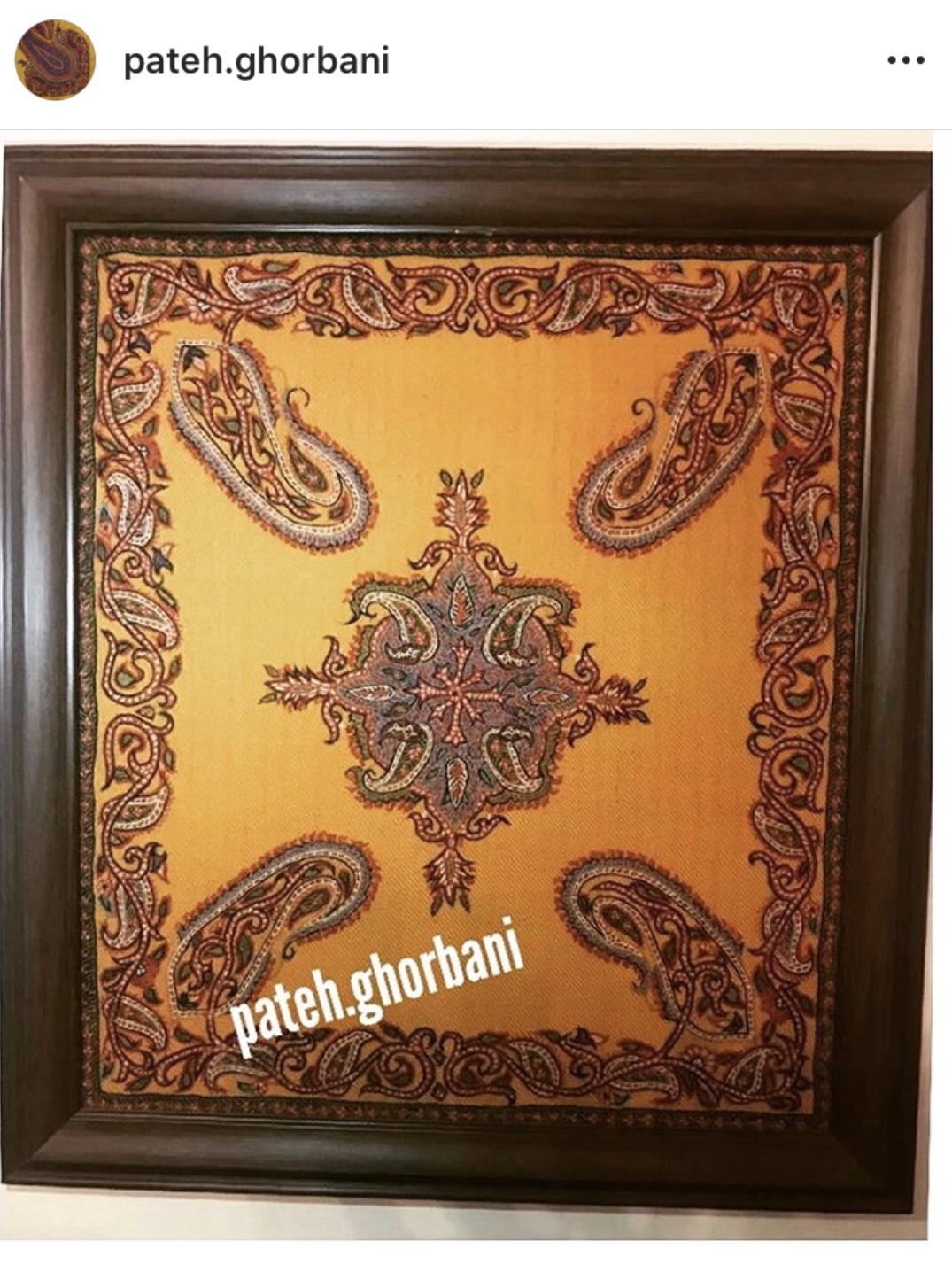
Traditional Design stitched by Dastineh / Botehs in the corners surrounding a toranj motif in the centre
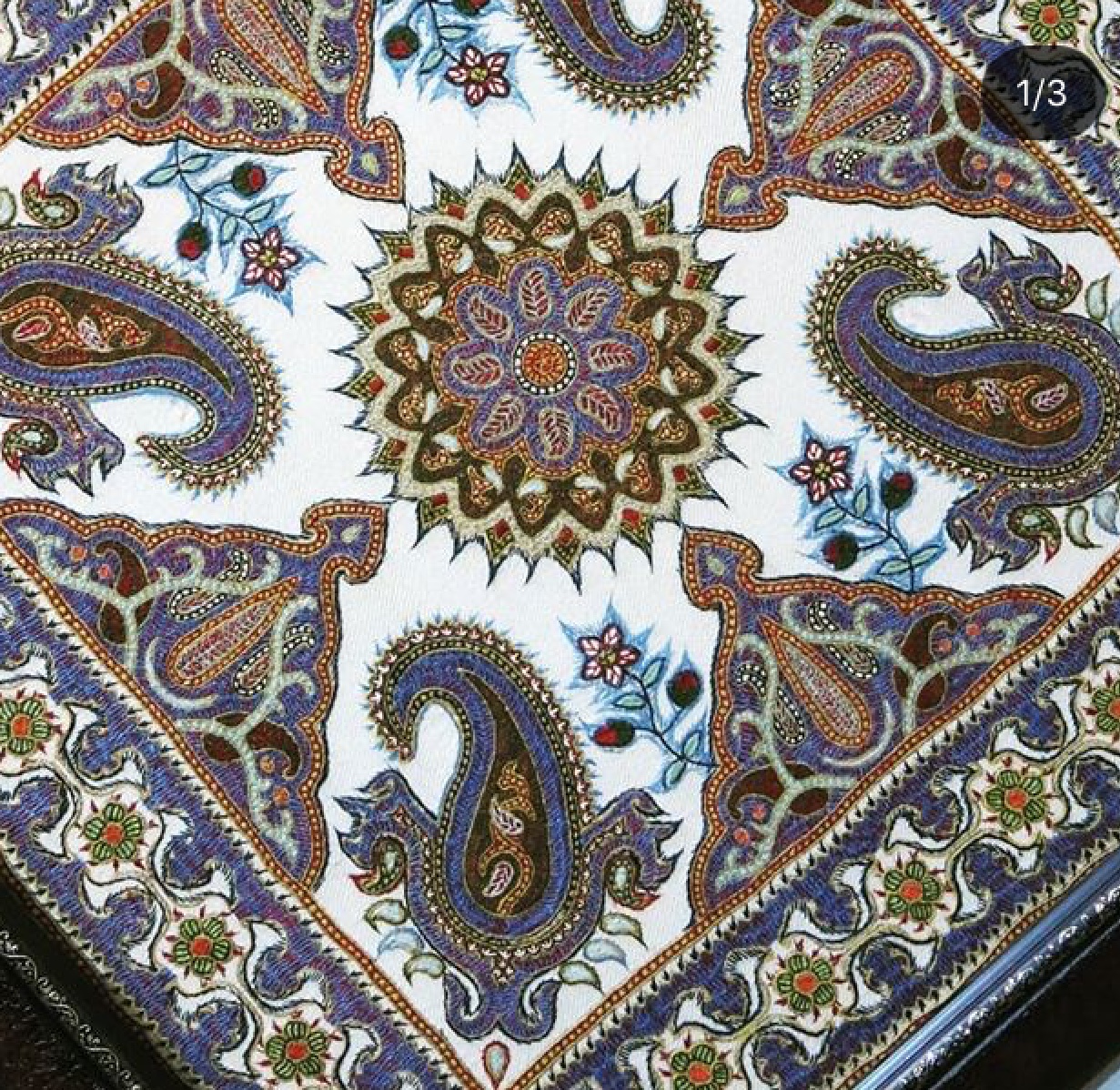
Traditional Design with naturally Dyed yarns stitched by Dastineh/ Botehs in the corners surrounding a sun mandala in the centre
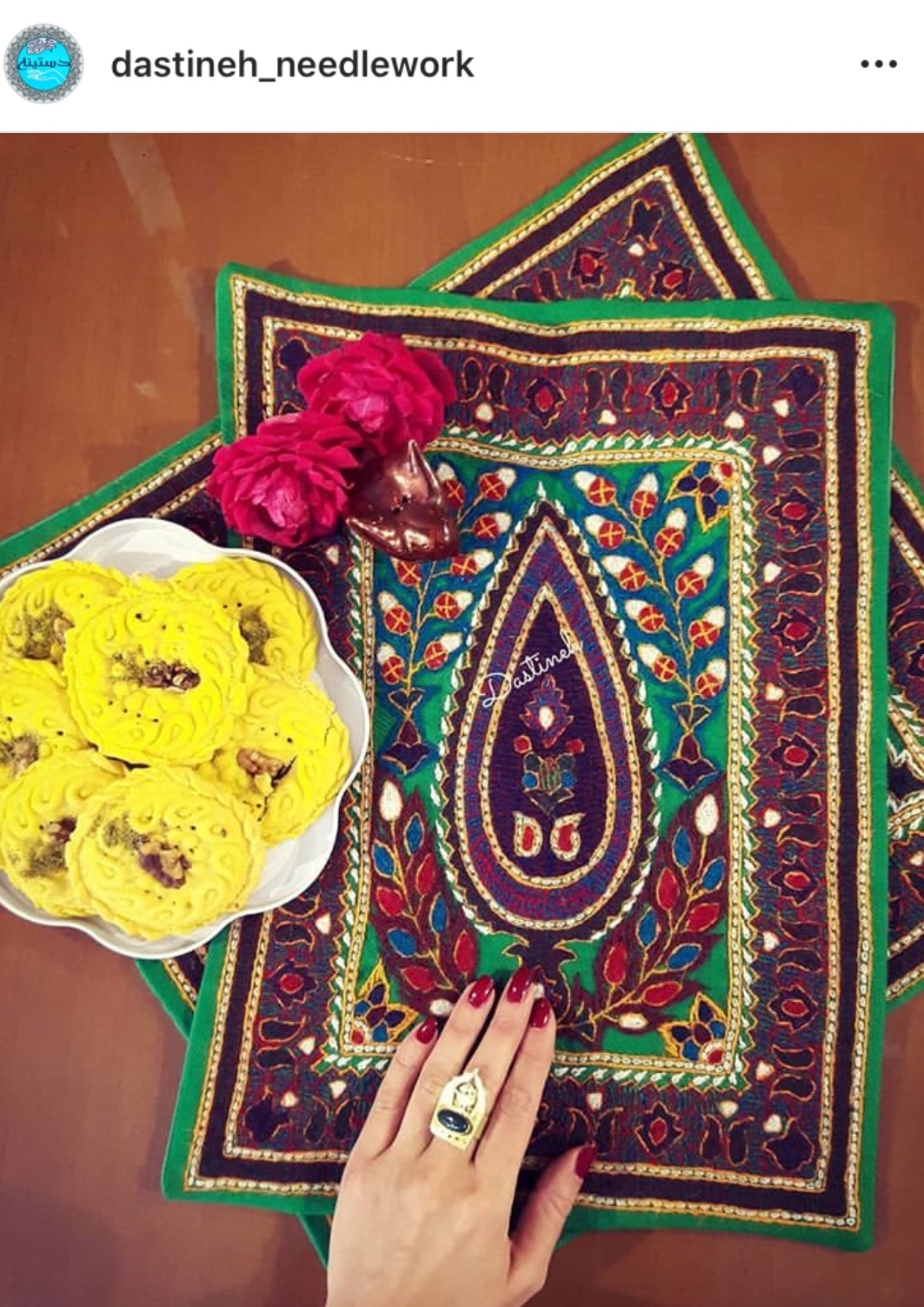
Traditional Design stitched by Dastineh with Botehs in each corner
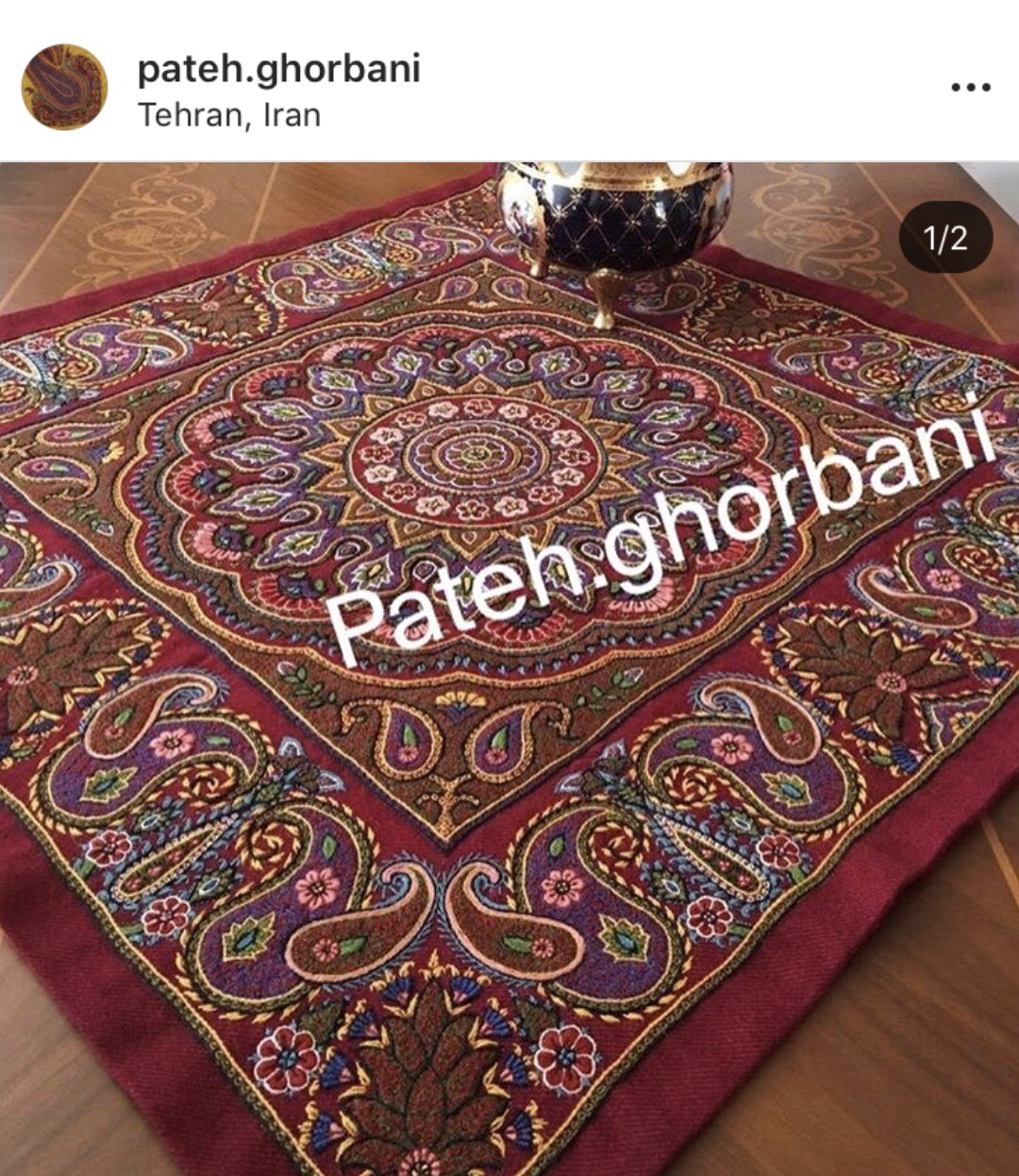
Traditional Design stitched by Fatemeh Ghorbani
Border designs with Botehs
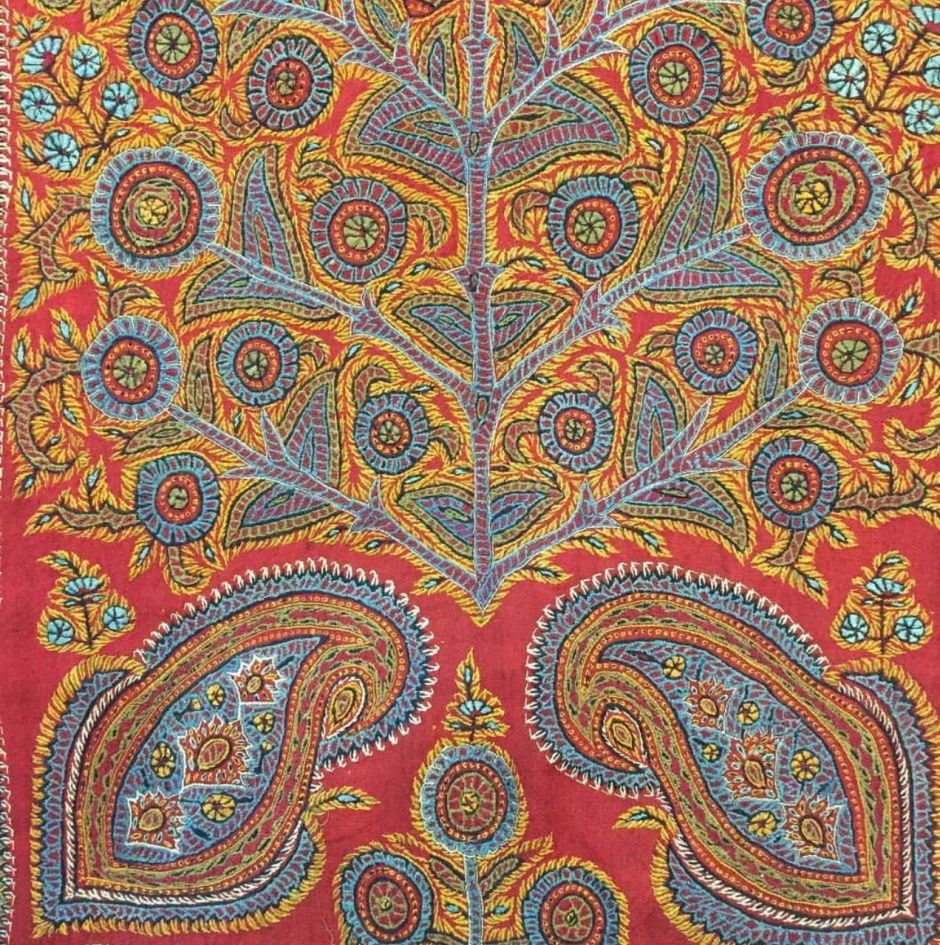
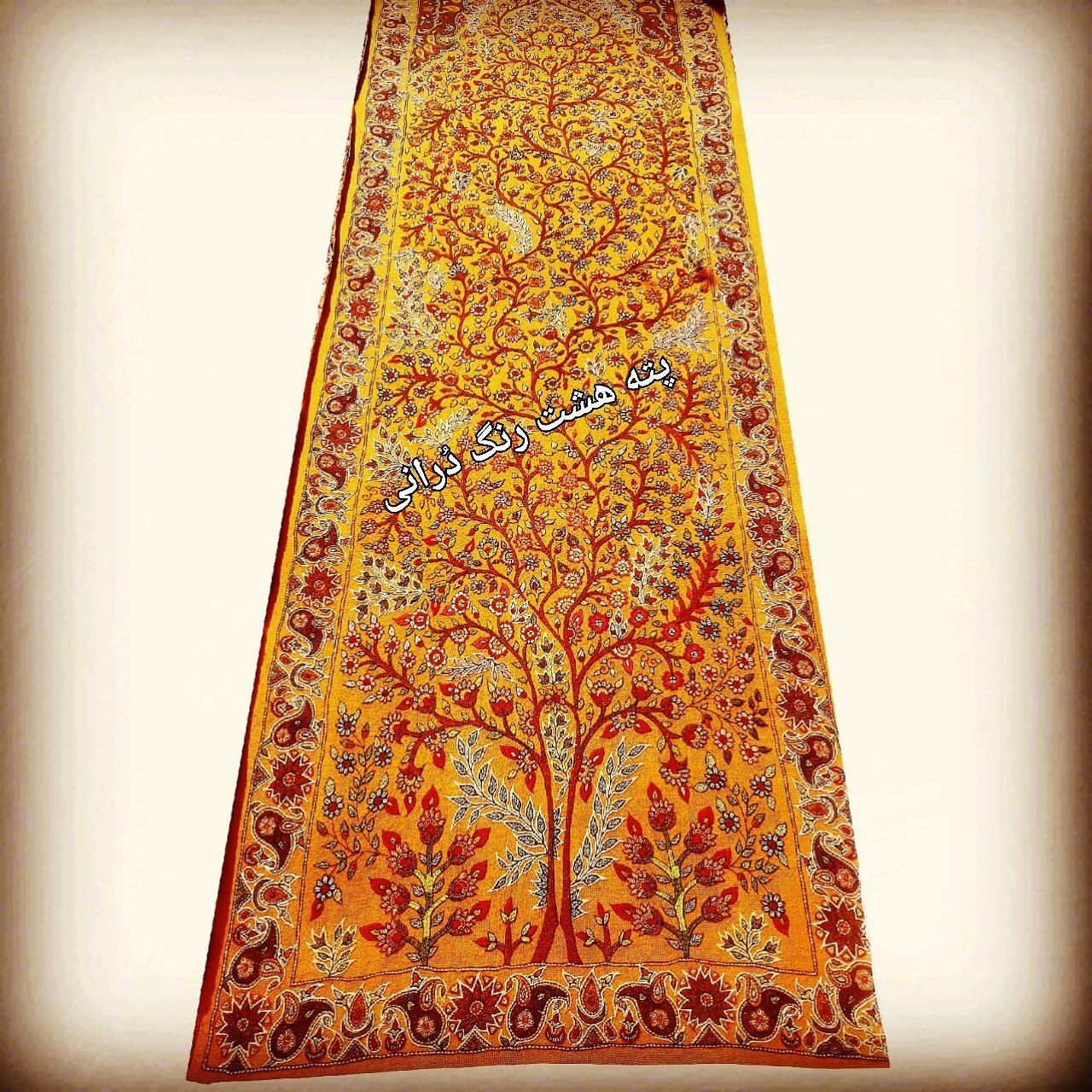
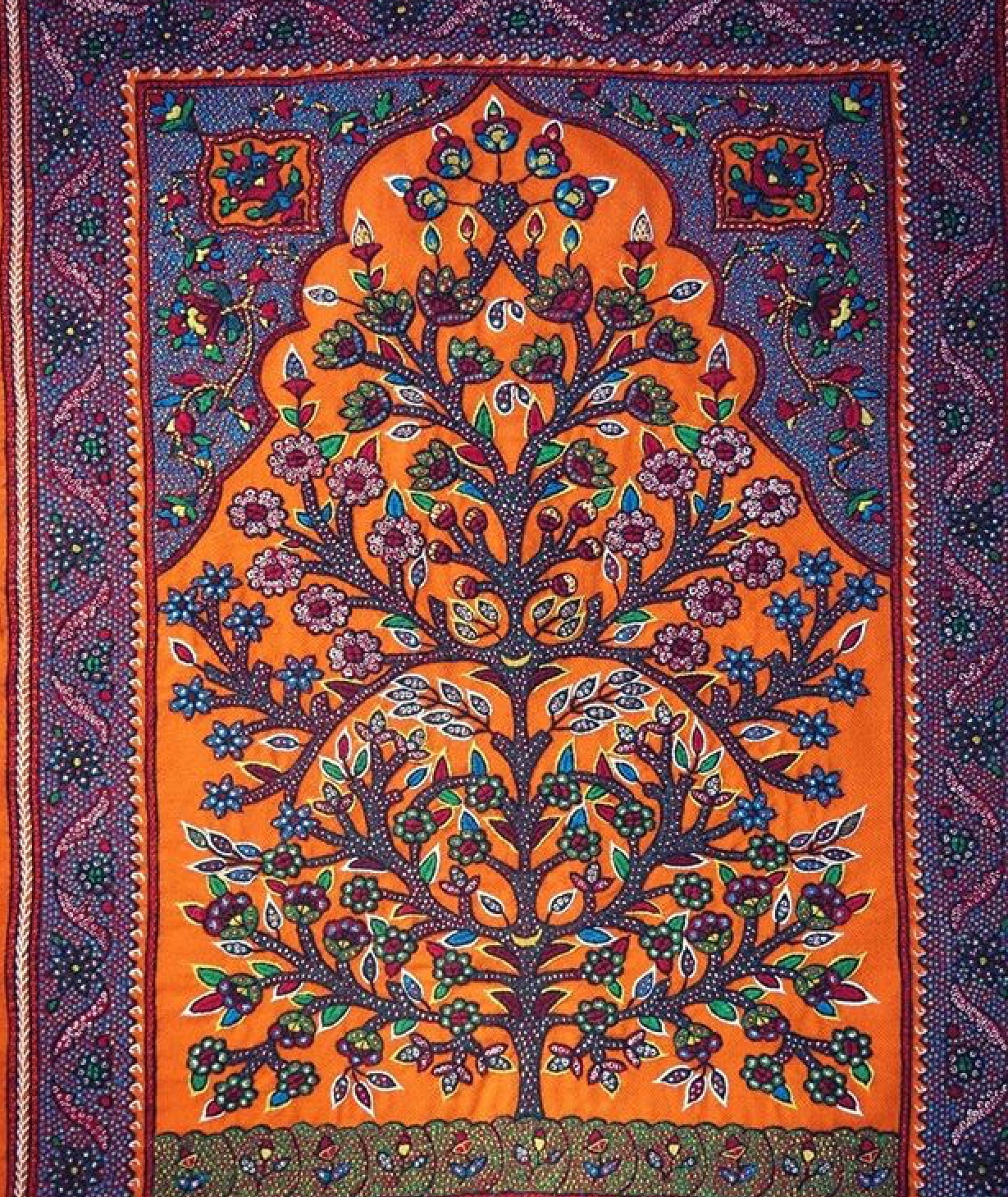
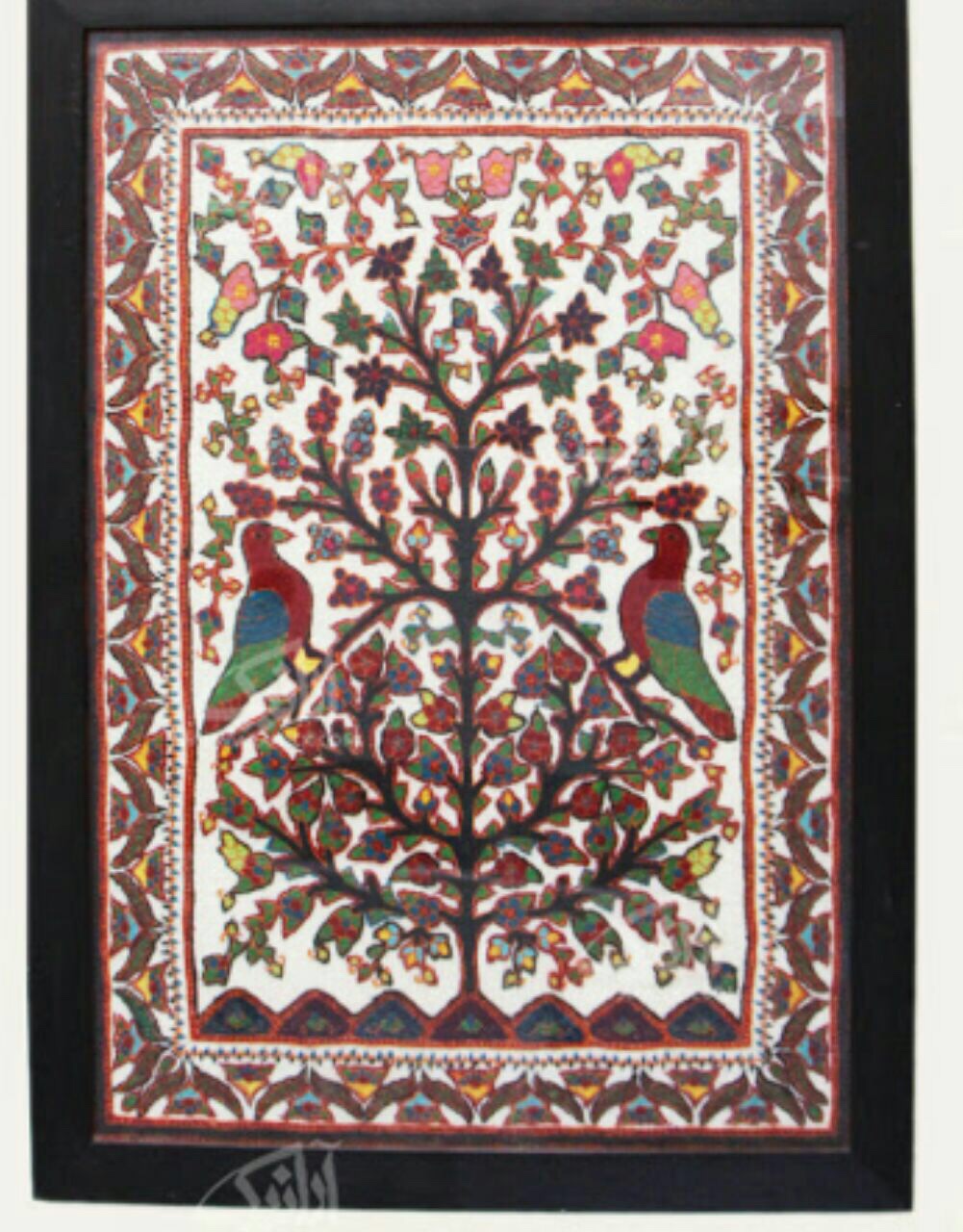
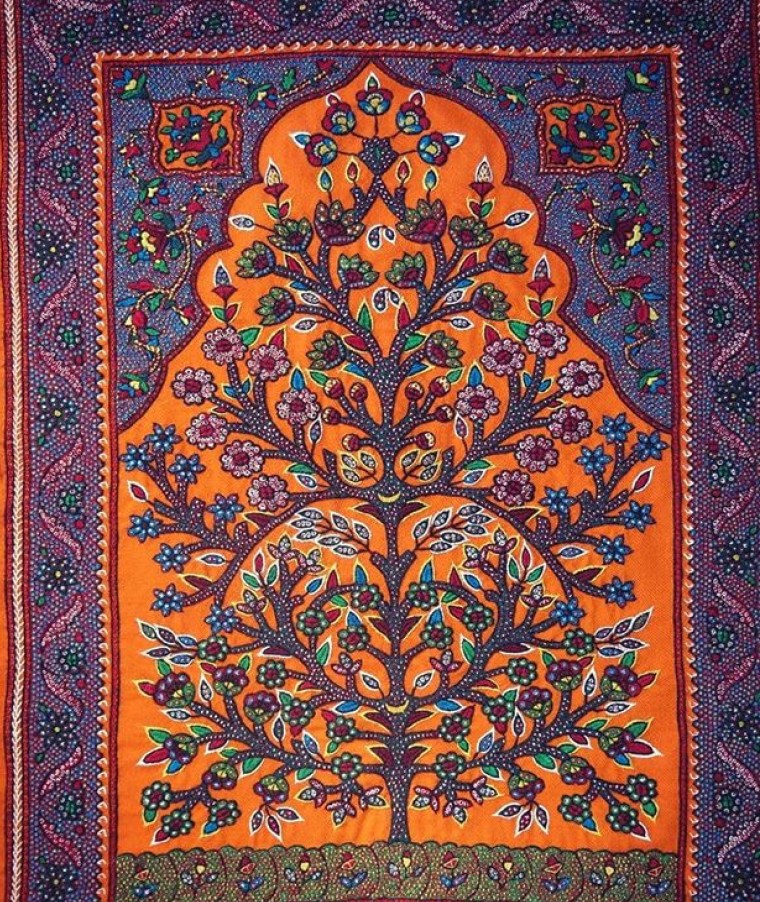
Trees are included in this section and are made up of the Cypress Tree and The Tree of Life . They are usually used for curtains or prayer mats and are rectagular in shape from 50×100 cm to 1 x 2.80 metres .
Antique curtain of the Tree of Life
Boteh Baadami cypress Tree
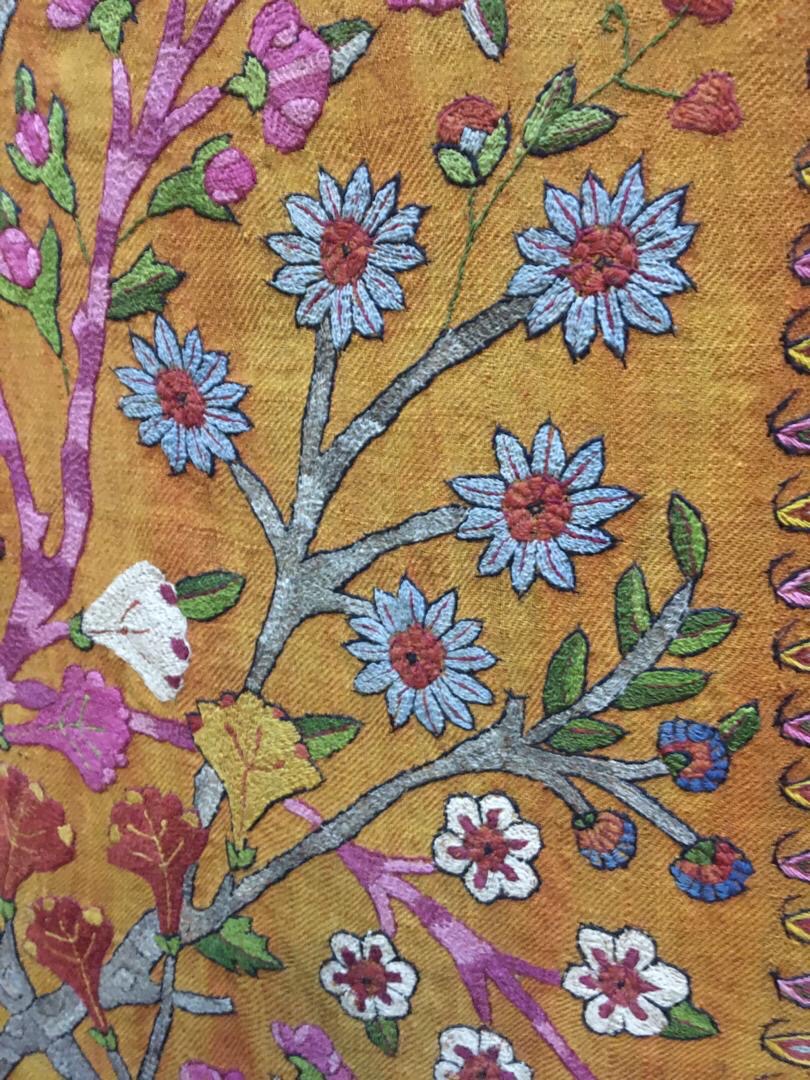
Antique Pateh
The Tree of Life stitched by Dastineh
2 – Katibé or Cornice Designs is another category of designs and is usually used for prayer mats , curtains or wall decoration. They are rectangular in shape . The designs are pre islamic and were used on pieces for religious and celebratory occasions .
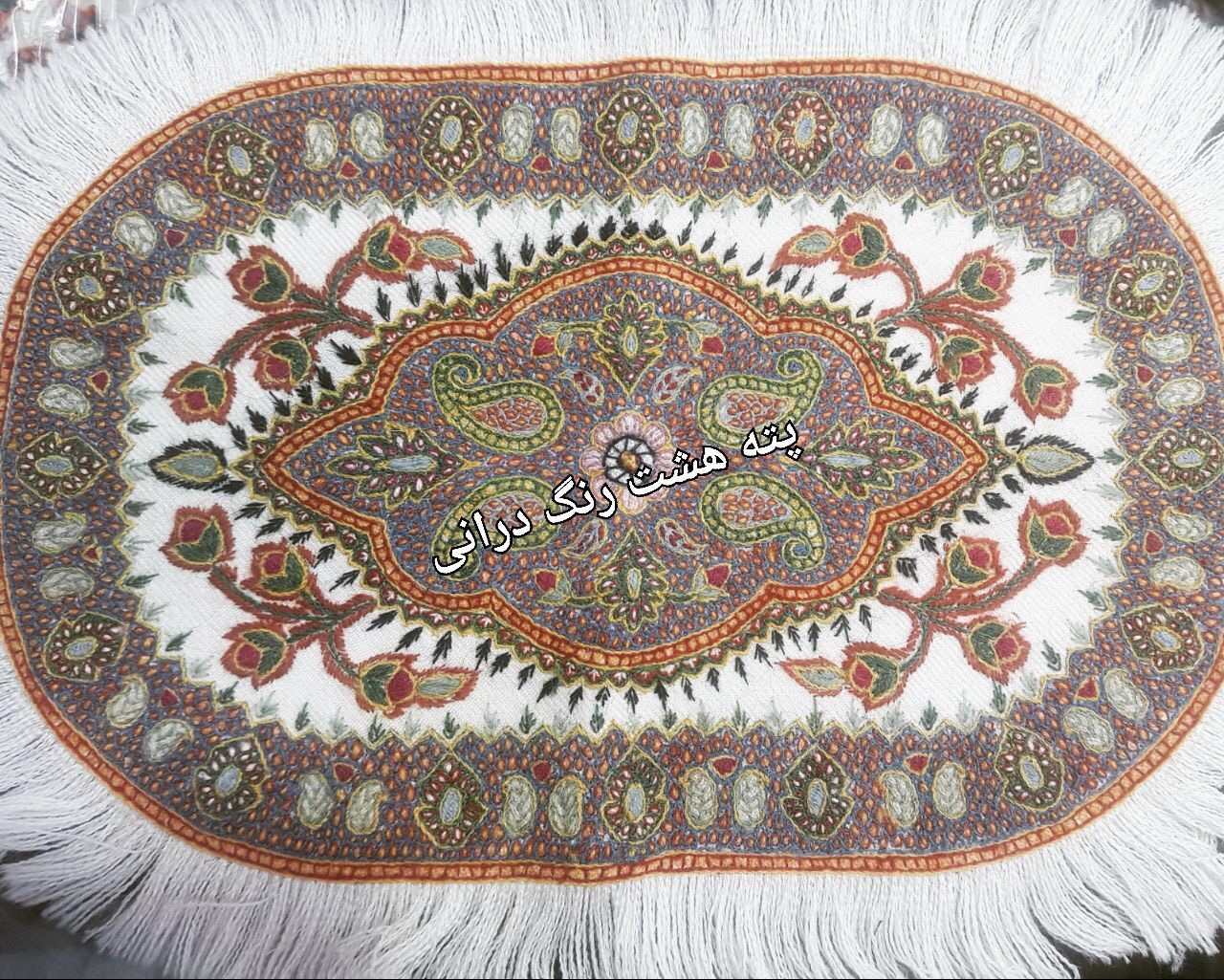
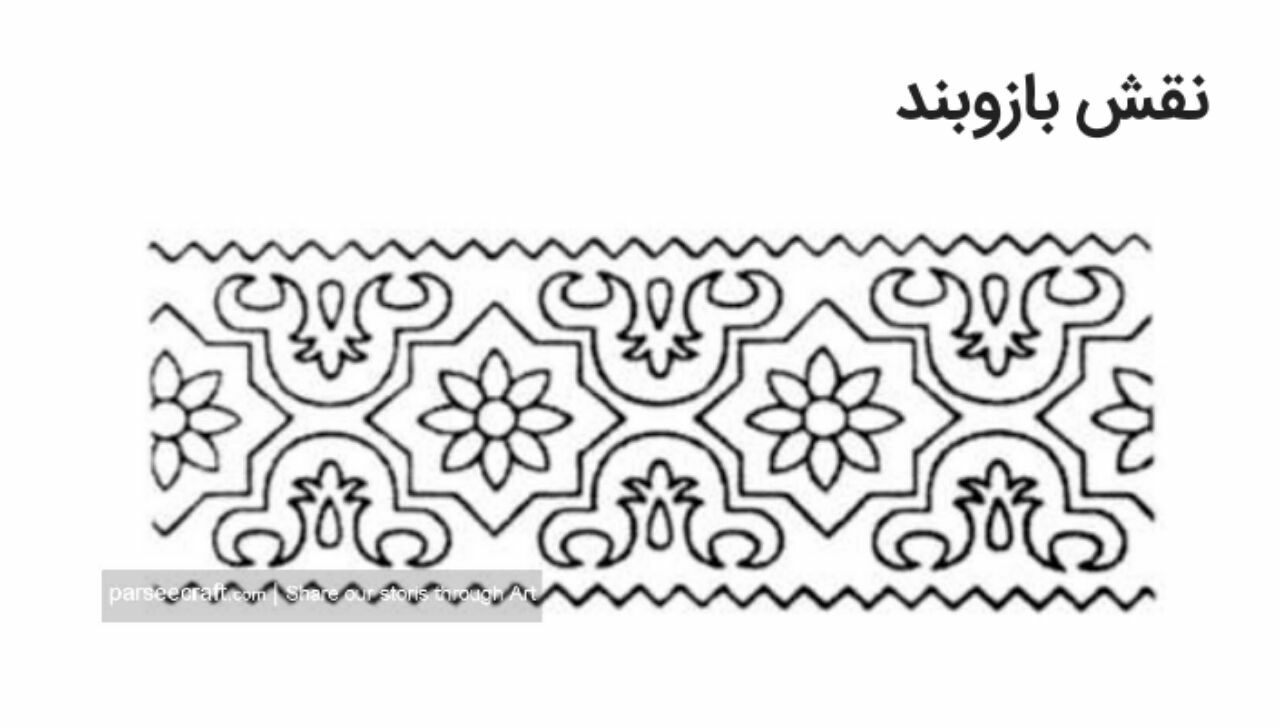
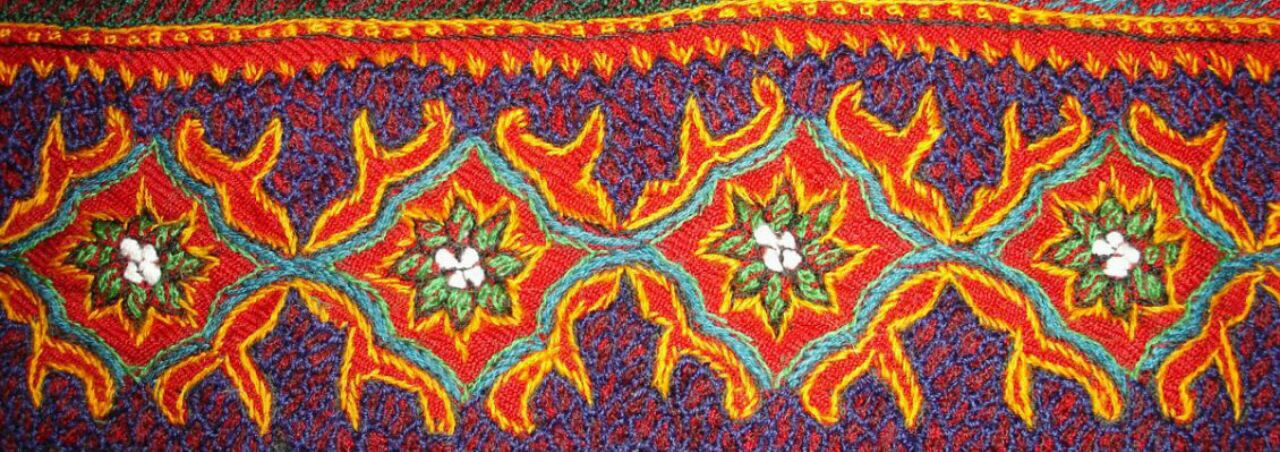
3 – Geometrical Designs . These designs can be either square or oval and cover the majority of the design repeats in the borders .There are special motif borders called Baazobandi which is an armlet used to decorate a hero or a champion .
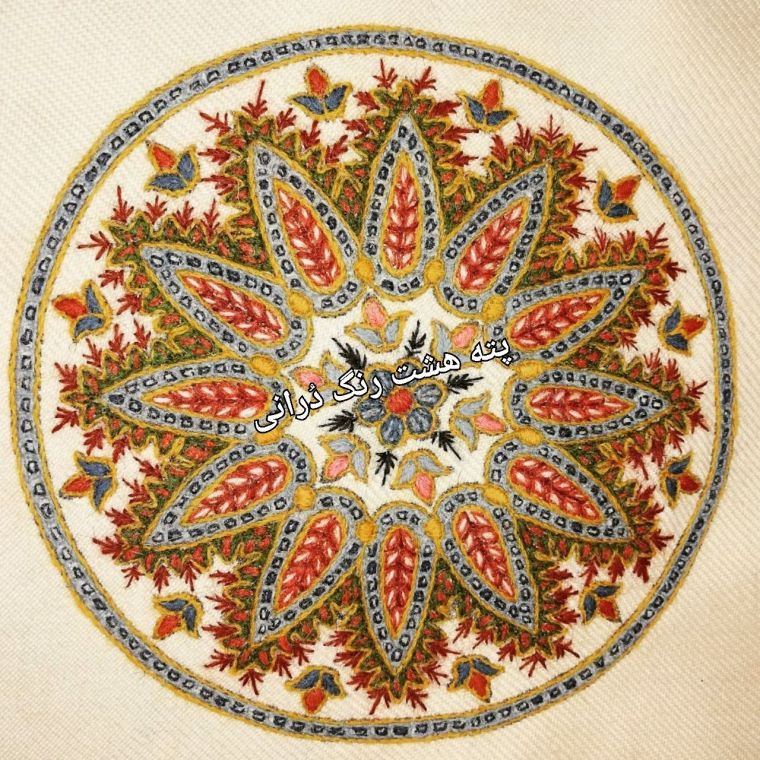
The circular designs are called Toranji and are either round or square pieces used for boghche , as wrap used for wedding gifts and for keeping precious things in . The pieces are also used as cushions, table cloths, especially for traditional occasions. Dark Pateh pieces are used for burial ceremonies either decoration or to place over the bodies.
Traditional Design with naturally Dyed yarns stitched by Dastineh/ Botehs in the corners surrounding a sun mandala in the centre
Traditional Design stitched by Dastineh
Baazobandi Motif for borders
Baazobandi Pateh border
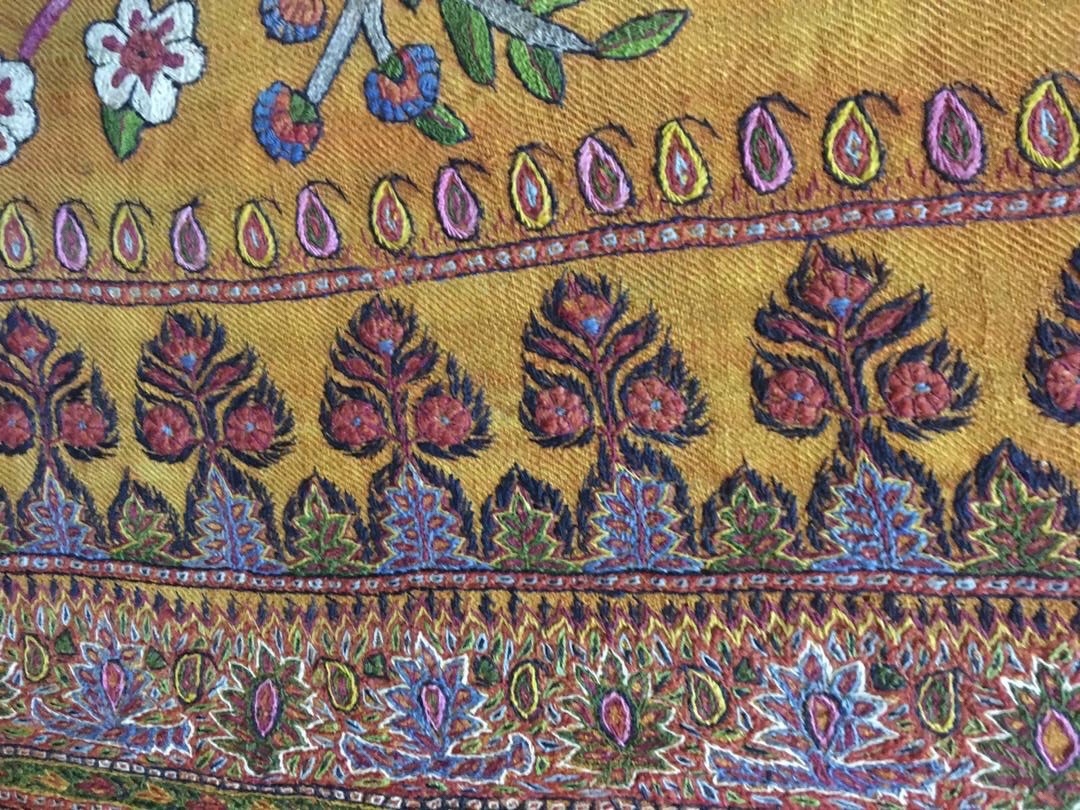
Border design Pateh Doozi with Boteh and Floral Motifs
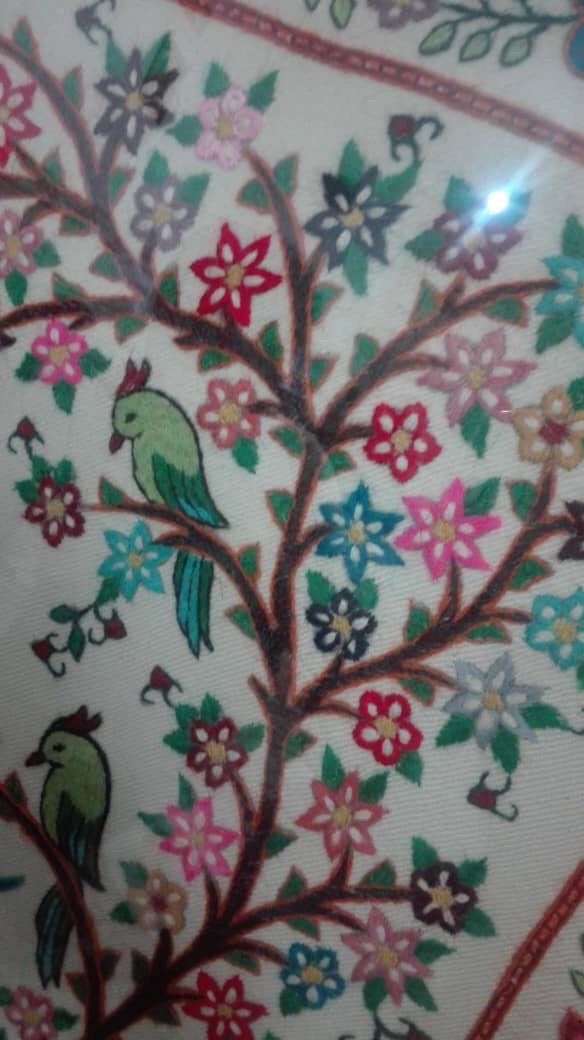
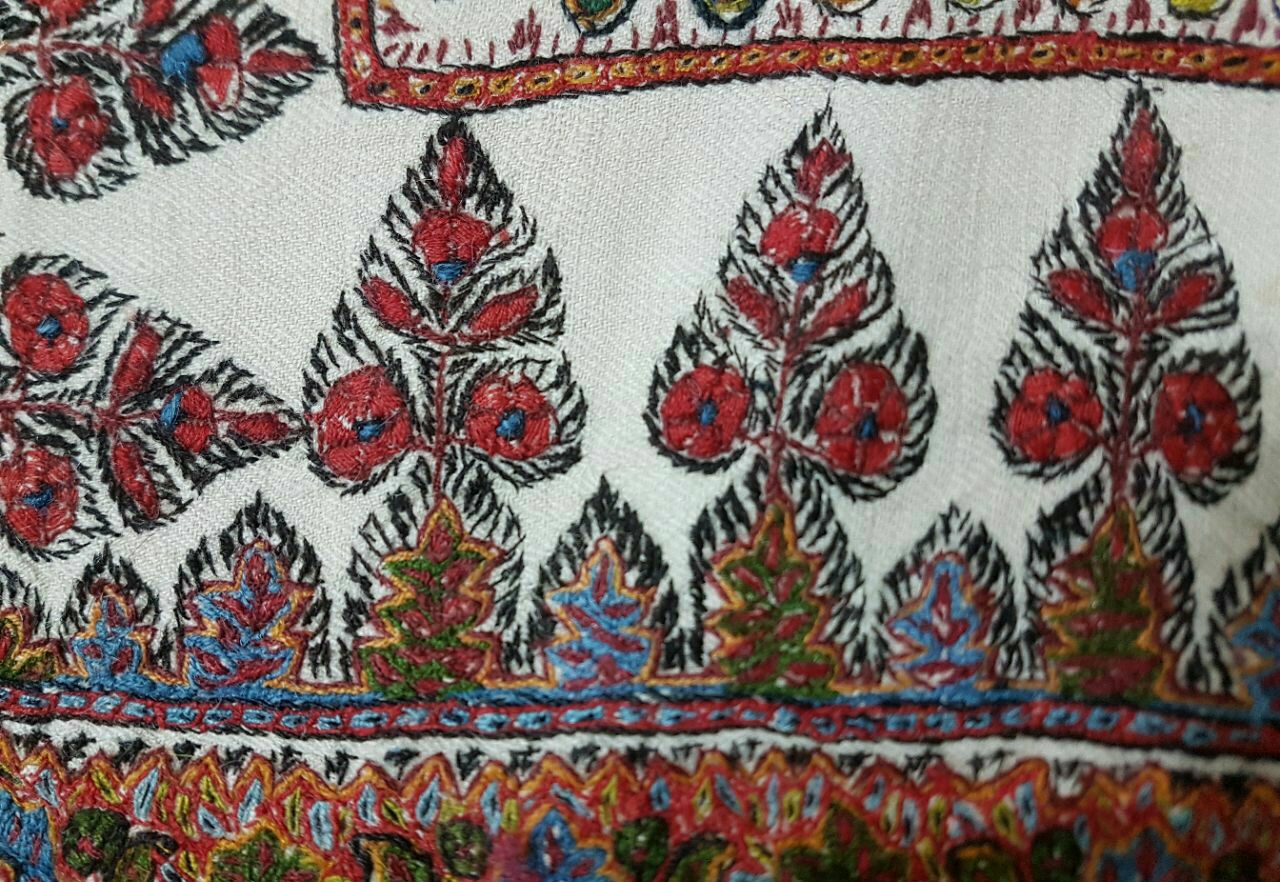
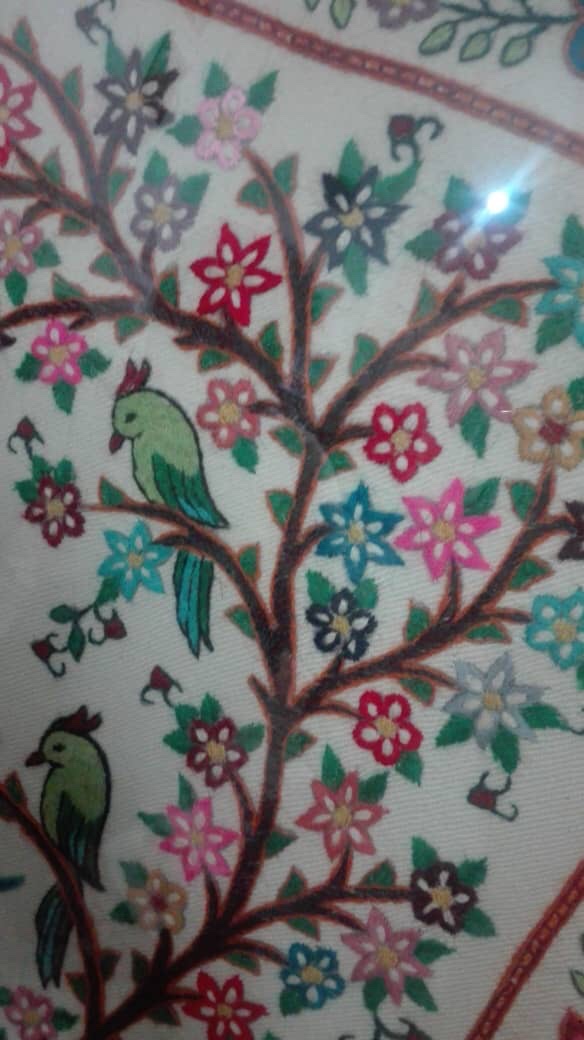
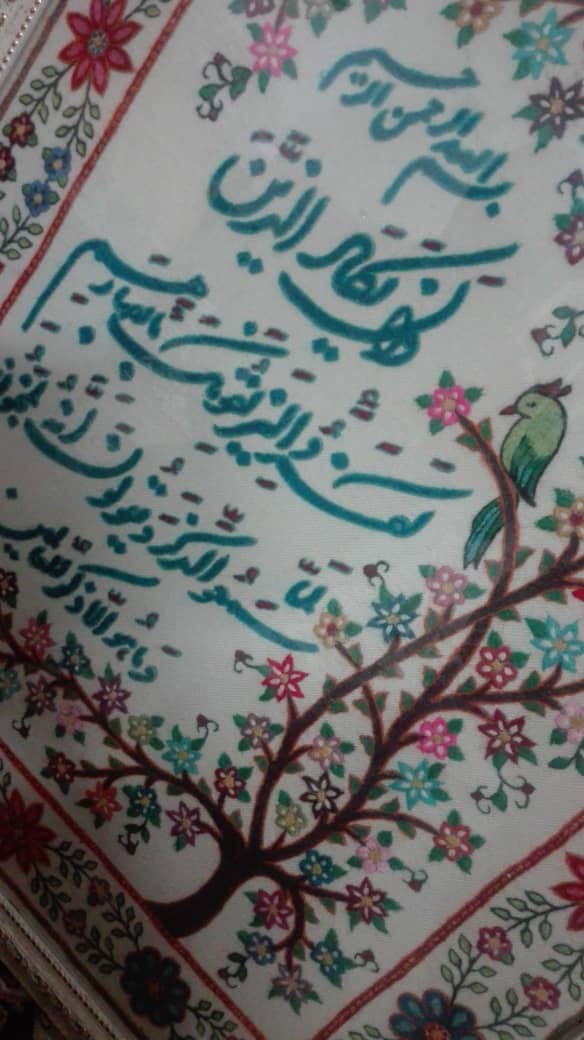
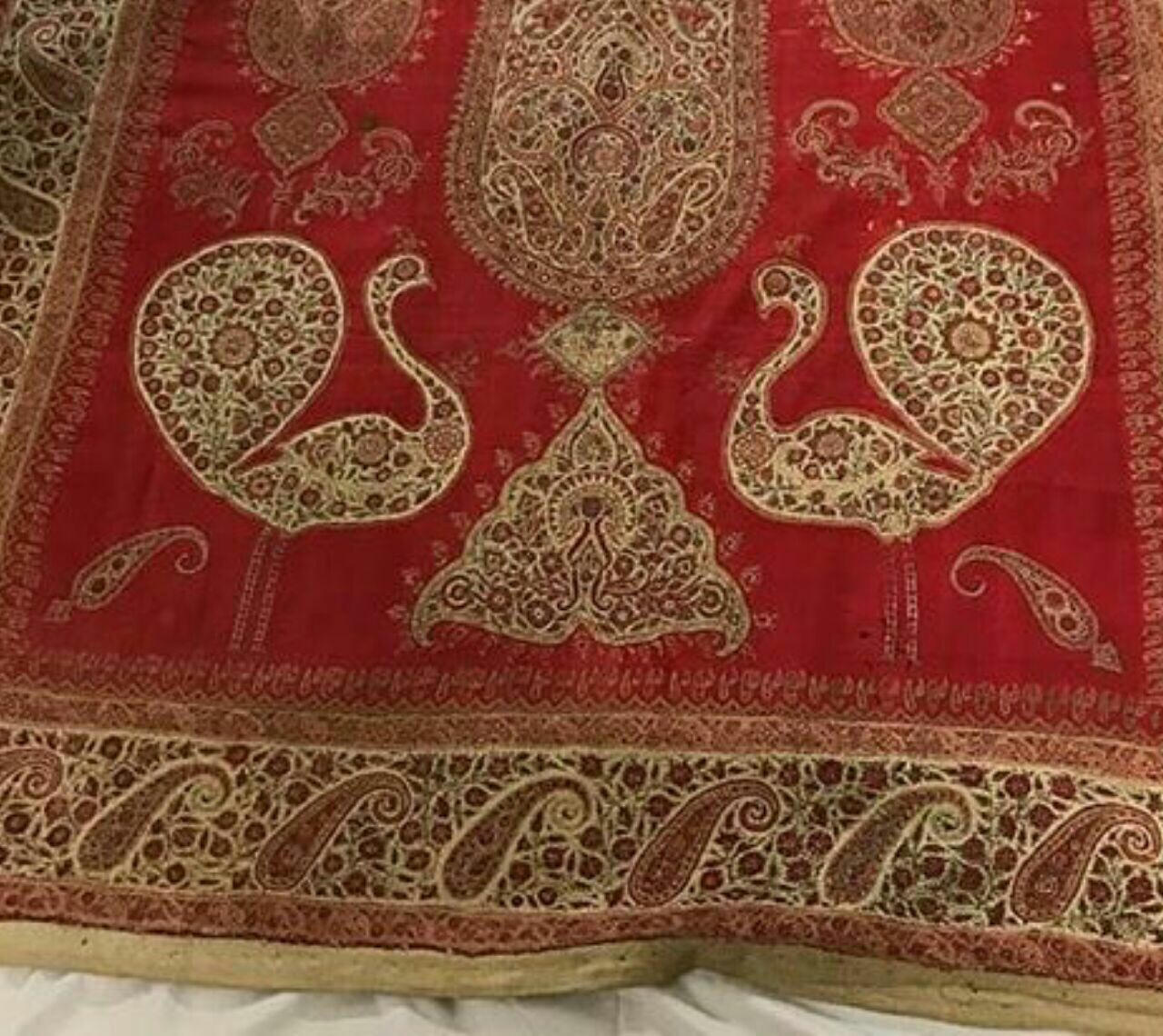
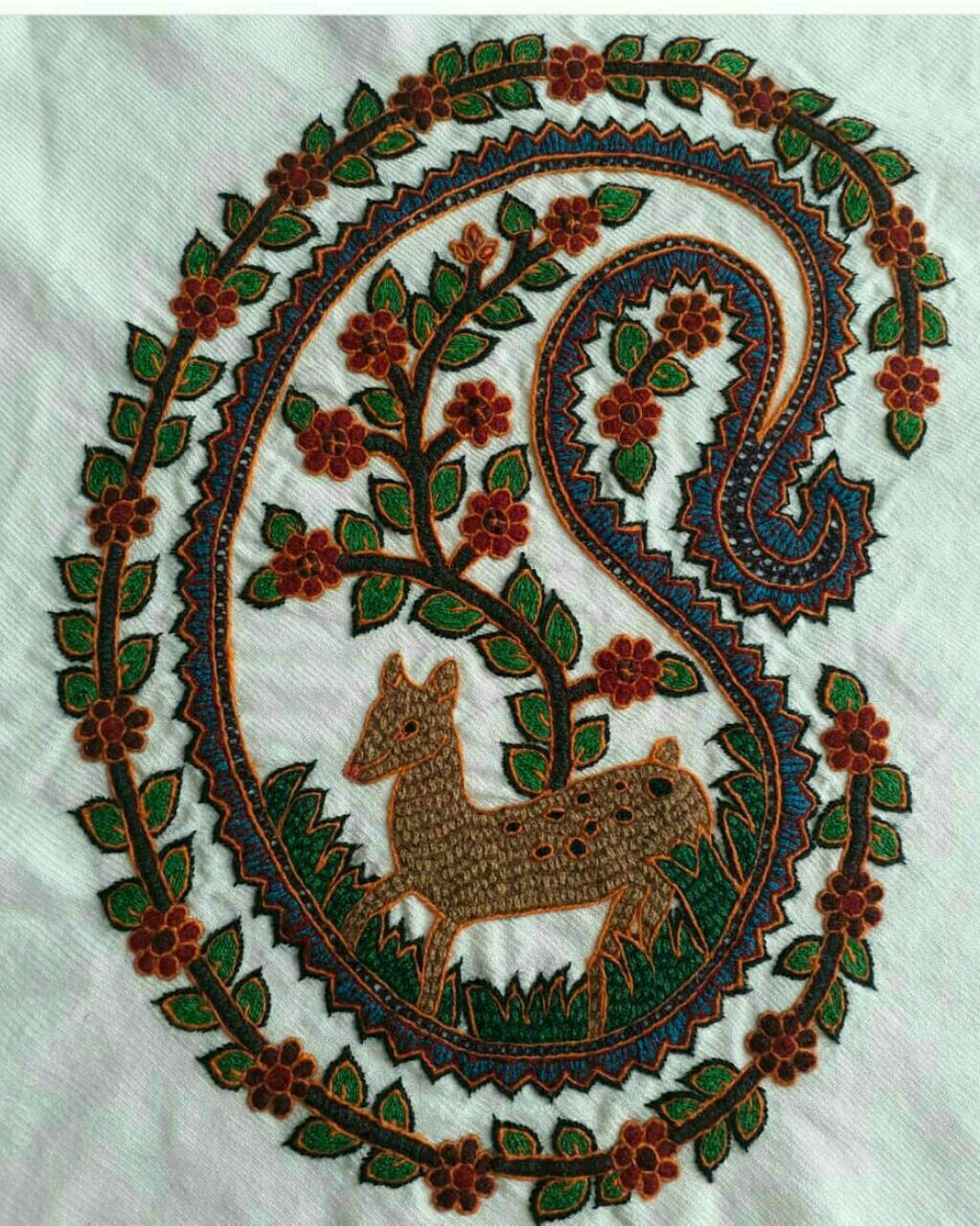
4 – Birds & Animals . Peacocks, parrots, love birds, nightingales and cocks as well as deer and fawns can be seen in antique Pateh Doozi especially from tthe Ghajar period and they are reappearing incorporated in a new calligraphy design Pateh Doozi.
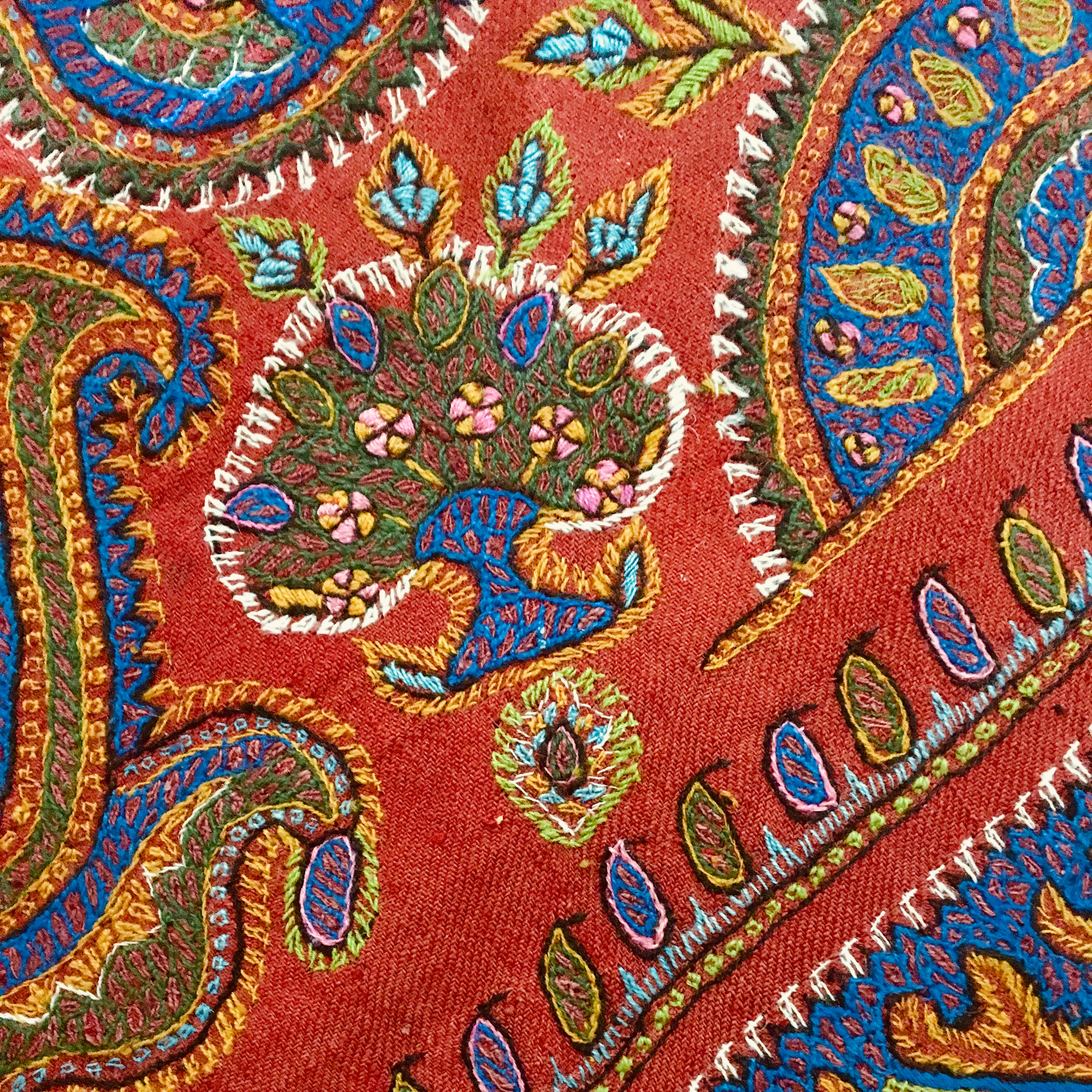
Peacock
Parrots & Love Birds
Calligraphy Pateh Doozi
Peacocks
There are many new designs on the market in this modern renaissance.
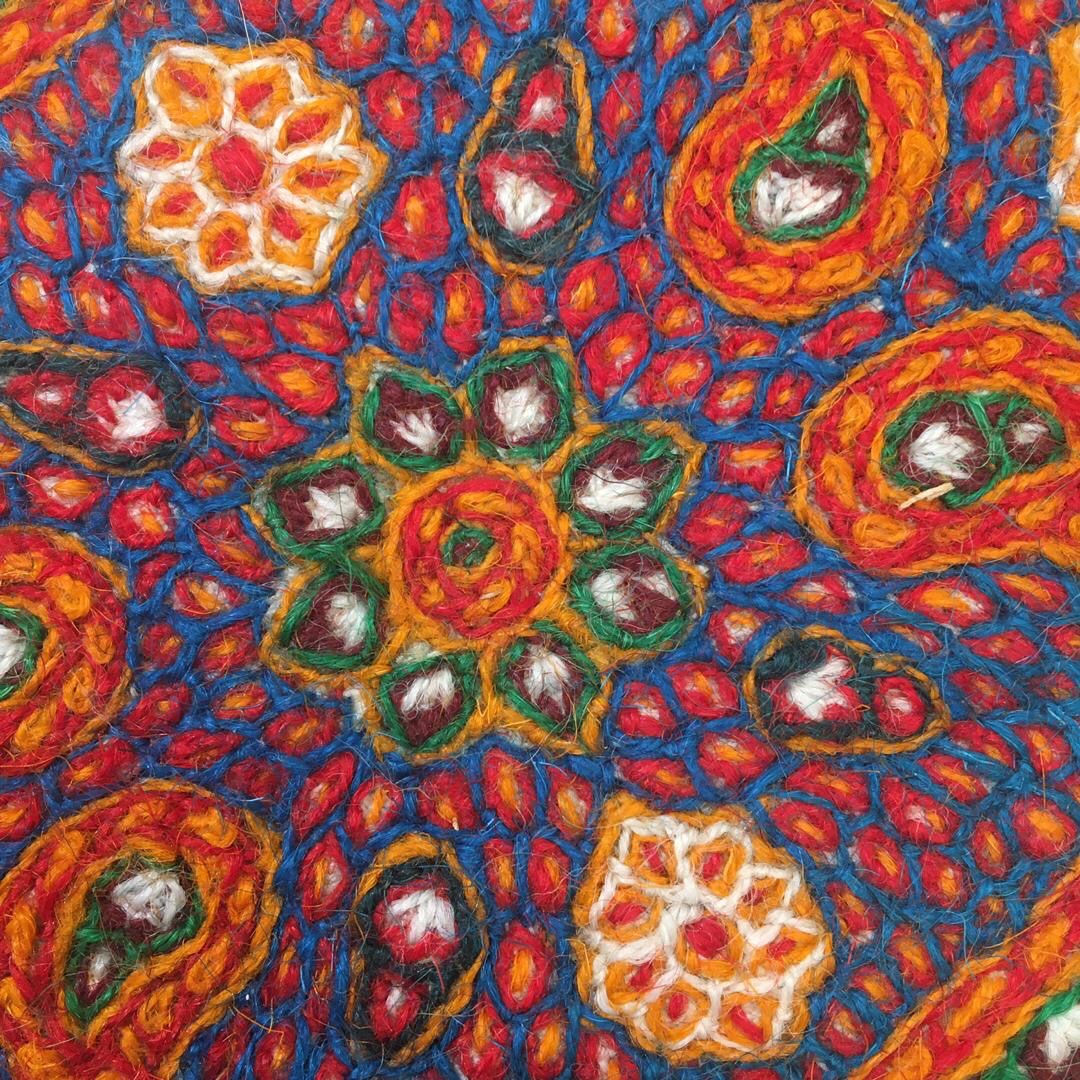
Pateh originates from Kerman in the south of Iran and is worked by women . The earliest Pateh dates back to the 18 the century . It goes further back but wool does not keep well, therefore we have little remaining evidence.
Pateh consist of a woolen fabric or shawl called ‘Arriz’ اریز and the embroidery threads which as usually of the same woolen yarns.
It is a folk art needlework which means that the objects usually have a practical use . There are 8 traditional colour yarns and is usually worked on a red or white background . Although in recent years working on orange , turquoise and navy backgrounds has become popular .The designs are traditional and most definitely have their origin in the carpert designs of the area.Paisley patterns بتجقه the central Toranj design and the Tree of Life are familiar designs used in Pateh Doozi .
The goat wool that is produced in Kerman goes back to Roman times and before . It was called Carmenian Wool and was prized for centuries and raised a high price.Pashmina is now forbidden due to the fact that the pulling of the down from the undercoat and behind the ears of the animal and is considered cruel. The fleeces are now sheered off in Australia,China and Iran but some illegal pulling still goes on in Pakistan and India. . Fleecing occurs and is produced and spun in Kerman but the Pasmina producing goat is now an endangered species. These days , the Merino Sheep wool is used for both carpets and crafts.
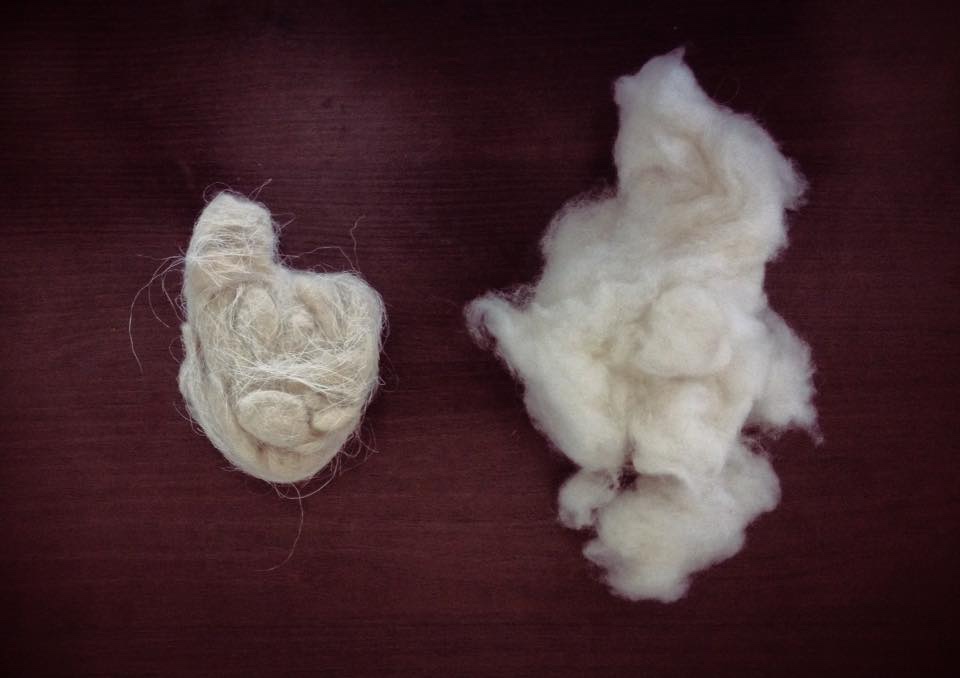
The word Pashmina comes from the Farsi word”pashm” which means wool and is the name of the fine fluffy wool that is harvested from the neck region and behind the ears of the goats. Due to the very cold climate the goats have developed a double fleece which molts in the Spring and can be easily combed from the animal.
There are often inquiries as to which came first , the Indian /Kashmir woolen industry or the Iranian . The fact is the Iranian export was really taken on and expanded in a superb way in India and became dominant during the 18 th and 19th century as trade with the British Colonial power boomed.
The story starts with the Central Asian Mountain Goat.
The Central Asian Mountain Goat
A sufi called “Seyyed Ali Hamedani” from Hamedan, Iran ,travelled several times to what we now call Kashmir but was then know as Ladakh region of India in the year 713 . He recognised a similar kind of goat to the Central Iranian Plains and decided to harvest the wool as he had seen in his home country , spin it and knit a pair of socks which he presented to the king .Sultan Qutabdin was so impressed with their warmth he requested Hamedani to go back to Iran and bring the industry to Ladakh . It is said that Hamedani took over 700 artisans from Iran , from breeder, spinners, weavers and stitchers and a whole industry began .
In 2014 , The United Nations agency Unesco reported and honoured. Mir Seyyed Ali Hamedani as one of the principle figures who shaped the culture of Kashmir both architecturally and through the flourishing of arts and crafts and hence the economy. The skills and knowledge he brought from Iran to Ladakh gave rise to a whole industry.
The Mir Seyyed Ali Hamedani tomb in Khatlan ,Tajikistan
The Boteh design which is familiar to all Iranian crafts from carpets to the shawls is what we call in the West , the Paisley design . It is described as a tear shape but the motif is actually derived from the evergreen tree , Sarv . The anglicanisation of the name came about as the shawl weaving industry took shape in Paisley ,Glasgow in the 19th century .
These shawls were replicas of the Indian Kashmiri shawls and were being mass produced in Renfrewshire ,Scotland as the industrial revolution brought in the Jaquard looms . The shawls were extremely popular during Victorian times and became a fashion statement for the women of the day .
The wool used in Kerman for Pateh Doozi today varies from the same local wool spun and dyed locally or imported wool from Australia. The yarns are both chemically and naturally dyed but are used separately as the naturally dyed yarn pieces are more expensive and are usually of a more finely spun count.
Modern Pashmina from Pakistan
The Pashmina wool before and after washing
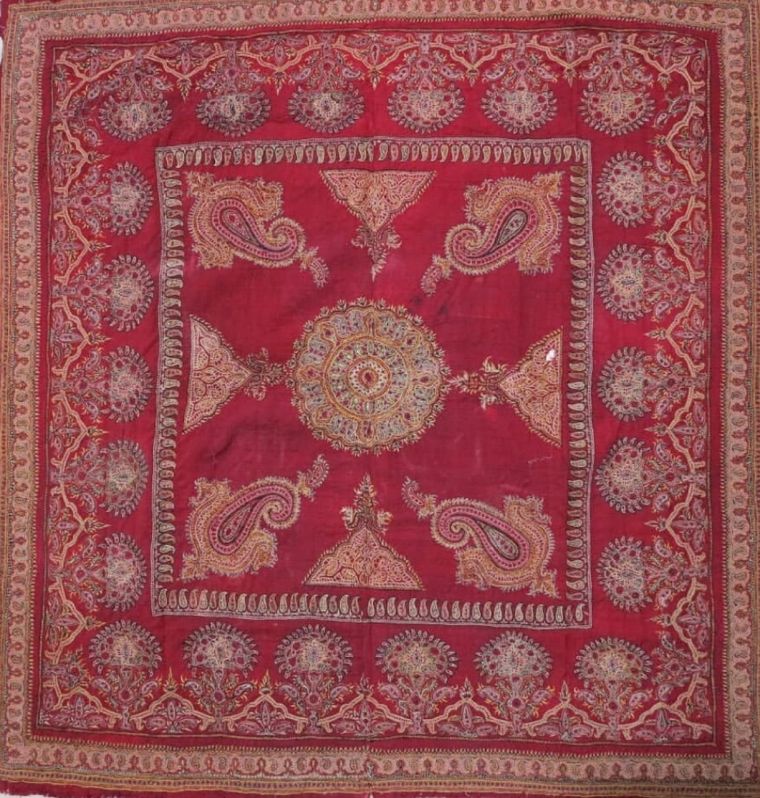
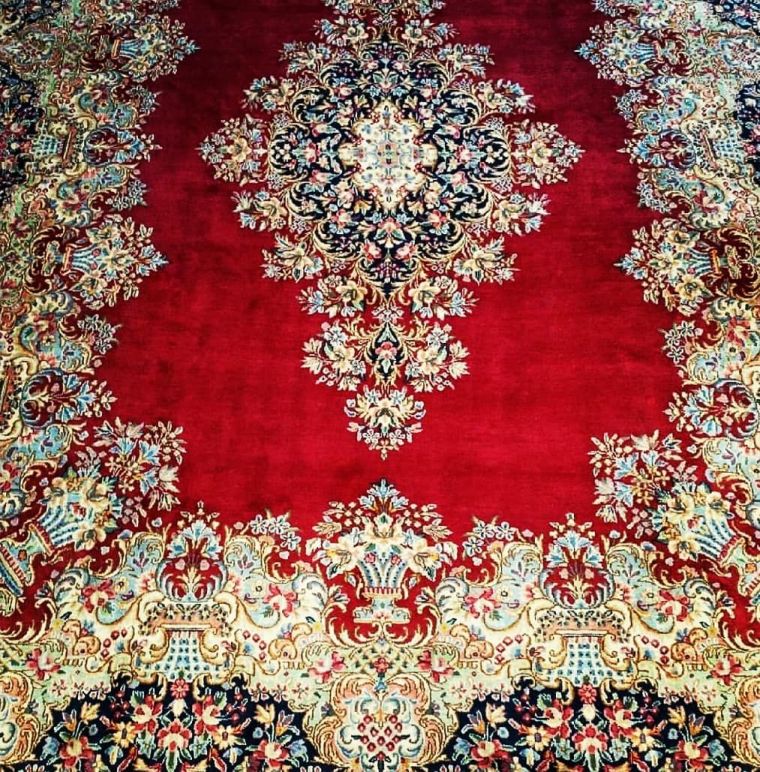
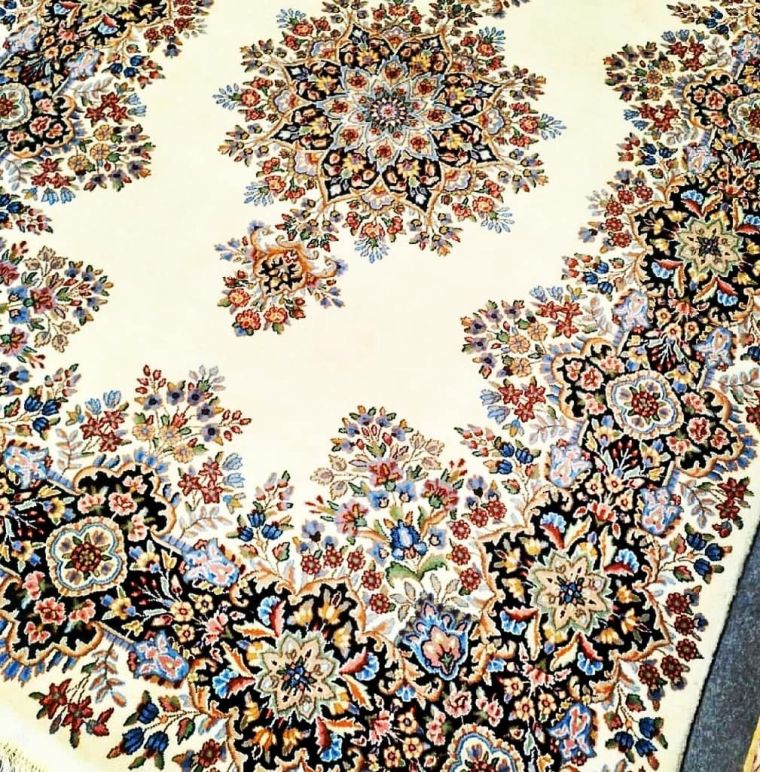
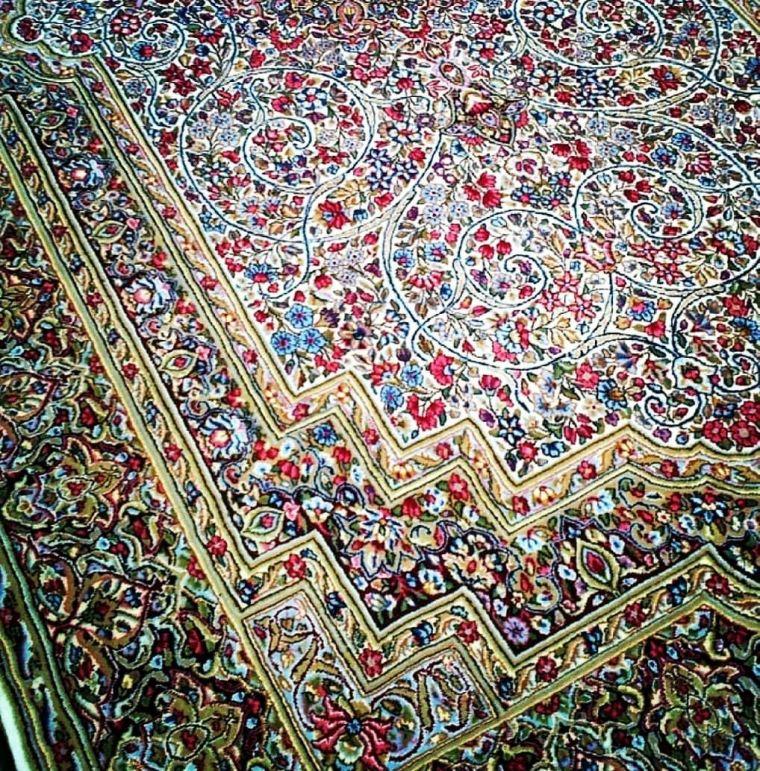
Pateh takes many of its designs from the famous Kerman carpets designs and similarity can be seen clearly as to a central mandala with borders. Kerman in situated in a dry desert plain and has severely cold winters and hot summers. Life is spent indoors and therefore the art and crafts have replaced flowers, gardens , birds etc… with their weaving and stitching and brought them into their homes.
Antique Pateh Doozi
Antique Pateh Doozi
Pateh Doozi with plant based dyed yarns by Mrs Alimohammadi ,Mahshad
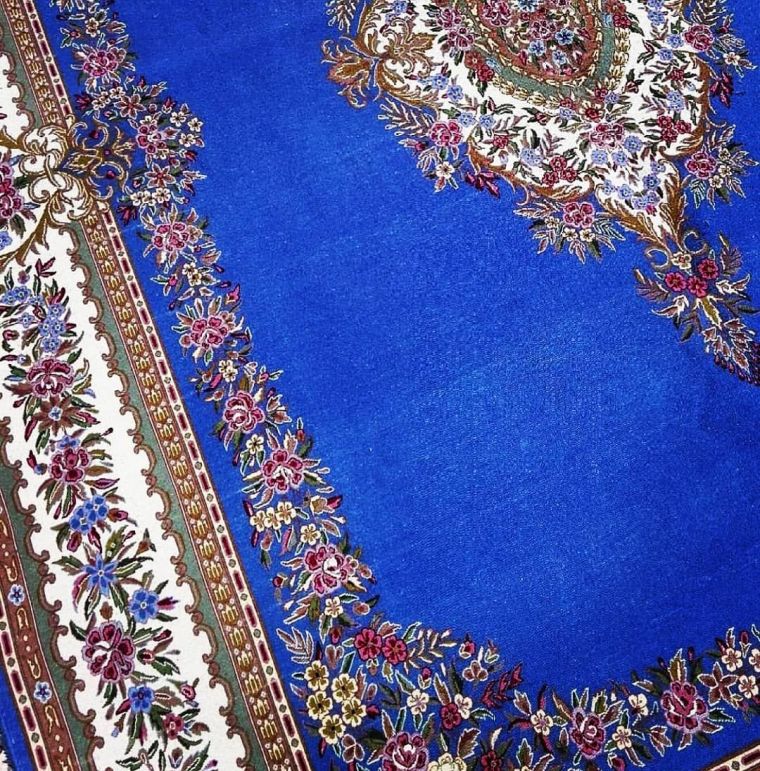
Carpet Woven in Kerman Iran
Carpet Woven in Kerman Iran
Carpet Woven in Kerman Iran
Carpet Woven in Kerman Iran
Carpet Woven in Kerman Iran
Carpet Woven in Kerman Iran
Traditional Design
Traditional Design by Dastineh
Traditional Design with naturally Dyed yarns by Dastineh



























































































 Dzignpatch