Blog

Master Stitcher Fatemeh Ghorbani

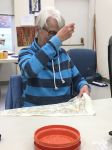
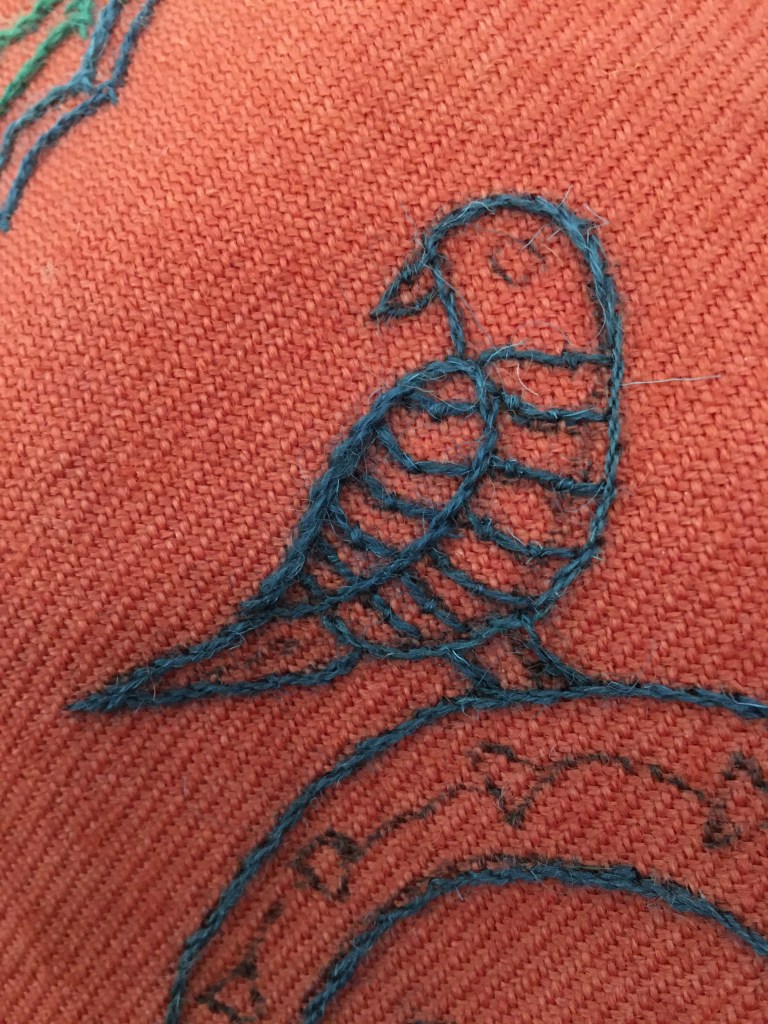
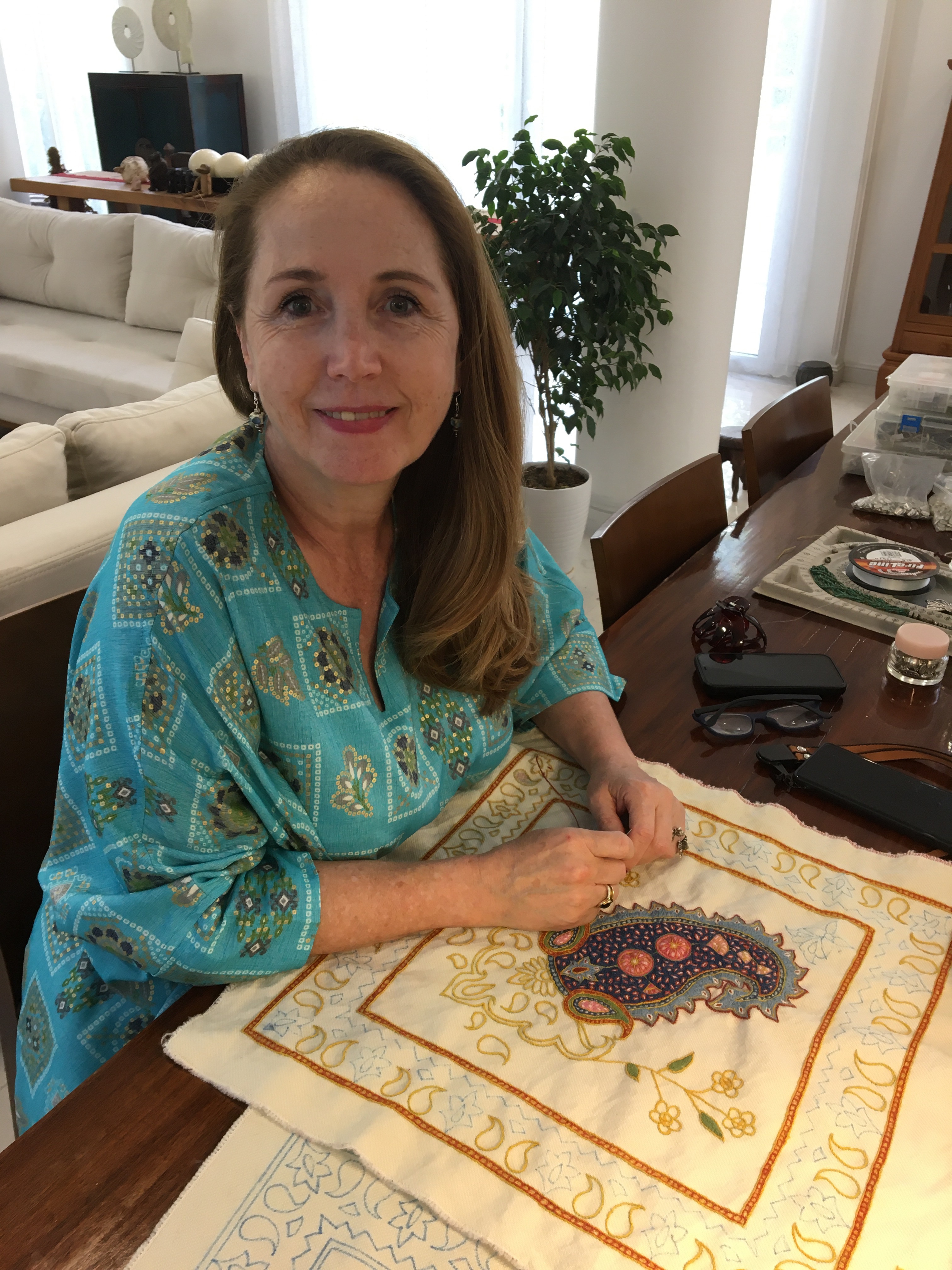
I am taking part in a Pateh Doozi Workshop with the Master Stitcher , Fatemeh Ghorbani .
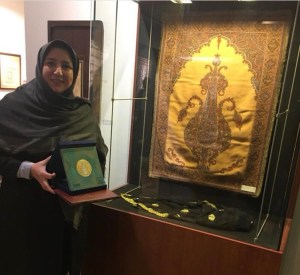
Ghorbani has taught for over ten years and has passed on her particular method to many students nationwide . What I mean by ‘her particular method ‘ is that she has developed a syllabus that expects her students to begin with the most recent style of this technique , Pahlavi Pateh.

This can be difficult for many students who have already been introduced to Pateh via classes and workshops or taught by their mothers and grandmothers .

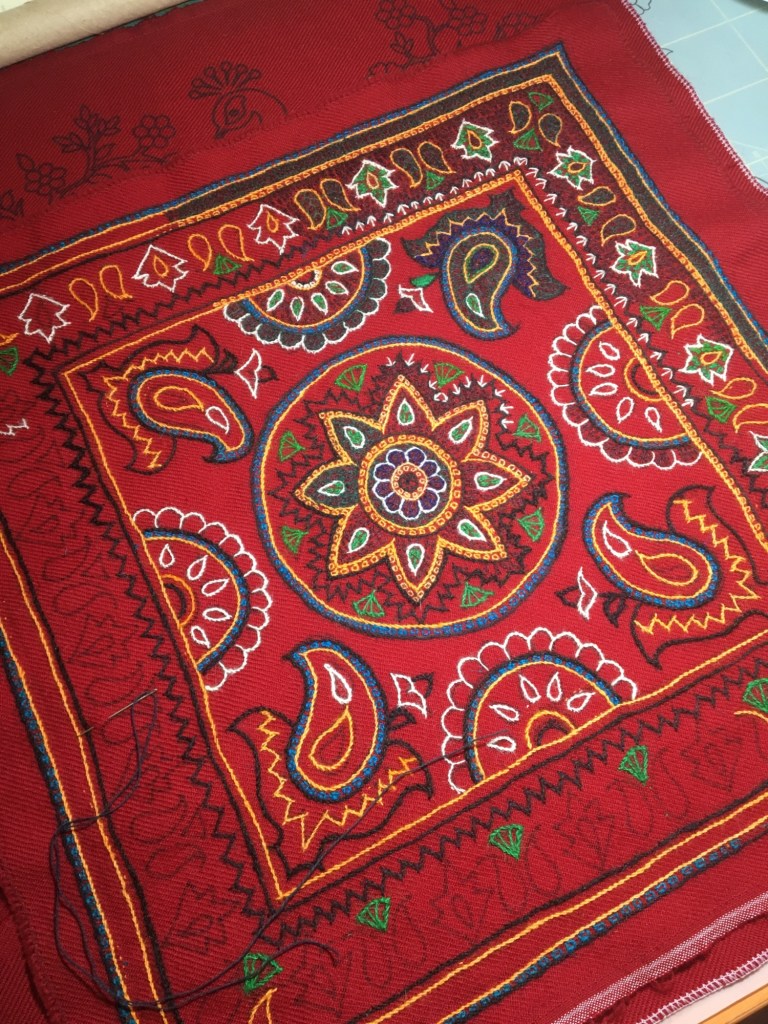
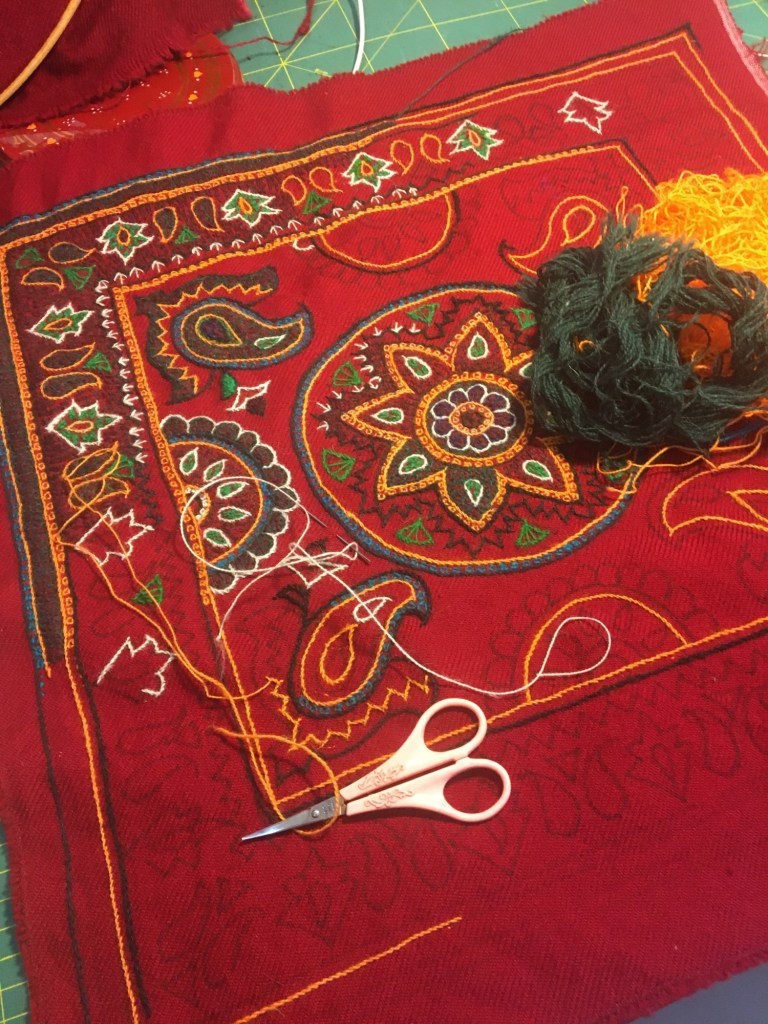
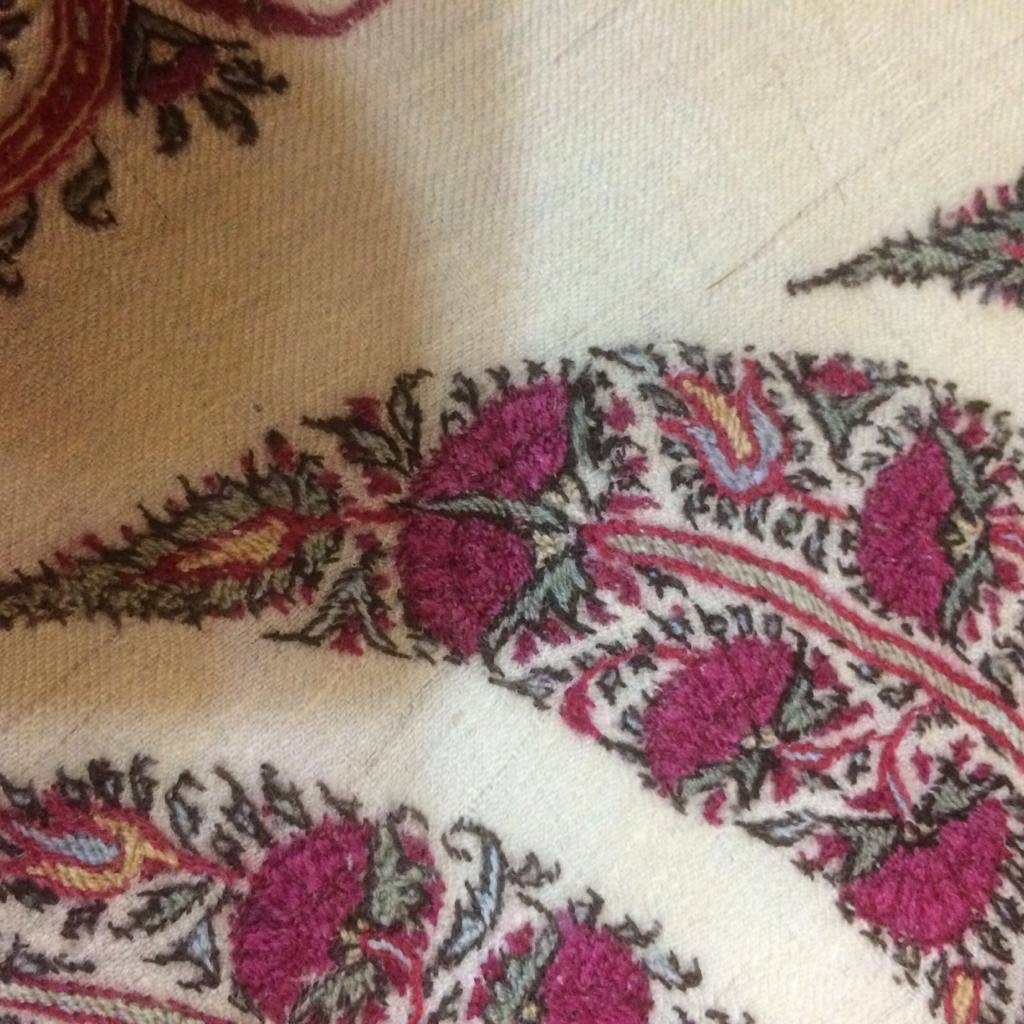
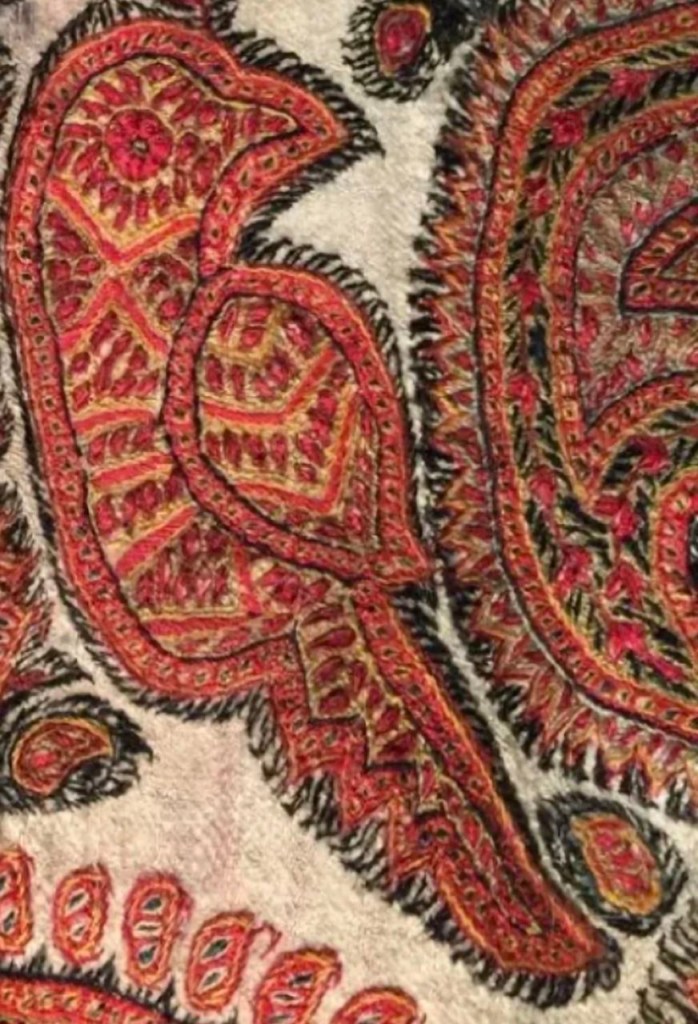
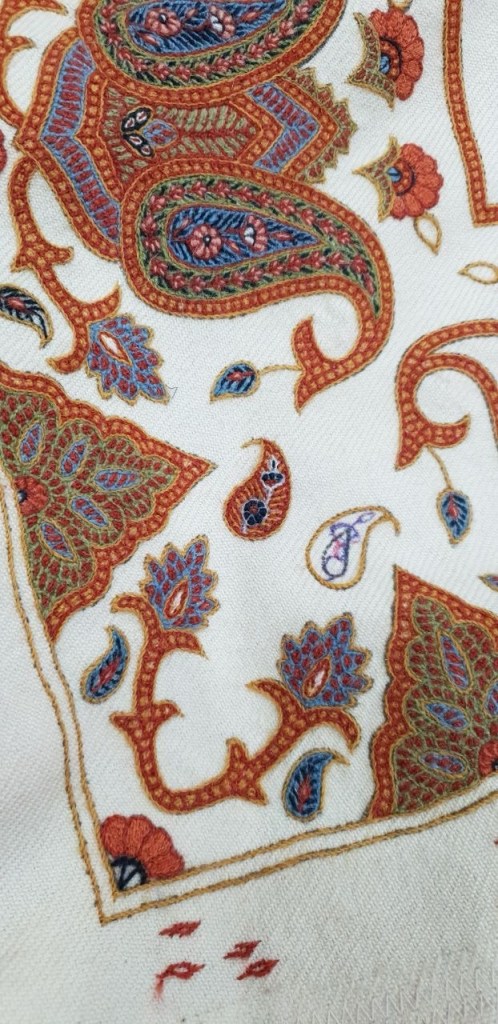
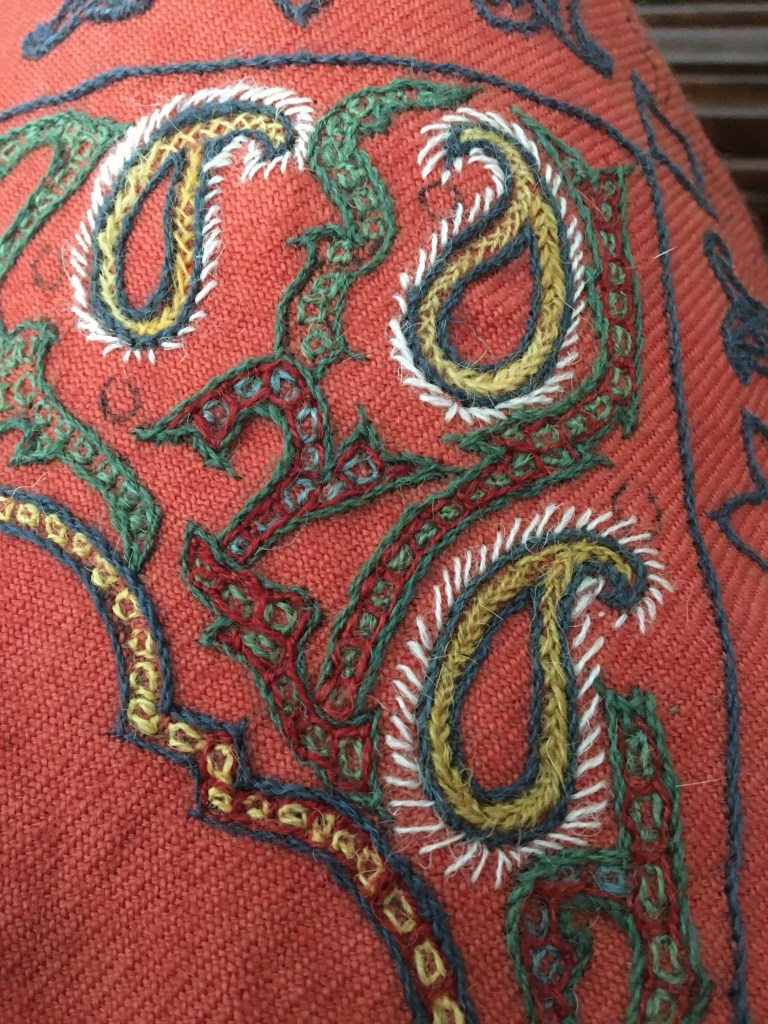
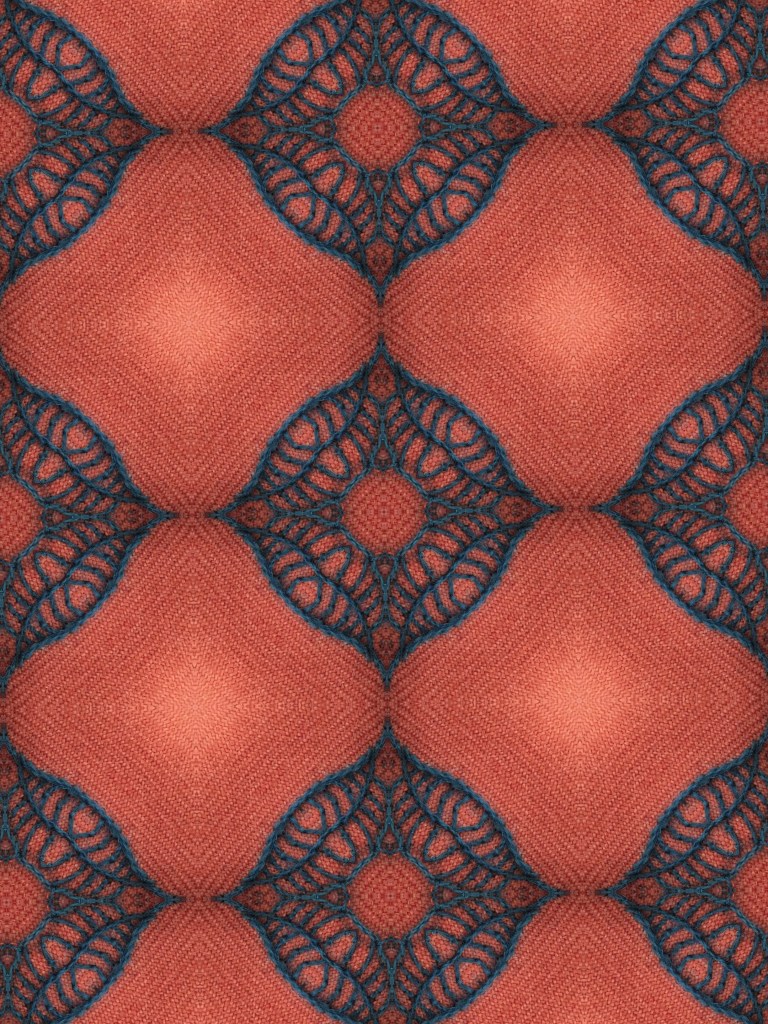
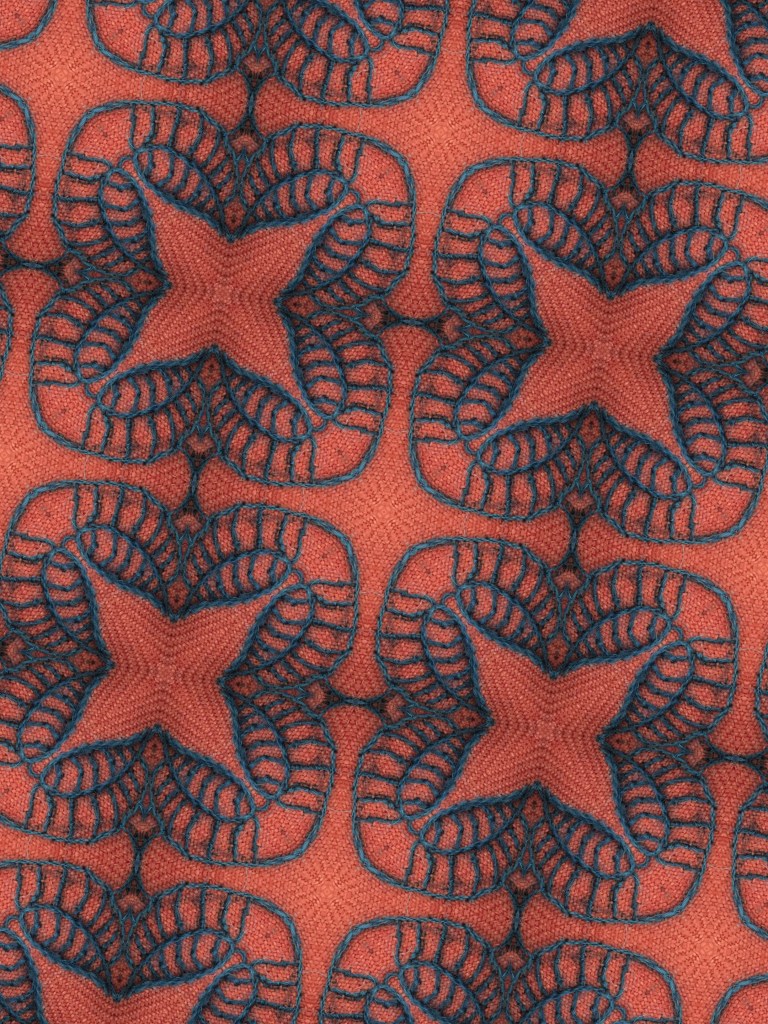
Pahlavi uses a heavier weight wool yarn to stitch with and is mostly always on a red background. The reason for this is that during the reign of Reza Shah Pahlavi a systemized educational program was started in the form of technical colleges including all Iranian art and crafts .This was a bold move to standardize education and to include craftsmen and women in the economy. She works from Tehran but has online classes and uses the social media apps to send video clips and mini lectures to her students.

Ghorbani also teaches in the city where this form of crewel work originates , Kerman.I mention this as Kerman is the place Pateh originated and the women of Kerman guard their craft fiercely ! So a Tehrani coming in to teach on their territory is like entering the jaws of the dragon !

I am lucky enough to have been able to attend her classes in person . She is an excellent teacher and has command of her students who are all women by the way ! Ghorbani also expects perfection.

Being a teacher myself I recognize that I am one of those difficult students who will go off at a tangent and do her own thing and needs to be reigned back in screaming and shouting !

……’unpick it ! unpick it !! ‘ she beseeches me with frustration !

I am not a stranger to this Iranian Method of education. It is based on a ‘Maktab’ style of repetition and copying of the Masters . Here it goes unquestioned and this is why Iranian students make great students…they do as you ask!

She made me go back to the beginning !
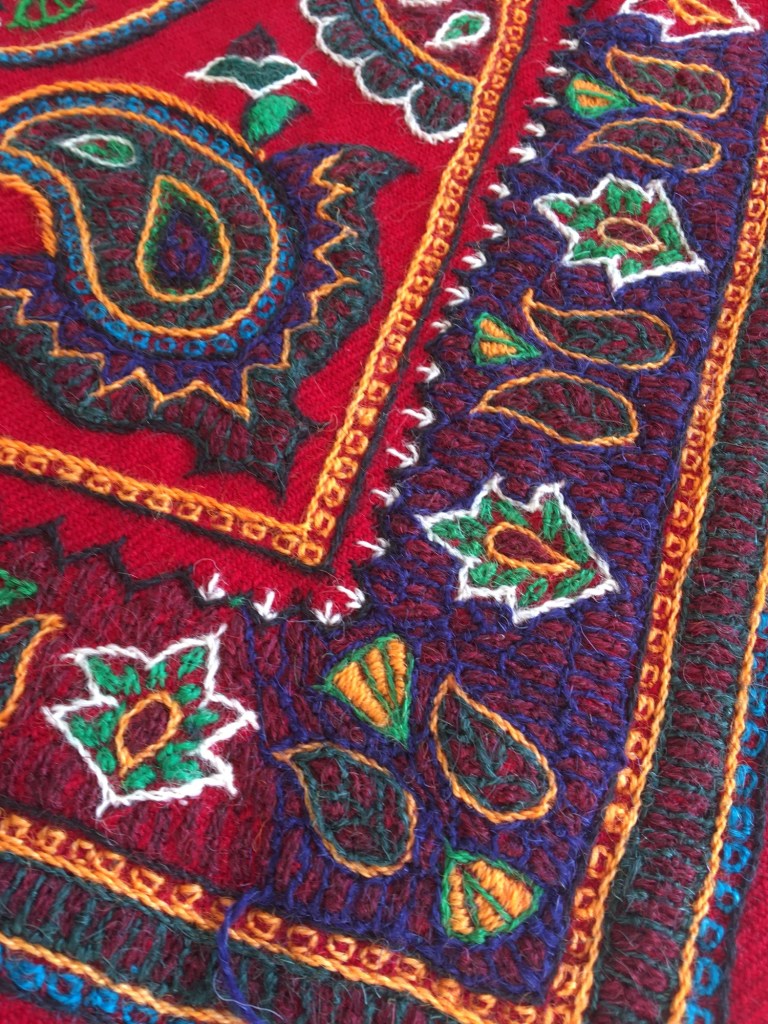
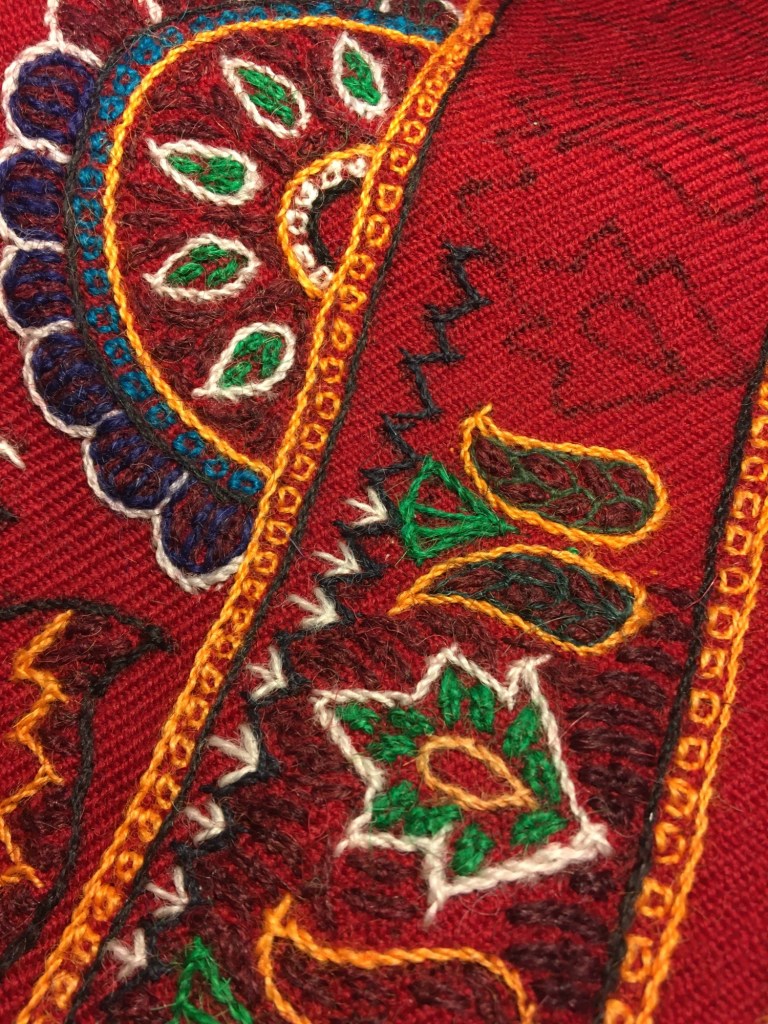
The complex thing about this crewel embroidery is the colour choices and starting with the Pahlavi Pateh limits the student to 8 colours . These yarns are chemically dyed .

The new Pahlavi method brought in chemical dyes in the early 19th century as new inventions and discoveries were being made in Europe in this field . Unfortunately at the time, the old dyeing methods using natural plants and minerals were abandonned for new technology .This also applied to the dyeing of yarns for the carpet industry .

Teaching a limited colour scheme was a way of attaining a reasonably artistic piece in the limits of the educational syllabus.As a designer I find this frustrating and limiting but as a teacher I understand the logic of it .Believe me, this really works because the mish-mash that can happen if inexperienced students just willy nilly choose colours to stitch their pieces can lead to horrendous results! So teaching a methodical colour scheme along with specific colours for certain stitches and areas of the work makes sense .

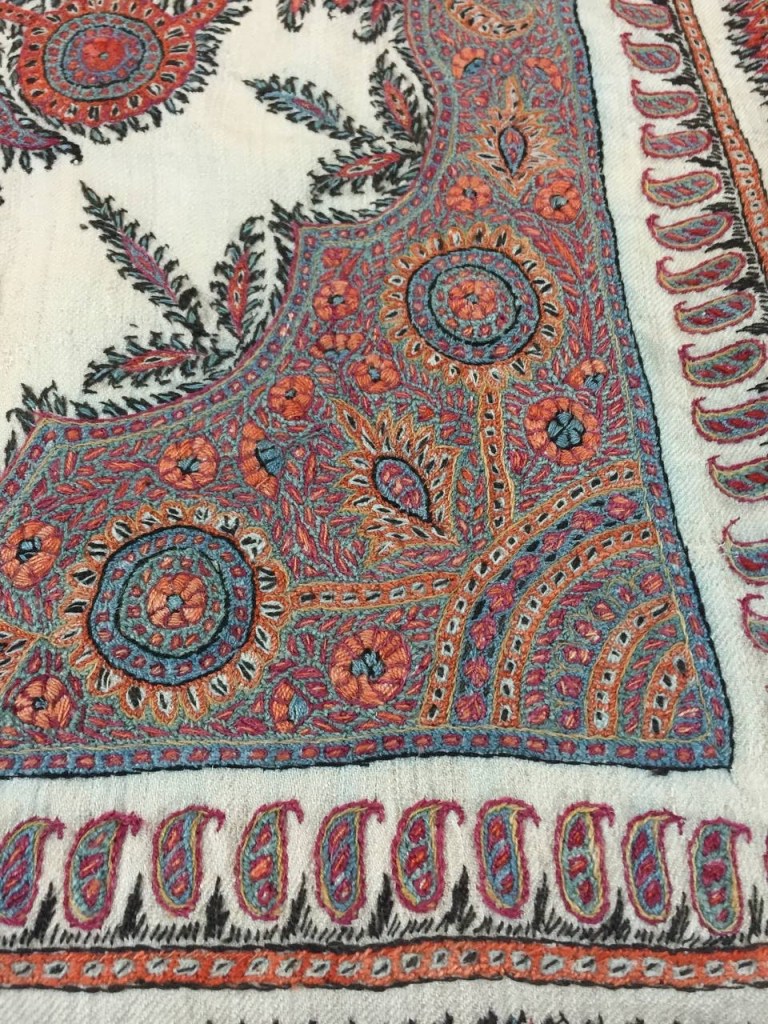
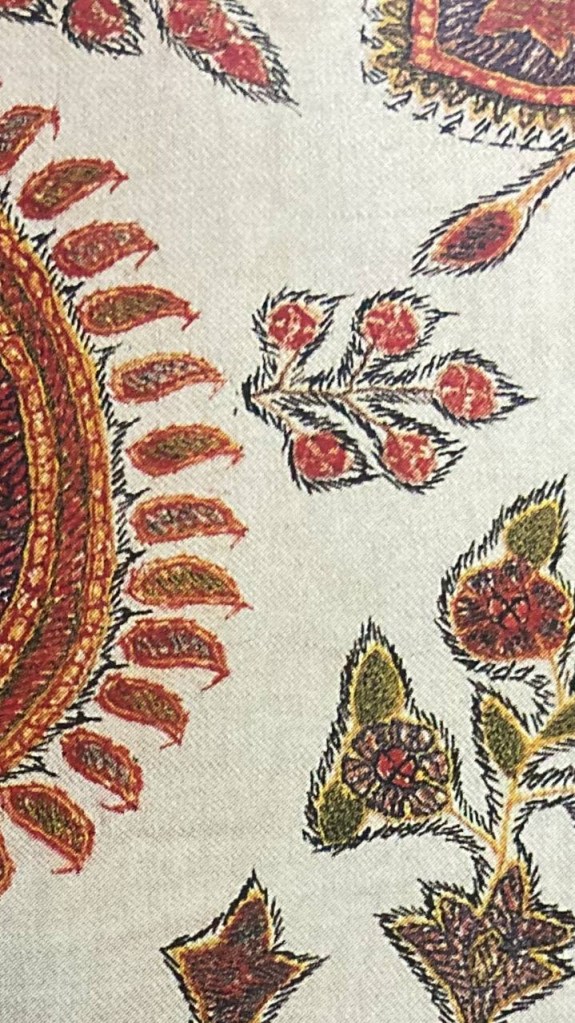
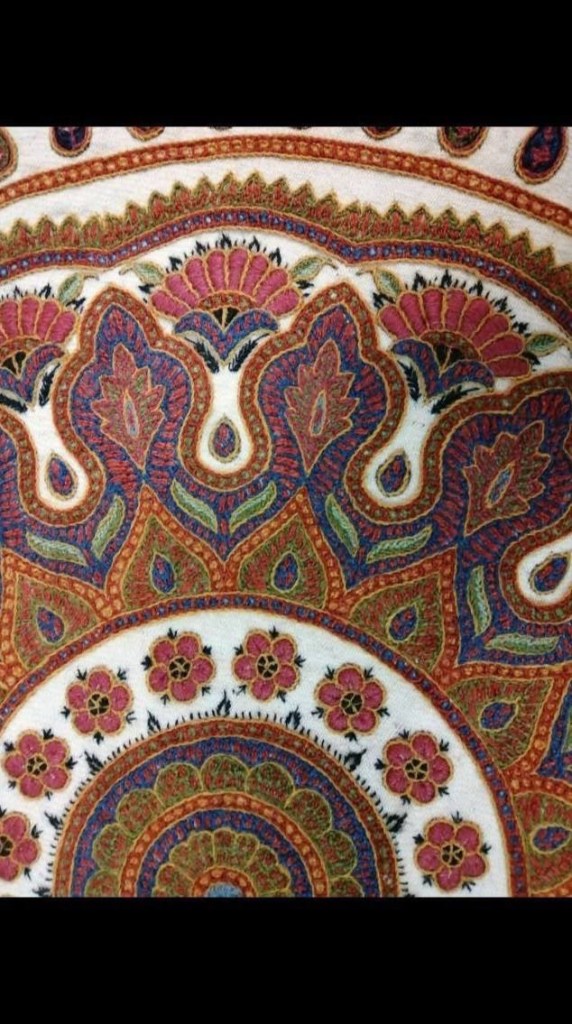
After completing the Pahlavi era technique we move on to the Ghajar era of Pateh . The foundation colour of this eras work varies from red or the natural colour of the wool twill .

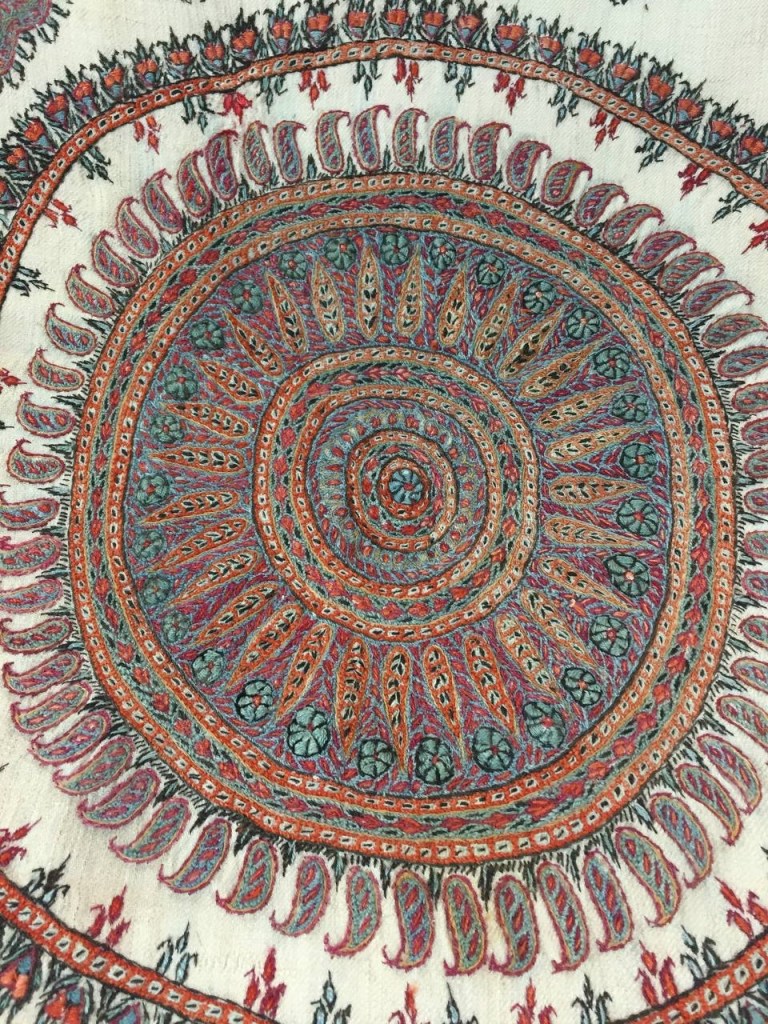
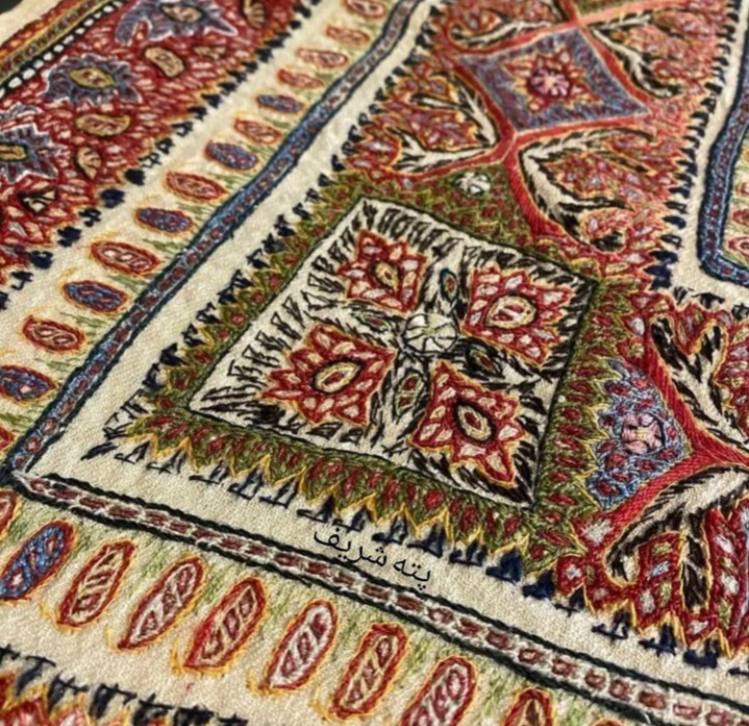
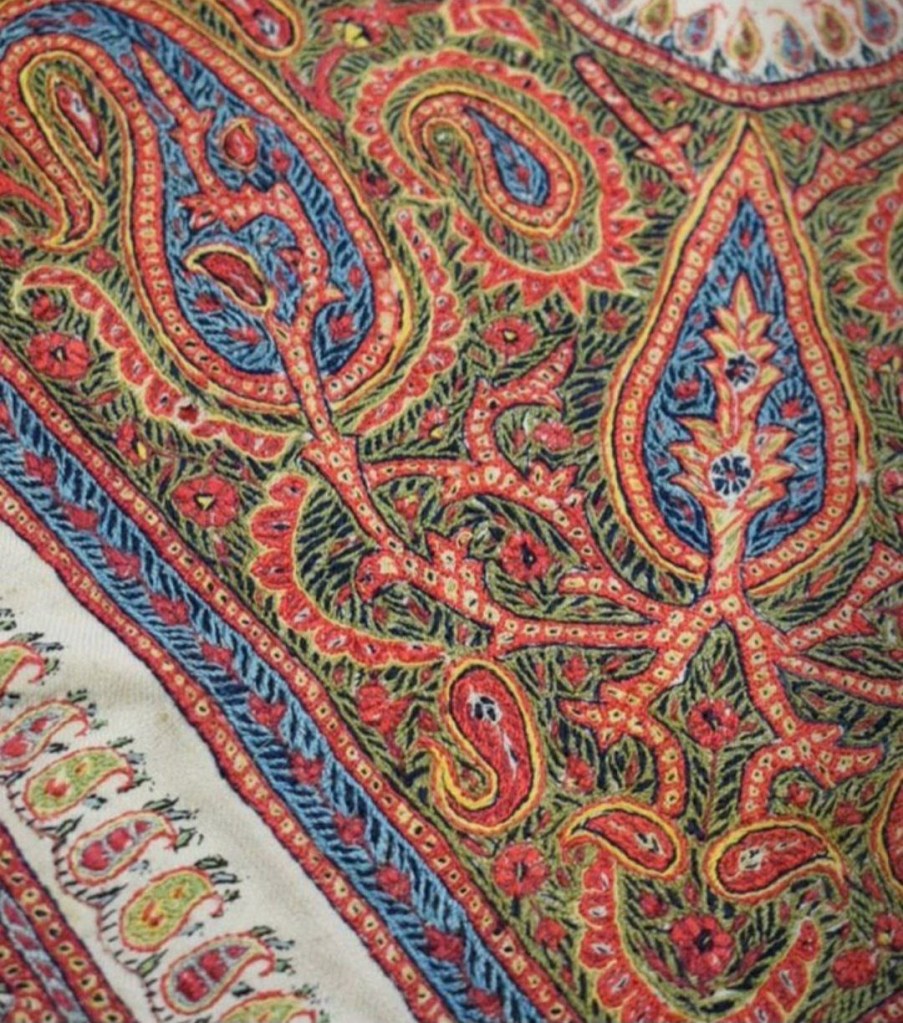
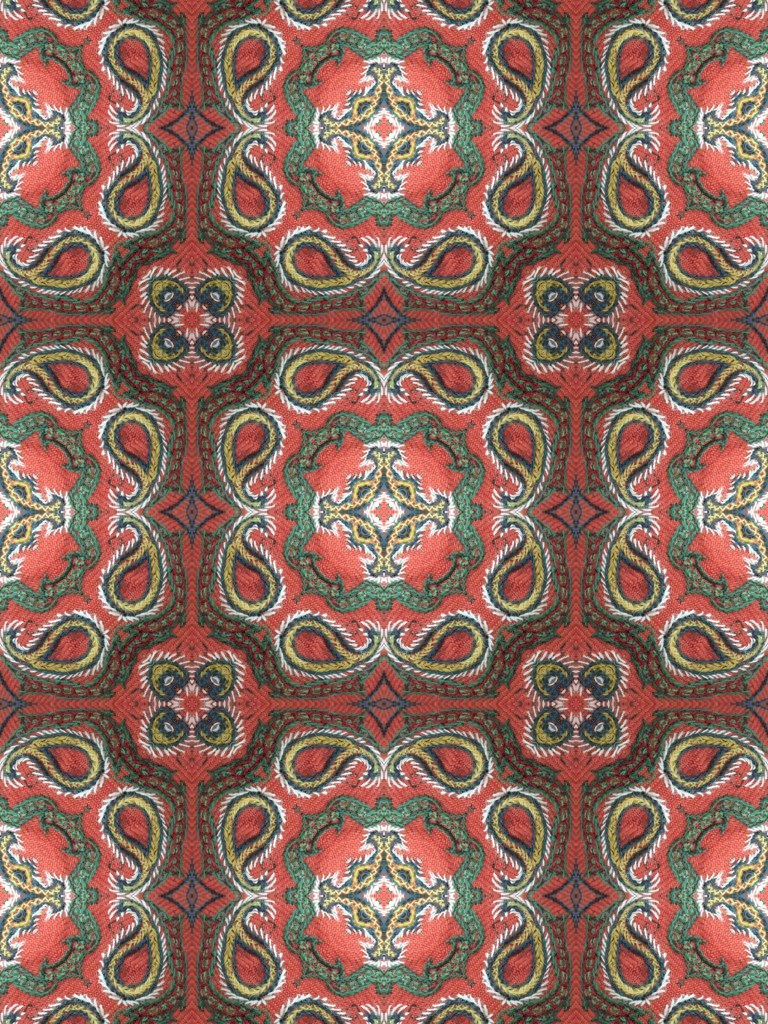
Here is a selection of Ghajar pieces
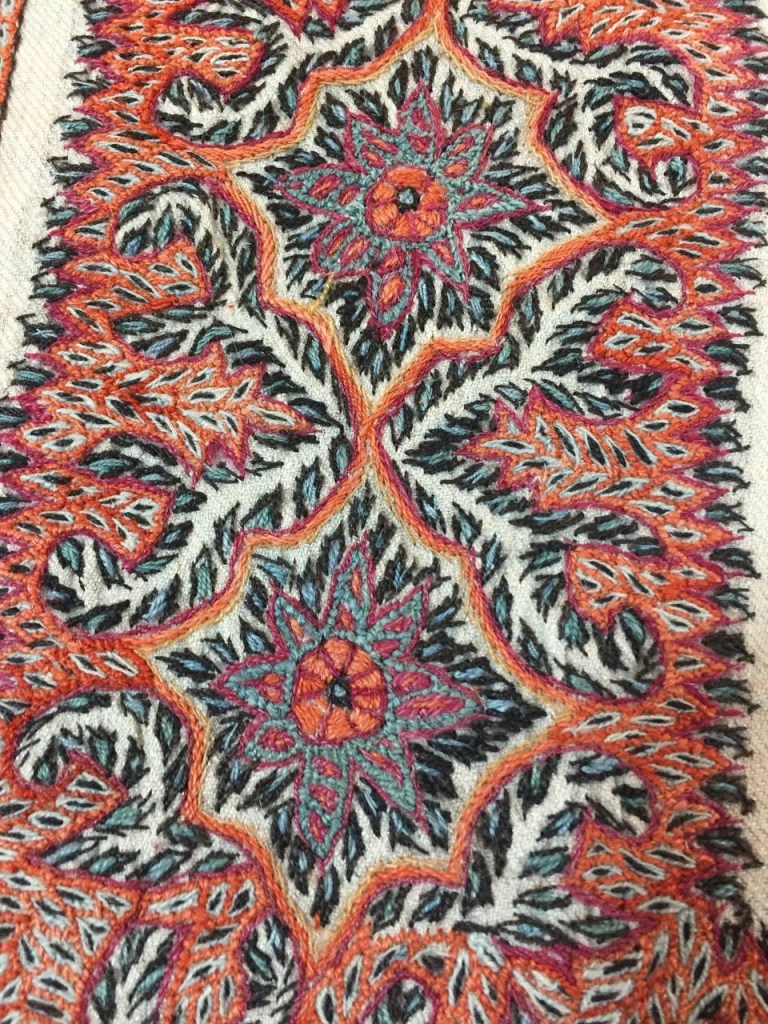
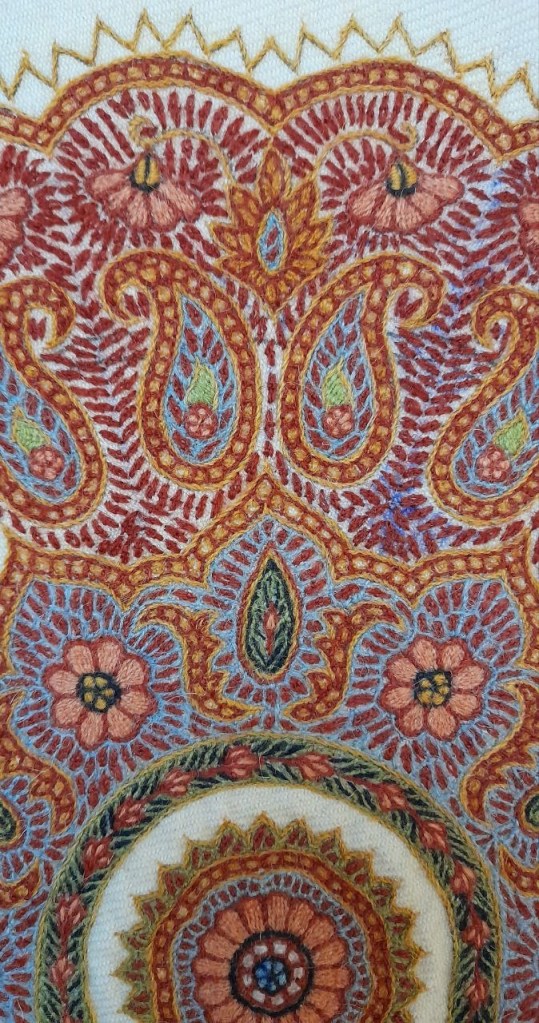
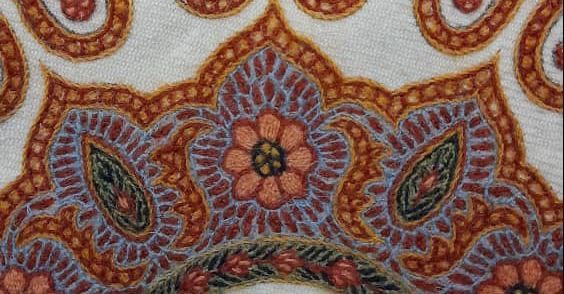
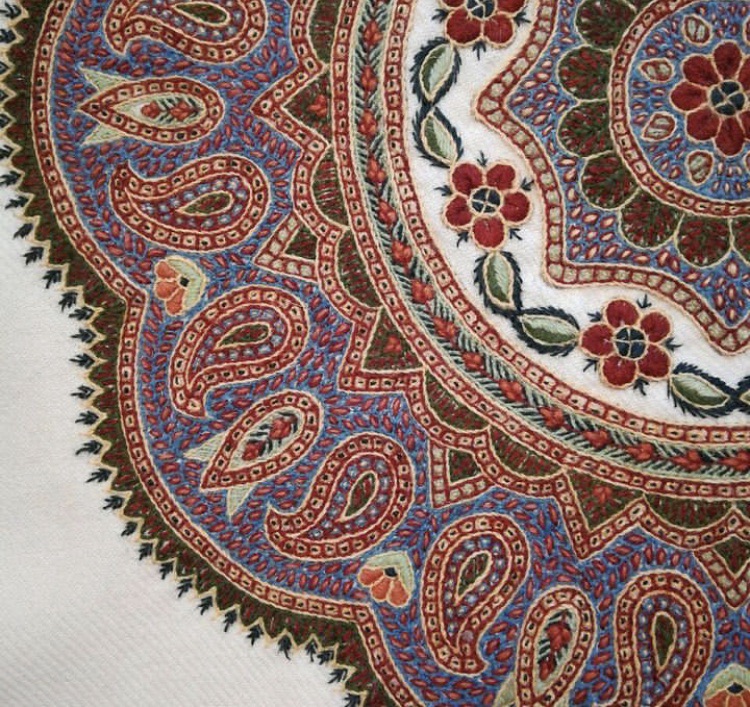
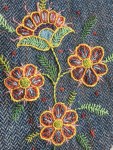
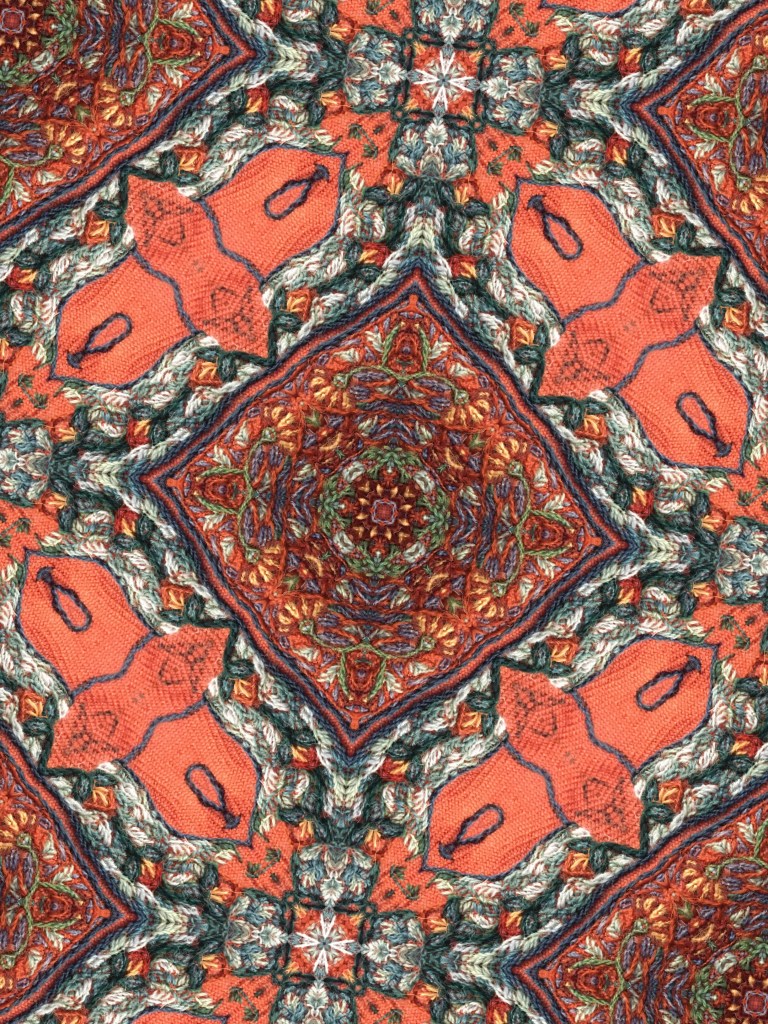
In comparison , the selection of pieces Ghorbani’s students below are recognizably unique . You will note the use of colour and distribution throughout the piece .You will also notice the accuracy of the stitching .

The students are required to start with a light background colour and then can move onto a choice of red or dark blue as they progress.

In years to come these pieces will be easily identified as Ghorbani’s heritage to this crewel embroidery technique.
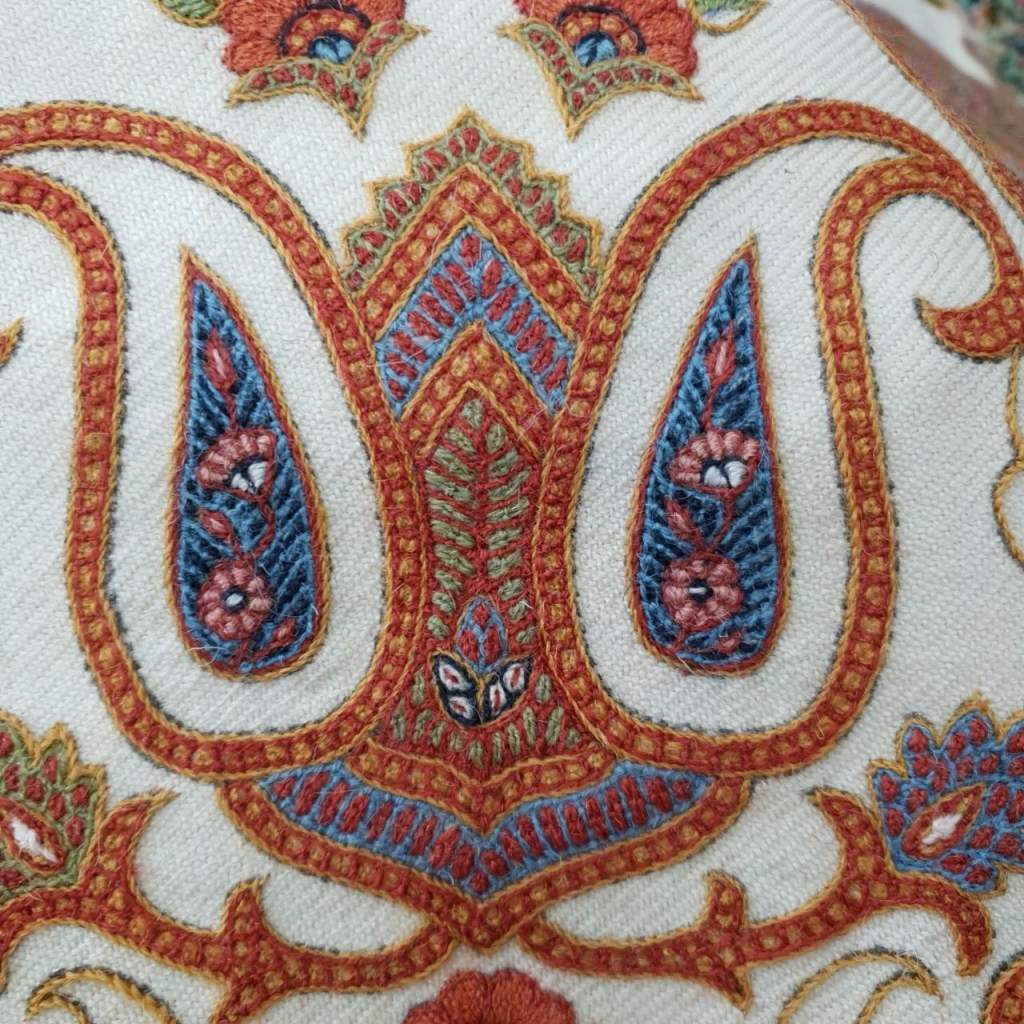
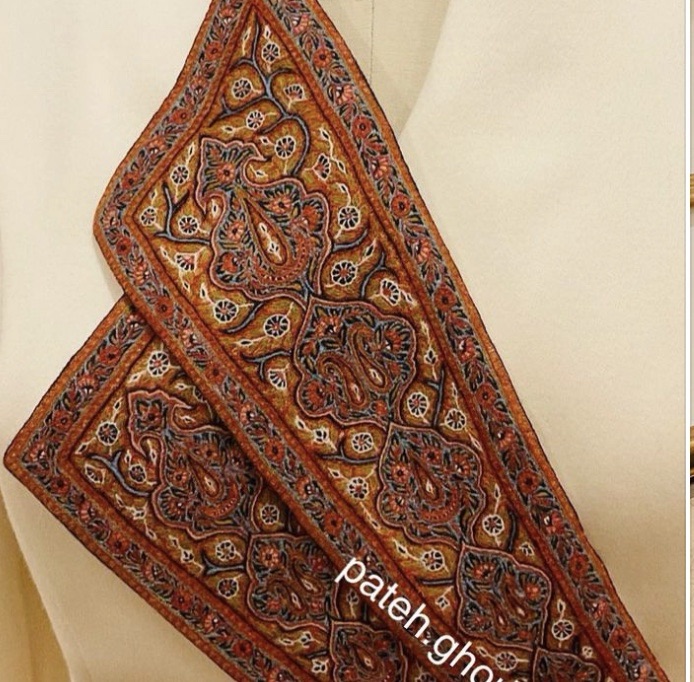
Ghorbani recently stitched the collar and accessories of HRH Queen Farah Pahlavi’s tailored suit celebrating the Iranian New Year .

Teaching in Canada

I am planning a trip to Canada and have decided to take some Pateh samples and ready made packs to see if anyone would be interested in learning over there !

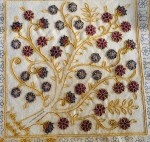
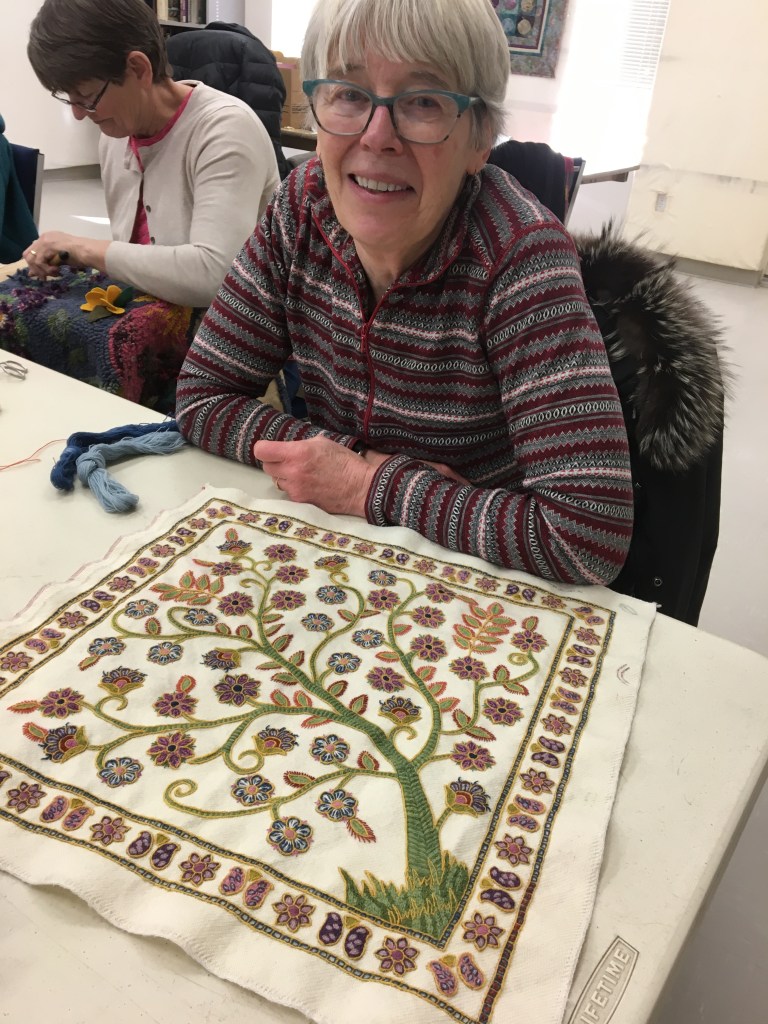
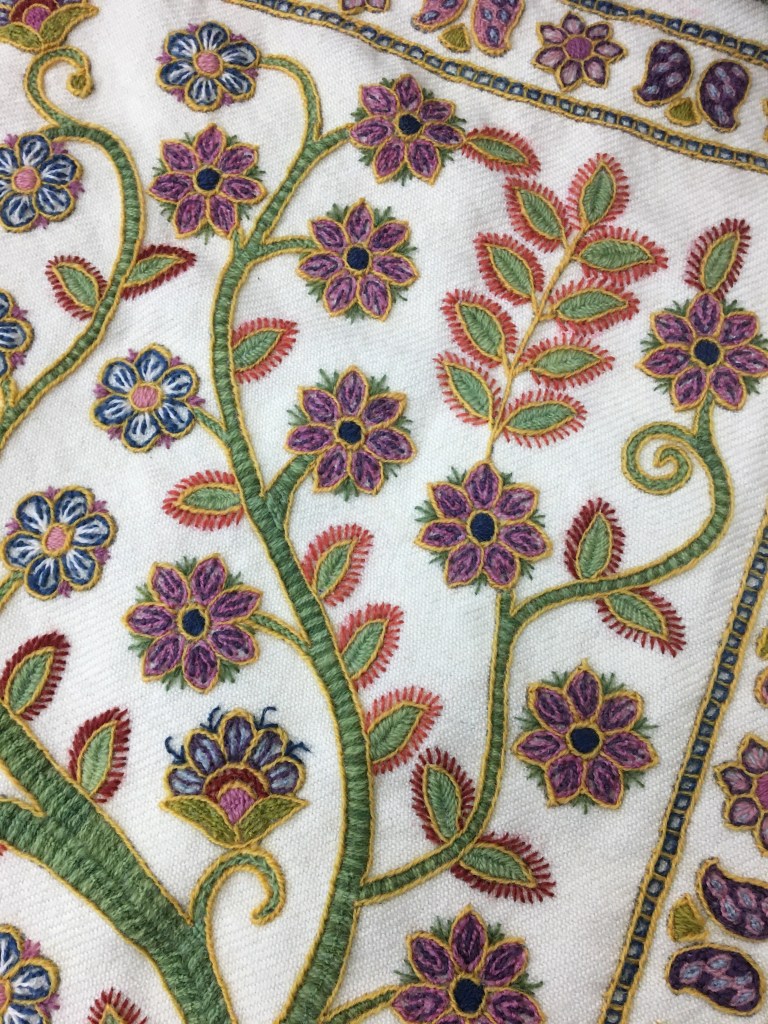
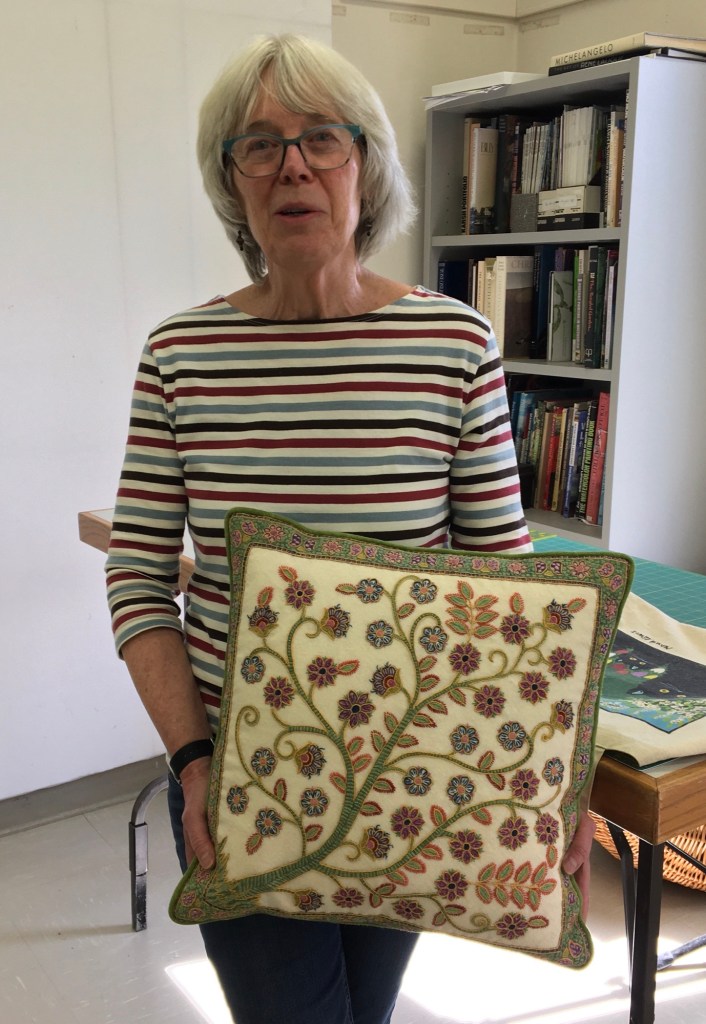
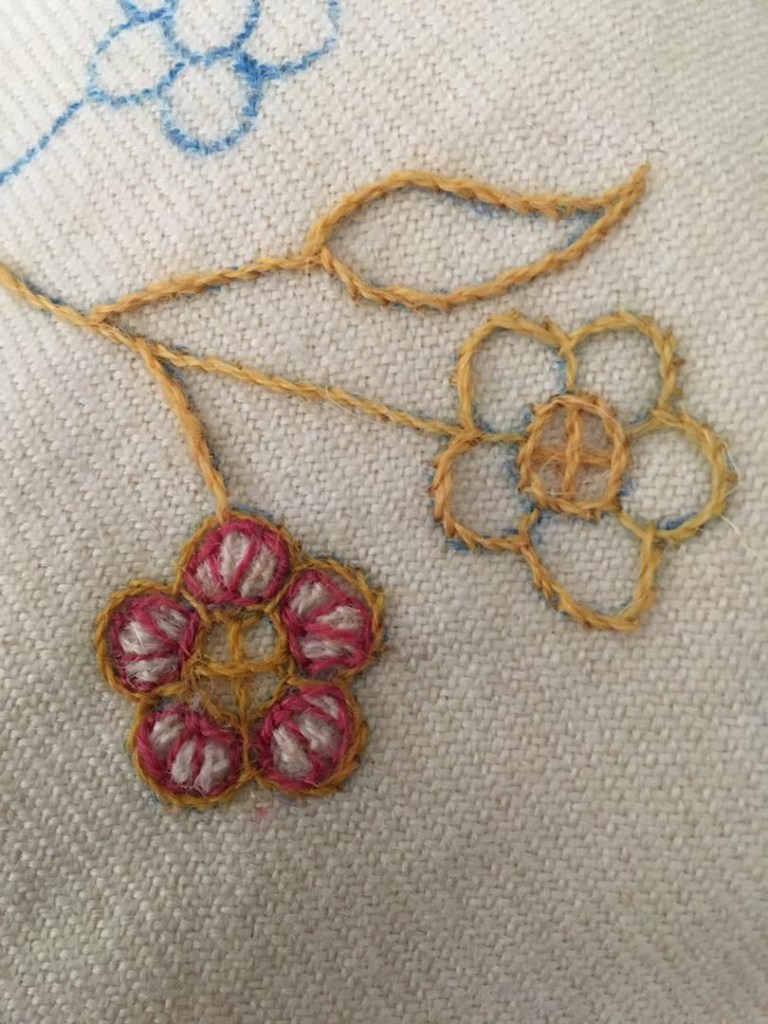
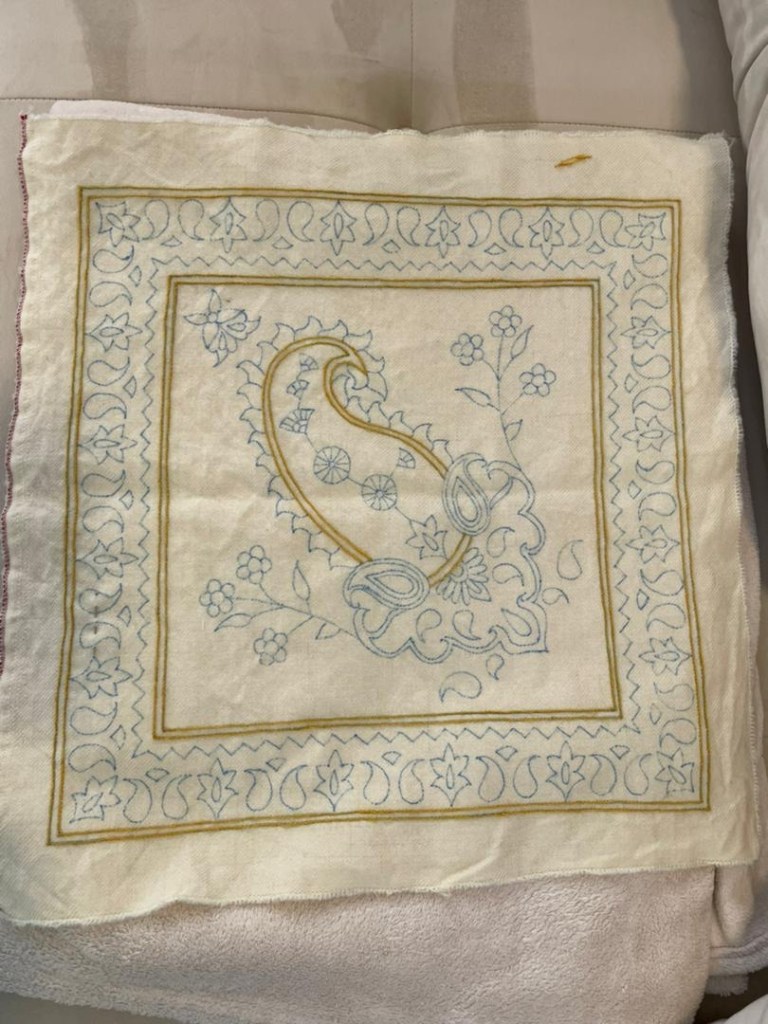
I have chosen this 40cm x 40cm design of the Tree of Life as a starter pack .It contains the design printed on a piece of hand woven wool and a selection of hand dyed yarns dyed with natural dyes .
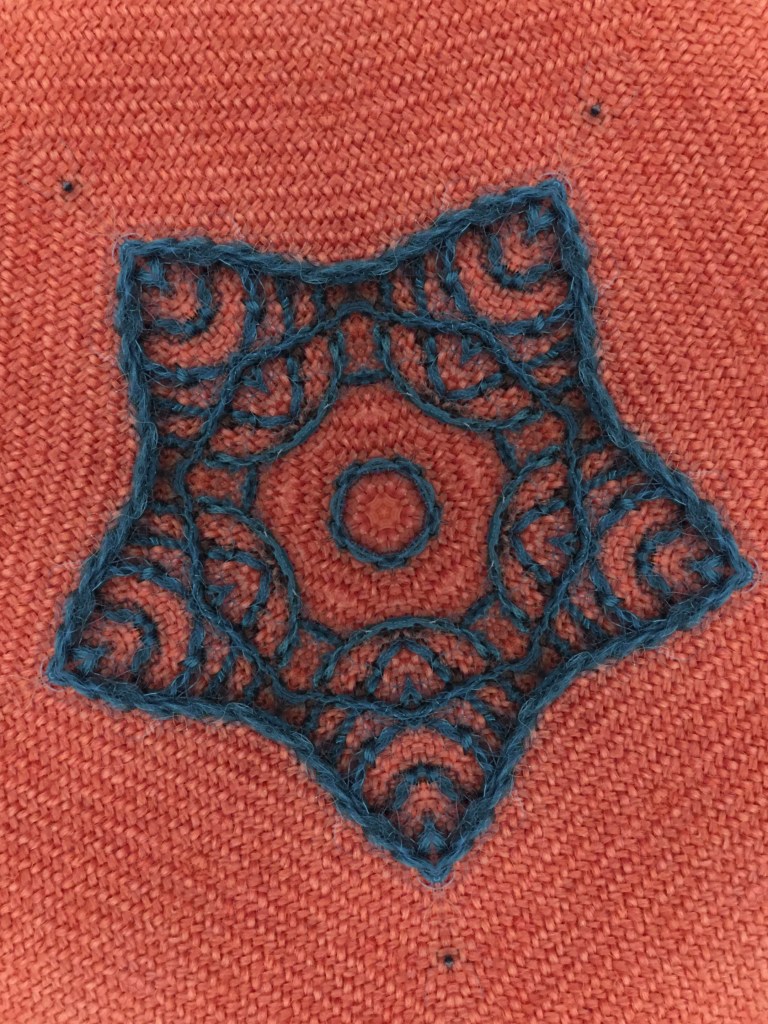
I am visiting my daughter and son in law in Ingersoll , Ontario which has a fantastic Creative Art Centre , fully equipped for artists, potters, jewellers, quilters and rug hookers . So I am aiming to engage a group there ! https://creativeartscentre.com/

Here’s how it’s going !

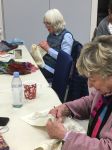
We started stitching and became friends!

The Creative Arts Centre in Ingersoll has a great program of Fiber Arts, Pottery, Patch Work and Quilting, Rug Hooking and Painting activities and workshops . It is fully equipped and has a considerable space for workshops and exhibitions .

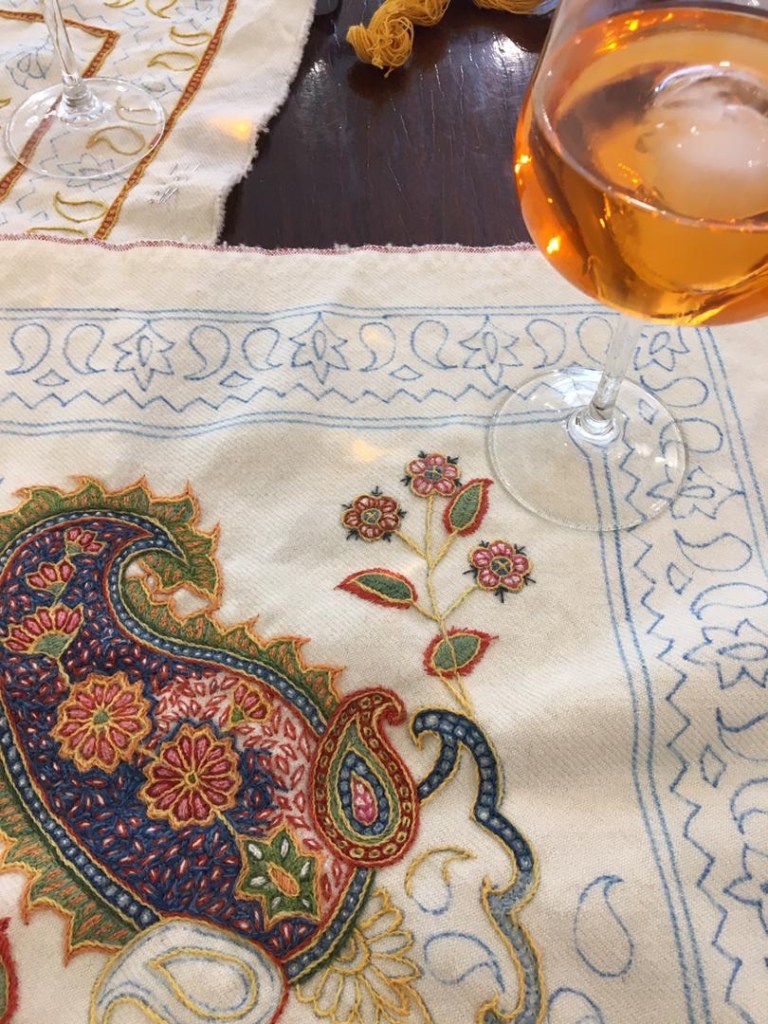
Susan Schurr from Stratford Ontario has stitched a beautiful Pateh piece. I always make allowances that Western Stitchers will want to make their own colour choices . Susan has used all the traditional stitches and has made some beautiful colour combinations making the piece exclusively her own. It is light and delicate and so well stitched !

The last time I was here I met Paulette Robinson .She is a potter and a member of the Creative Arts Centre .Paulette is a member of the Rug Hookers and introduced my offer to teach Pateh Doozi , an Iranian embroidery from Kerman . The timing was very contentious as it coincided with the beginning of serious political upheaval in Iran following the death of a young Kurdish girl called Mahsa Amini. To my amazement the members were not only up for an embroidery workshop but also very curious to hear about Iran and my life there .

And the research goes on ….!

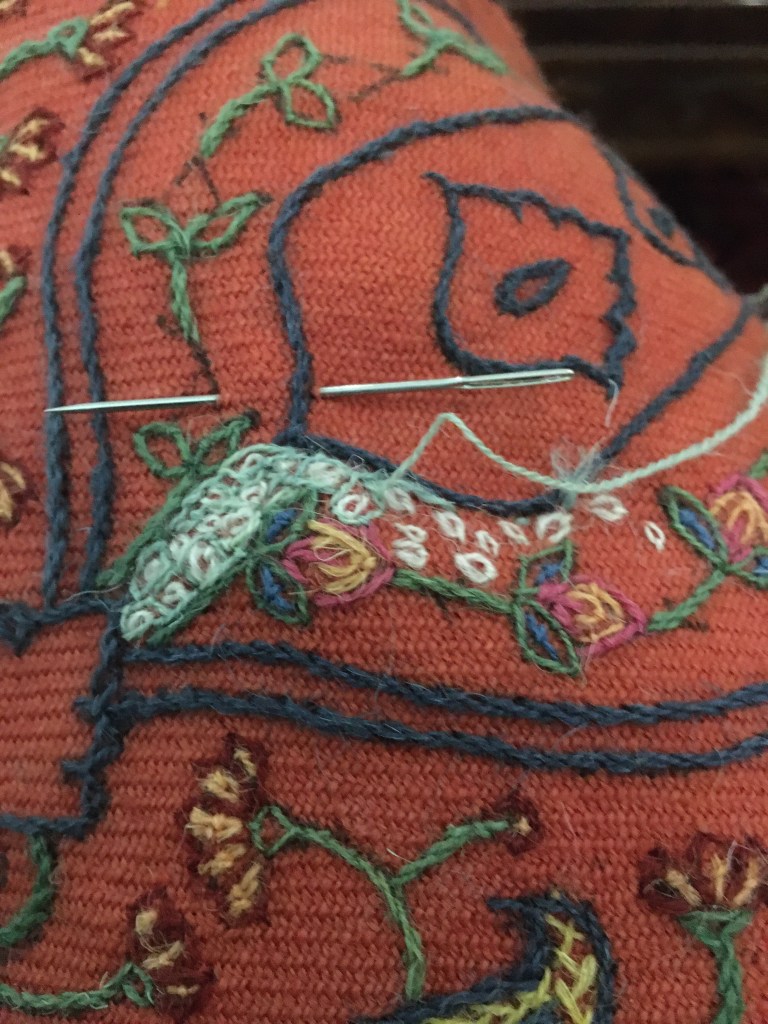
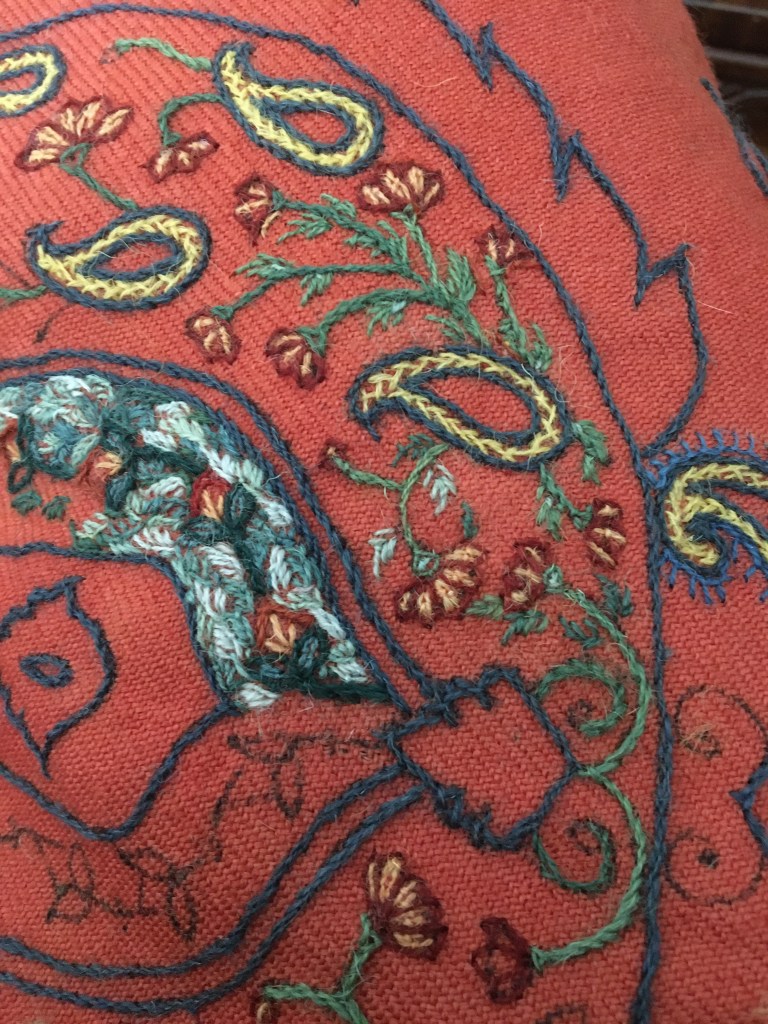
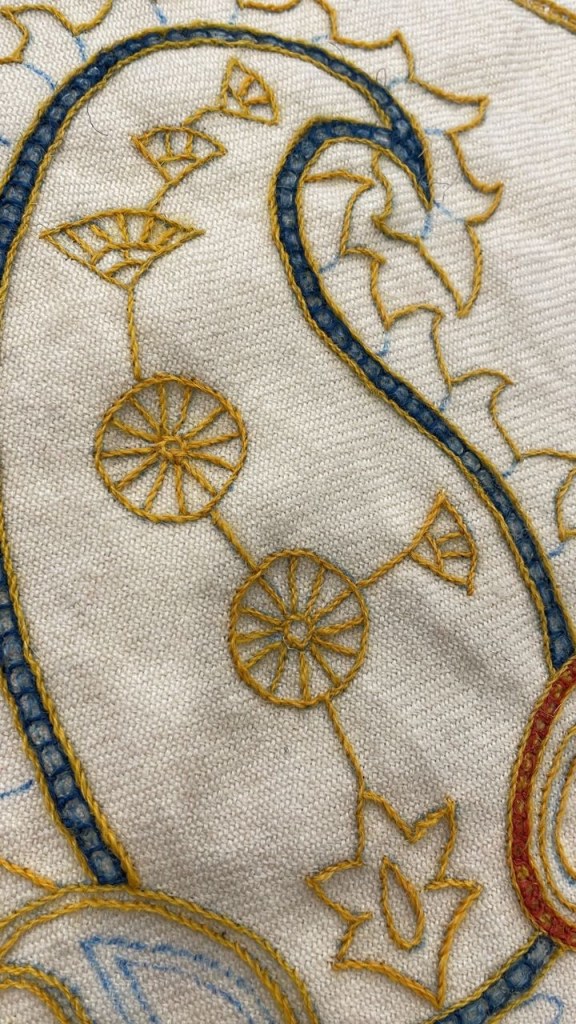
Since I started to learn how to do Pateh Doozi, an Iranian embroidery on woolen twill fabric with woolen yarns , i have discovered it has had several revivals . Recently I came across Pateh Kohan پته کهن , Kohan meaning ancient which is directly related to its Kashmiri cousin .It is far more organic than the Ghajar/Pahlavi and modern pateh styles although many of the stitches are the same .

The visual effect of the organic background filling stitches is obviously different but really needs a confident hand to achieve . I think I have unpicked more stitches than I have sewn …. Trying to get the flow of the stitches right and also coordinating colours combining the background fabric is not easy .

This craft has not yet developed into the commercial pack with an ordered colour chart and instructions as to which stitches to use where, therefore it is a matter of trial and error ! The more research and observation I do I realize that many more hours of both theory and practical lay ahead!

Playtime!

I am on a mission !

I have made it my mission to teach Pateh Doozi to any foreigner who visits Iran !

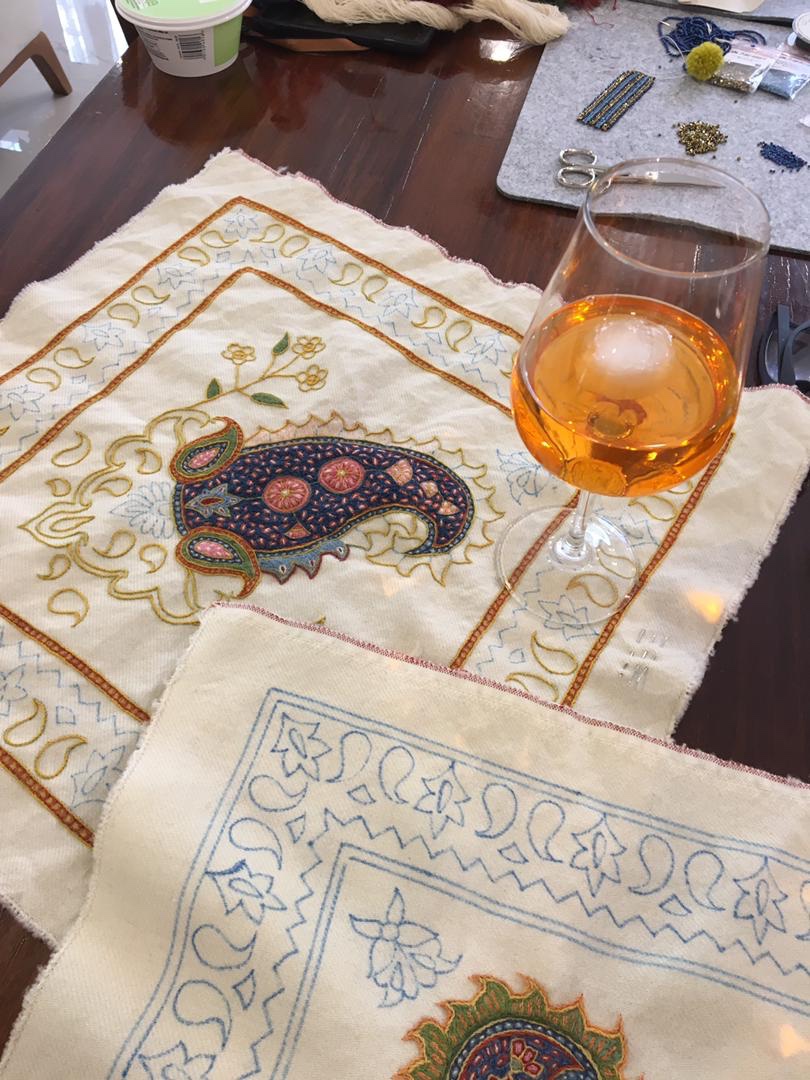
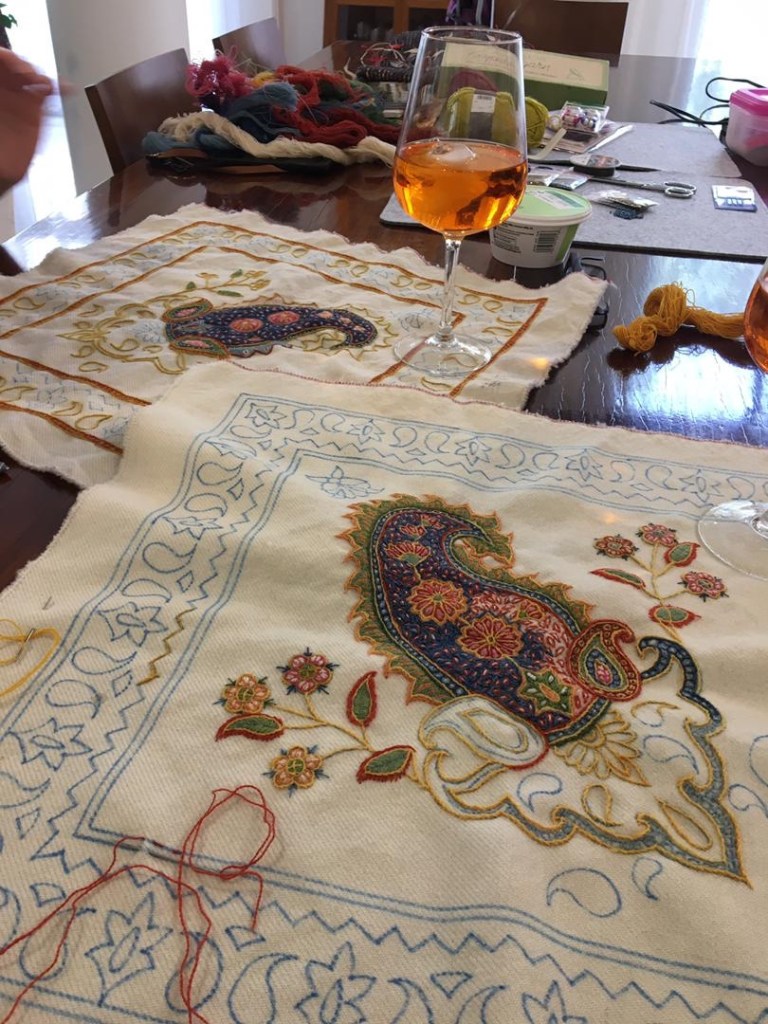
My present student is Pia Mueller from Switzerland ! Pia is a natural ! She is a beader and therefore has a keen eye for the intricate and she has an extra bonus for me …. she serves white wine during our stitching sessions !

I am not a ‘natural’ embroiderer …. I am too impatient. But Pateh Stitching sits so well on the woollen shawl .It is fills in fairly quickly therefore is engaging and easy to handle even for non embroiderers. It is a really great introduction to embroidery simply because it is so forgiving and I include it as a must in our City and Guilds Level 1 Embroidery Course for this reason.

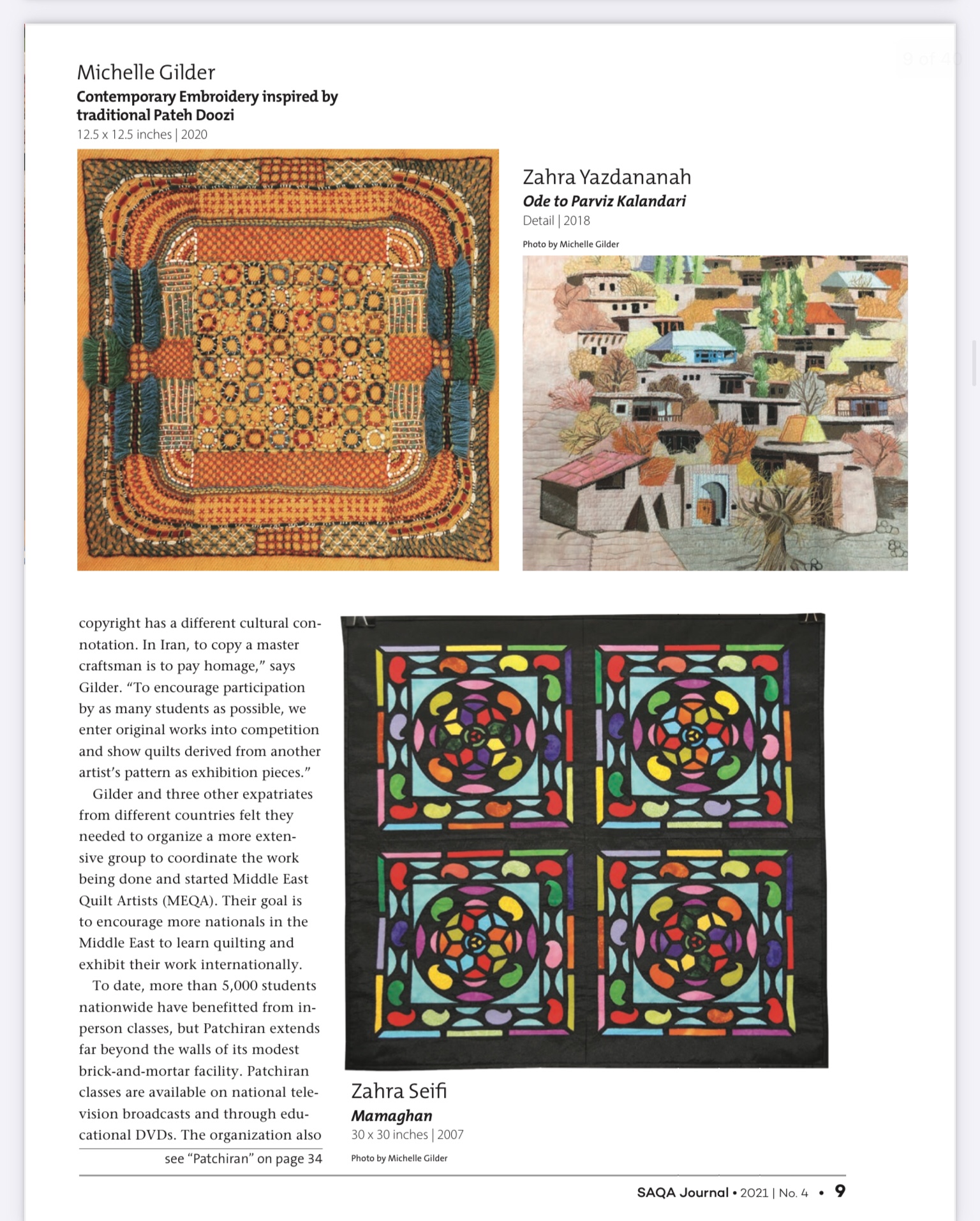
SAQA Studio Art Quilt Association Journal

January 2022

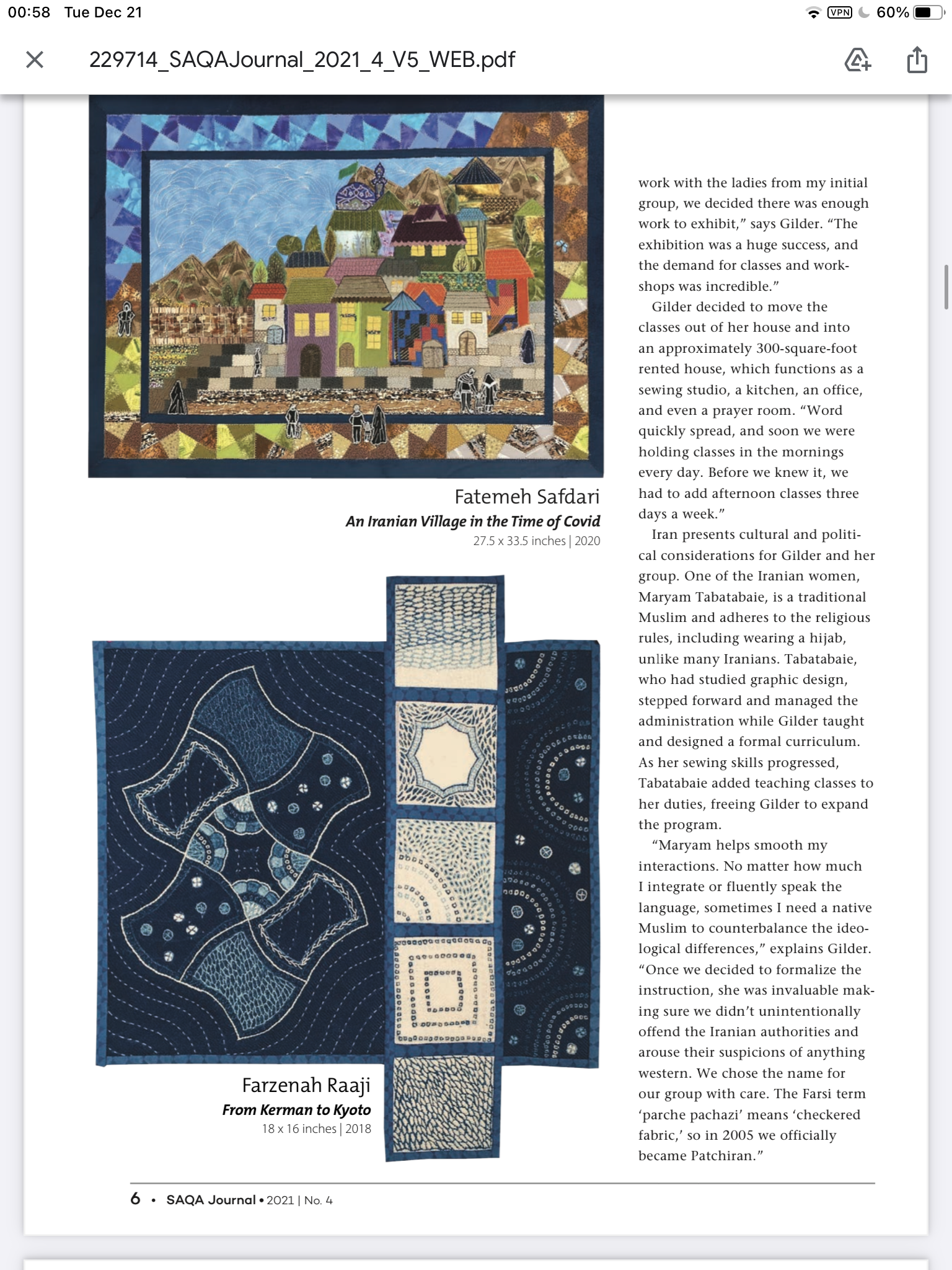
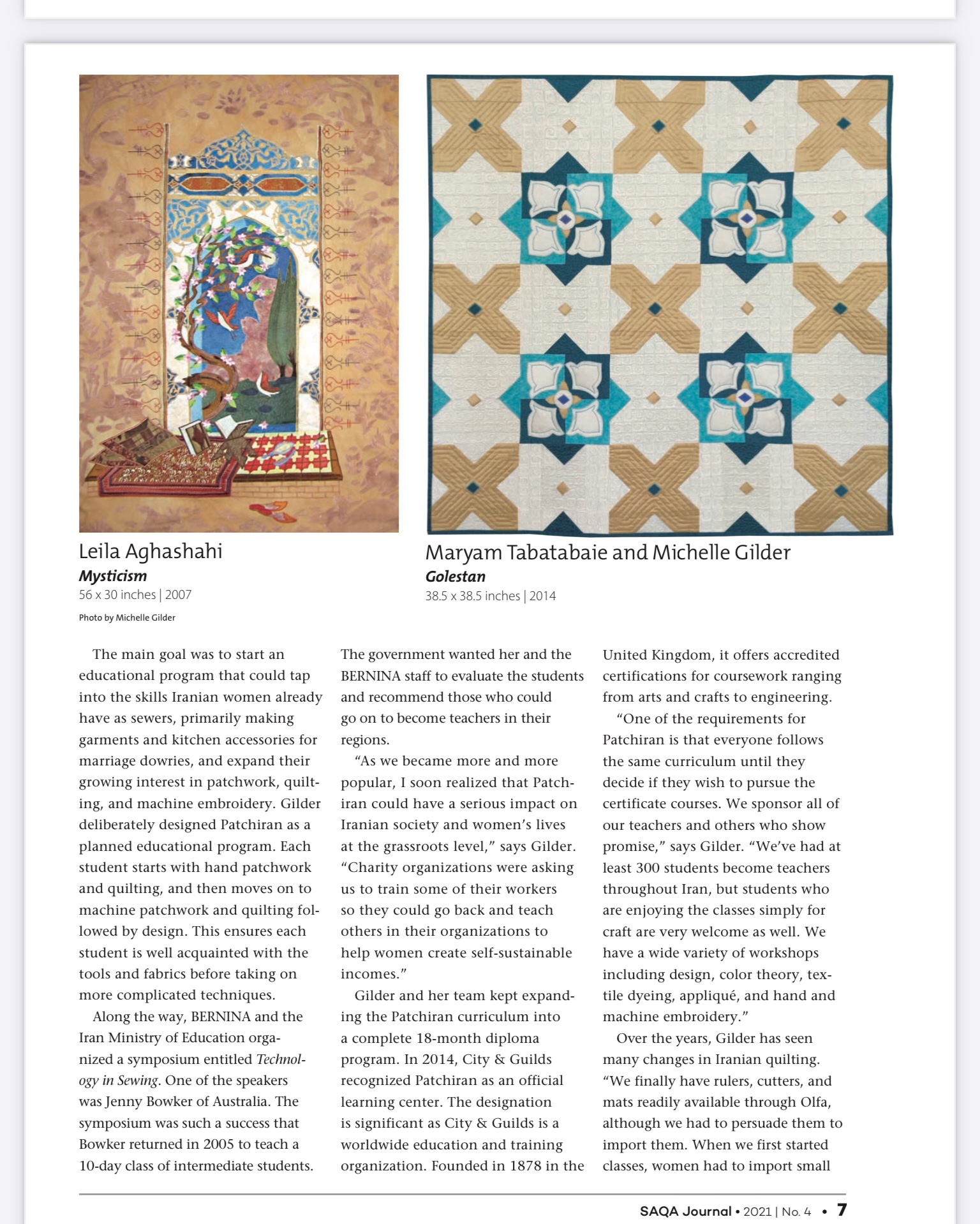
The ultimate honour was to have our story published in the SAQA Journal this month ! The journal is the Art Quilter Bible and to be featured in this issue along with many of our quilting idols and mentors is an incredible honour !

It is such a pleasure to see our students achieving recognition and success worldwide .It has been a long journey and an incredible experience for me and my friend and colleague Maryam Tabatabaie. Working in Iran as women is not easy and following protocol is imperative but it can be done and done well! We have set an example to the younger generation coming up that not only that work with a needle and thread is not an old fashioned occupation to keep housewives hands and minds busy ! ….but a creative outlet for their innovation , success in their own business endeavors and a positive road to self sustainability.

Some of our students have been coming to our workshops for over 18 years now and have traveled long distances nationwide . Each and every individual journey I recall with a sense of personal fulfillment .

The space at Patchiran has been a place of growth for many .It has also been a warm nurturing sanctuary where women have shared happy times, family stories , grief and heartache . The stitches made , techniques learned and innovation shared over the last 20 years have really exceeded our expectations and we hope to be able to continue and encompass the young vibrant artists developing in Iran today .

Passive pastimes and hobbies are ‘out’ but our laptops are now being used as powerful creative design tools and with profitable business and management platforms such as Etsy and Instagram artists are connecting with their clients directly and making money .

We have yet again turned towards more practical ways of sustaining a more ‘rounded’ life by reconnecting with our spiritual , psychological and economical needs. People are returning to stitch ,weave ,repairing and mending as part of a “slower ” more meaningful and introspective lifestyle. This is creating a revival and appreciation of arts and crafts lost to consumerism and it is an exciting development to witness here in Iran too…

What we can achieve under the auspices of the humble needle and thread is unbelievable!

http://patchiran.ir

The Covid Chronicle

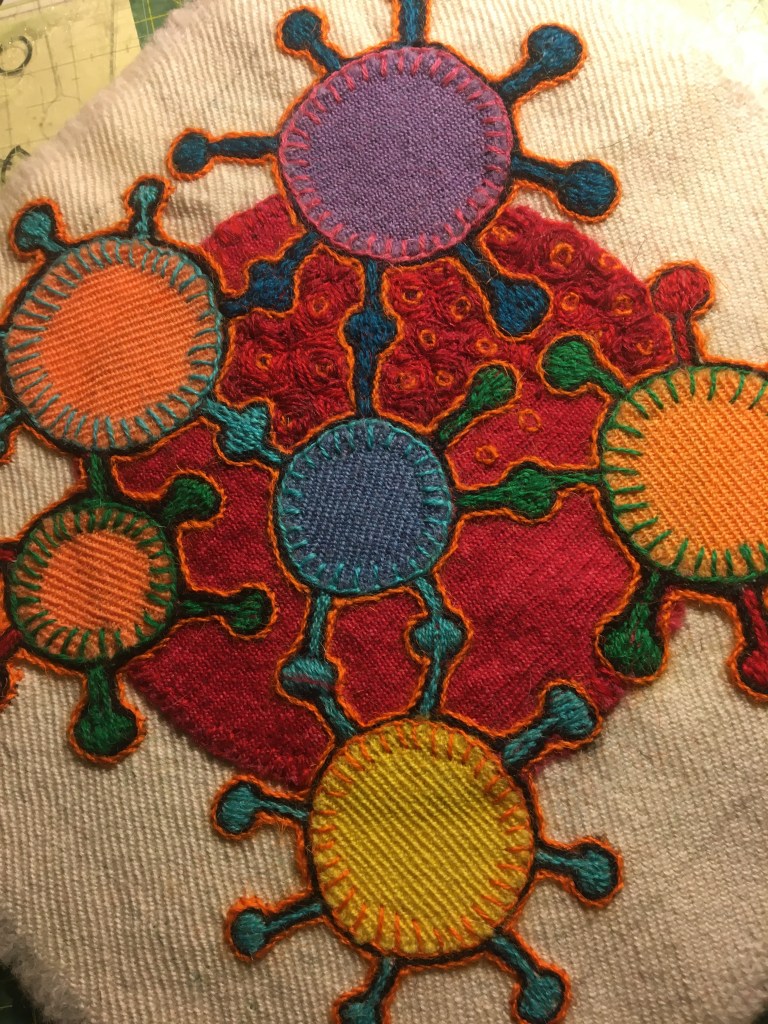
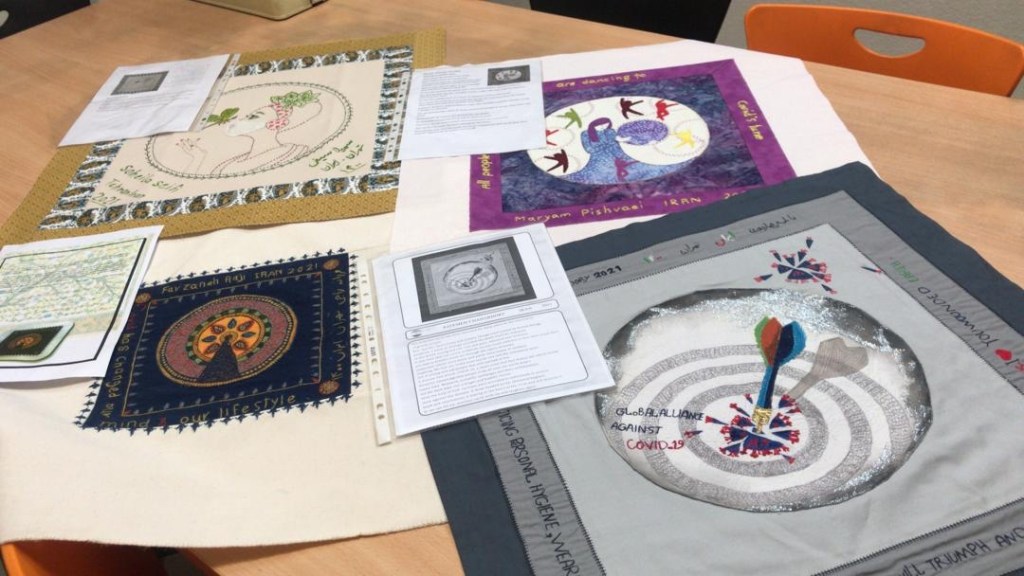
Artist Statement : My piece is called “Till We Meet Again” “ and is a continuation of work I had been doing during the lockdown on traditional Iranian embroidery .The embroidery is on woolen fabric and yarns from Kerman , Iran and is stitched with traditional Pateh Doozi stitches but has a modern design interpreting the Covid 19 virus.

Lockdown Embroidery

I live in Iran where there has been over 130.000 deaths due to Covid until now. The vaccination program was slow but eventually I had my two jabs of the Chinese vaccine Sinopharm . I could not travel due to Lockdown and have not been able to travel as neither the UK , Germany nor Canada recognize Sinopharm as a legitimate vaccine . I have not seen my children and my family since the first lockdown .

I am holding my breath , trying to stay positive ….and am very grateful that we are all safe and healthy so far !

Till we meet again !

https://instagram.com/the_covid_chronicle?utm_medium=copy_link

This project was started by Wendy Bliss, Textile Artist , based in the UK .The project is in aid of MIND which is a charitable organization which provides support and empowerment to anyone suffering from mental health issues especially in the wake of the global pandemic in 2019.

Update: my piece kept evolving as I was waiting for the group to complete their work . As the dire situation got worse and new variants kept appearing , it seems my piece got darker , less coherent and more dispersed as too did the inside of my head .

Group Work

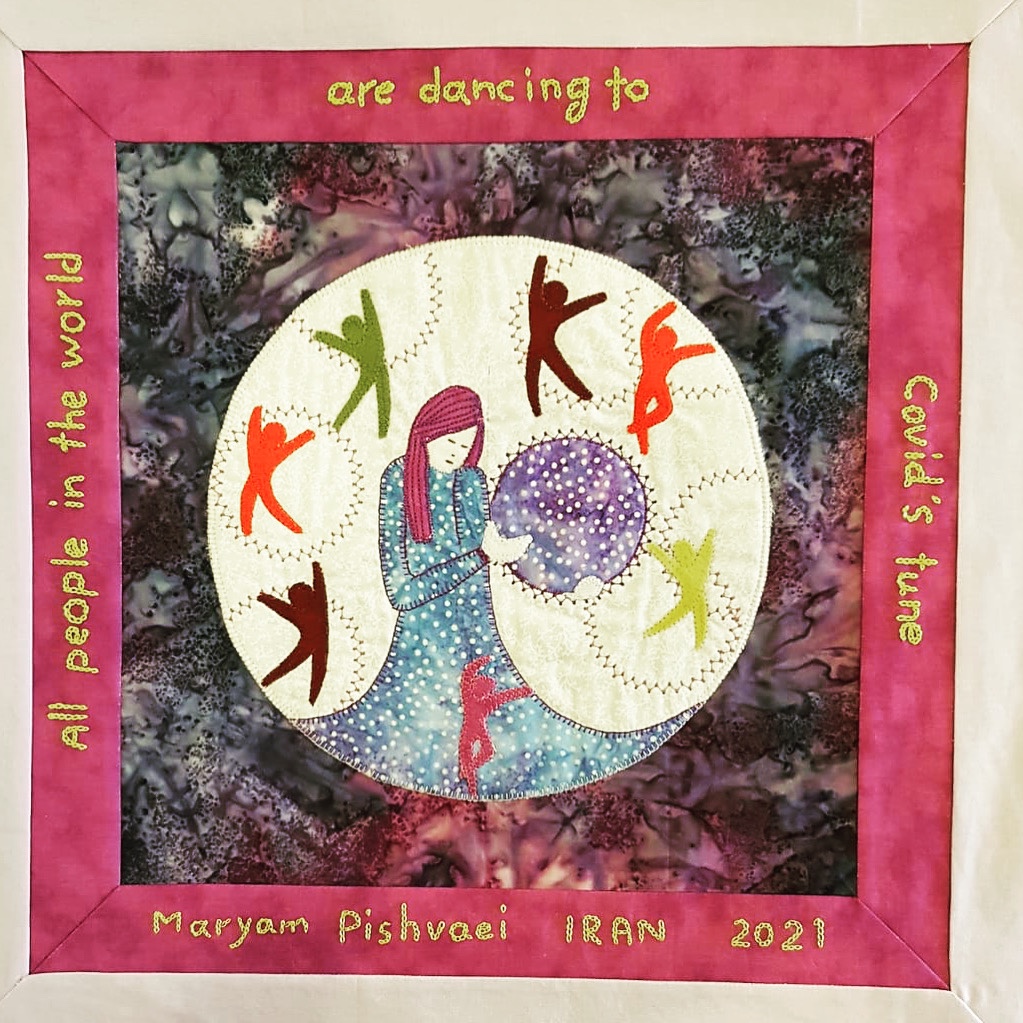
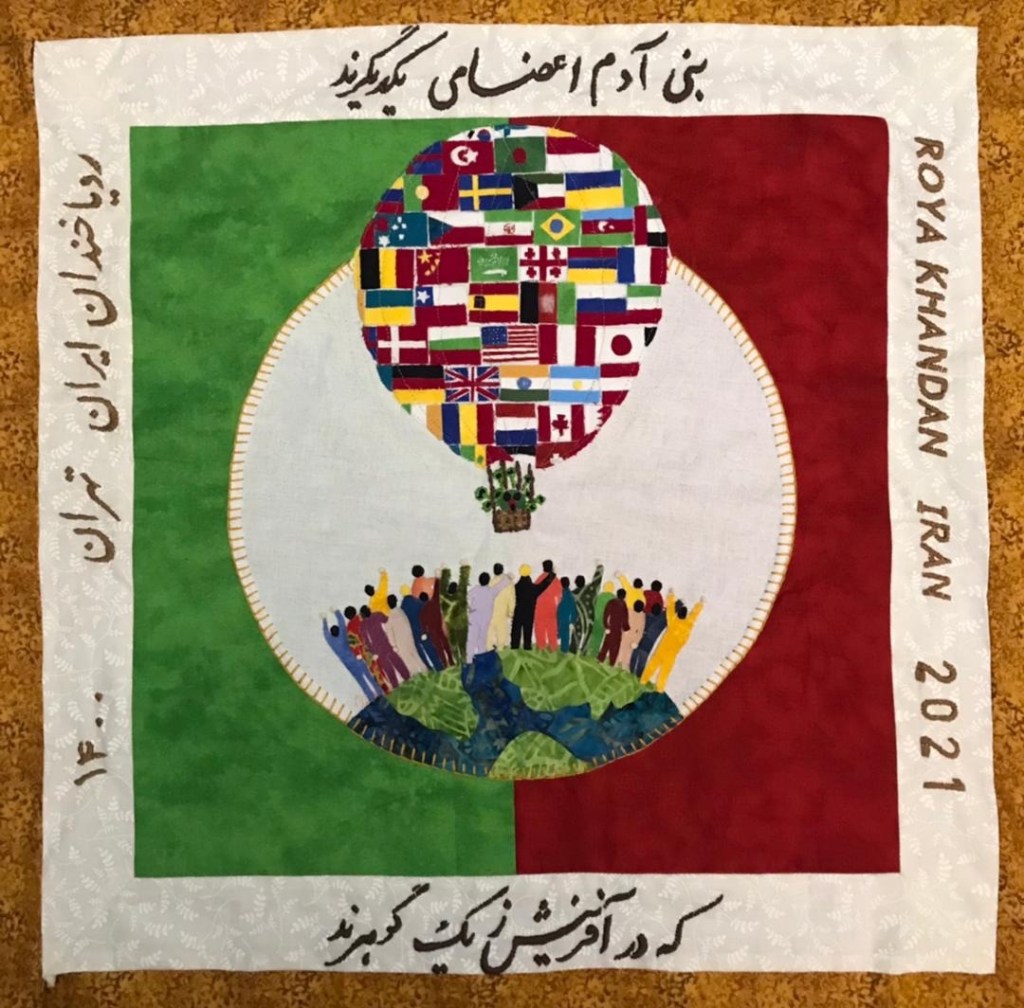
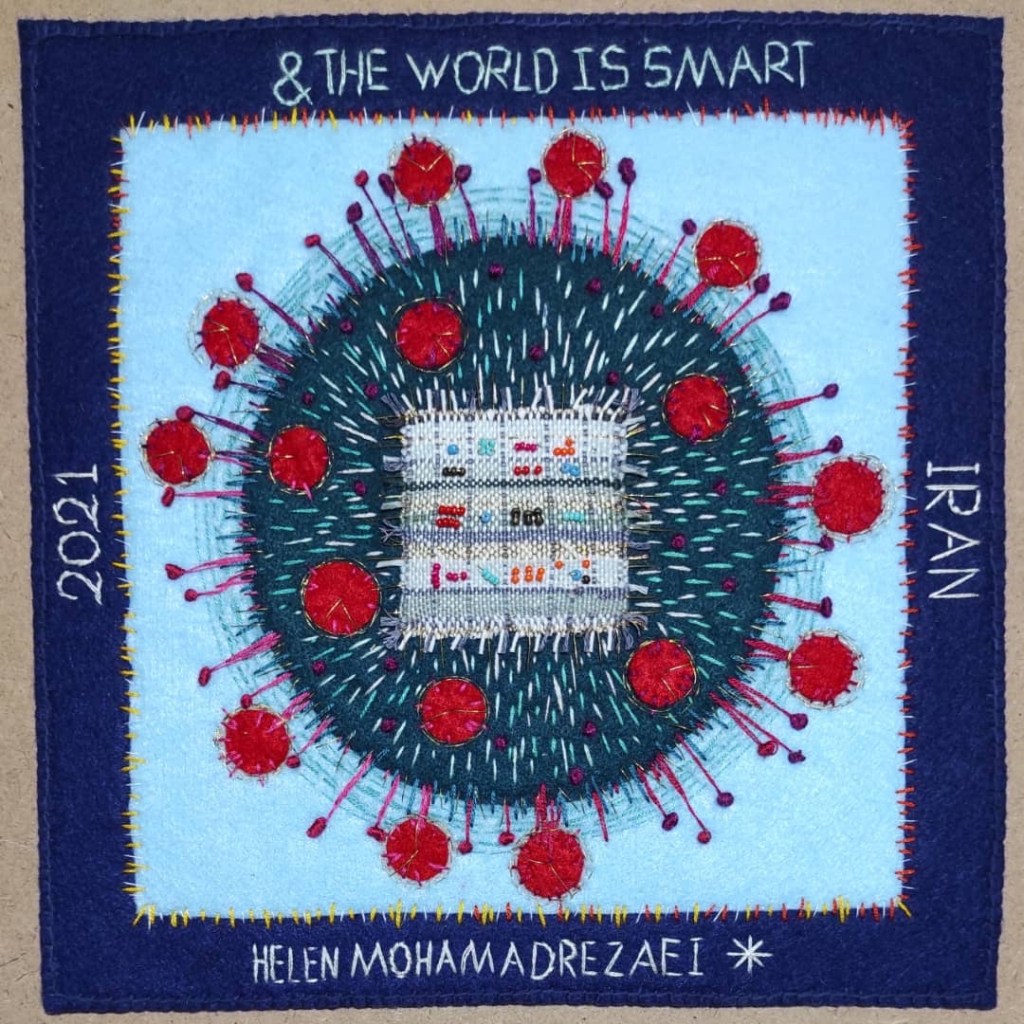
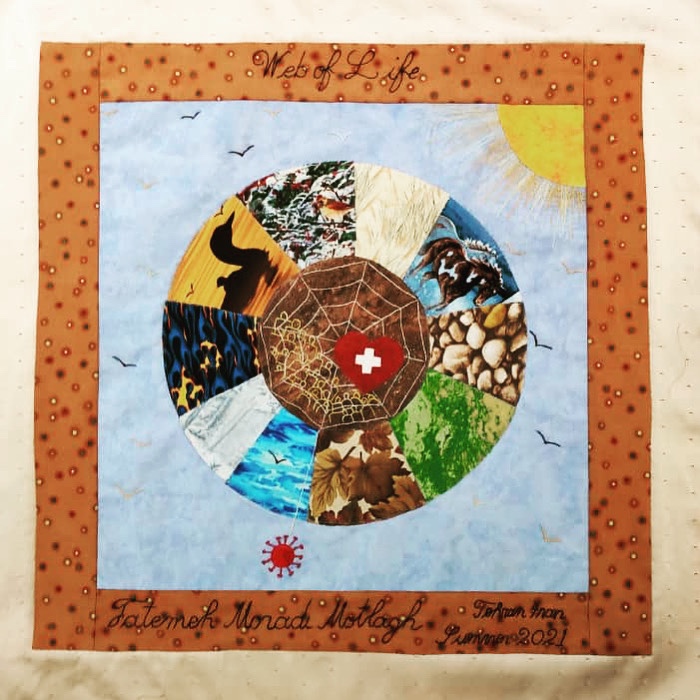
16 members of Patchiran decided to take part in the project and they were mentored by myself and Maryam Tabatabaie . We translated the brief which was to design a piece portraying either their own experiences during the Covid Pandemic or subjects relating to the Lockdown.

We were eager that each member experiment with their own interpretation of the brief and suggested included Farsi and if possible traditional embroidery and motifs.

The group includes patchwork and quilting,weaving ,graphic and embroidery artists and each submitted their design and final piece according to the template of choice along with a 200 word artist statement .

Transporting the pieces was also a problem especially during the pandemic what with cancelled flights, family members and friends contracting the disease and also deaths . Also , impositioning people to take on even more responsibility juggling PCR tests and flight requirements is difficult .That is why a big thank you goes to Clare Goodall from the British Embassy here in Tehran who kindly agreed to transport the pieces to the Uk and register post them to Wendy Bliss before the deadline

We are excited to announce that these 16 pieces from Iran will tour in the UK in 2022 as part of a worldwide contribution of 140 pieces stitched into a 35m long panel .

Mystical Metropolis

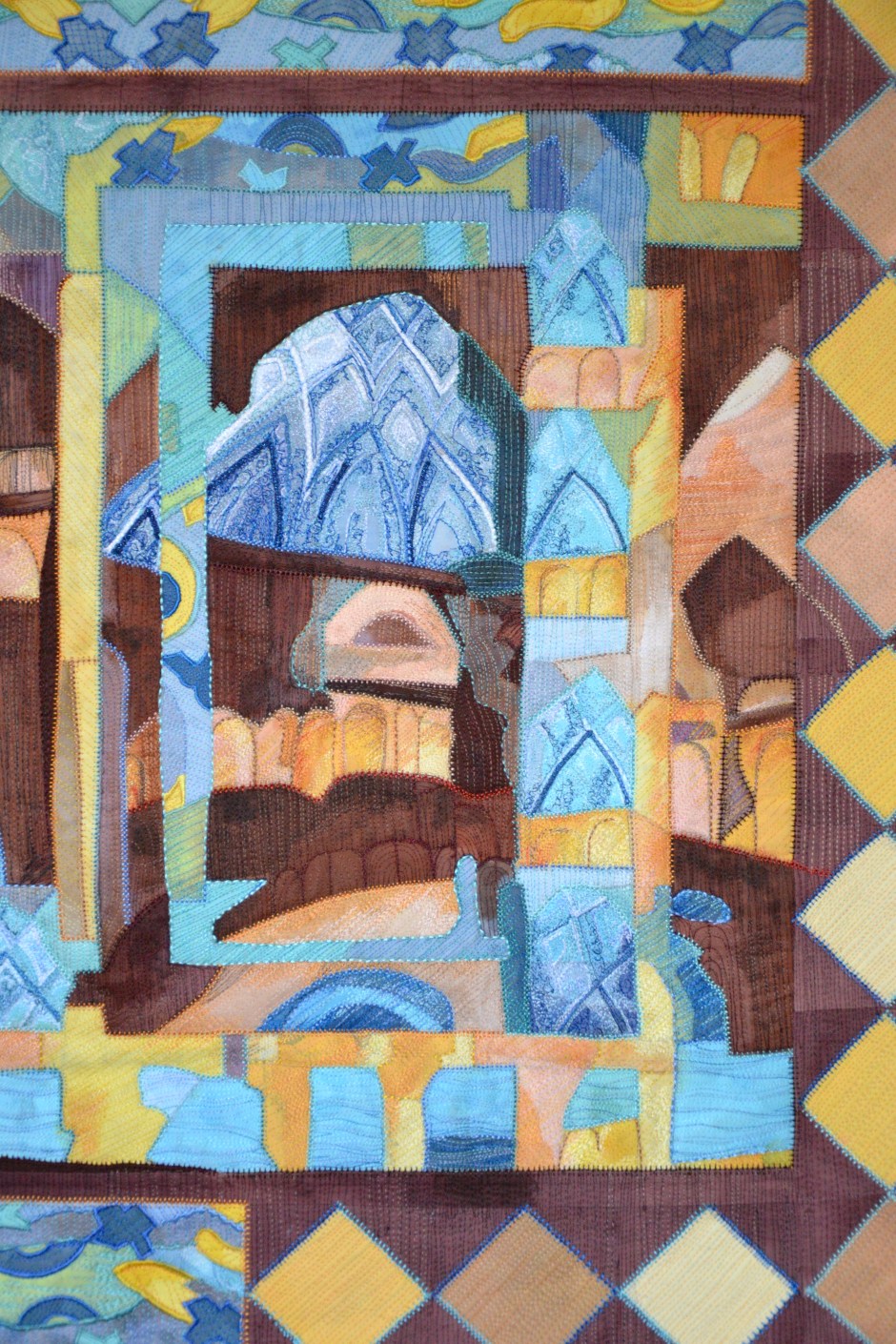
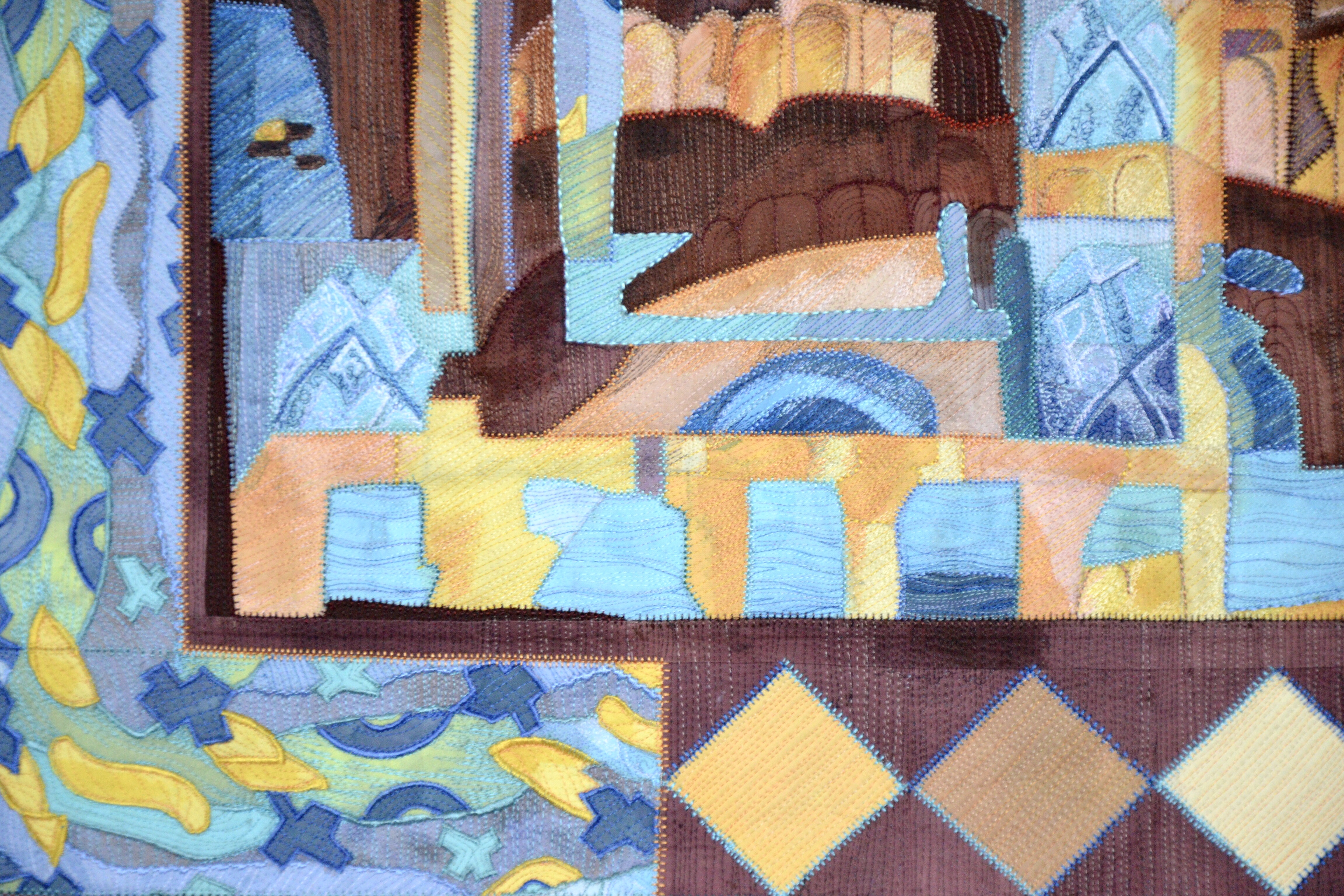
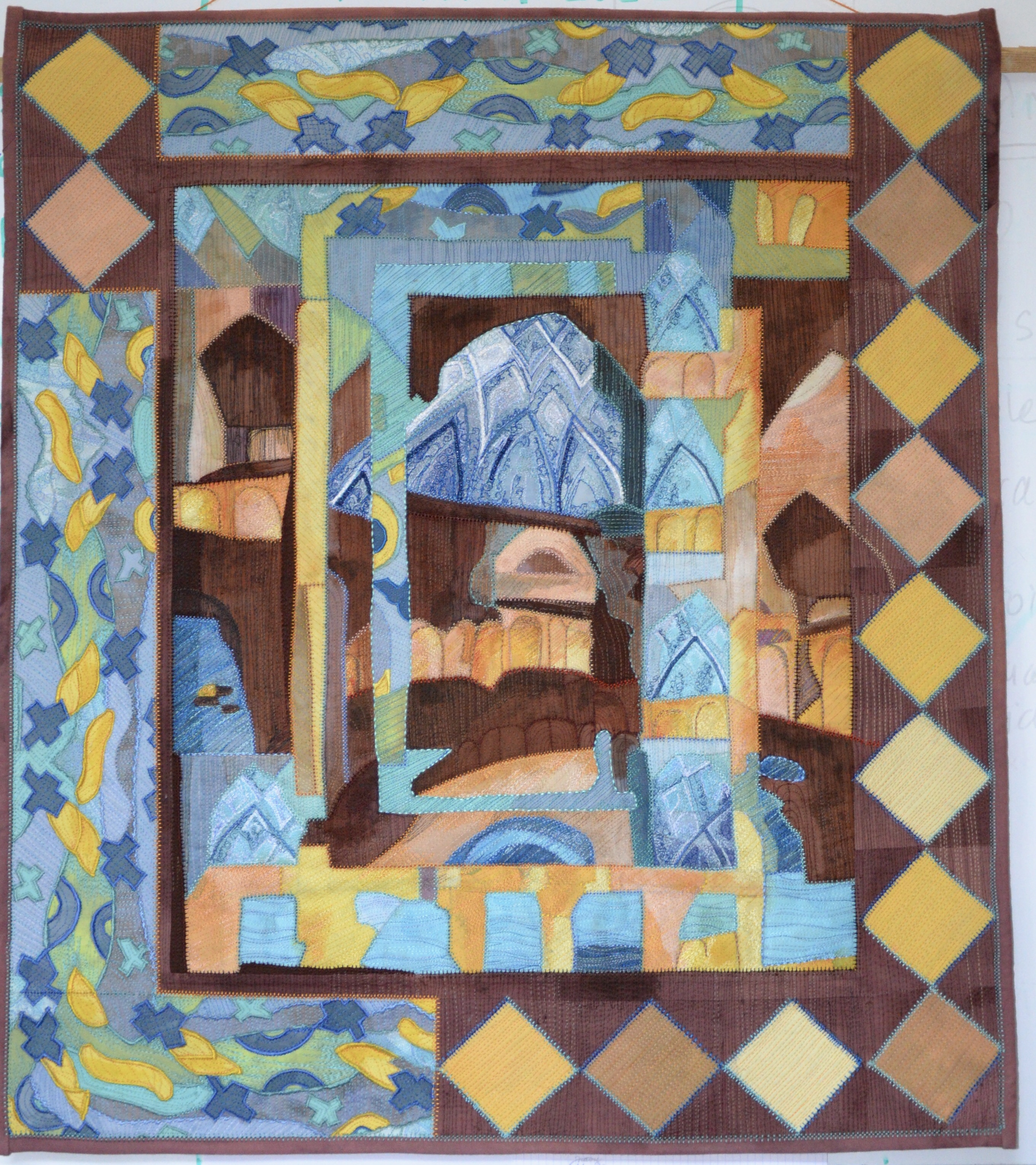
This is an important piece to me as it is Kashan , one of my favourite places in Iran.

It is the colours of Iran.

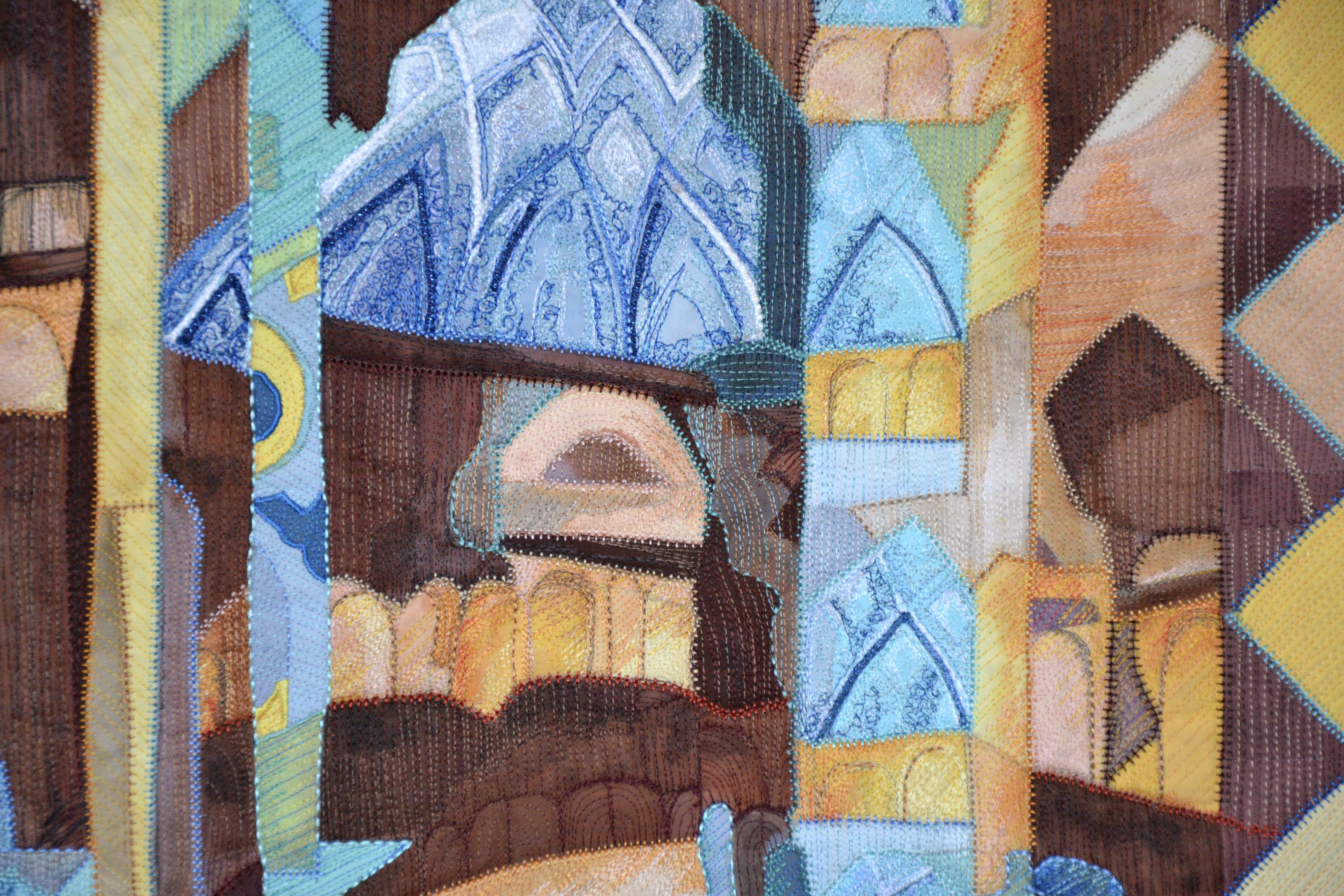
I have tried to capture the simplicity of raw mud brick and their colours in contrast to the vivid blues of the skies, running water and incredible detailed ceramic work in the domes .

The Building is an old Bath House and has running water all around in pools and channels .

It is cool and peaceful ….away from the heat outside …

This Art Quilt is from my own photo and is digitally designed on Photoshop.

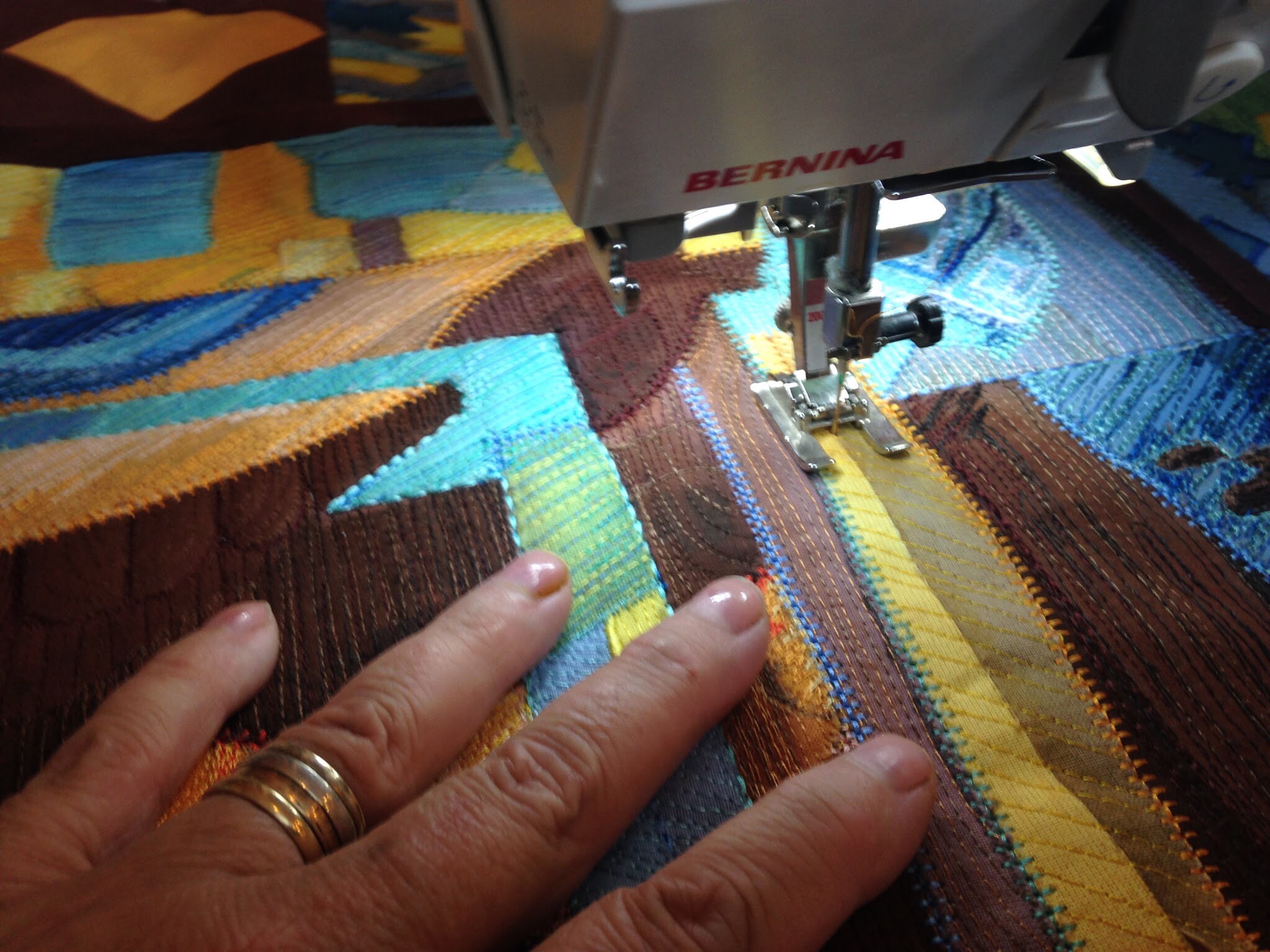
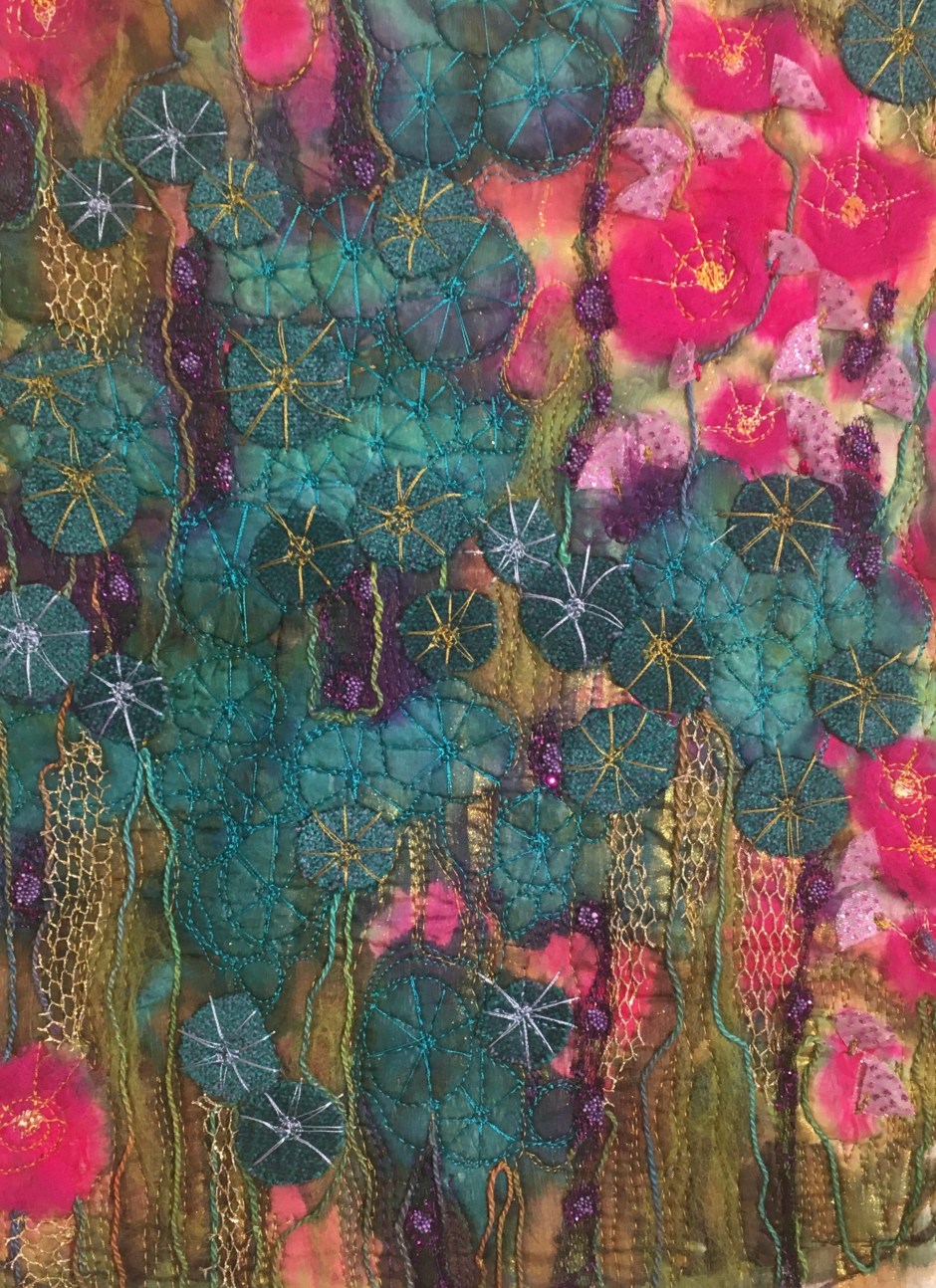
Hand dyed fabrics & thread painting.

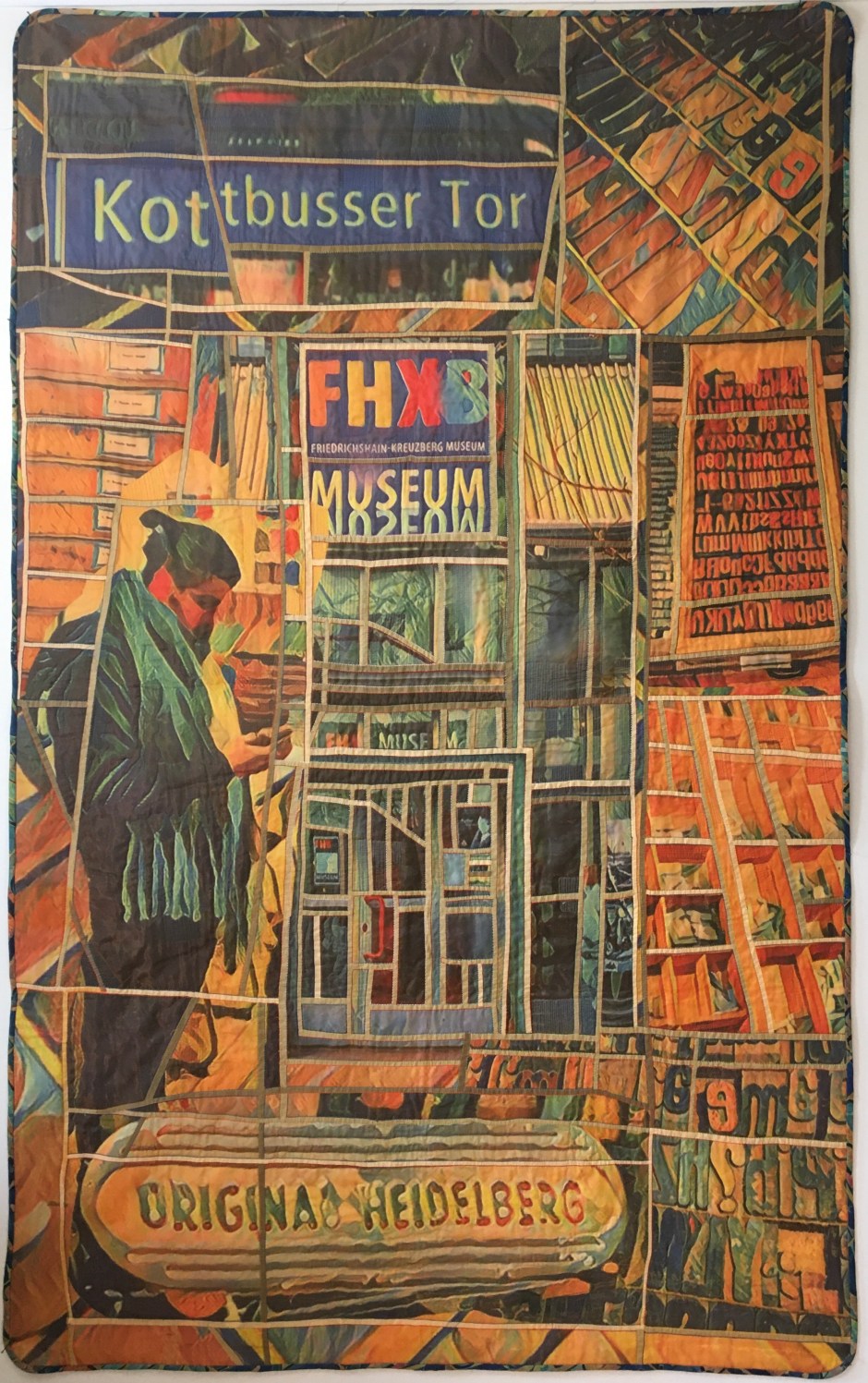
Kottbusser Tor à la Rauschenberg

This project is a combination of ideas inspired by the work Mary Ruth Smith and Robert Rauschenberg with a Faux Pojaji technique . The photos were taken in Kreuzberg Berlin on a trip to the Print Museum .

The Brief

1. Make a quilted wall hanging no less than 150 cm squared.

2. Use photo collage reminiscent of Robert Rauschenberg .

3. Use App.Ollogy

4. Research Mary Ruth Smiths work and base the design using some of her techniques .

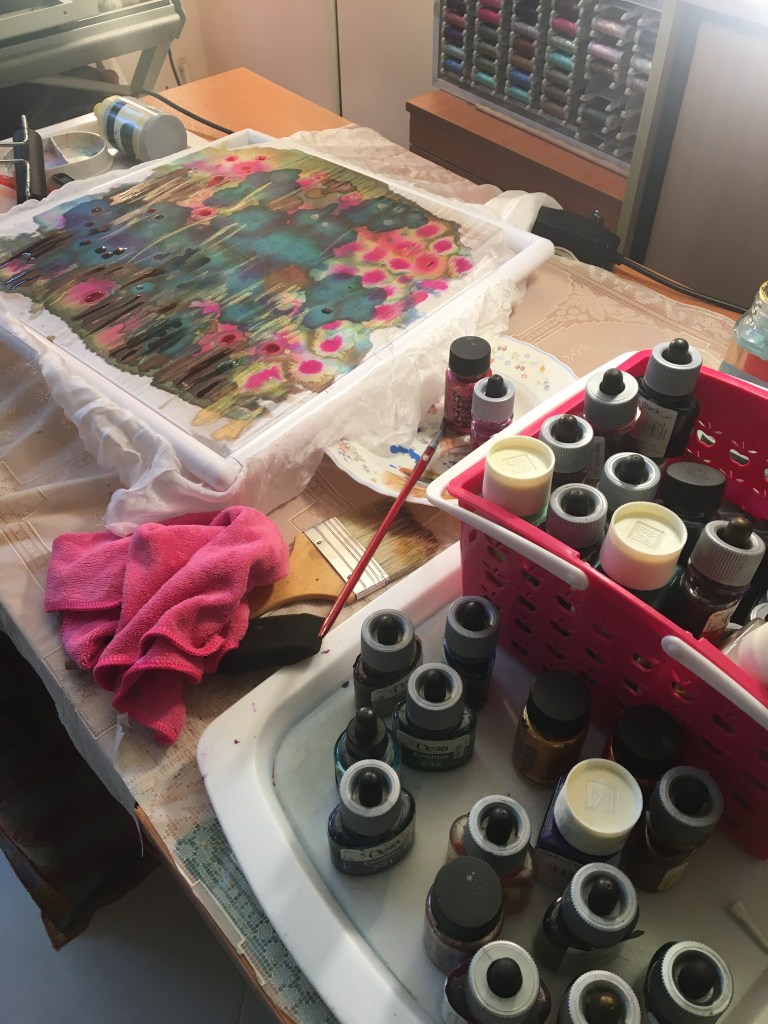
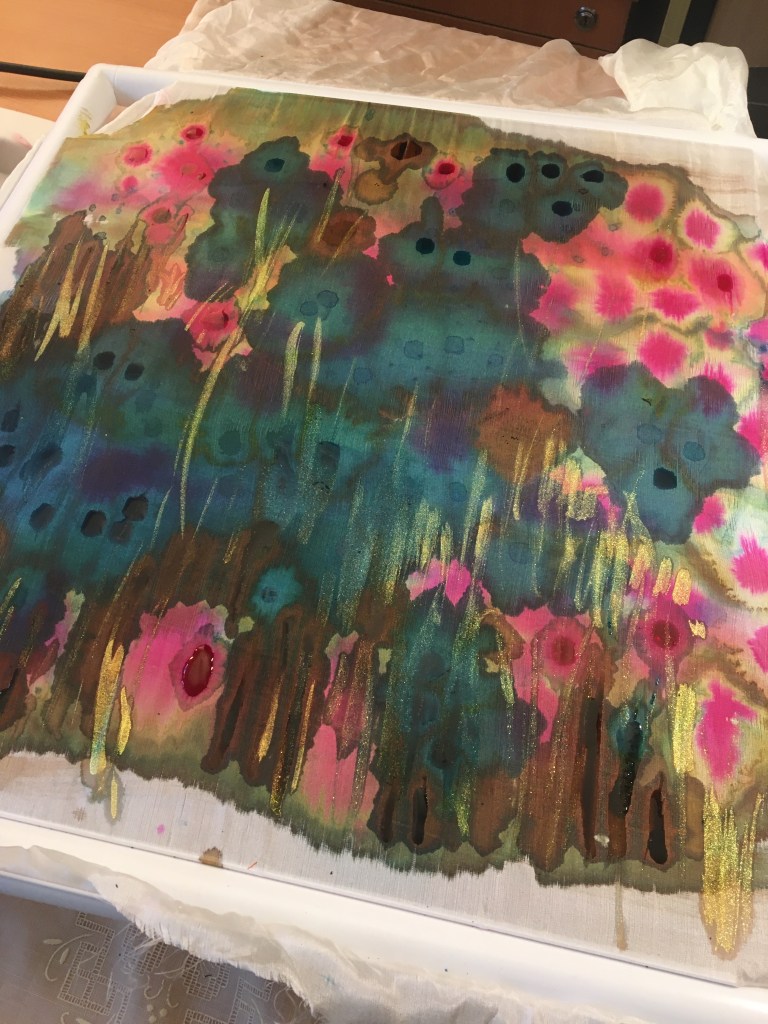
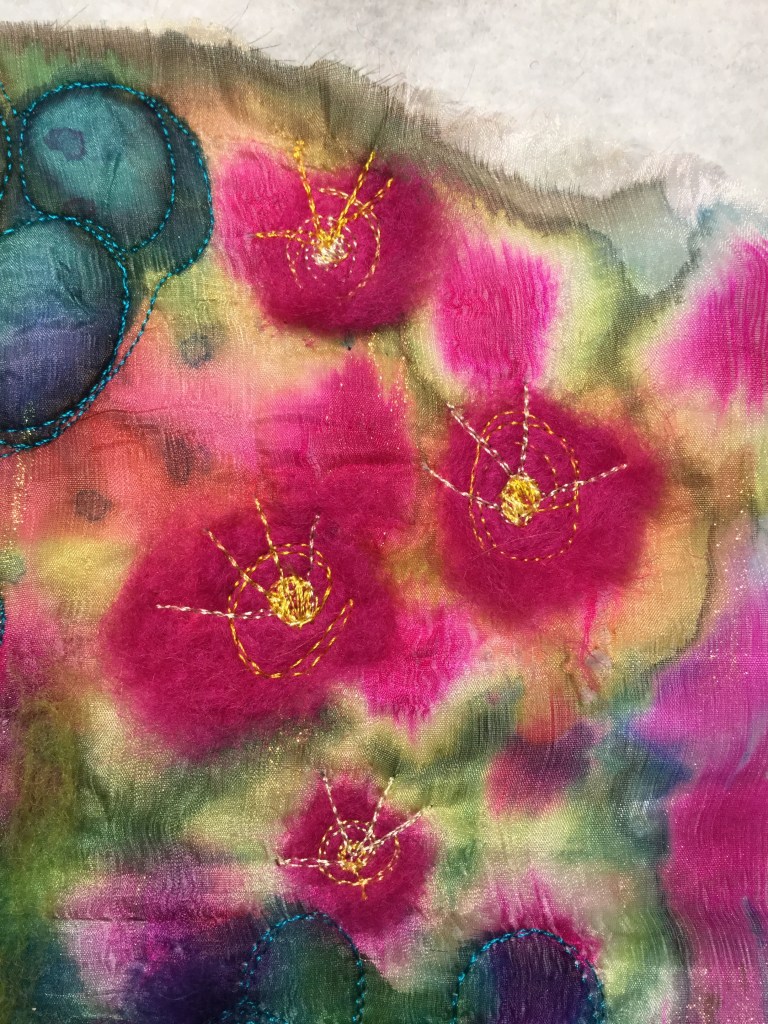
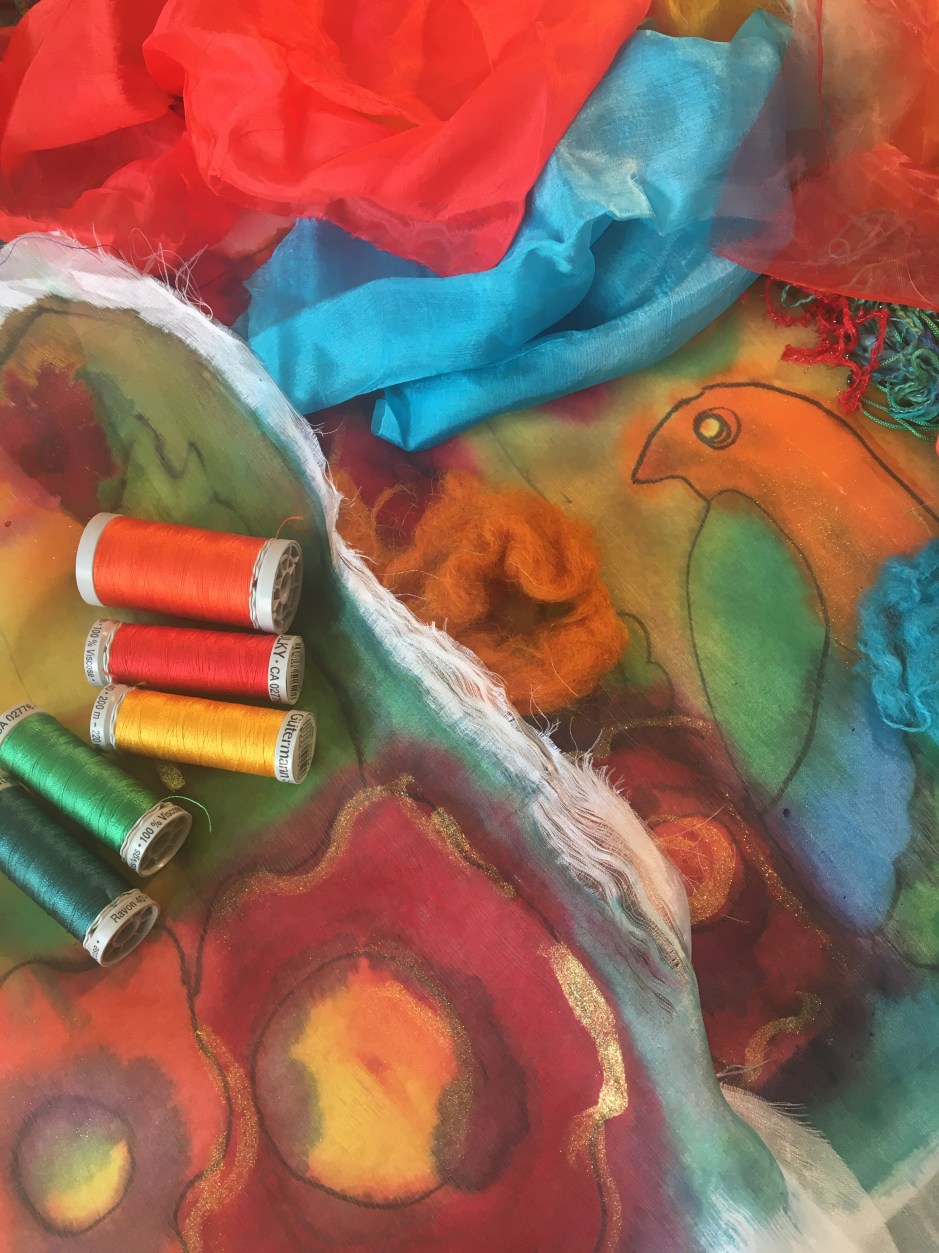
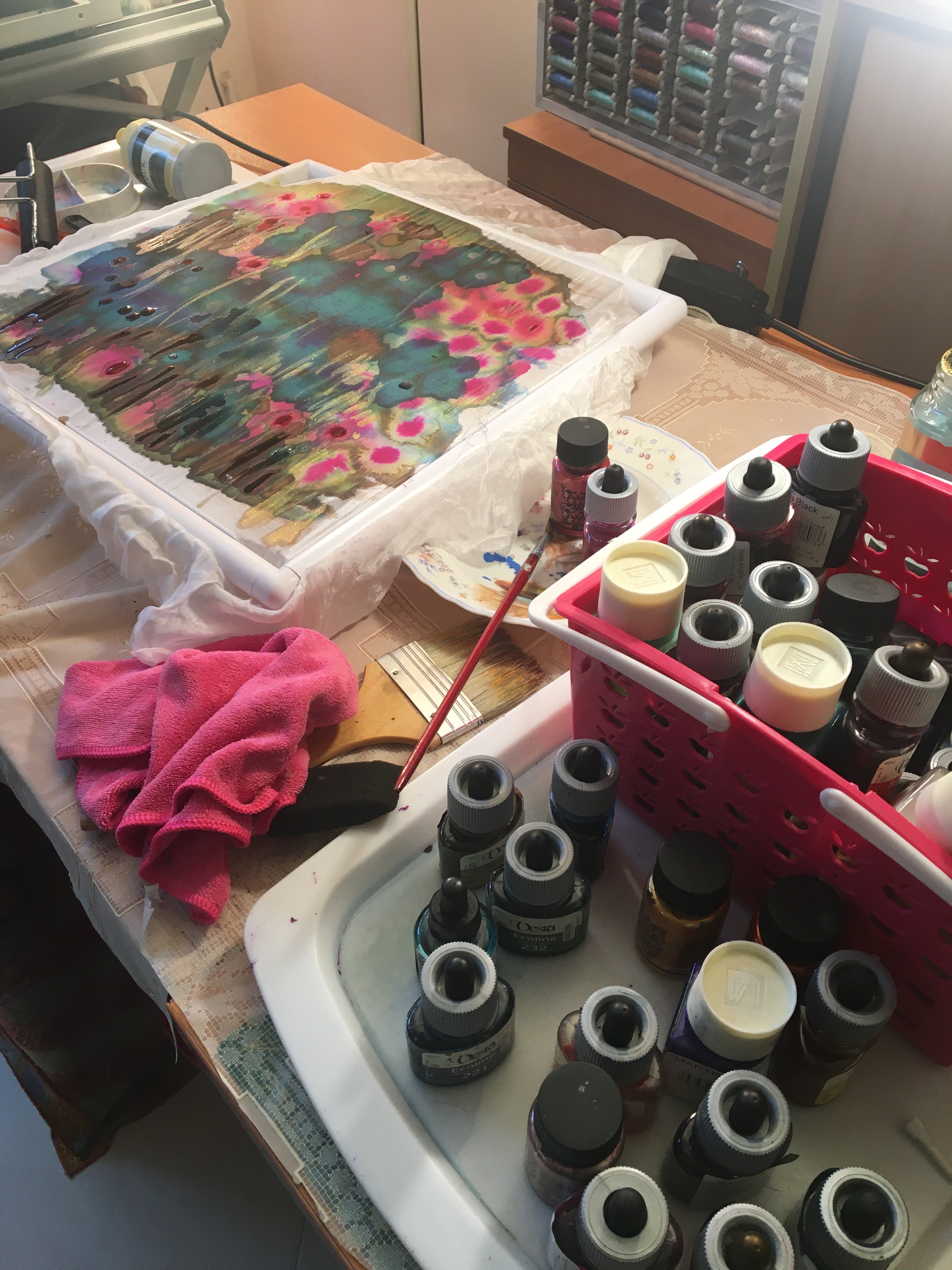
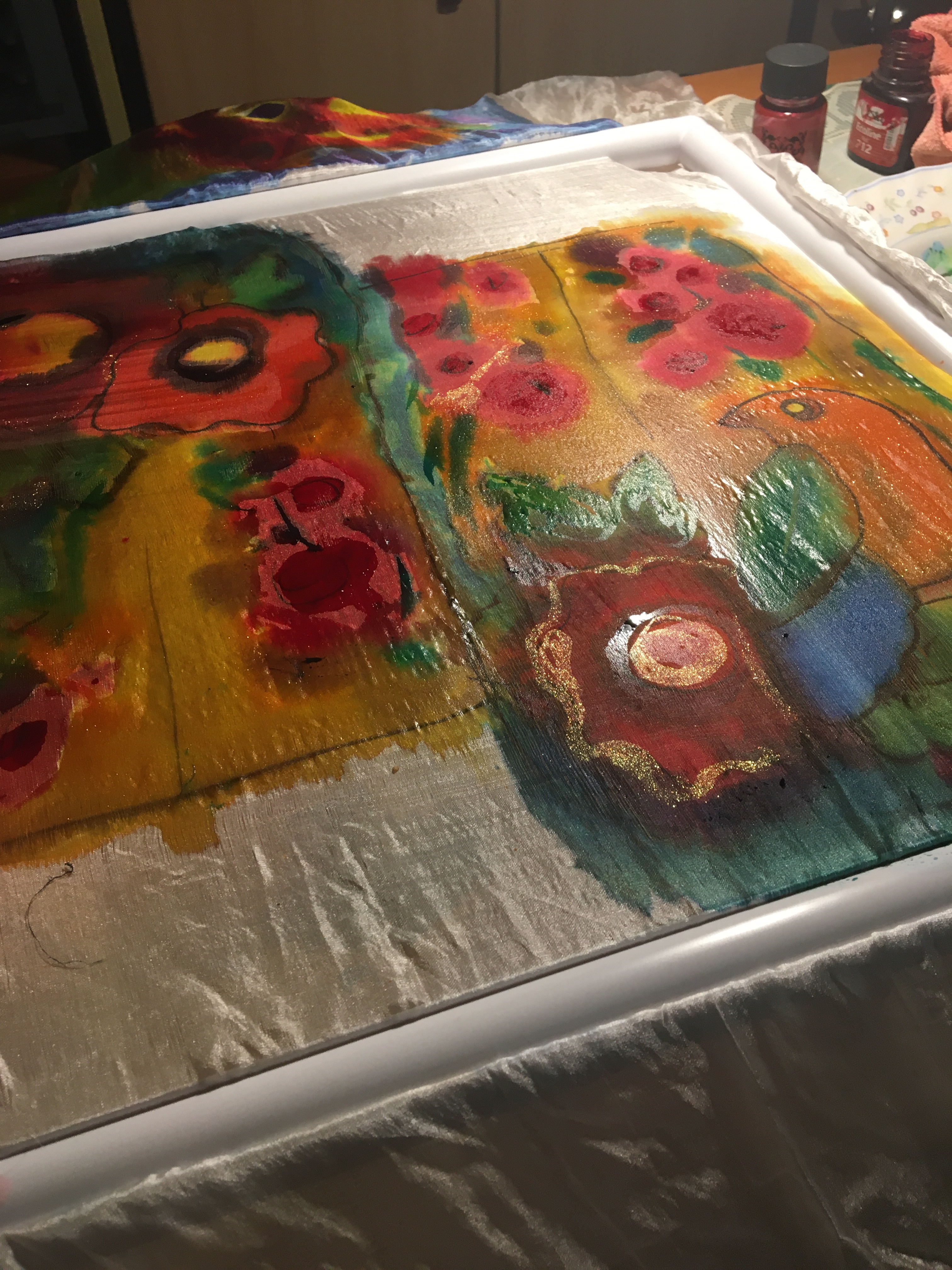
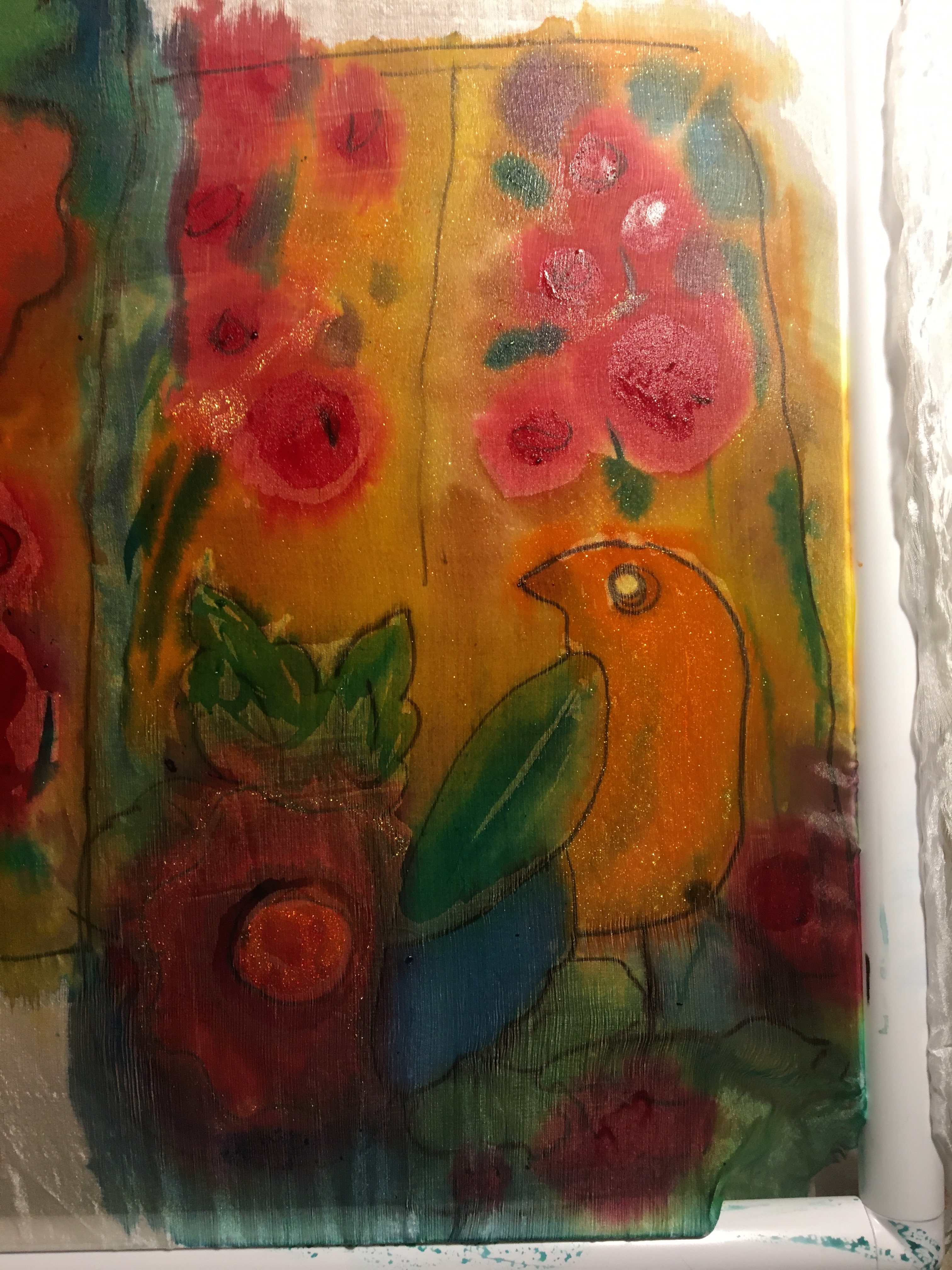
Silk Painting & Machine Embellishing

I did this piece with something else in mind but I cannot bring myself to cut it up ! It will stay as it is! …another piece just to look at !

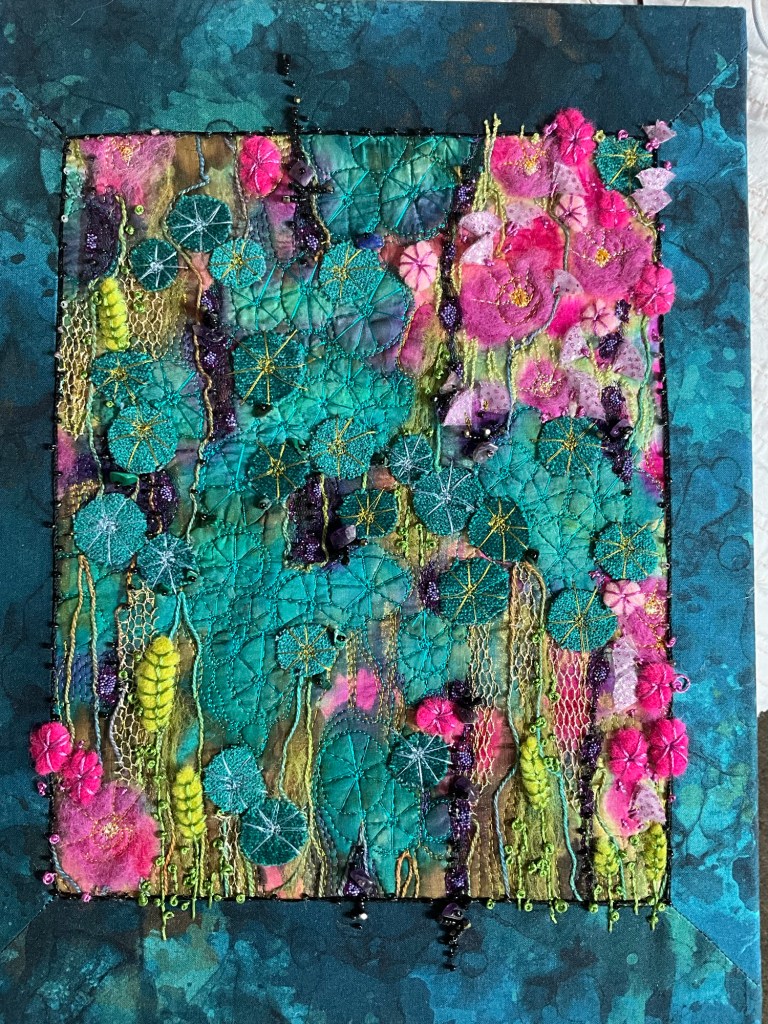
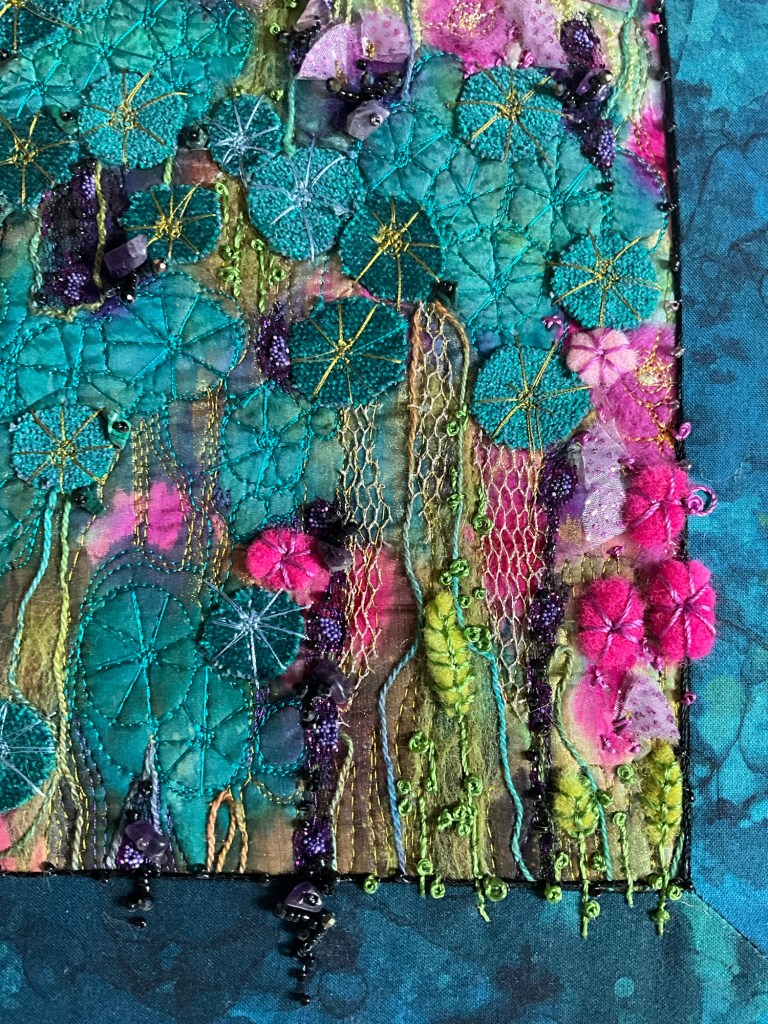
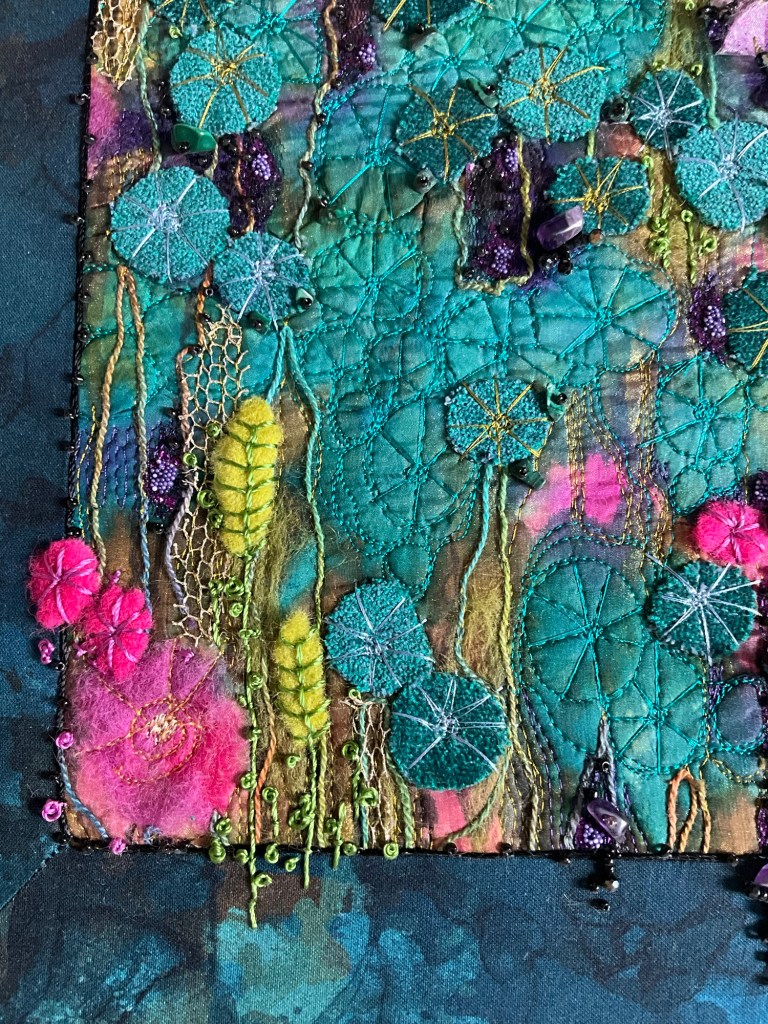
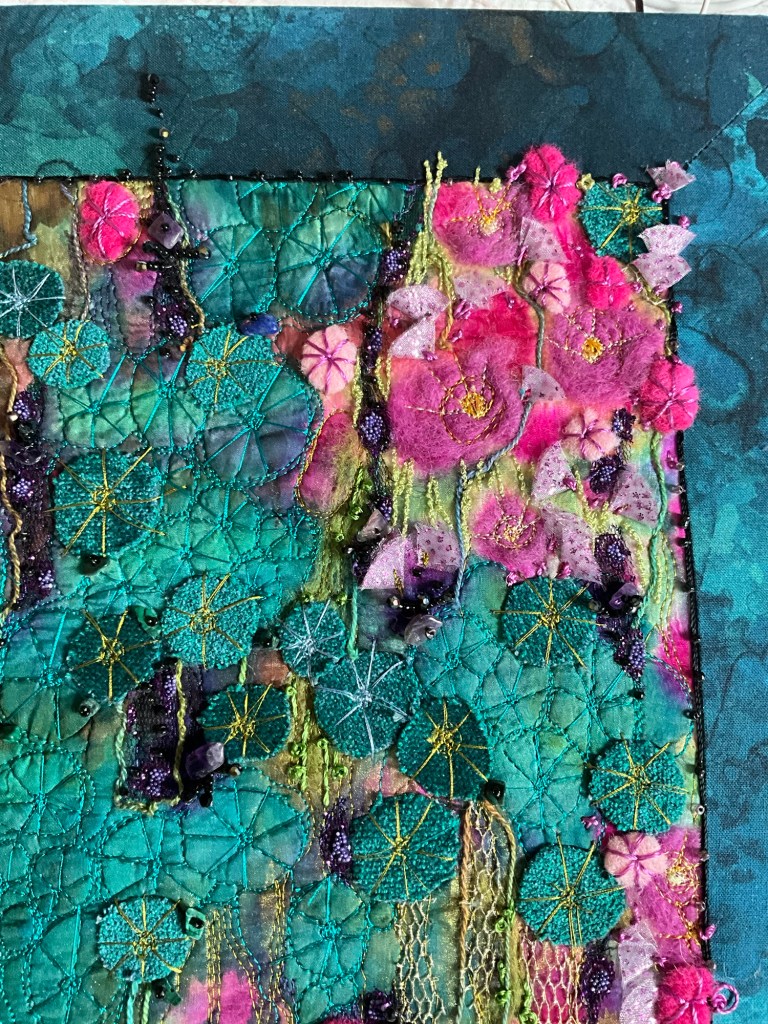
I reworked this piece in 2023 and named it “Underwater Garden”

There is an Australian quilt artist who uses similar techniques I used creating this piece .Her name is Michelle Micshulnig .

Here is a pdf of research I did on her work . She is incredibly inspirational !!!

Pockets

The Brief:

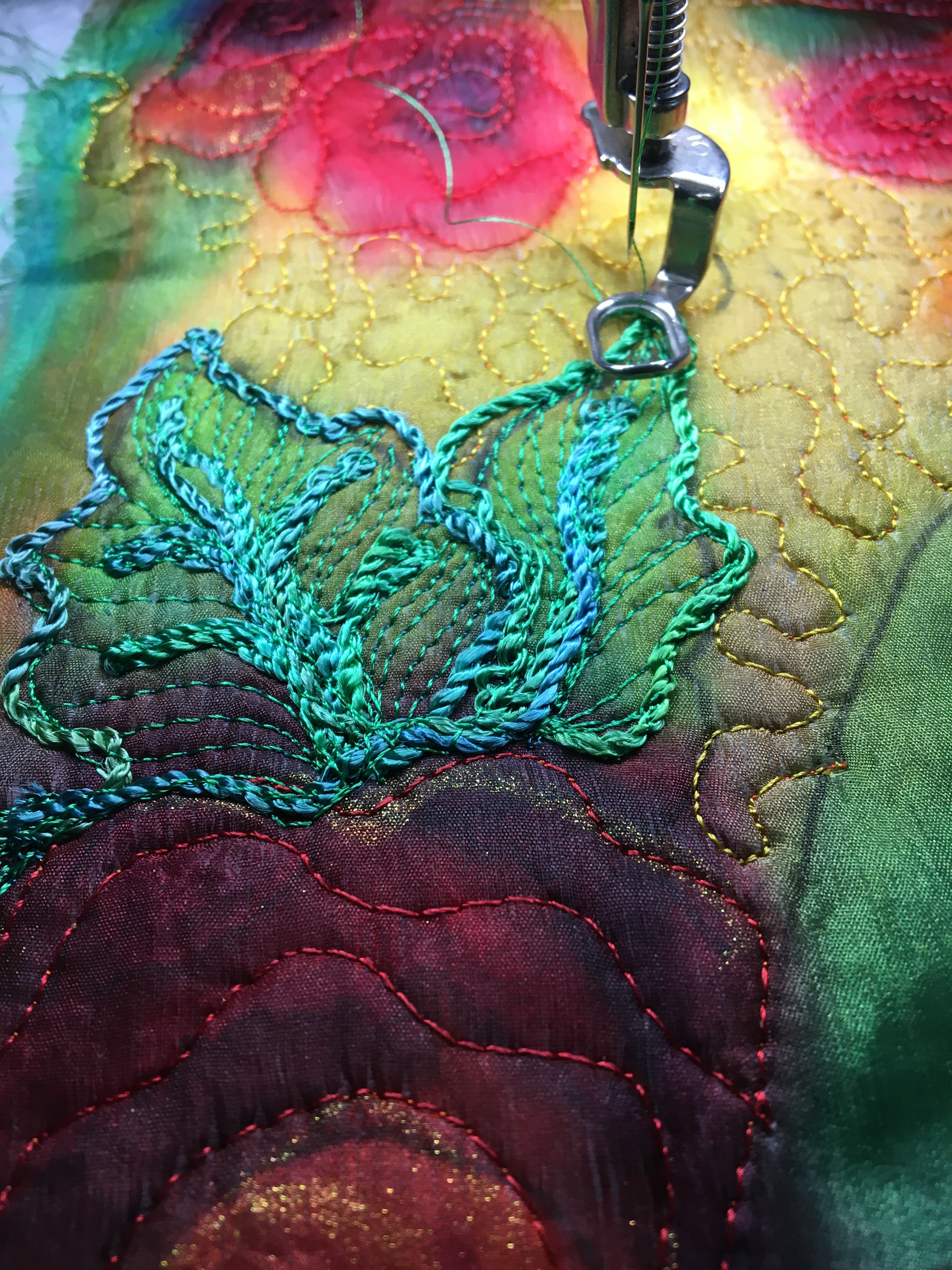
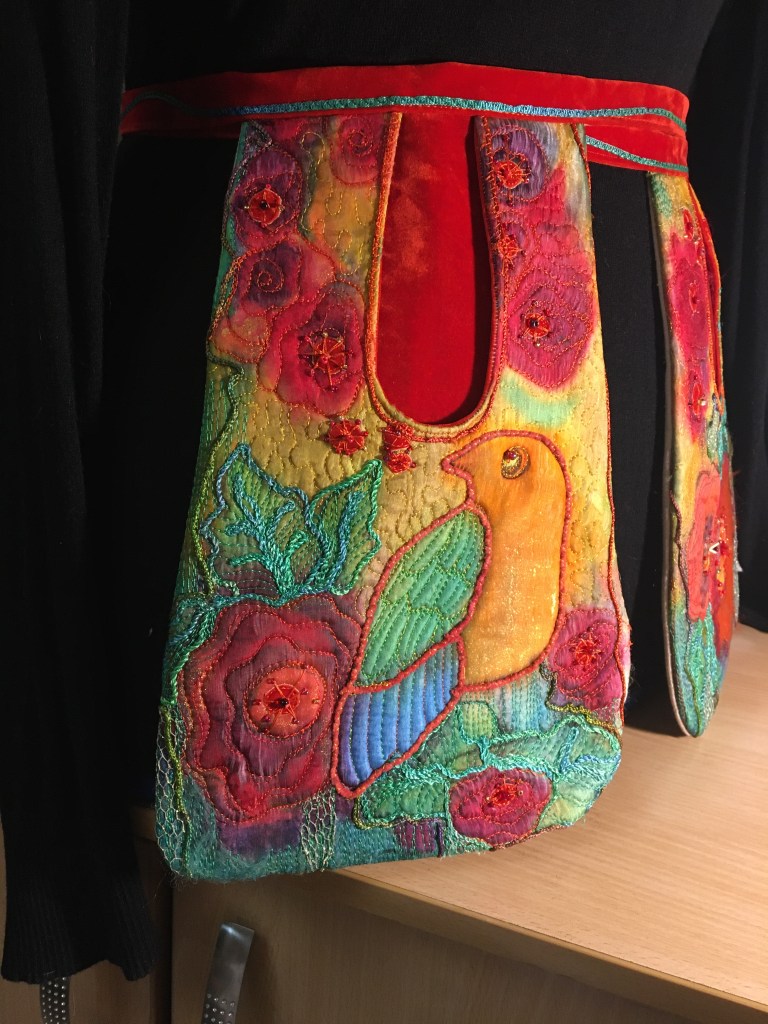
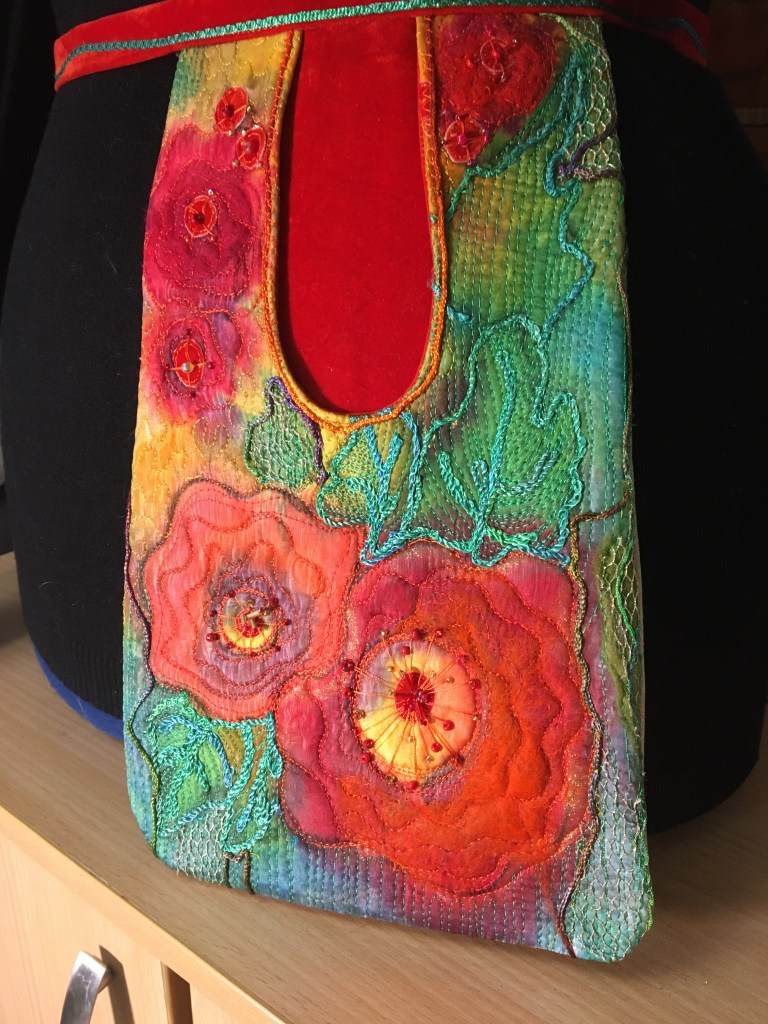
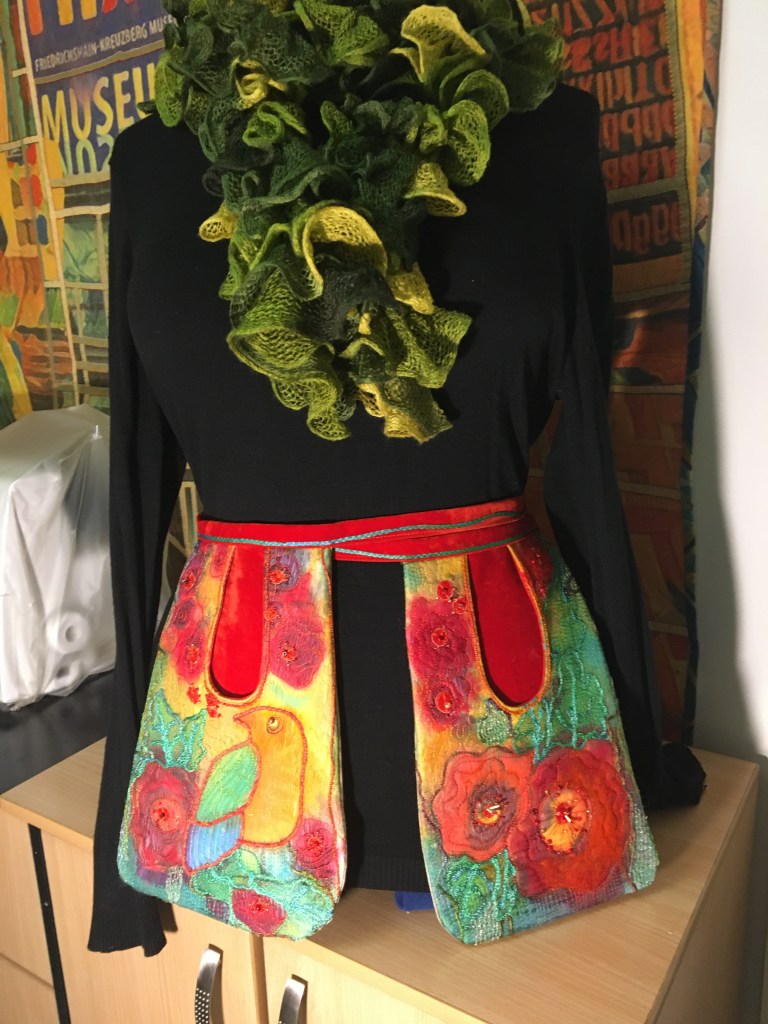
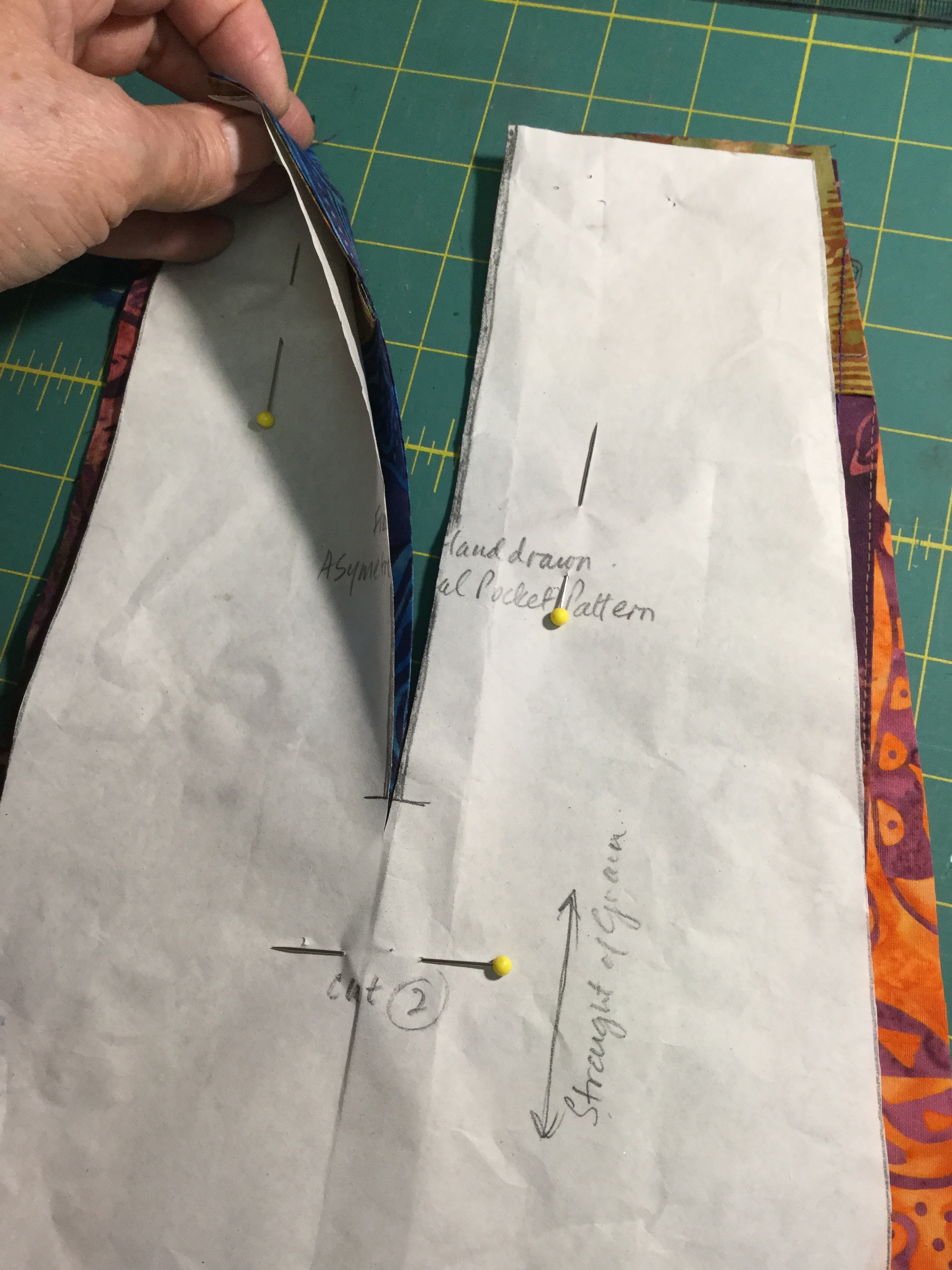
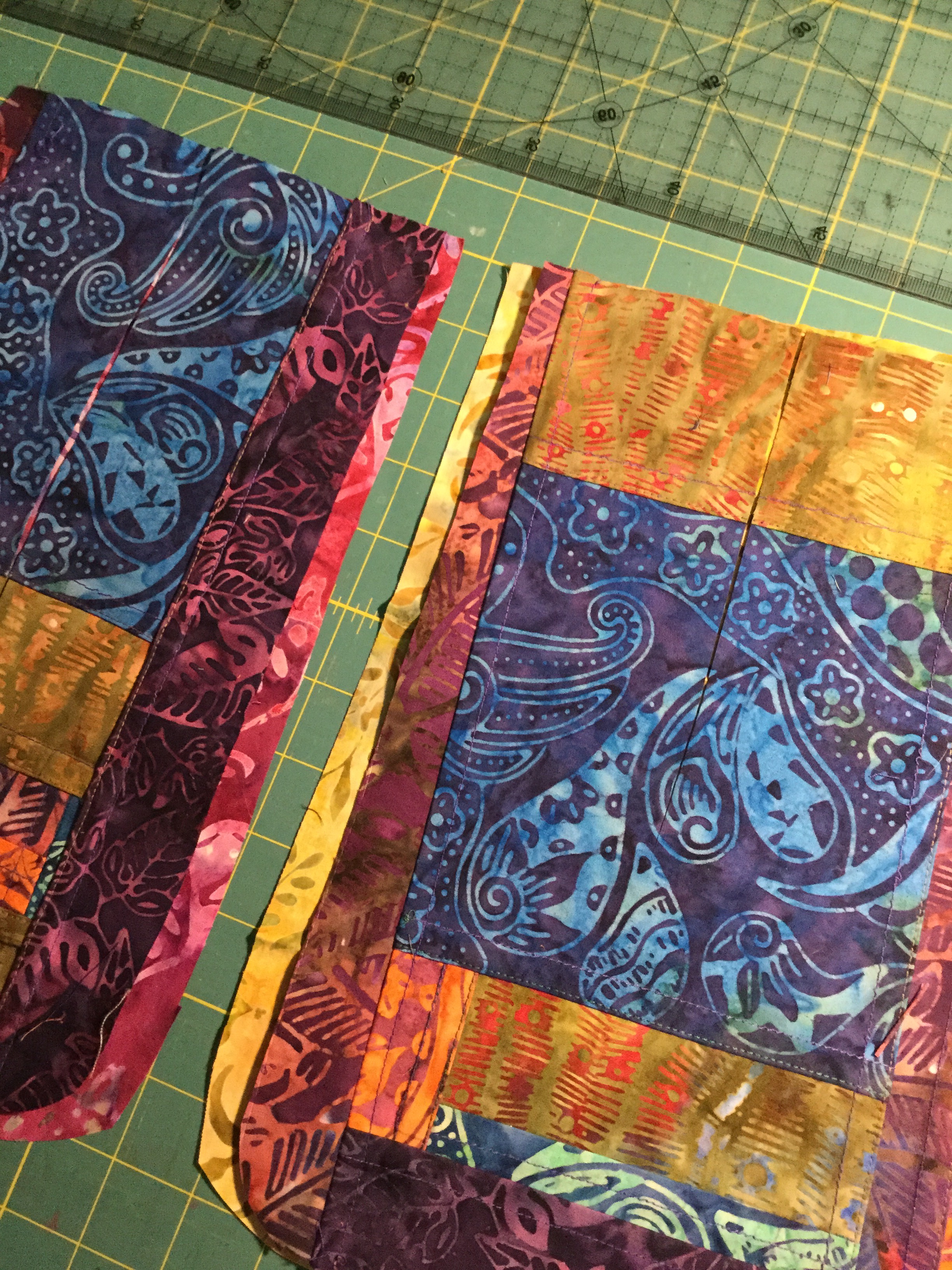
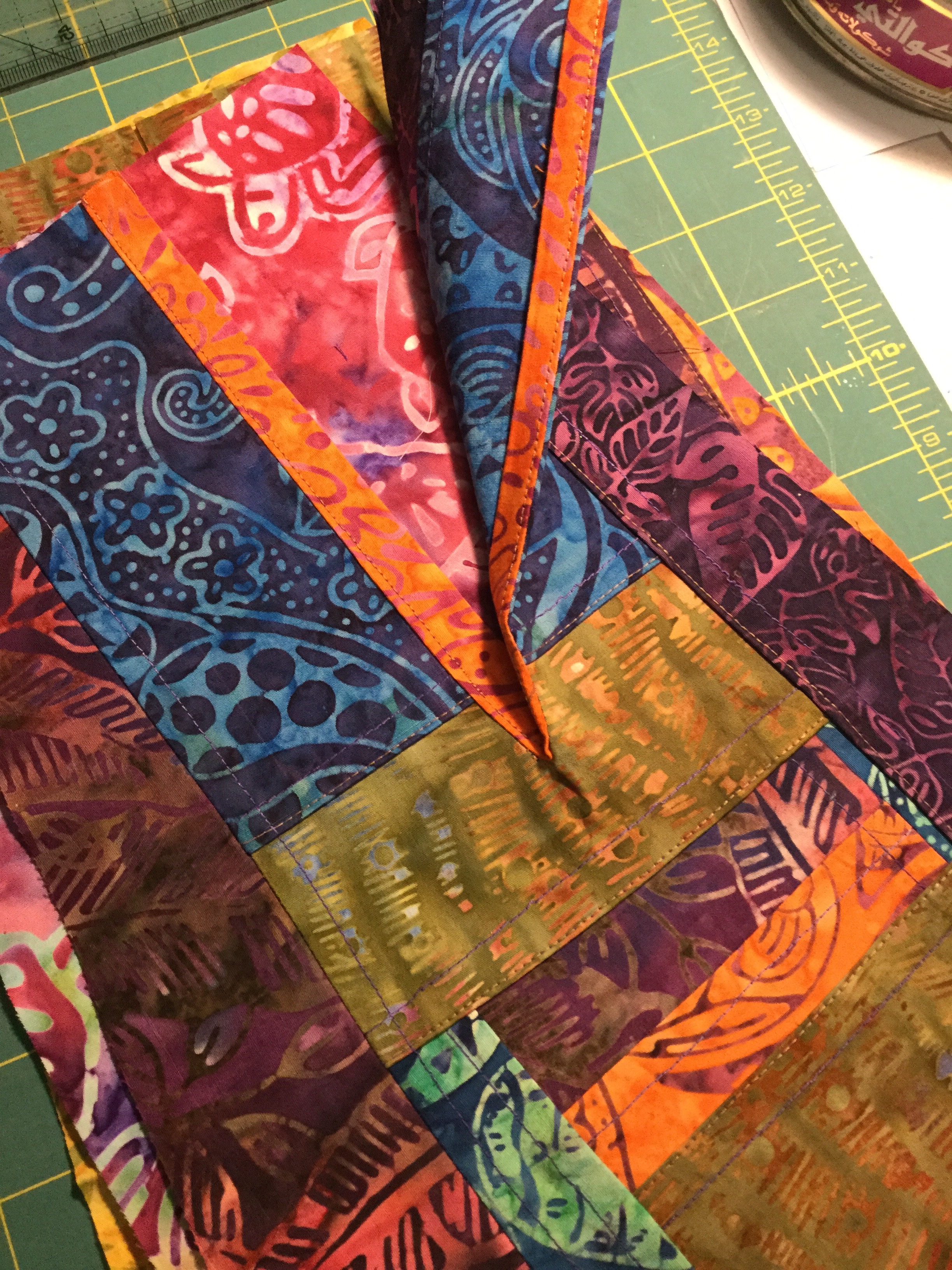
1. Make a 3D item – pockets

2. Use App.Ollogy

3. Use similar processes as Australian Textile Artist , Michelle Mischkulnig.

Pojagi Pockets

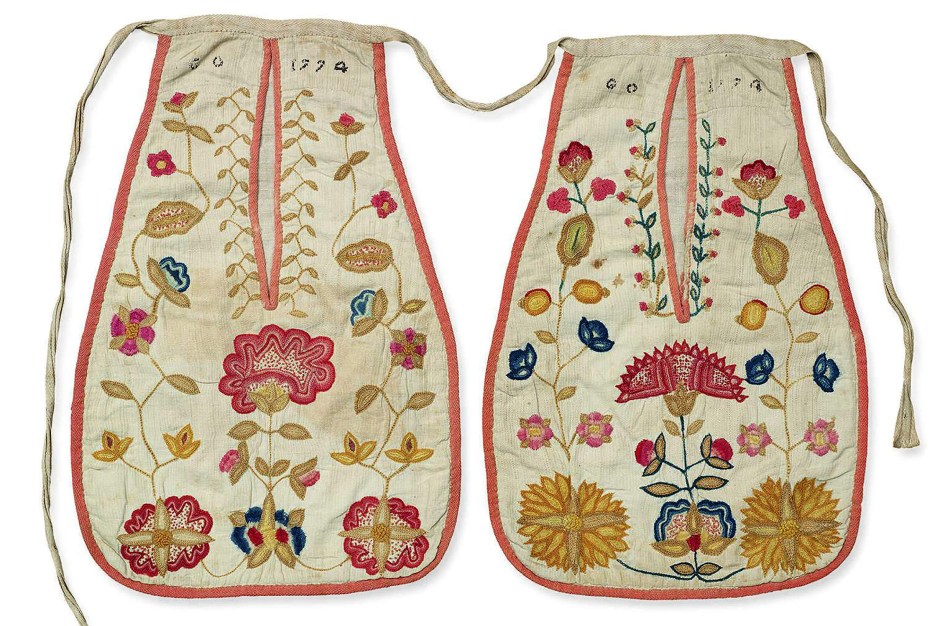
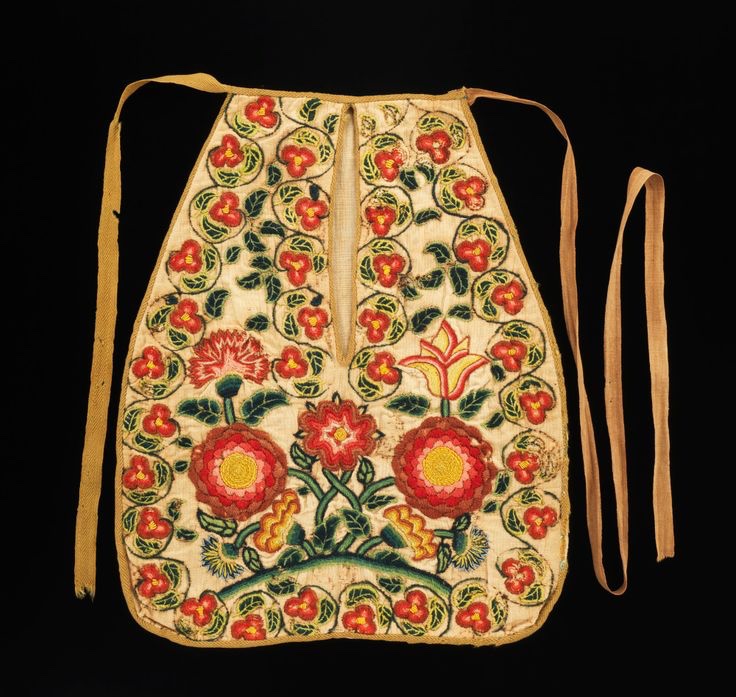
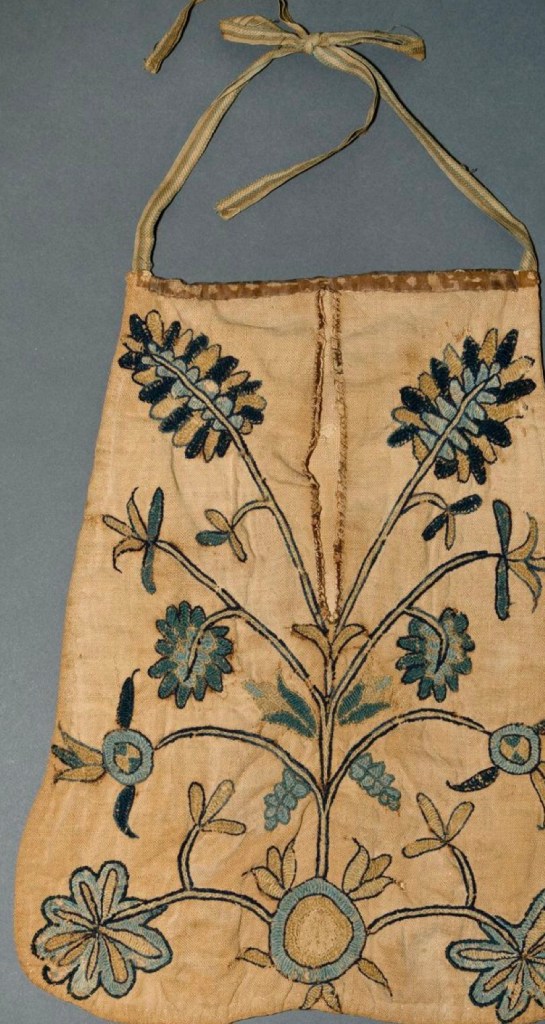
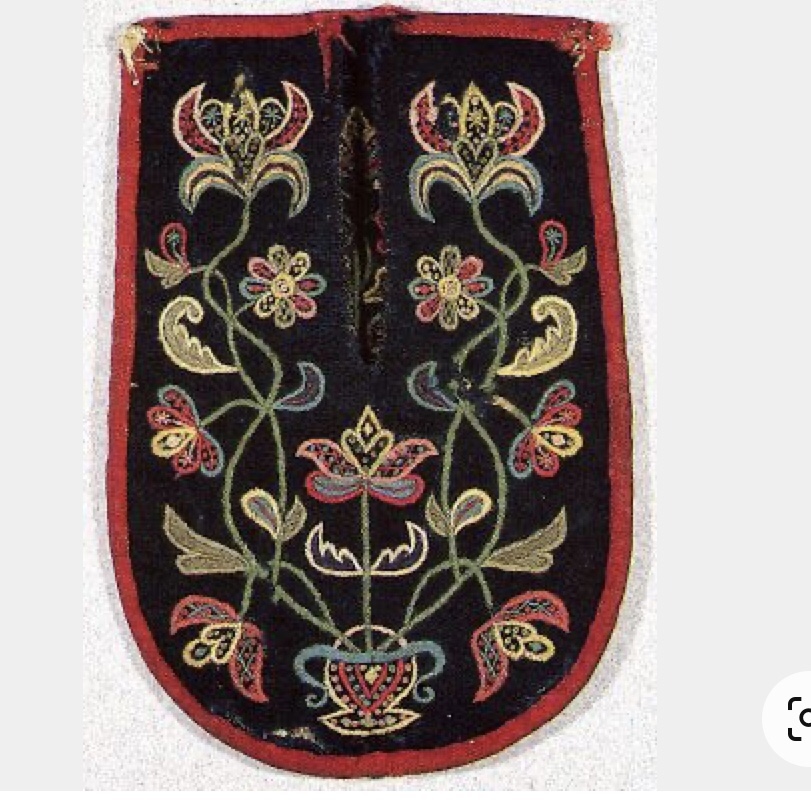
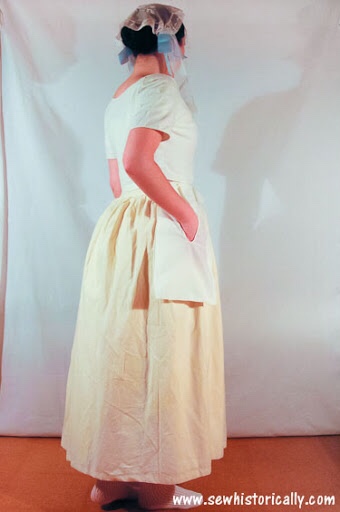
A Brief History of Hidden Pockets .

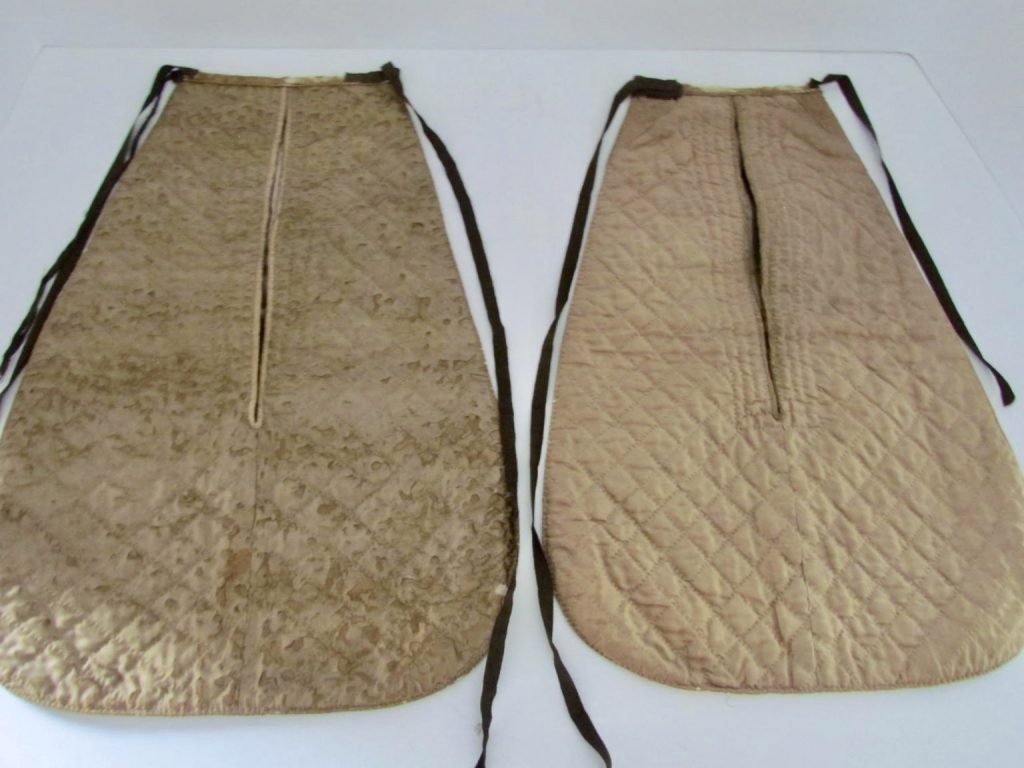
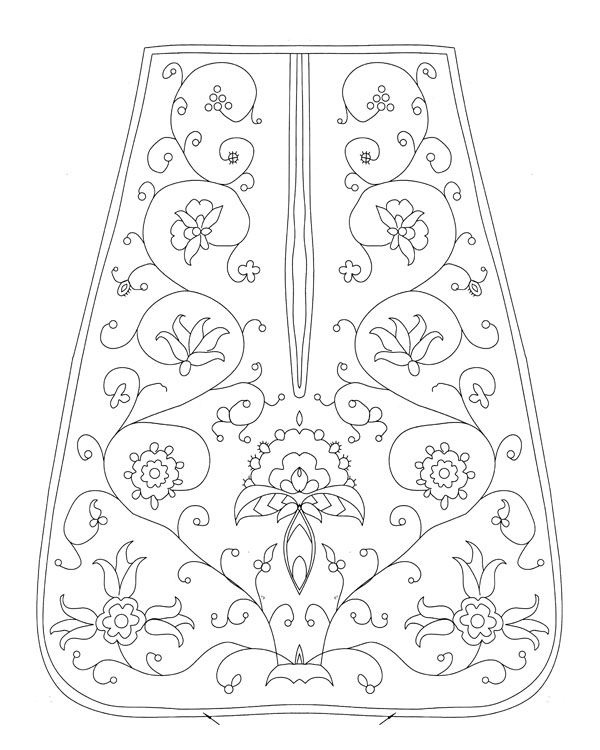
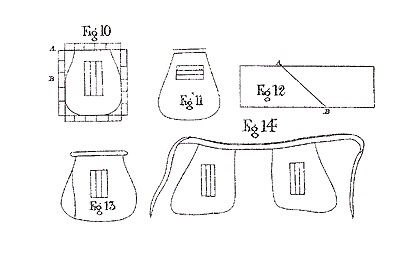
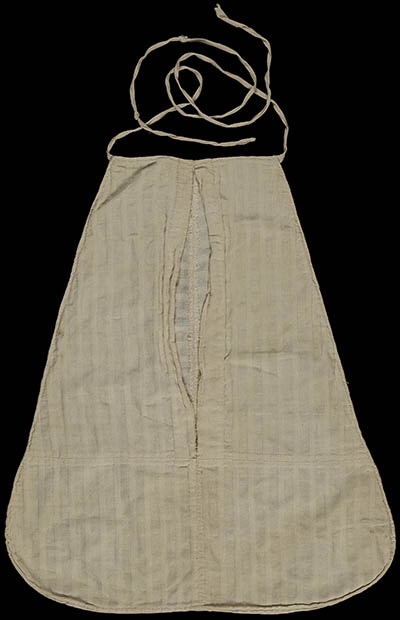
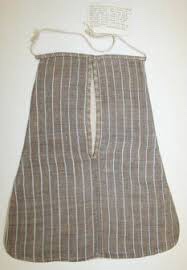
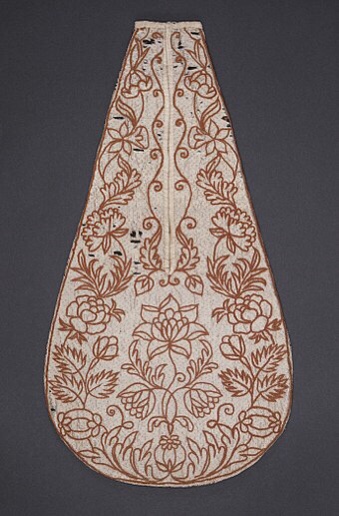
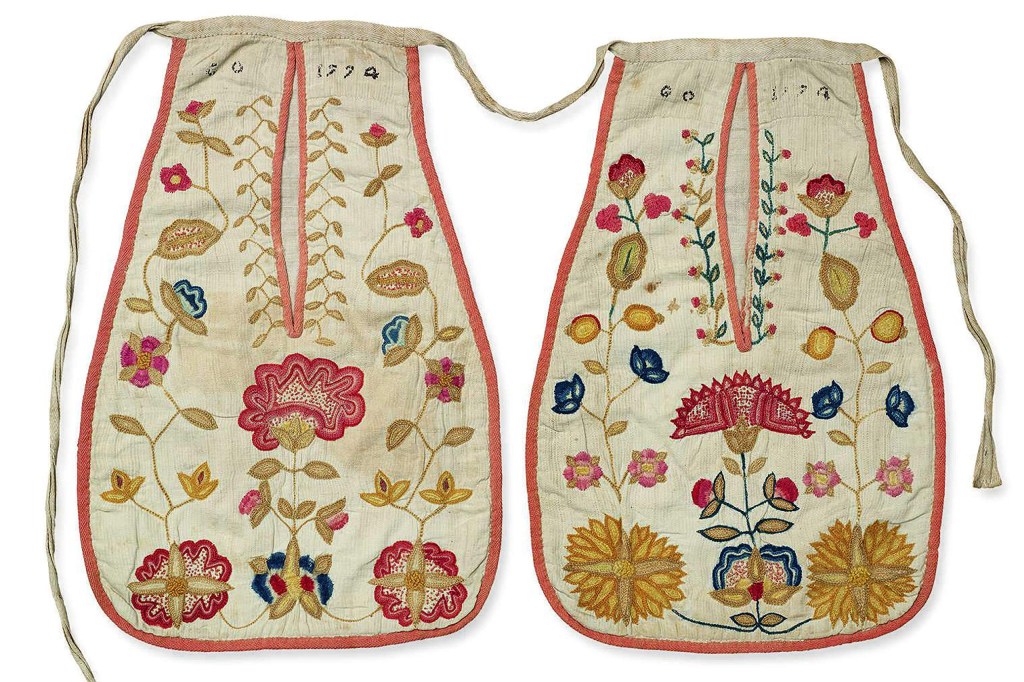
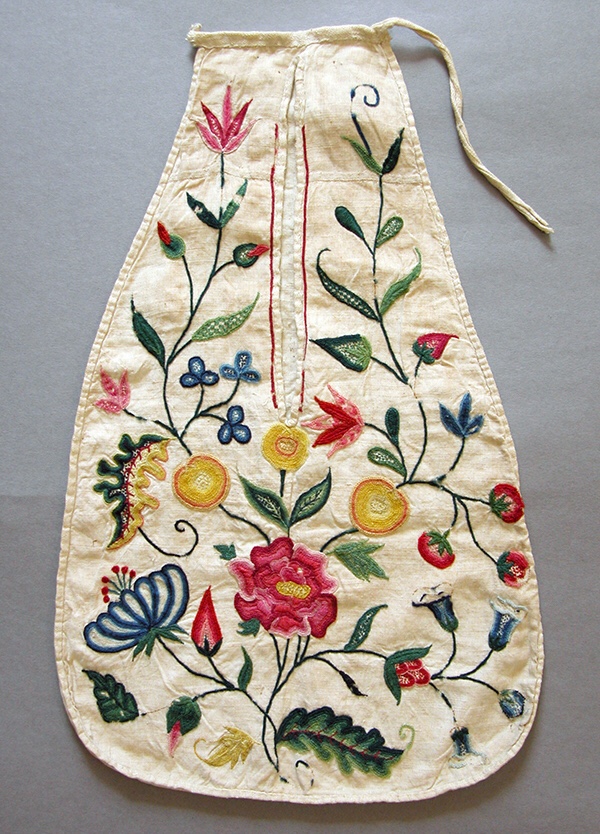
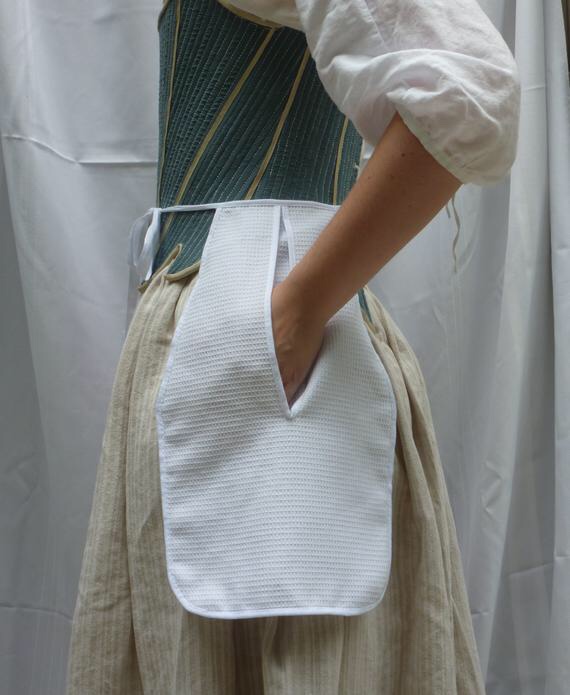
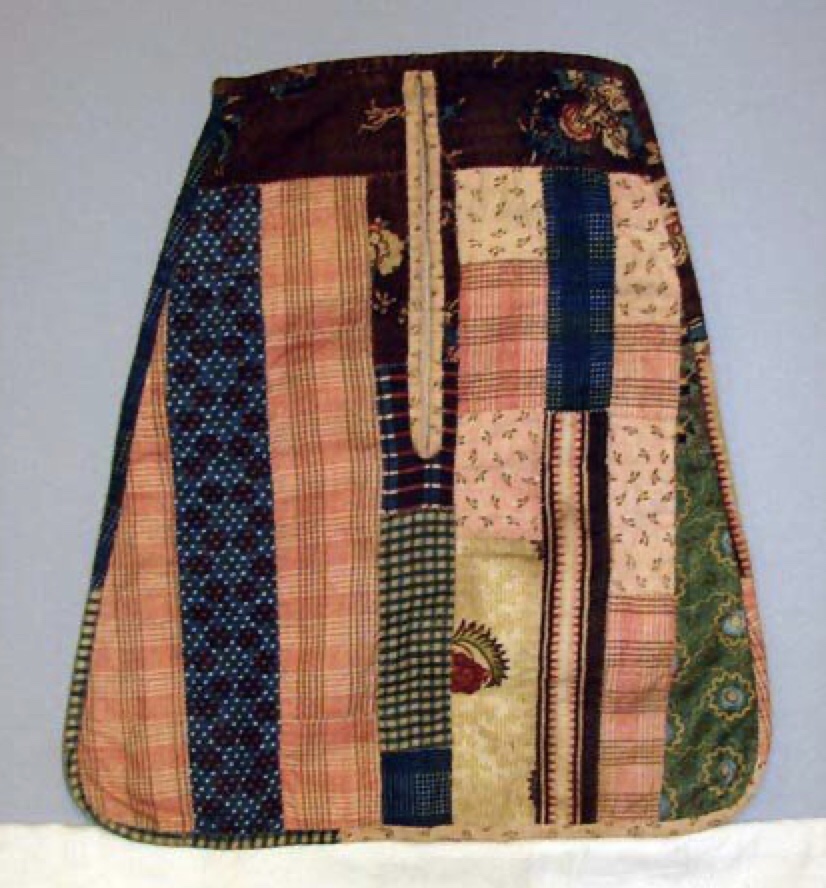
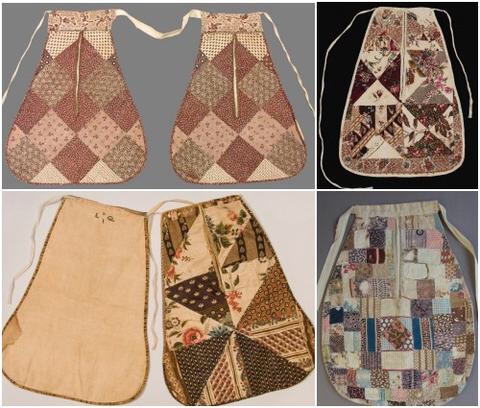
Hidden Pockets were worn by women in the 17th through to the 19th centuries and were considered an essential accessory . The pockets were not sewn into the garments but sewn and attached to a cord , tape or ribbon tied around the waist under the outer garments. Therefore they were hidden and were reached by a slit in the garment and the petticoat. They can come in pairs or as individual pockets .

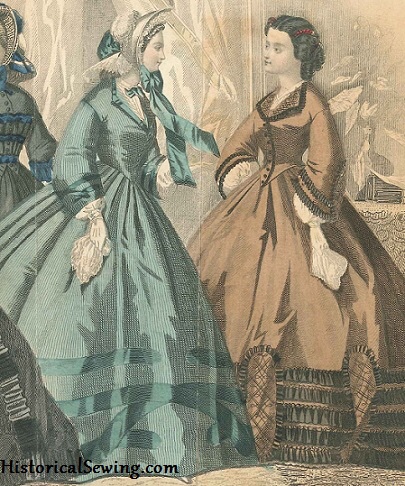
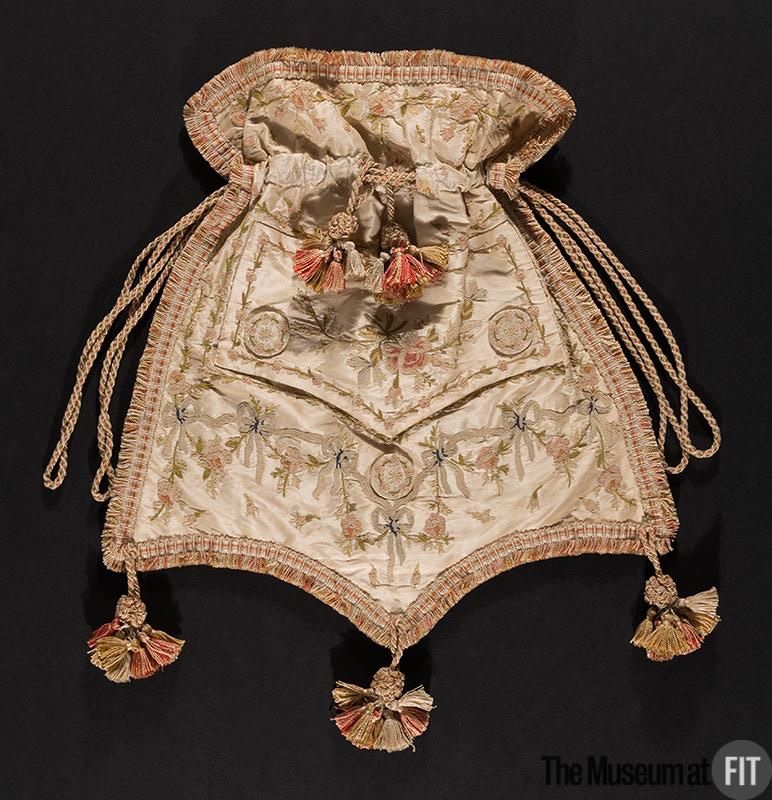
They were used both by the gentry and the working women to carry necessities around with them . The large volume of the clothing in fashion made it easy to hide these pockets . Hand bags were not in fashion and did not come into use until the hidden pocket became vulgar showing bulk as the slimmer silhouette became more fashionable . In the 18th century a small pouch called a reticule first became the fashion . These were smaller in size and more decorative and usually made of silk rather than linen or cotton and made to carried over the arm.

The working womans hidden pockets were more ordinary and usually made of linen or cotton . They were easy to wash . Pockets worn by the gentry and nobility wore more embellished usually made of silk and intricately embroidered.

Pockets eventually were sewn in as part of the garment in the mid 19th century.