
I am taking part in a Pateh Doozi Workshop with the Master Stitcher , Fatemeh Ghorbani .
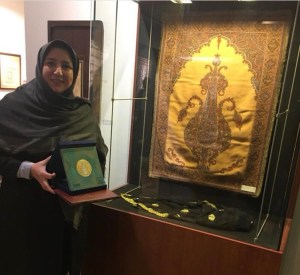
Ghorbani has taught for over ten years and has passed on her particular method to many students nationwide . What I mean by ‘her particular method ‘ is that she has developed a syllabus that expects her students to begin with the most recent style of this technique , Pahlavi Pateh.
This can be difficult for many students who have already been introduced to Pateh via classes and workshops or taught by their mothers and grandmothers .
Pahlavi uses a heavier weight wool yarn to stitch with and is mostly always on a red background. The reason for this is that during the reign of Reza Shah Pahlavi a systemized educational program was started in the form of technical colleges including all Iranian art and crafts .This was a bold move to standardize education and to include craftsmen and women in the economy. She works from Tehran but has online classes and uses the social media apps to send video clips and mini lectures to her students.
Ghorbani also teaches in the city where this form of crewel work originates , Kerman.I mention this as Kerman is the place Pateh originated and the women of Kerman guard their craft fiercely ! So a Tehrani coming in to teach on their territory is like entering the jaws of the dragon !
I am lucky enough to have been able to attend her classes in person . She is an excellent teacher and has command of her students who are all women by the way ! Ghorbani also expects perfection.
Being a teacher myself I recognize that I am one of those difficult students who will go off at a tangent and do her own thing and needs to be reigned back in screaming and shouting !
……’unpick it ! unpick it !! ‘ she beseeches me with frustration !
I am not a stranger to this Iranian Method of education. It is based on a ‘Maktab’ style of repetition and copying of the Masters . Here it goes unquestioned and this is why Iranian students make great students…they do as you ask!
She made me go back to the beginning !
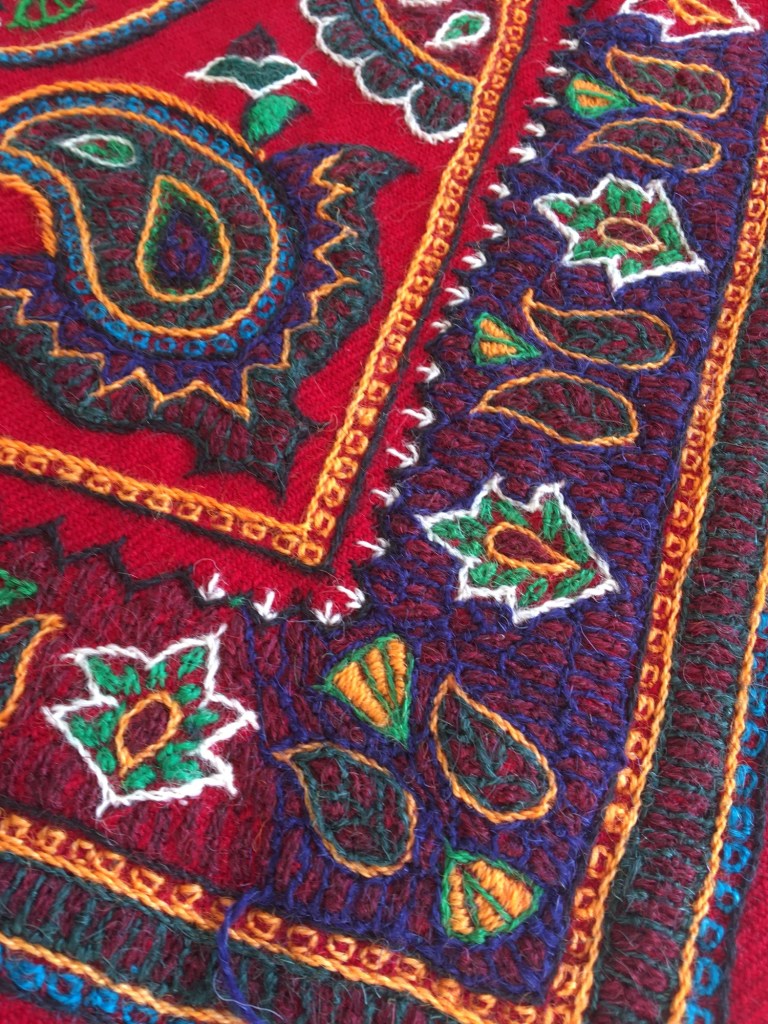


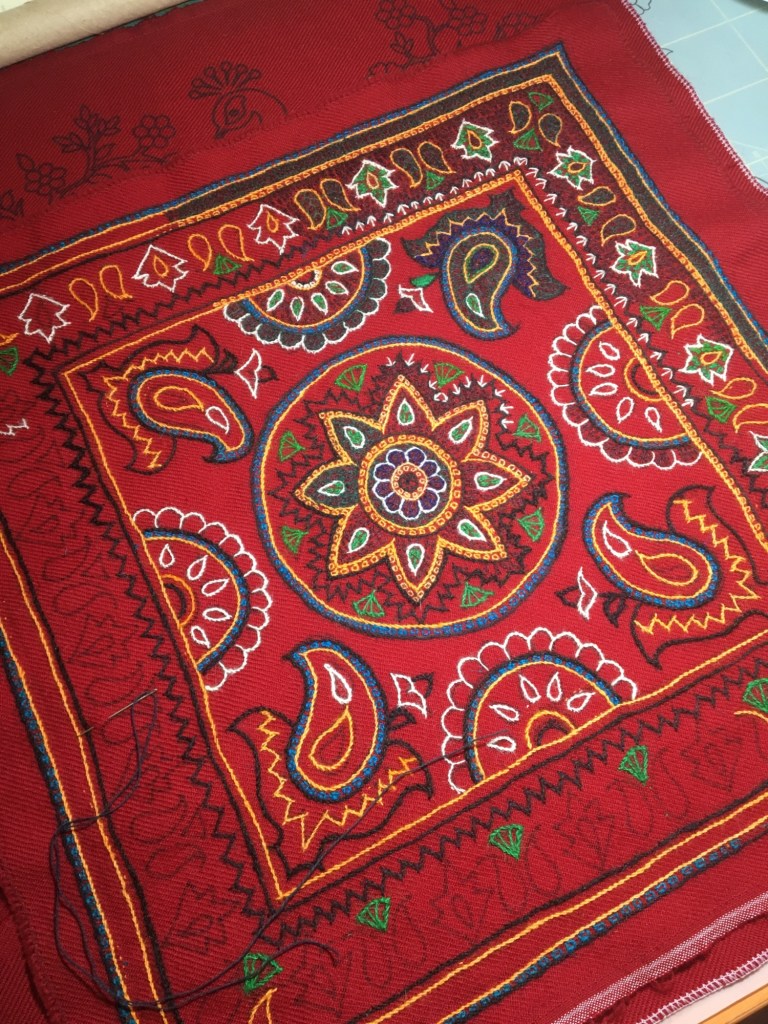
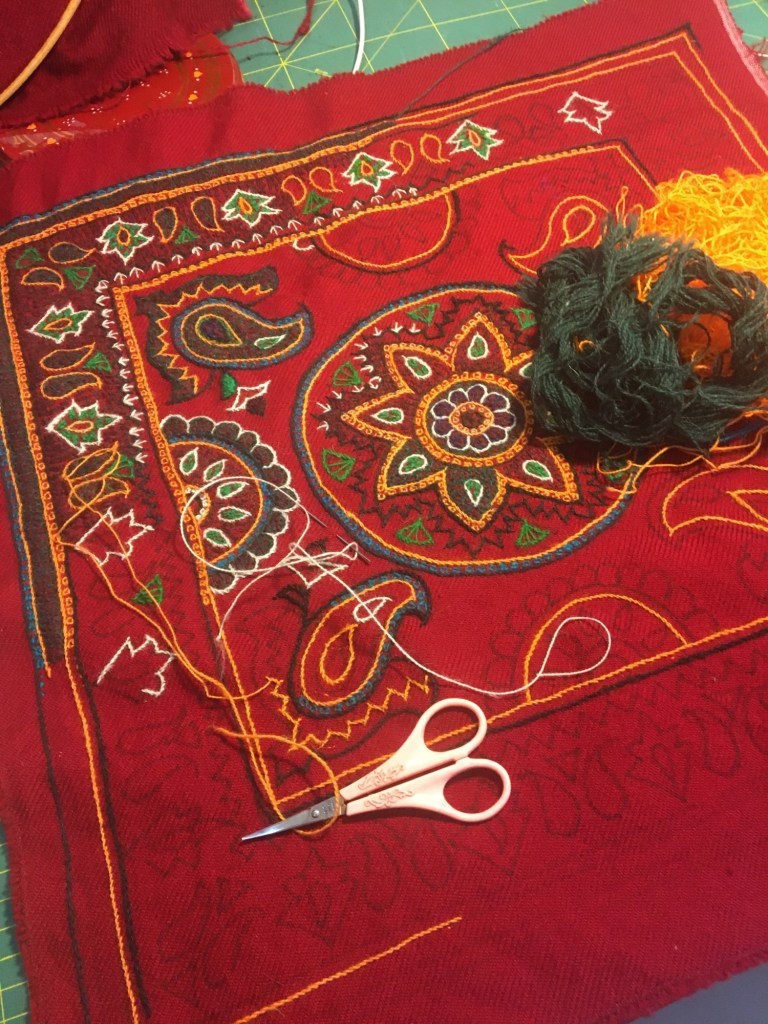
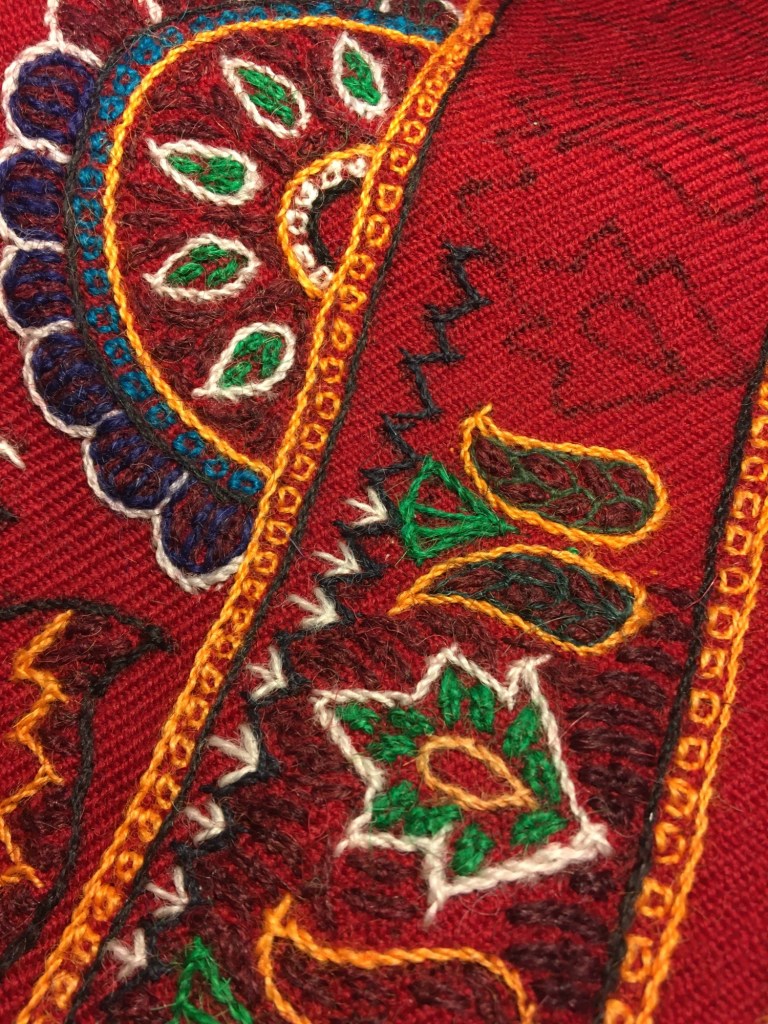


The complex thing about this crewel embroidery is the colour choices and starting with the Pahlavi Pateh limits the student to 8 colours . These yarns are chemically dyed .
The new Pahlavi method brought in chemical dyes in the early 19th century as new inventions and discoveries were being made in Europe in this field . Unfortunately at the time, the old dyeing methods using natural plants and minerals were abandonned for new technology .This also applied to the dyeing of yarns for the carpet industry .
Teaching a limited colour scheme was a way of attaining a reasonably artistic piece in the limits of the educational syllabus.As a designer I find this frustrating and limiting but as a teacher I understand the logic of it .Believe me, this really works because the mish-mash that can happen if inexperienced students just willy nilly choose colours to stitch their pieces can lead to horrendous results! So teaching a methodical colour scheme along with specific colours for certain stitches and areas of the work makes sense .
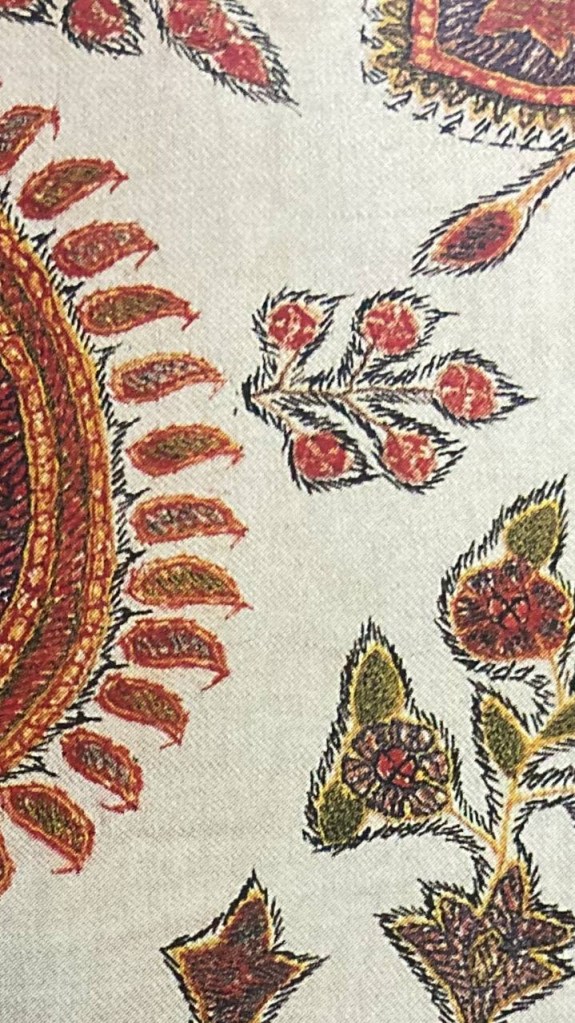
After completing the Pahlavi era technique we move on to the Ghajar era of Pateh . The foundation colour of this eras work varies from red or the natural colour of the wool twill .
Here is a selection of Ghajar pieces
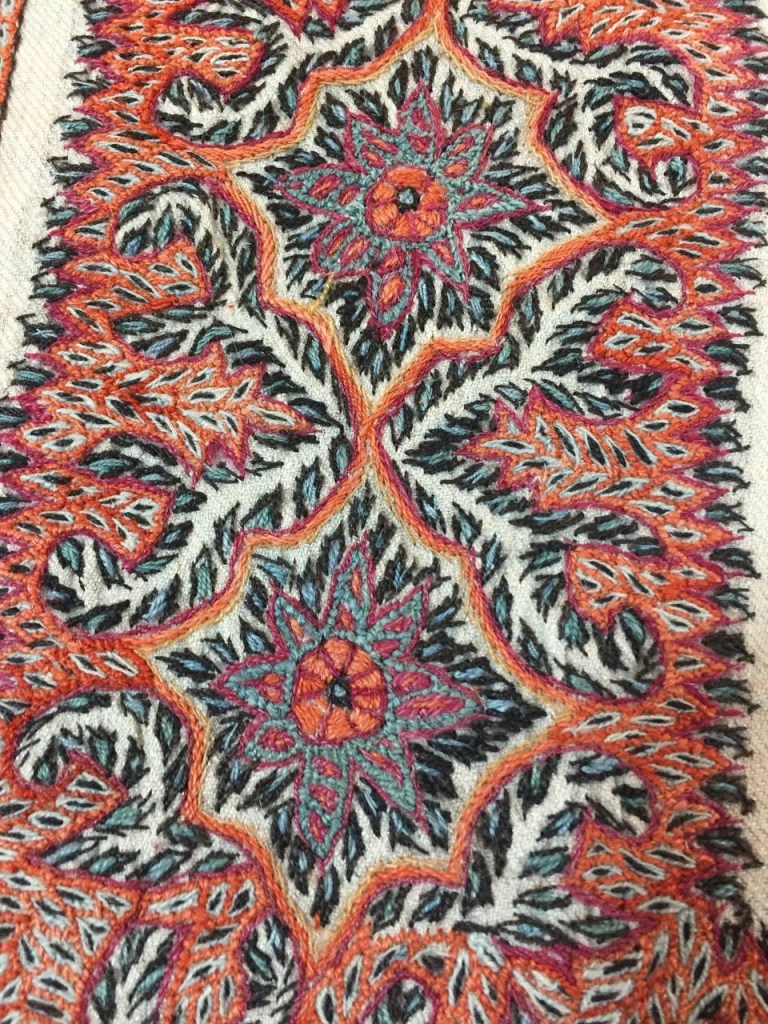

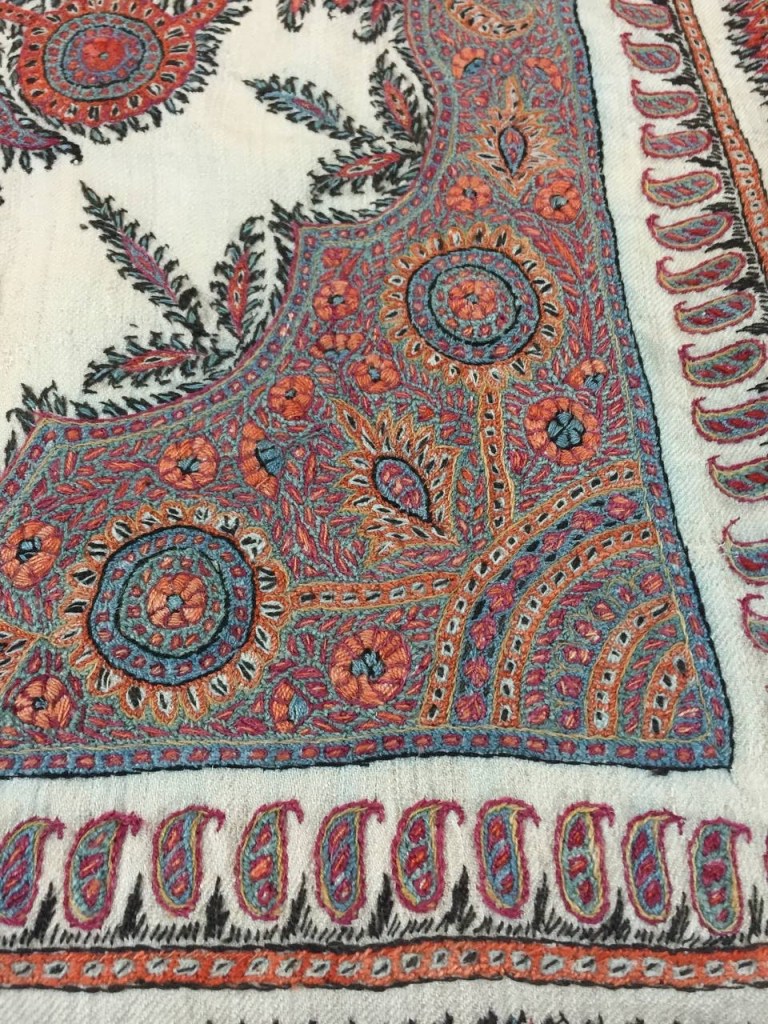
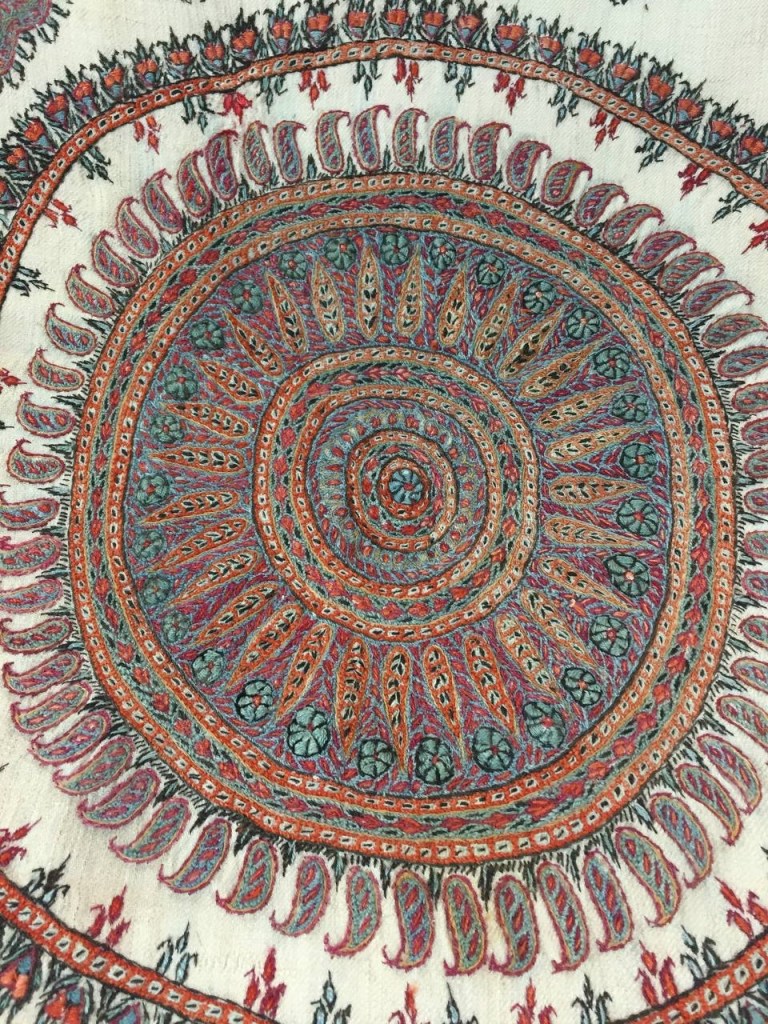

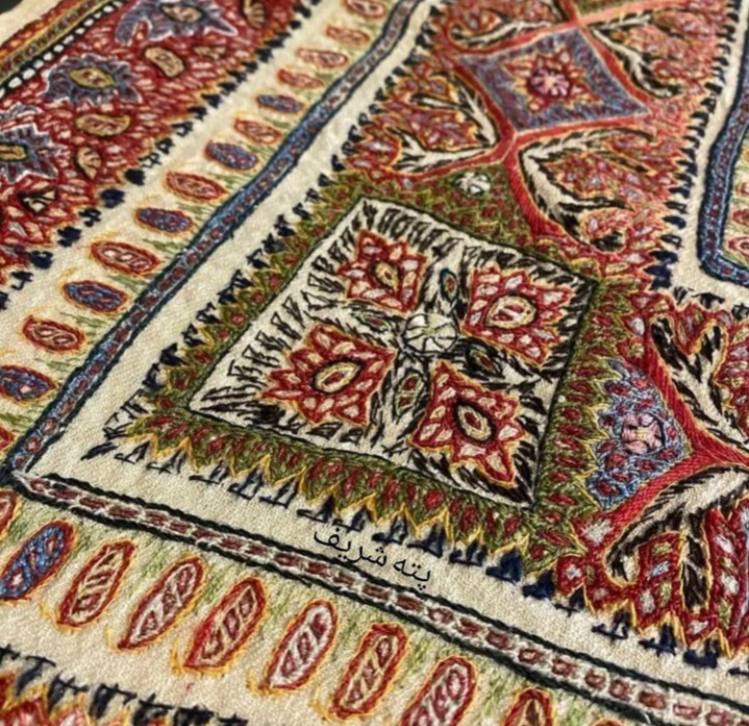
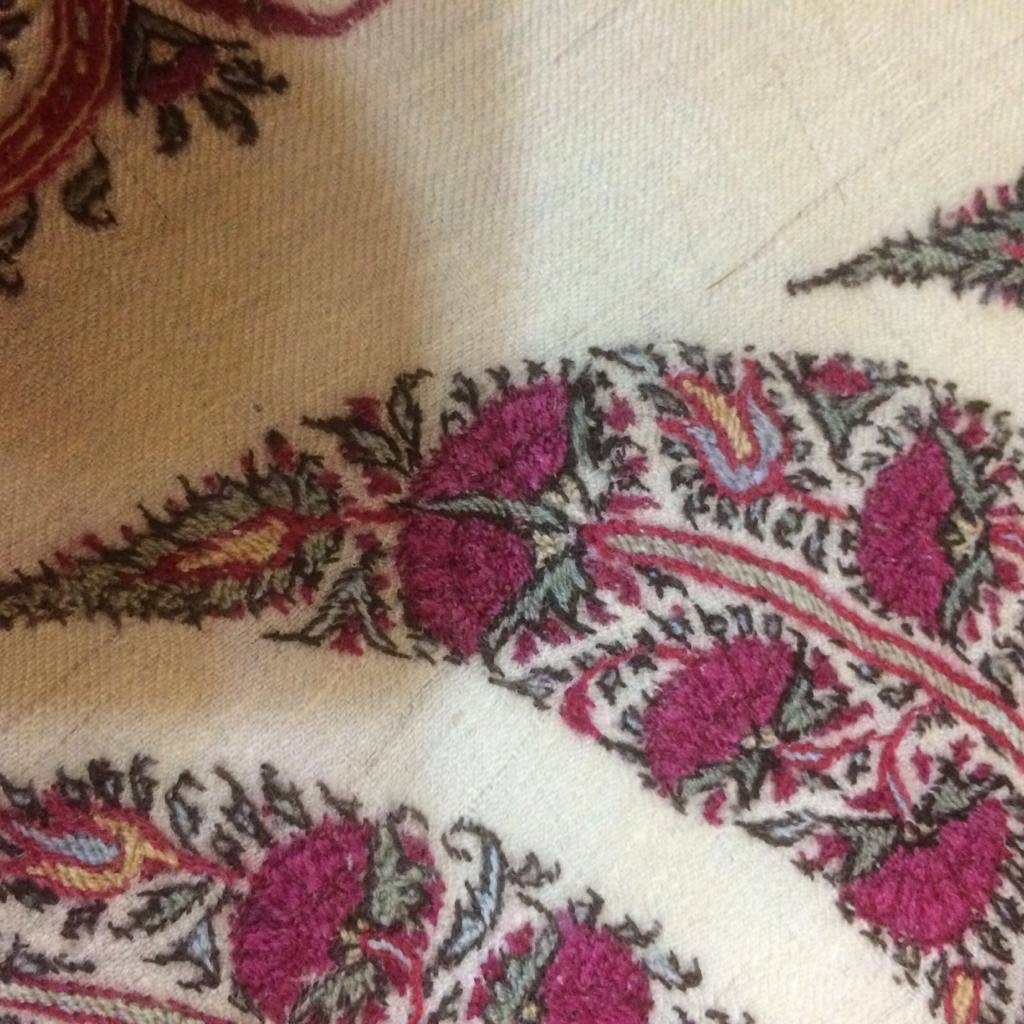


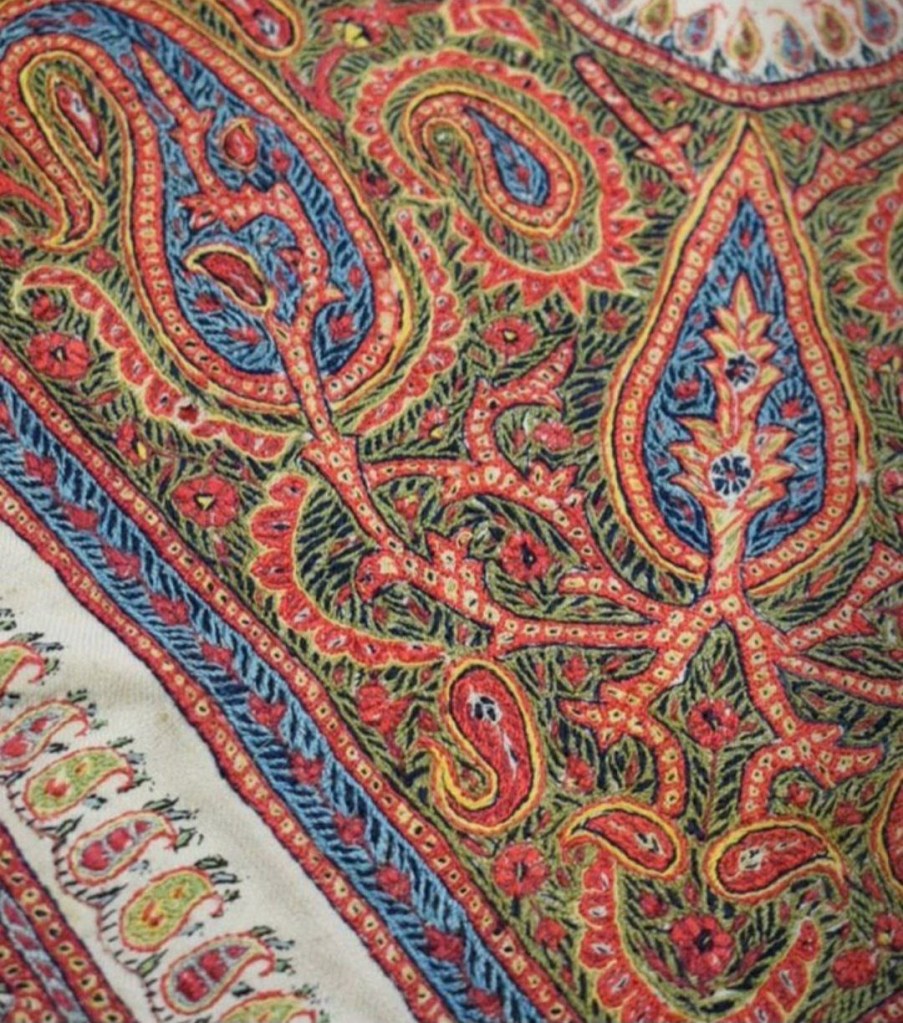


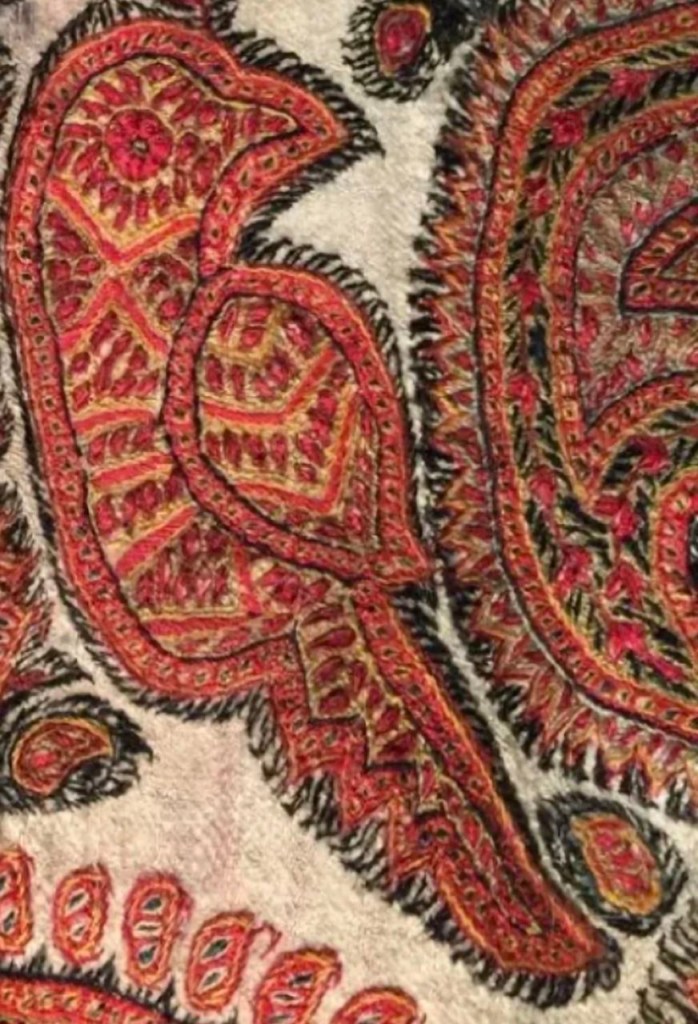
In comparison , the selection of pieces Ghorbani’s students below are recognizably unique . You will note the use of colour and distribution throughout the piece .You will also notice the accuracy of the stitching .
The students are required to start with a light background colour and then can move onto a choice of red or dark blue as they progress.
In years to come these pieces will be easily identified as Ghorbani’s heritage to this crewel embroidery technique.
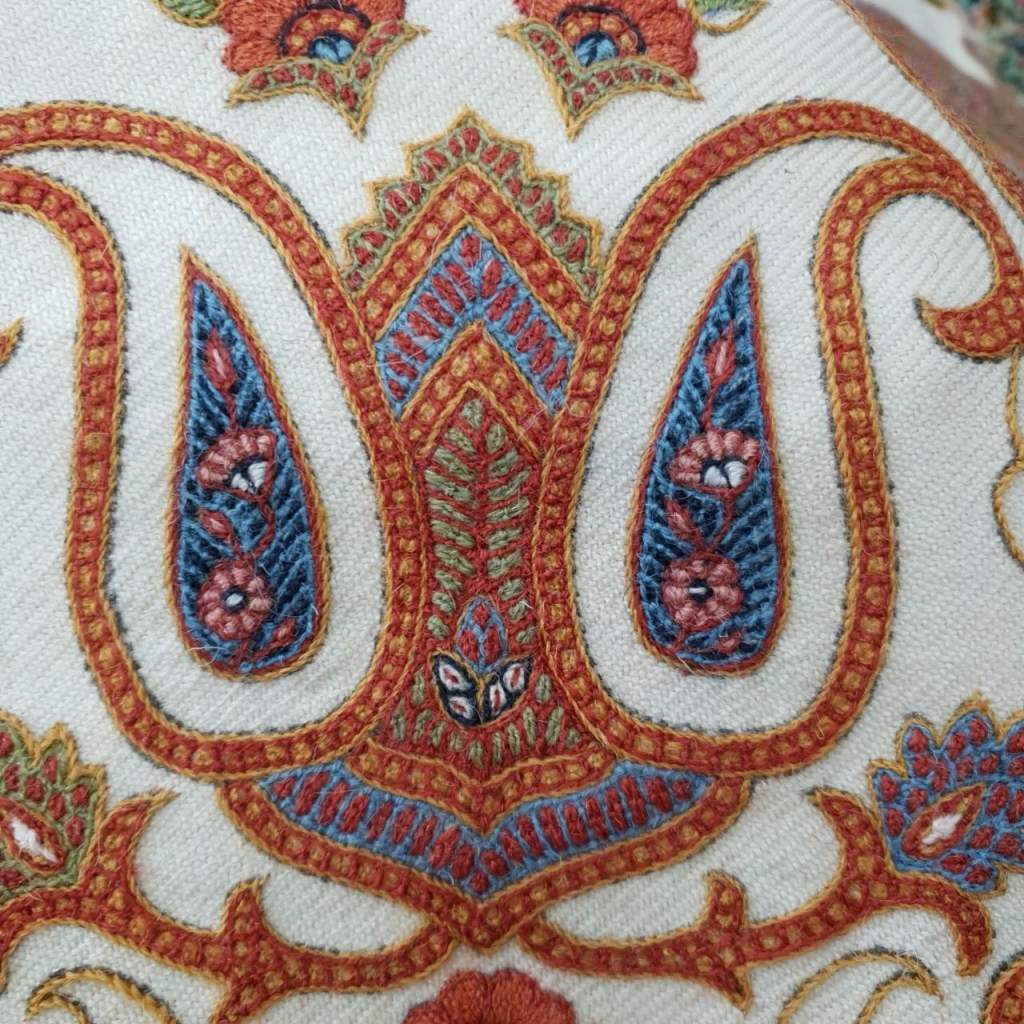

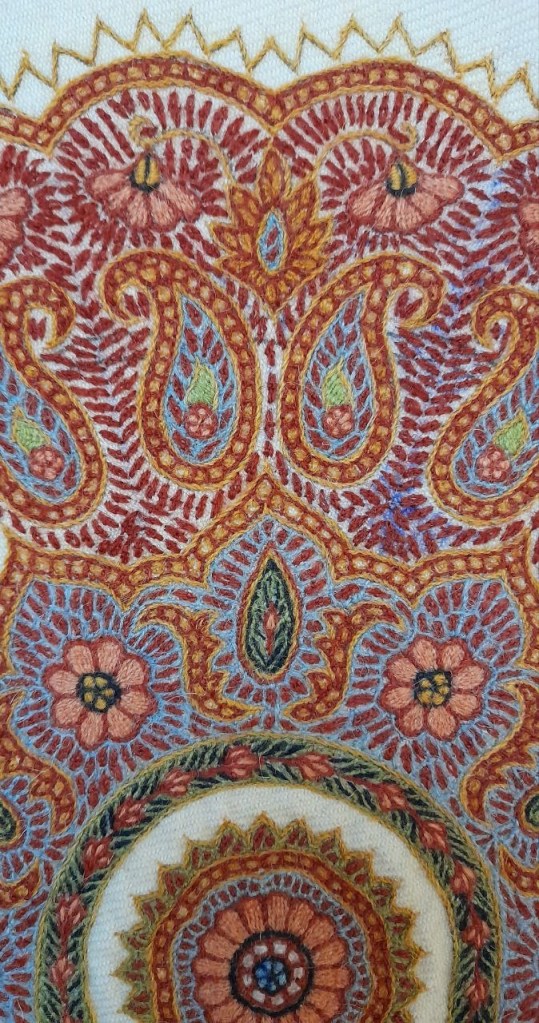

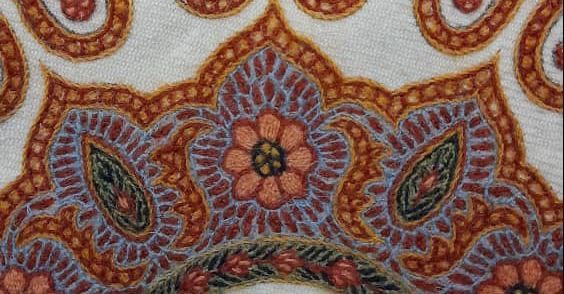
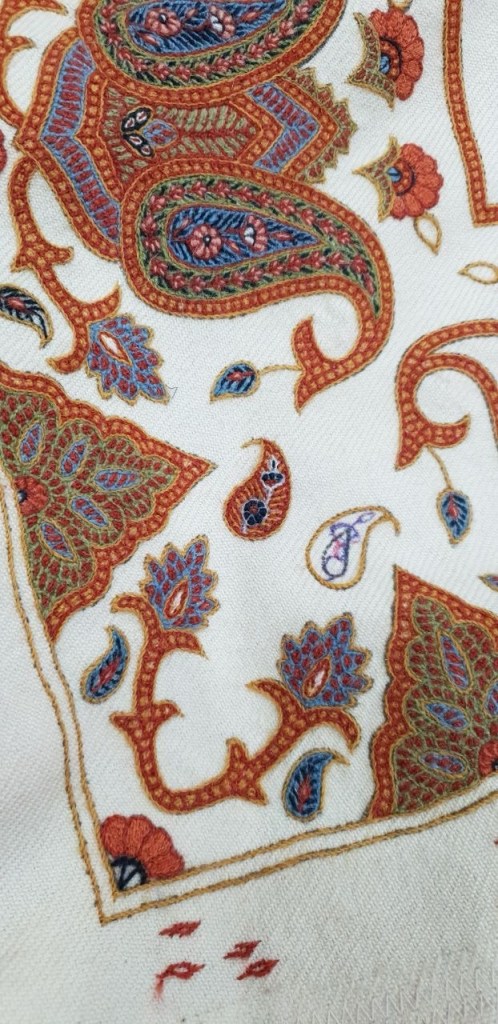

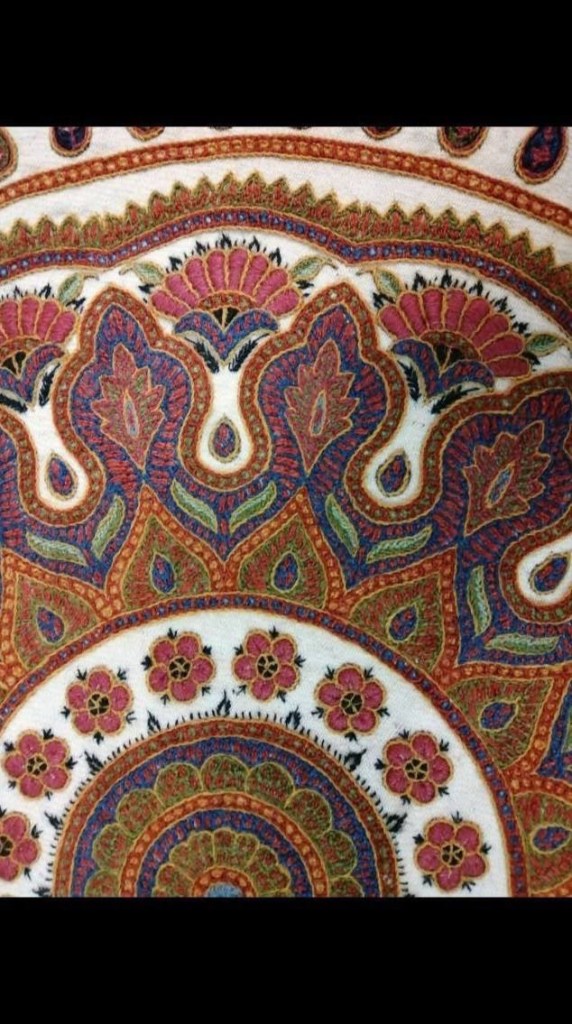

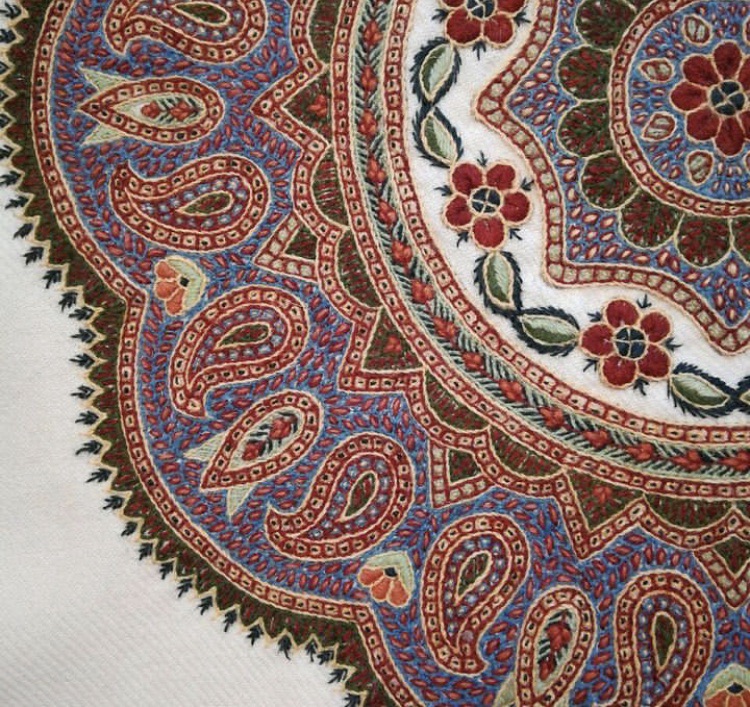
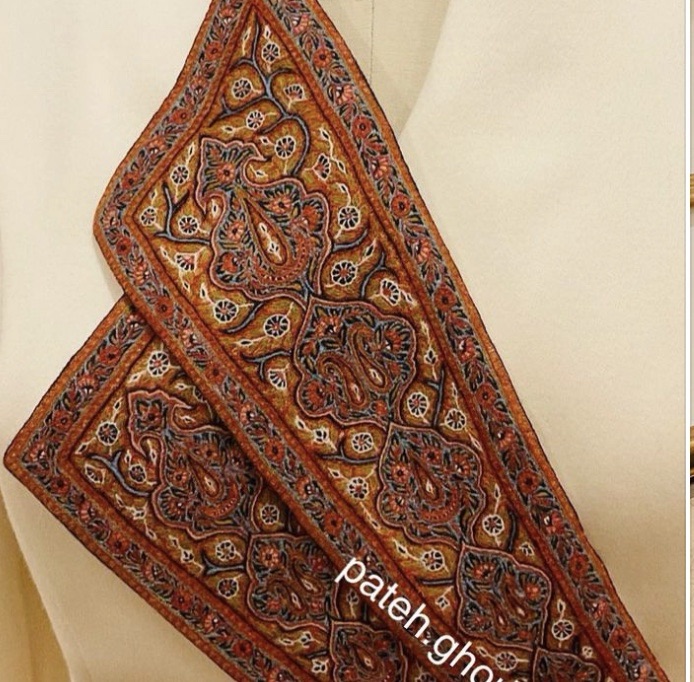
Ghorbani recently stitched the collar and accessories of HRH Queen Farah Pahlavi’s tailored suit celebrating the Iranian New Year .


 Dzignpatch