
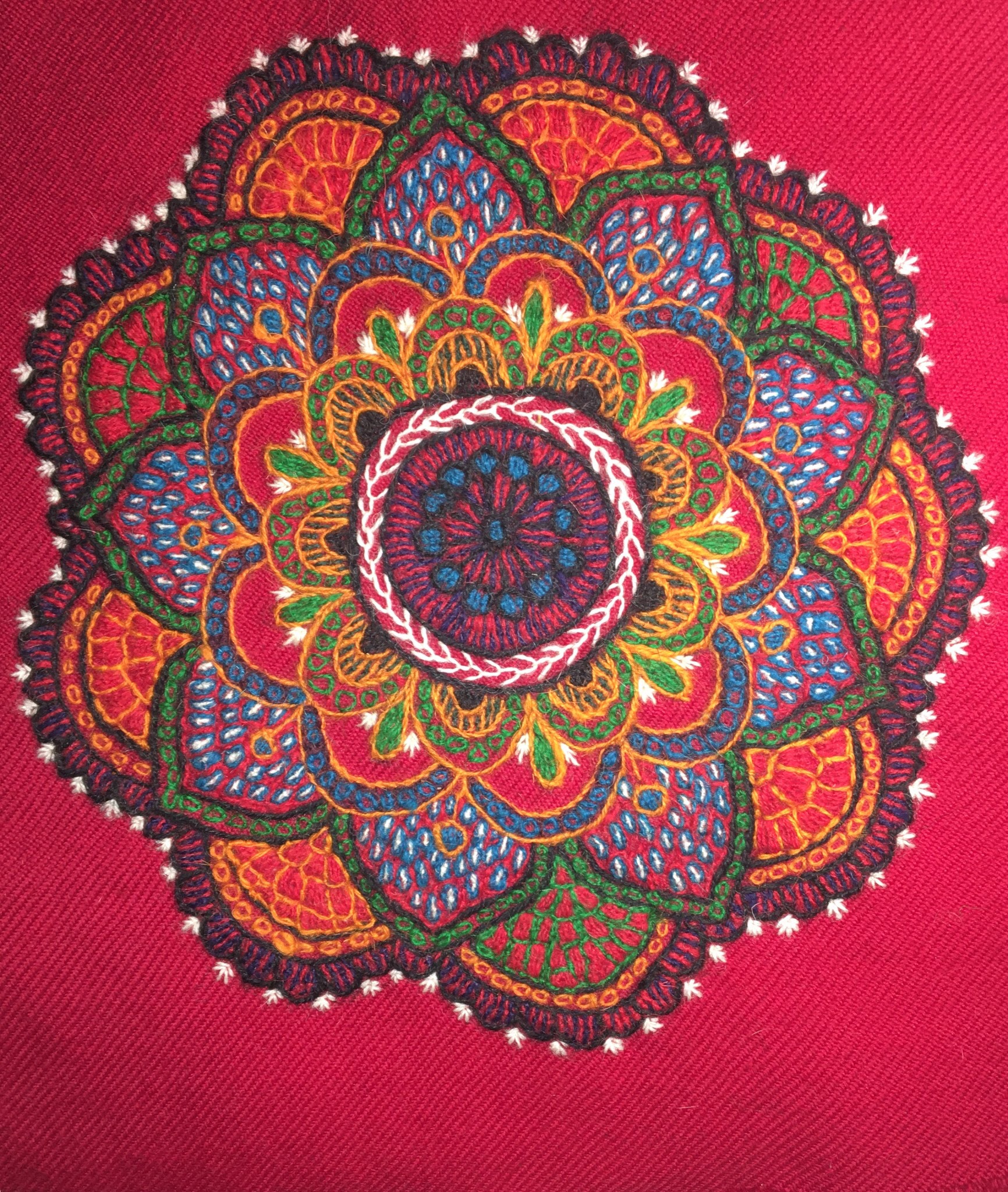
My First Stitch Sampler
Traditional Pateh Doozi Stitches
Sagheh doozi – stem stitch is usually used as outline stitch
Petk chahargoosh – a geometrical square shape
Petk Sehgoosh – a geometrical triangular shape
Ab Doozi – a long ( 1 to 2 cm ) couched stitch
Matn doozi – the use of ab doozi to fill in the background
Negin doozi – jewel stitch is an intricate combination of ab doozi as to create a jewel like motif with a stitch in one colour enclosed by another on each side .
Gharjar doozi -is a combination of ab doozi creating a grid
To por doozi – fill in stitch like satin stitch
Barg Doozi – is a variety of stitches used to contour shapes
Dookht Jaadoui – magic stitch is done by twisting two yarns together and stitching the Ab Doozi stitch with them . It creates a very rich effect. For instance , making the first couch stitch in red and filling in the background with blue creates a purple effect .Twisting red and blue together and doing all the stitching with both creates the same but at twice the speed! It is considered cheating but personally I love it !

Petk chahargoosh/saghe doozi/to por doozi 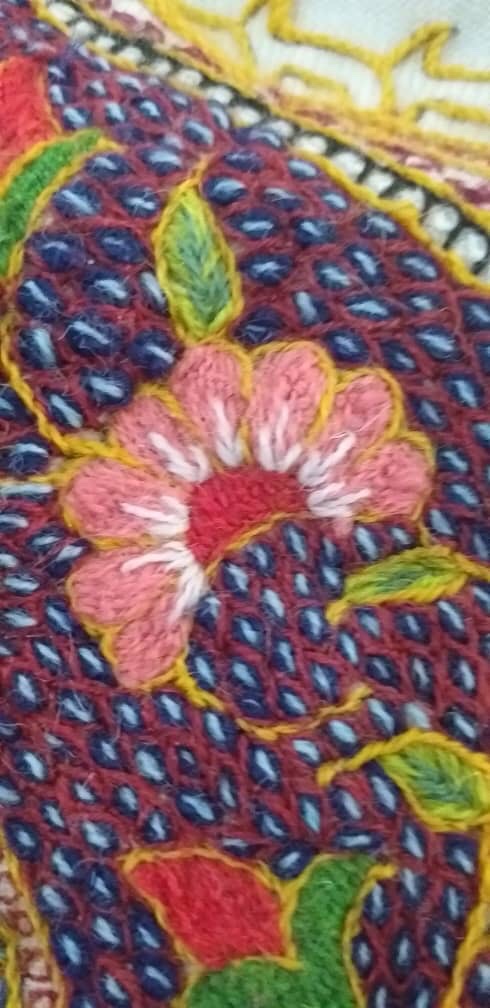
Negin Doozi/the spots 
Petk Chahargoosh/ negin doozi 
To por doozi/ barg doozi 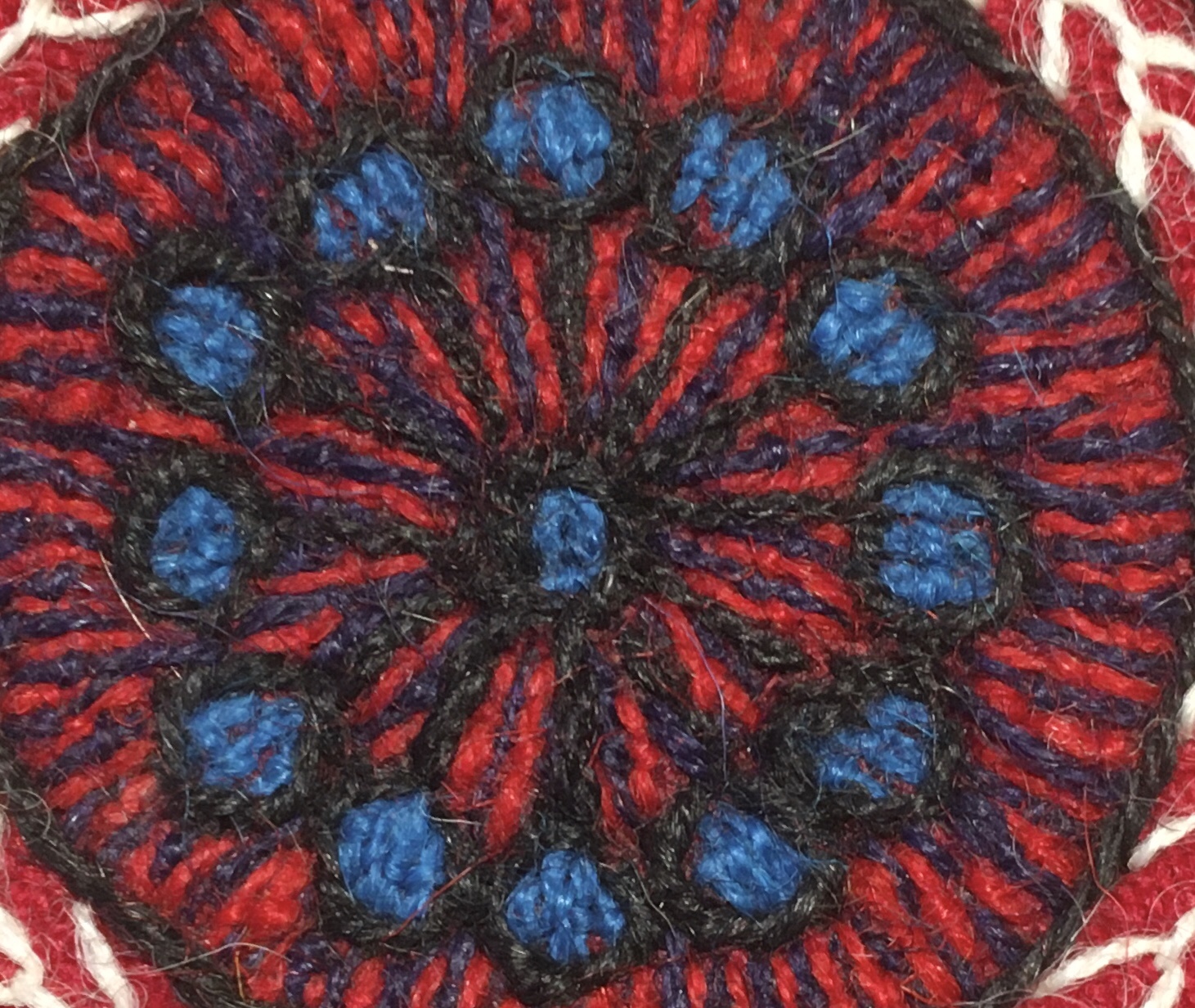
Ab Doozi 
Gharjar Doozi 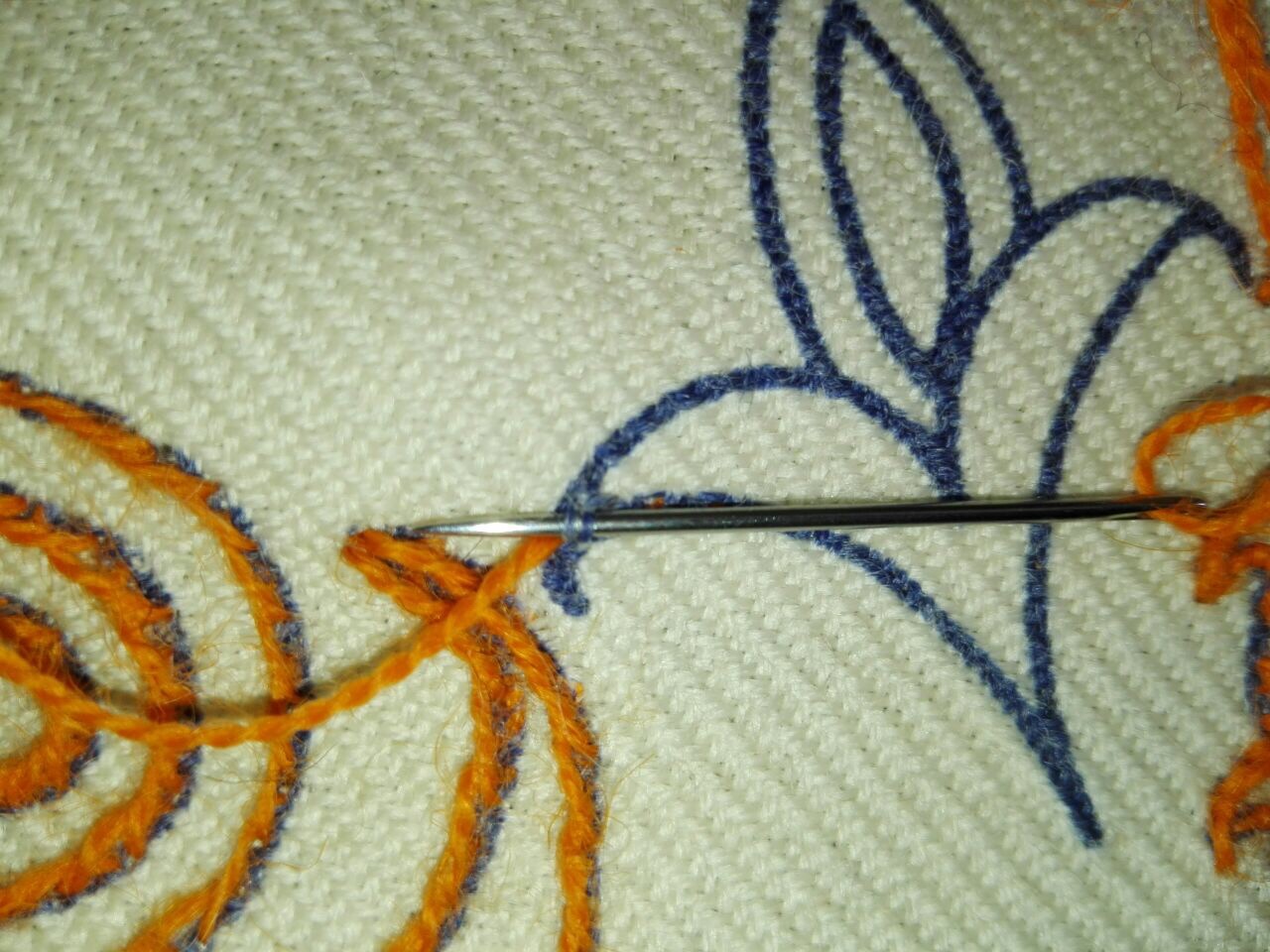
Sagheh Doozi/ stem stitch 
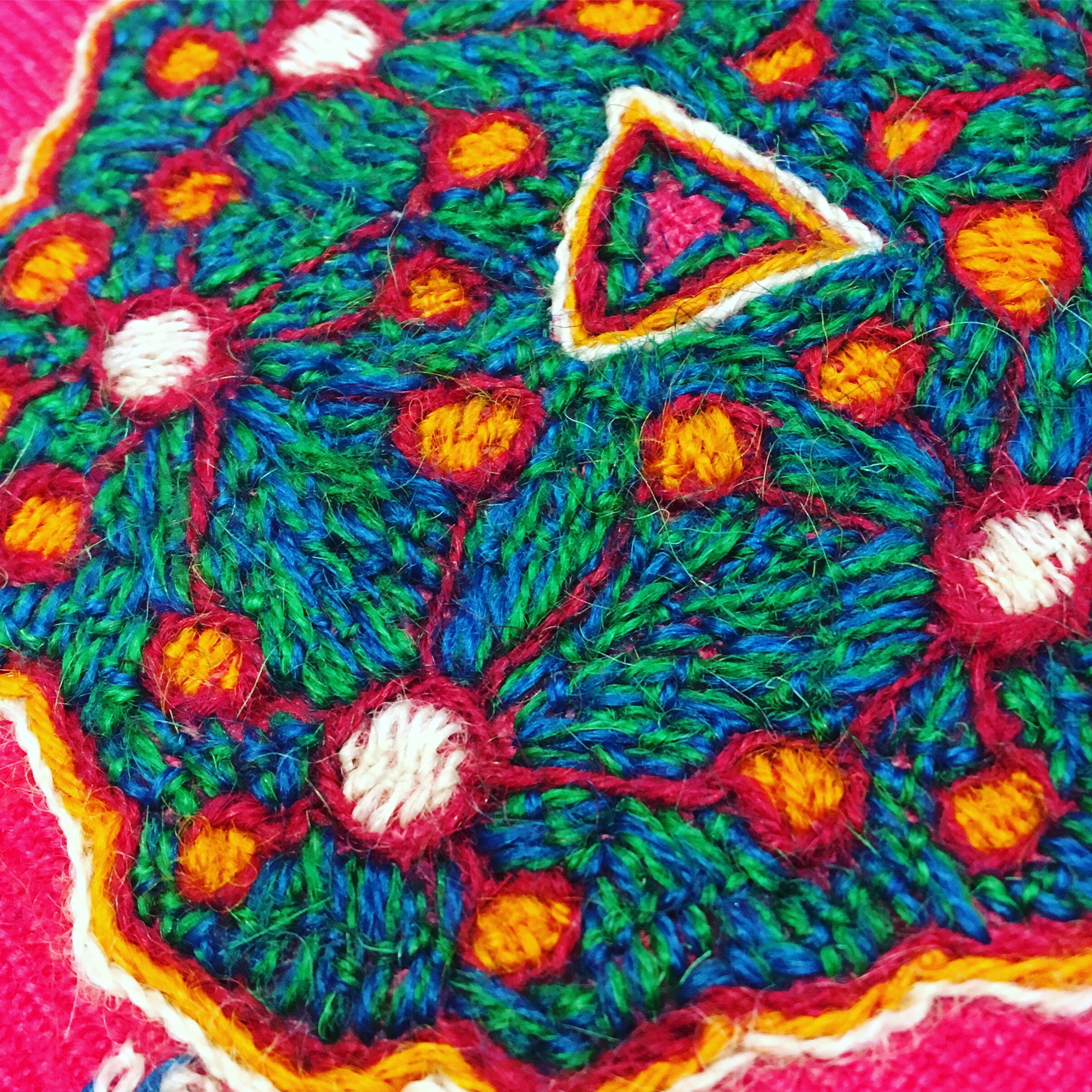
Magic stitch 
Stem stitching comes first 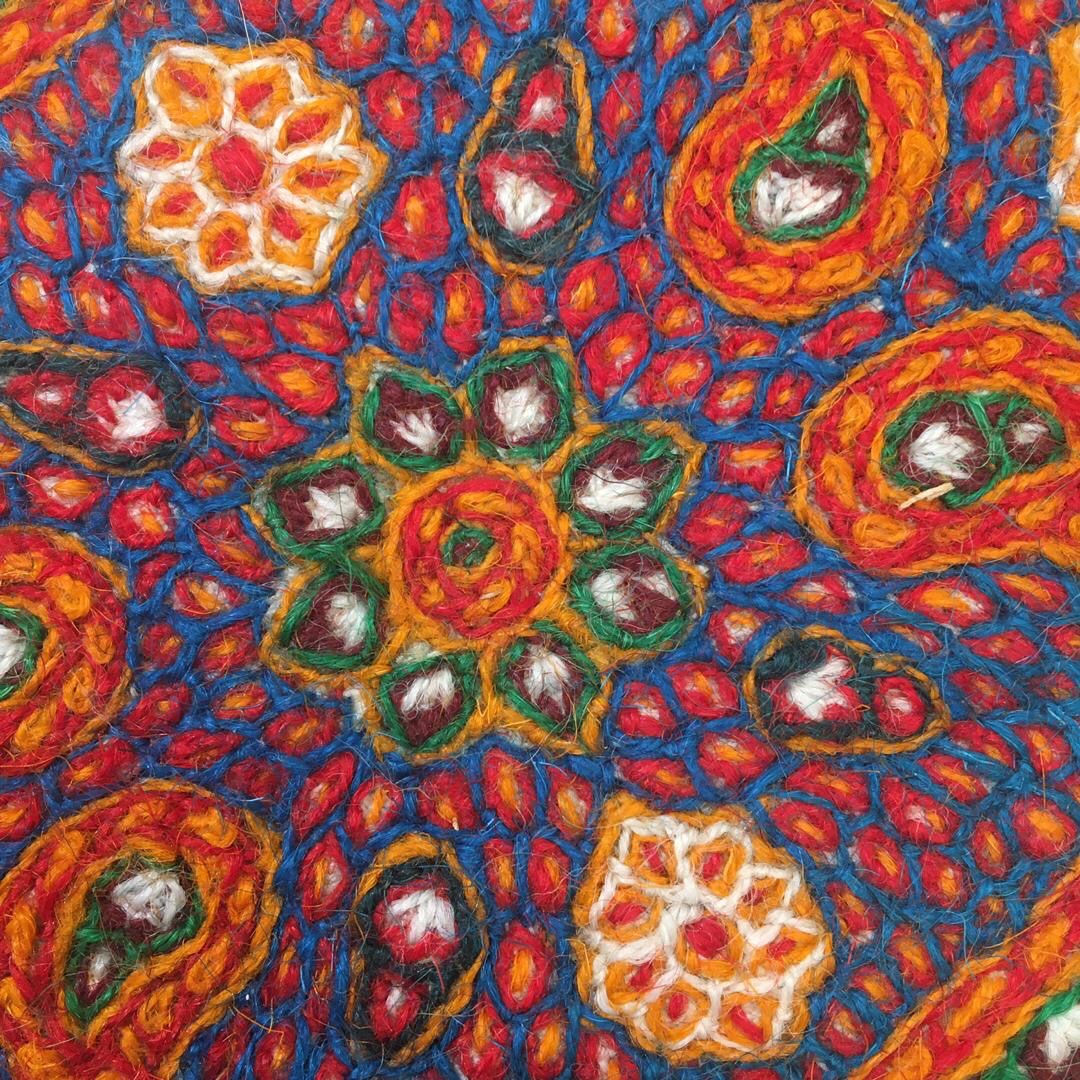
Negin Doozi
There are a variety of stitches been added to modern pateh doozi by younger and less traditional stitchers like feather and rope stitch. The modernization of Pateh Doozi is causing concern for some traditionalists .’Fantasy’ stitches, colours and designs as they are called are creeping in. Like most things in Iran , people are on the defensive when it comes to change but there have been several renaissances due to various factors like economics and the market place to political factors. For instance , there was a great Pateh renaissance in the Pahlavi era as Farah Pahlavi, the late Shahs wife encouraged and supported arts and craft revival . My own personal opinion is that change is good and progress happens as long as we understand and respect the crafts history and recreate it with the same quality of workmanship . The craft has exploded during the last year and many young stitchers are appearing with the spread of Instagram . They are making little cottage industries selling their crafts and the equipment for it as well as teaching on line. Items from necklaces, tissue boxes , hand bags and purses are being made , even shoes. It is incredible ! A new respect for the crafts is appearing and long needed and it can be a great source of income and support.
The Fabric & Yarns
The wool ariz is a locally woven fabric usually woven at 90cm wide and you can buy it by the metre. It comes in red and white , turquoise, saffron, navy blue and green. It is a twill weave .This has alway puzzled me as it is not a stable fabric and can be pulled and distorted on the bias very easily and therefore it is practically imposing to embroider straight lines on ! But On reflection, maybe straight lines are few and far between ! It is a medium weight fabric and easily embroidered on .It has a great handle and very pleasing to work with .
Packs are available in assorted colours and yarns from suppliers in Kerman . The designs are printed onto the fabric ready to sew. In the past the designs would have been transferred either freehand or with a stencil marked with charcoal. It is appropriate to wash both the fabric and the yarns before use. The black ink tends to spread during stitching so it is best to wash away the excess before hand. The yarns may bleed dye so washing before use will prevent running when the piece is cleaned.

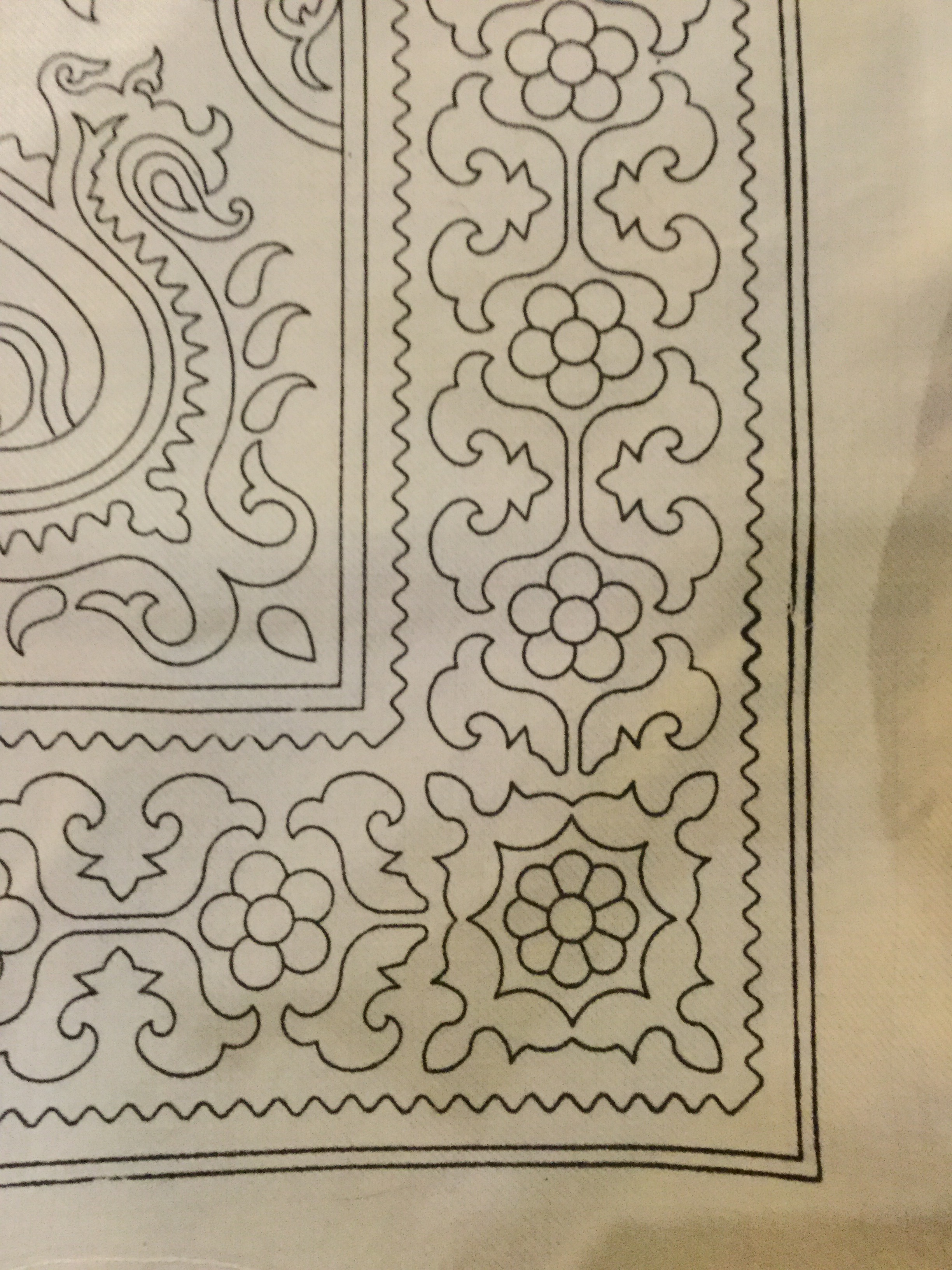
Design printed on arriz shawl 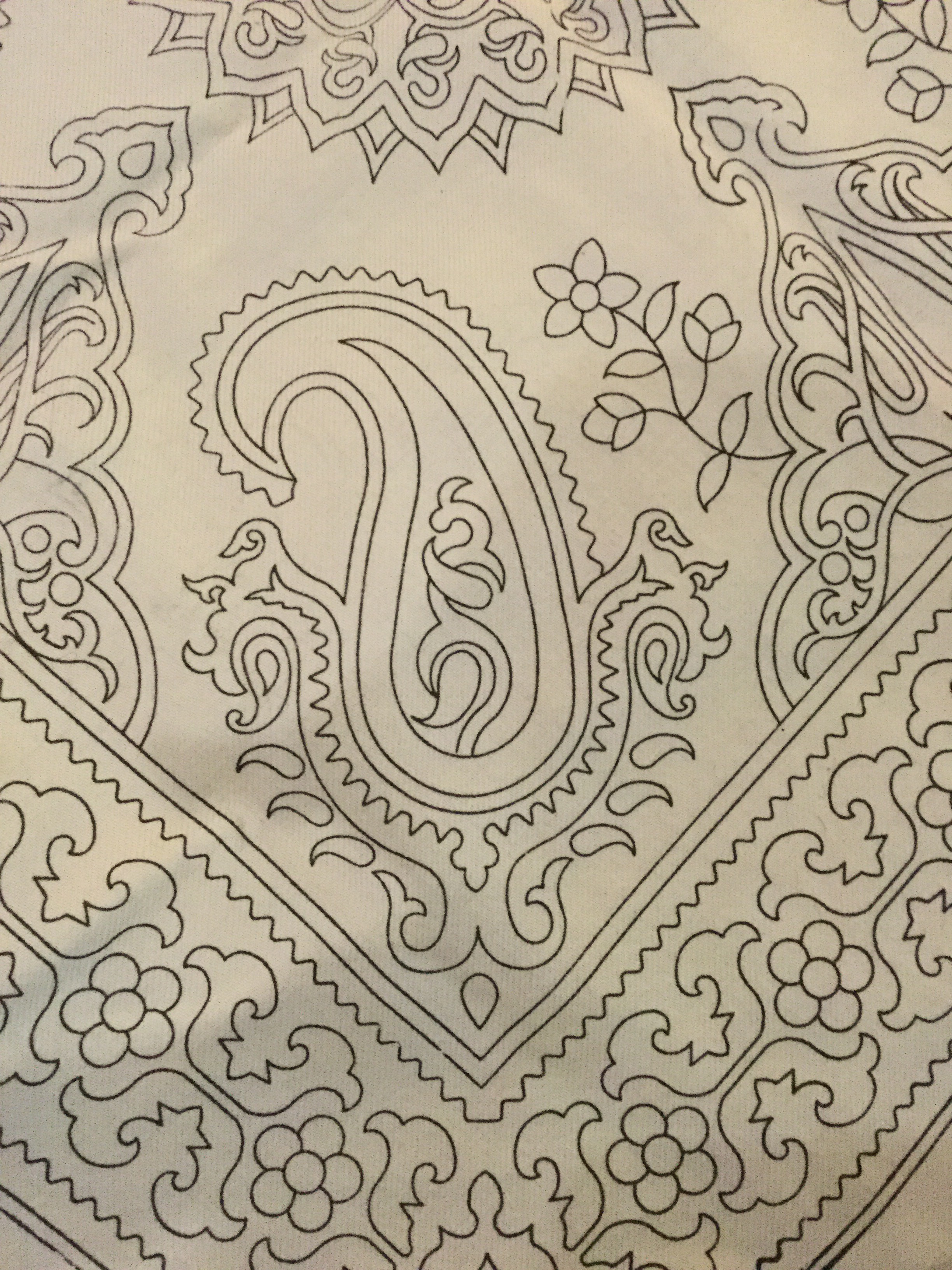

Washing the printed fabric 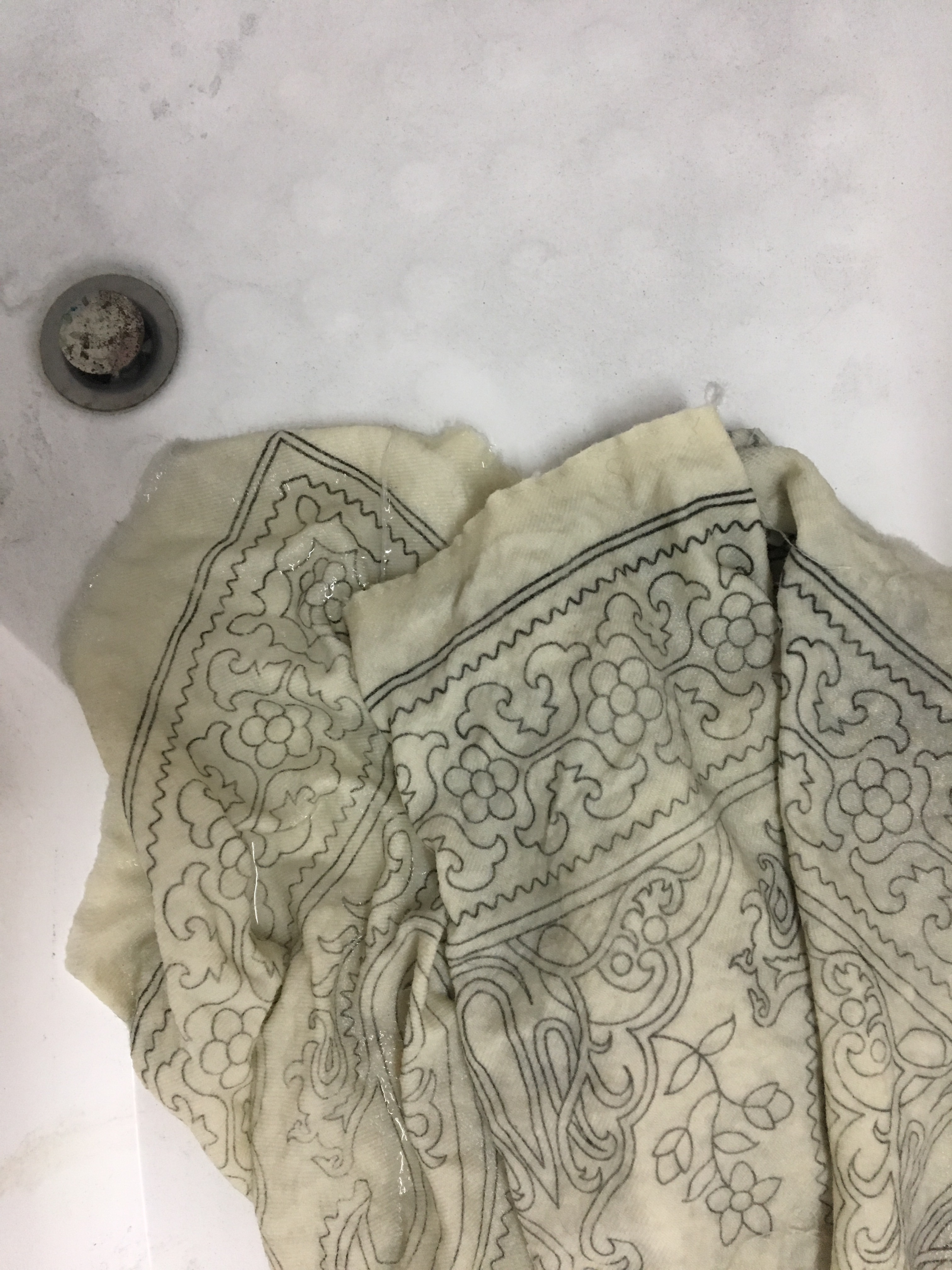


Washing the yarns 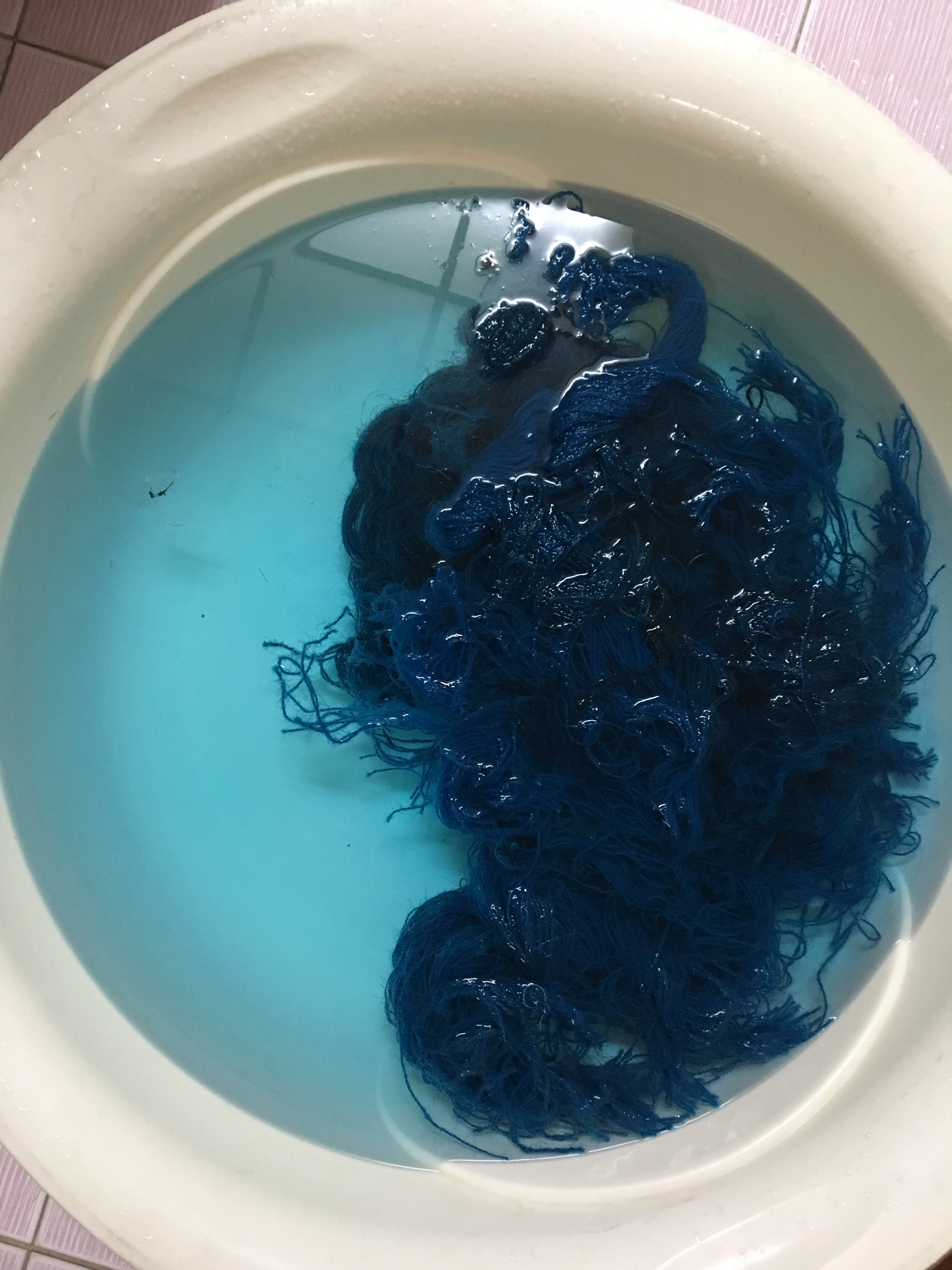

Using fabric softner for final rinse 
Traditional naturally dyed colours 
Traditional chemically dyed colours 
Fantasy naturally dyed colours 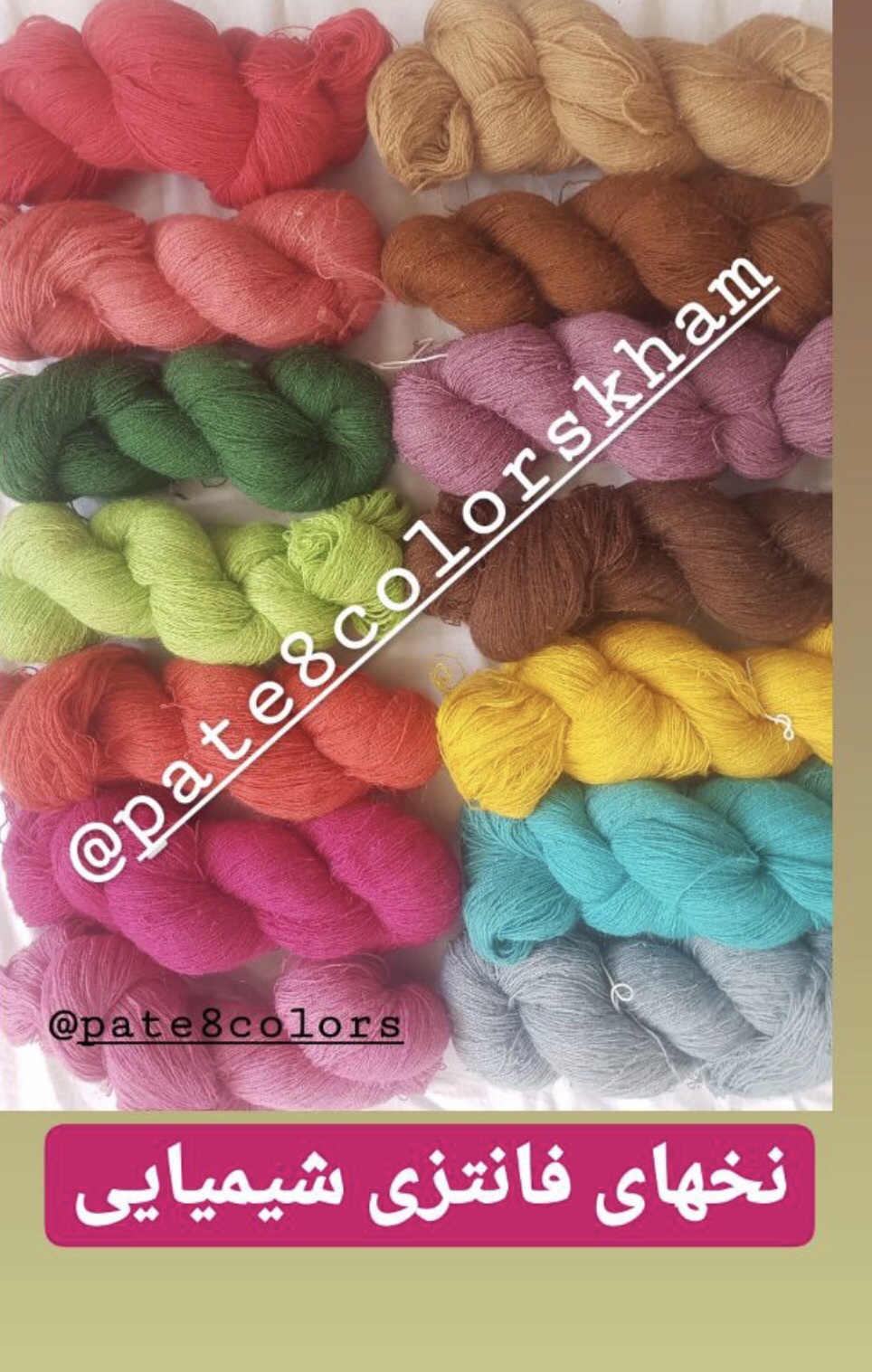
Fantasy chemically dyed colours 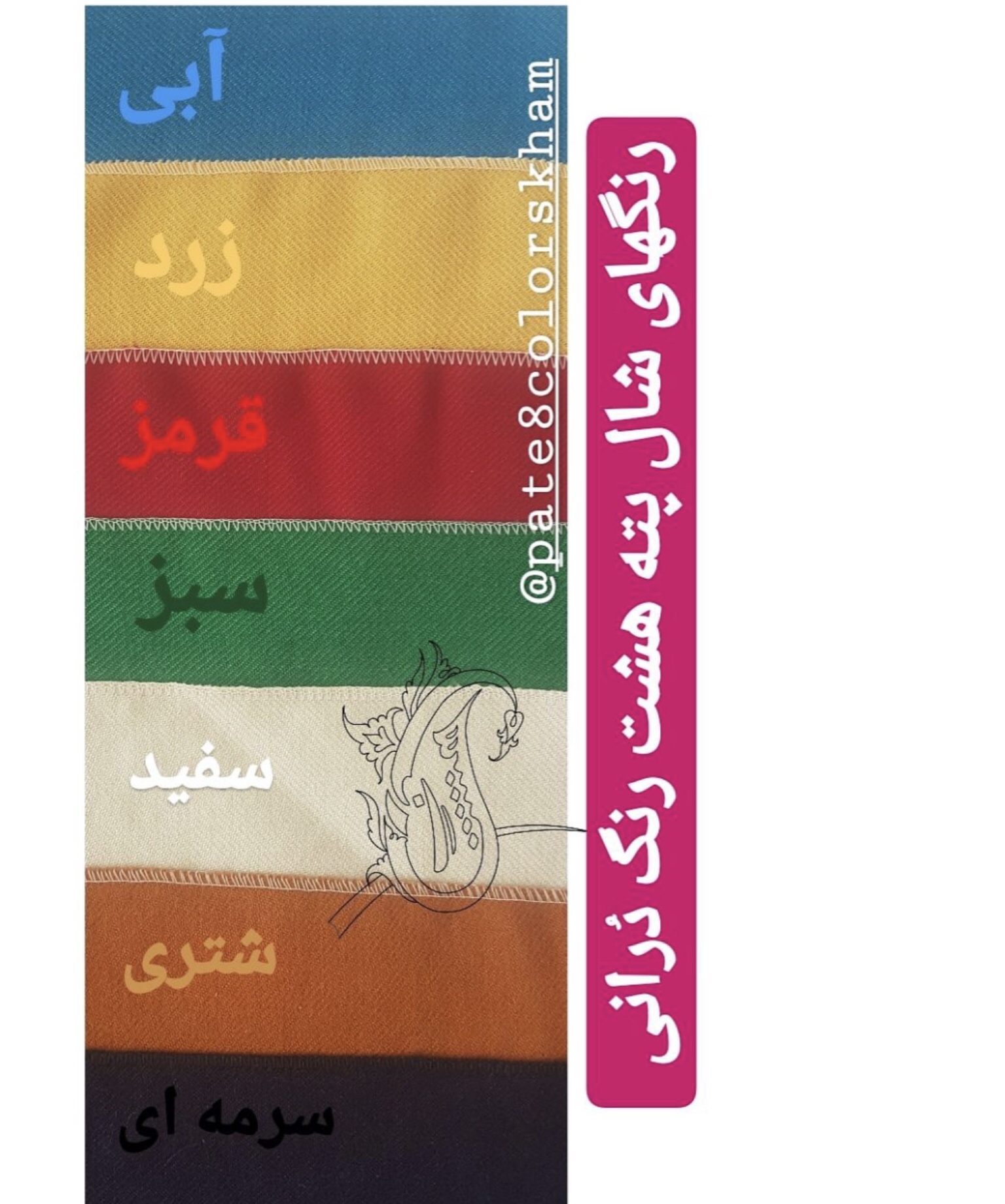
Background colour choice 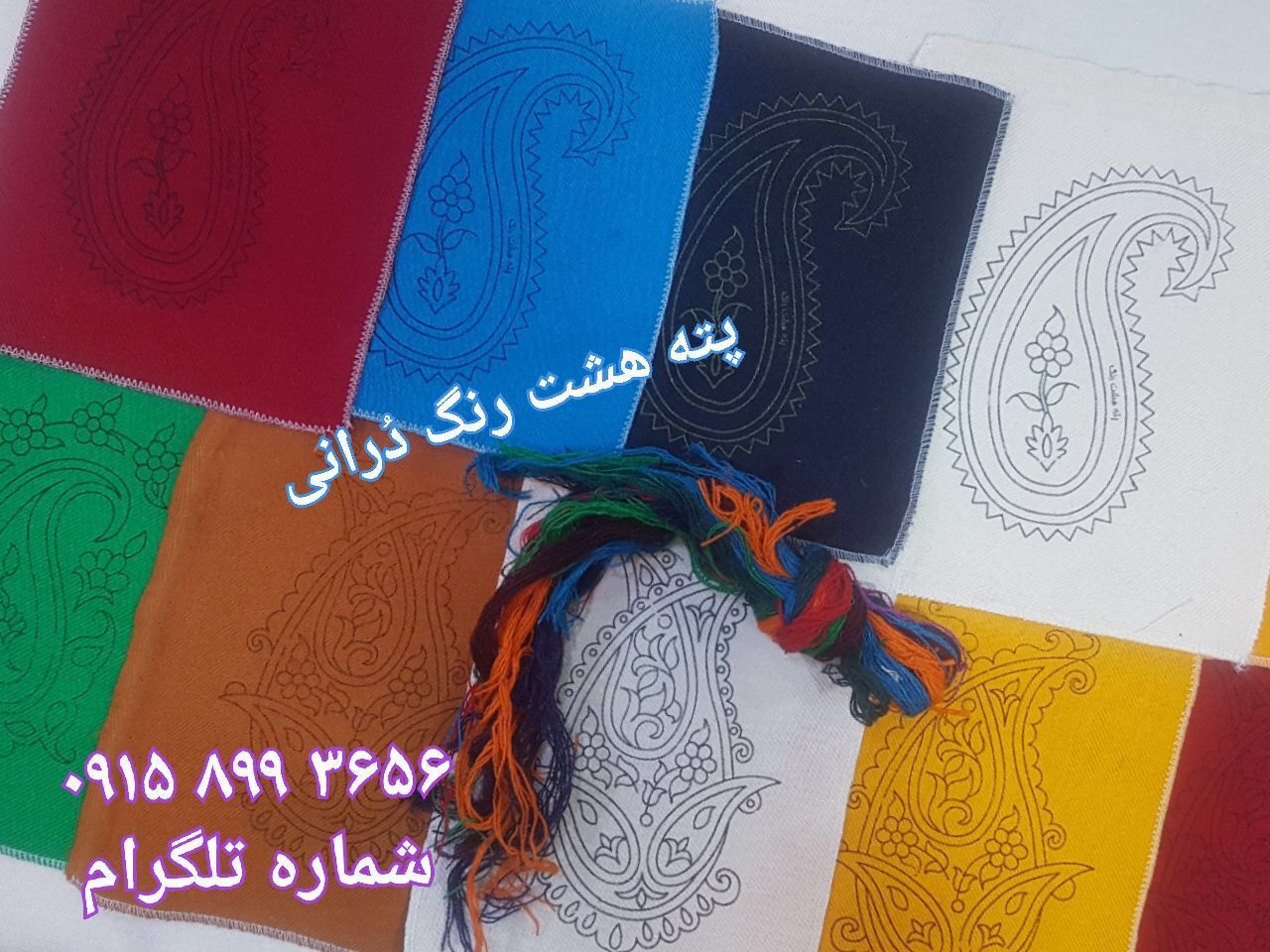
Packs
The Designs & Motifs
The designs are divided into four categories, Flowers and Florals , Geometrical, Katibé or Cornice and Birds .
1 – Flowers and Florals : Gol va Boteh designs are flowers including Shah Abbasi flower motif from the lotus flower, water lilies ,carnations, sunflowers and iris.They are incorporated with the Boteh design which is the shape we have come to know as Paisley.
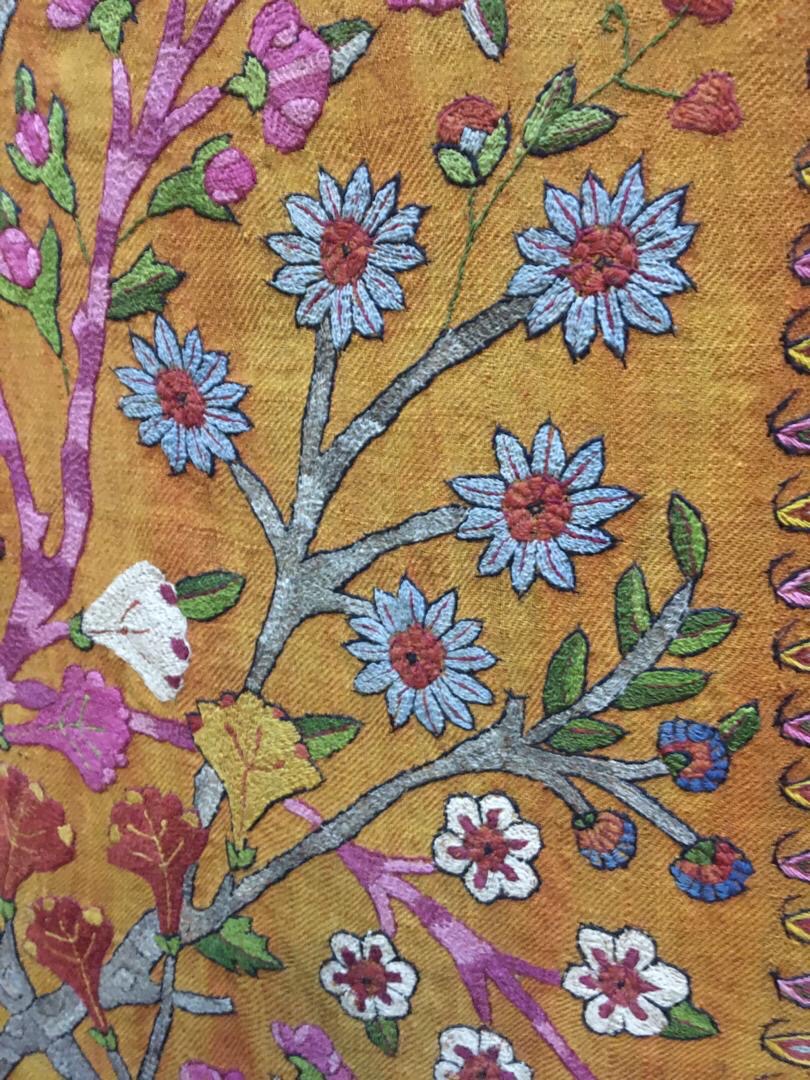
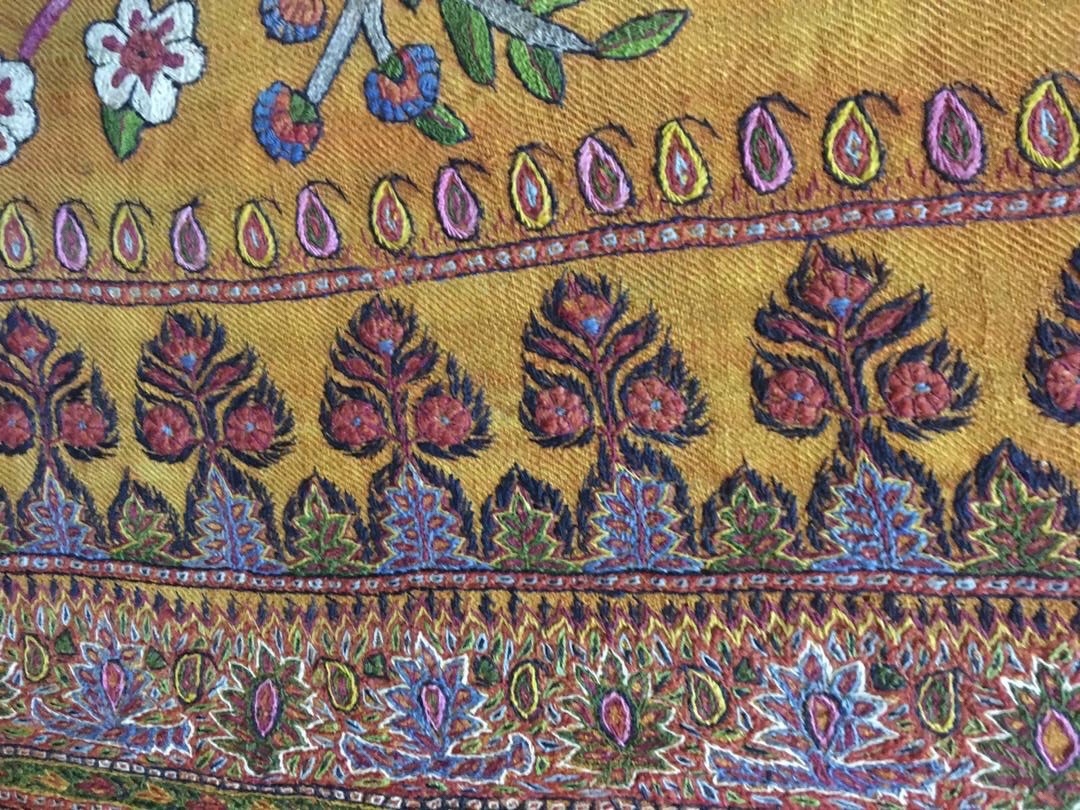

Eight petal flower / pre islamic motif 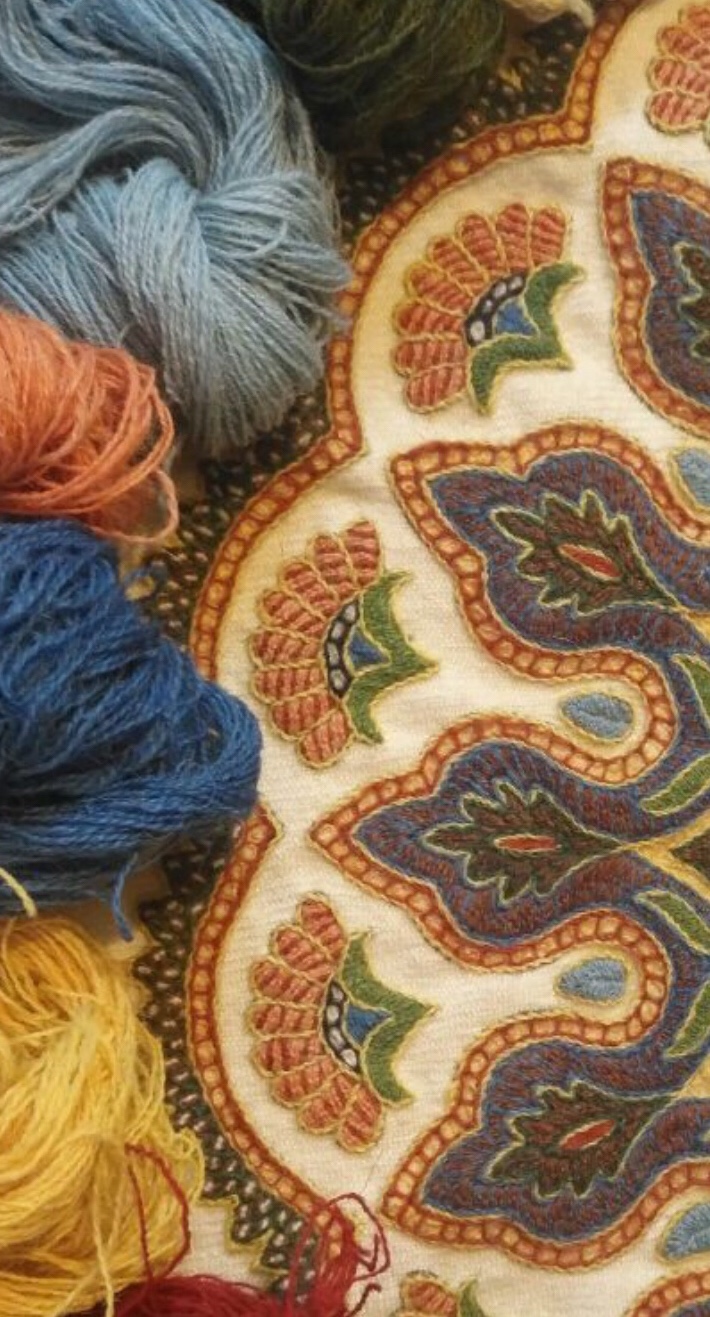
Carnations 
Antique Pateh/ sunflower motif 
Contemporary Floral Pateh Doozi 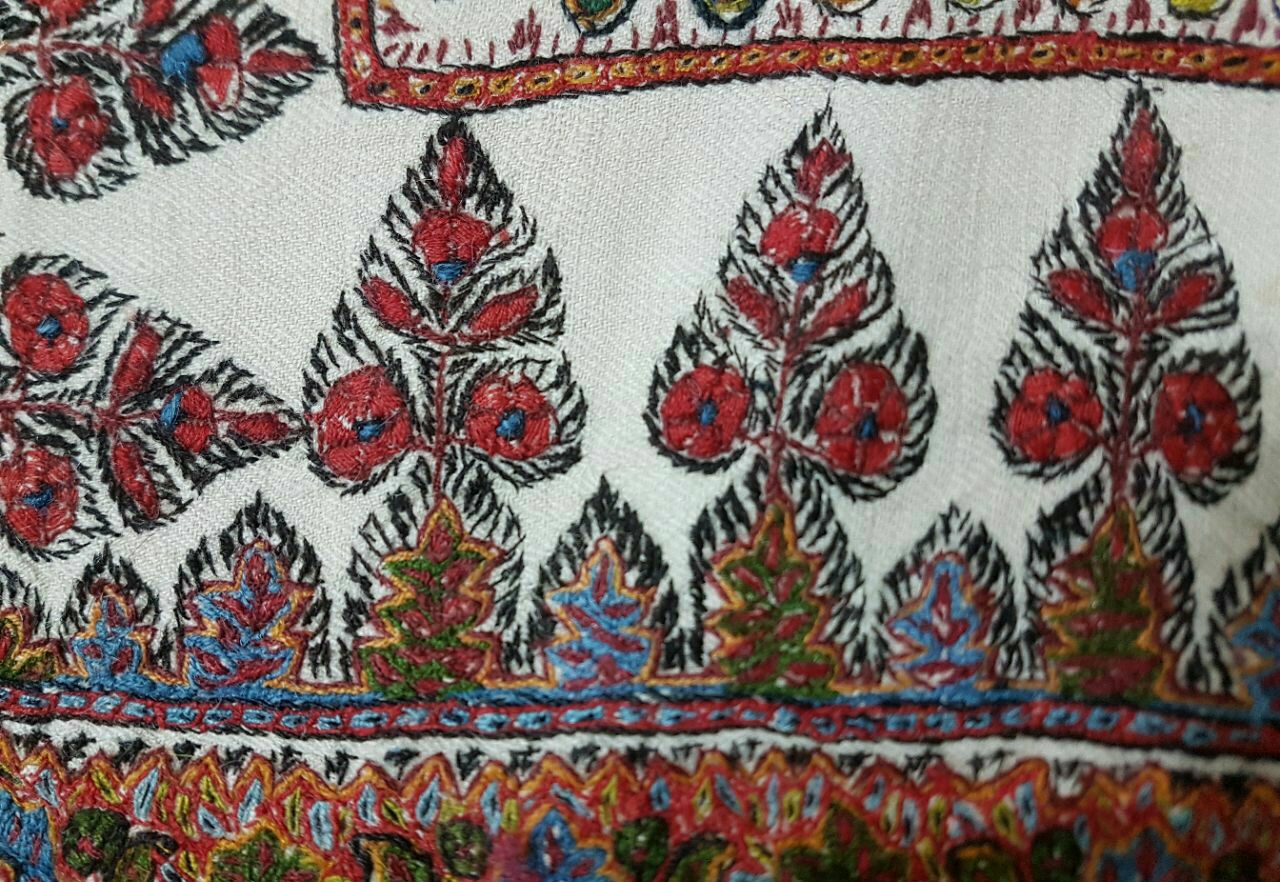

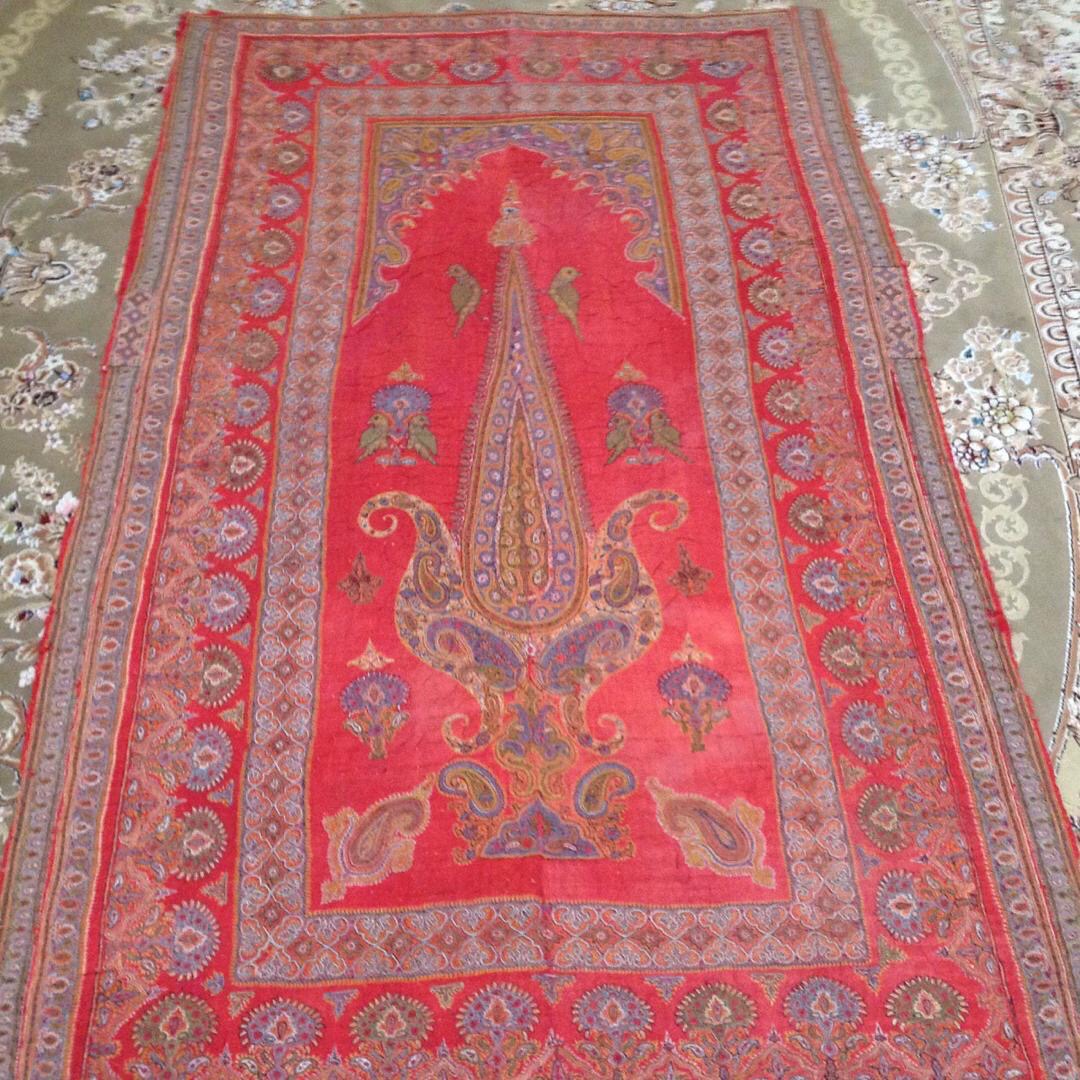
The Boteh design originates from the pre islamic design and motifs of a cypress tree . It has taken on a curl at the top over the years but used to be straight. it can still be seen in designs for prayer mats and is called Boteh Badaami which means almond shaped. This shape comes in various configurations , one of which is Mother and Child which is a large Boteh and a small one in arms as it were. There can be more than one child Boteh on the design . There is also. Boteh Motif called Ghar va Ashti which means to sulk and to reconciliate ! They are usually back to back or all facing in a one direction repeat. Botehs can be used in the border designs . There is also a motif which shows the smaller Boteh inside a larger one which means God and the inferior Human .

Boteh Badaami 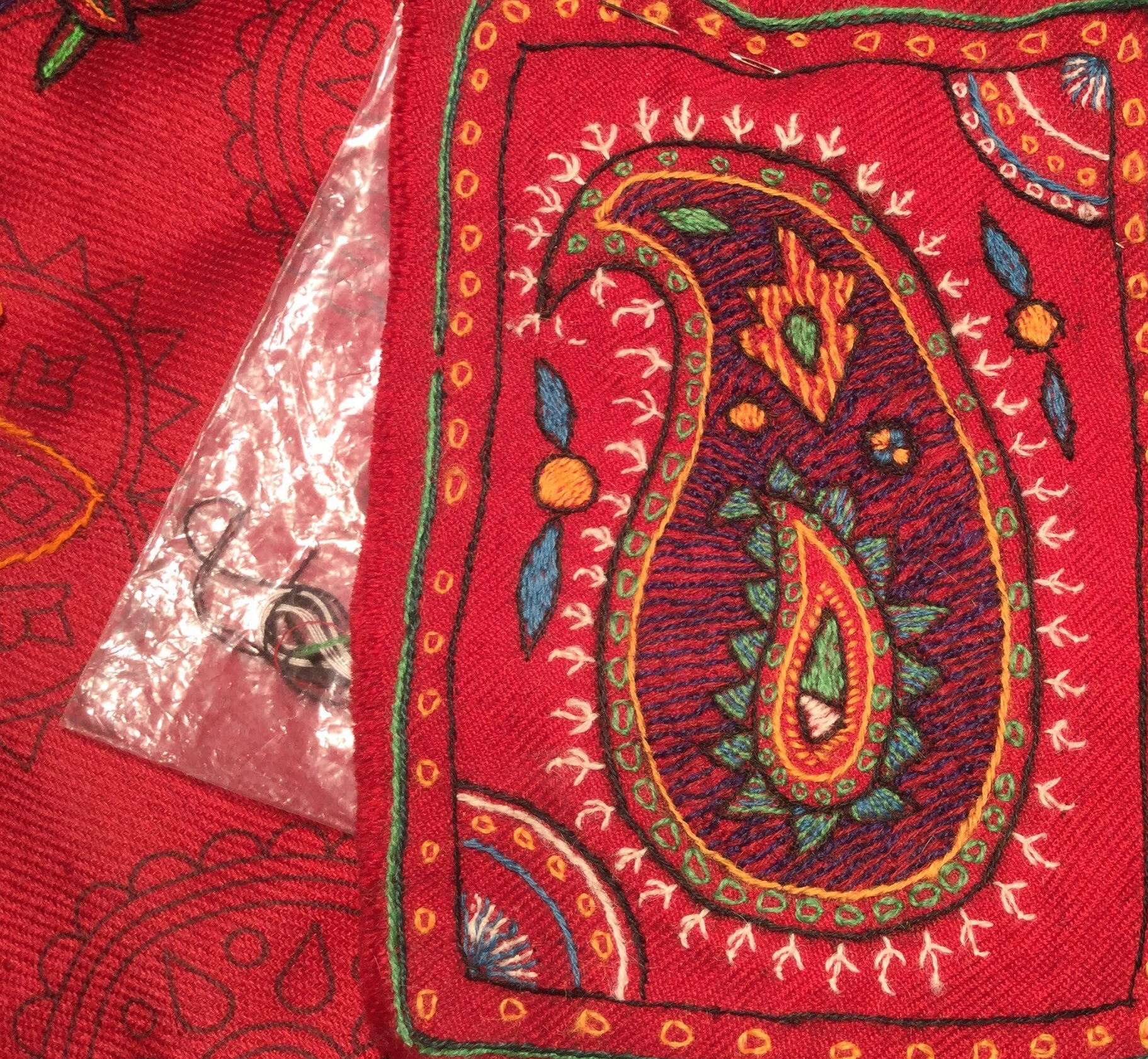
Boteh with a curl 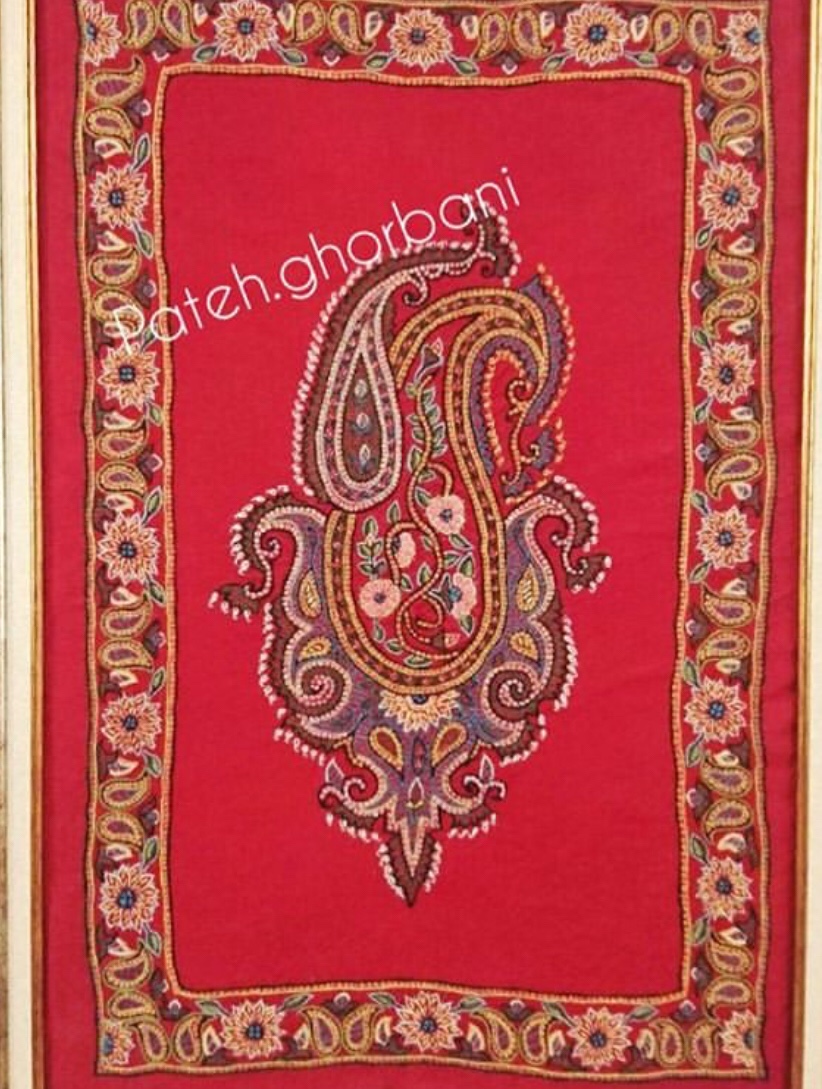

Boteh Baadami 
Antique Pateh from the Ghajar period with Mother and 2 Child Botehs 
Mother and Child 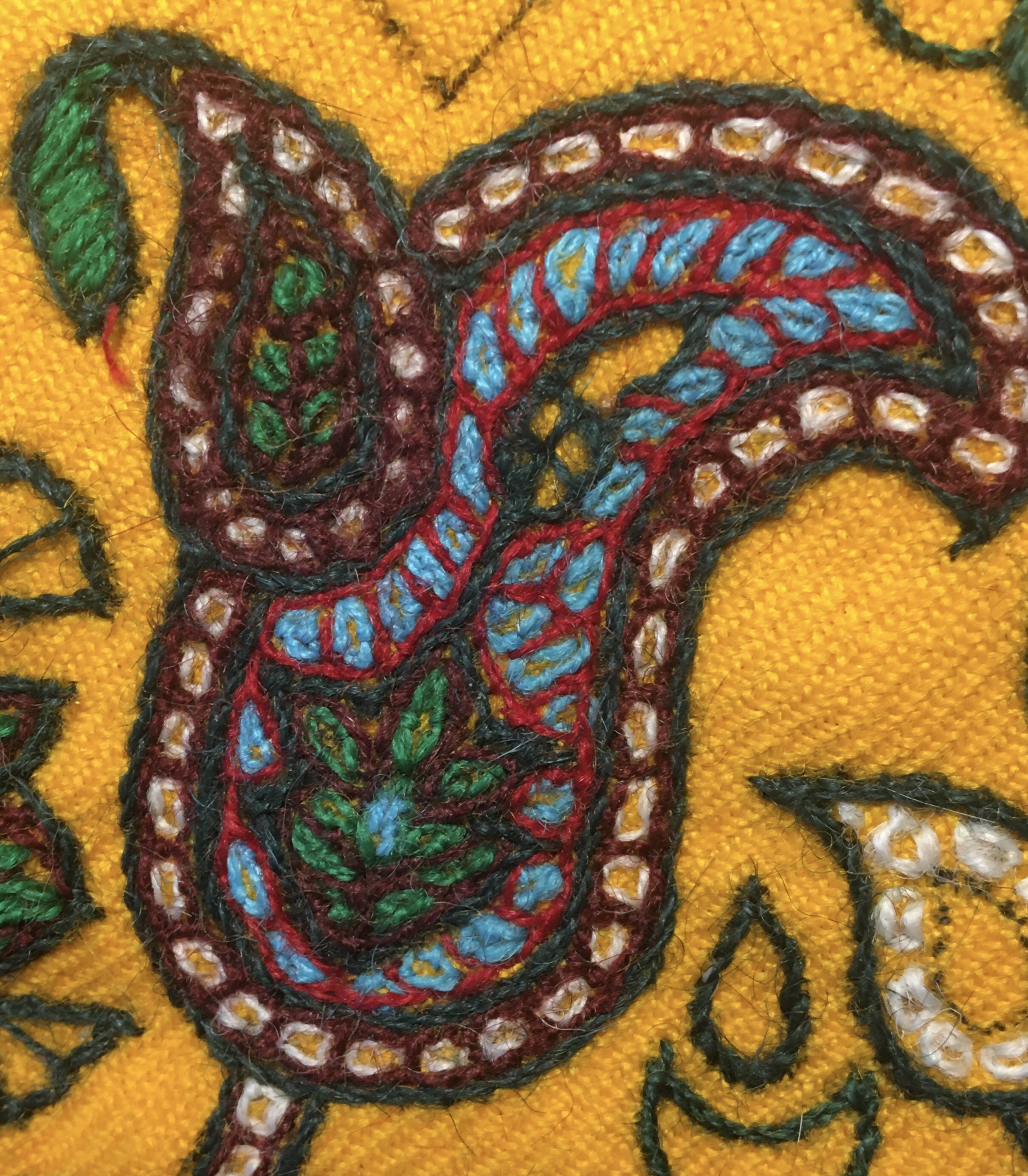
Mother and Child 
Ghar va Ashti Botehs 
Traditional Design stitched by Dastineh / Botehs in the corners surrounding a toranj motif in the centre 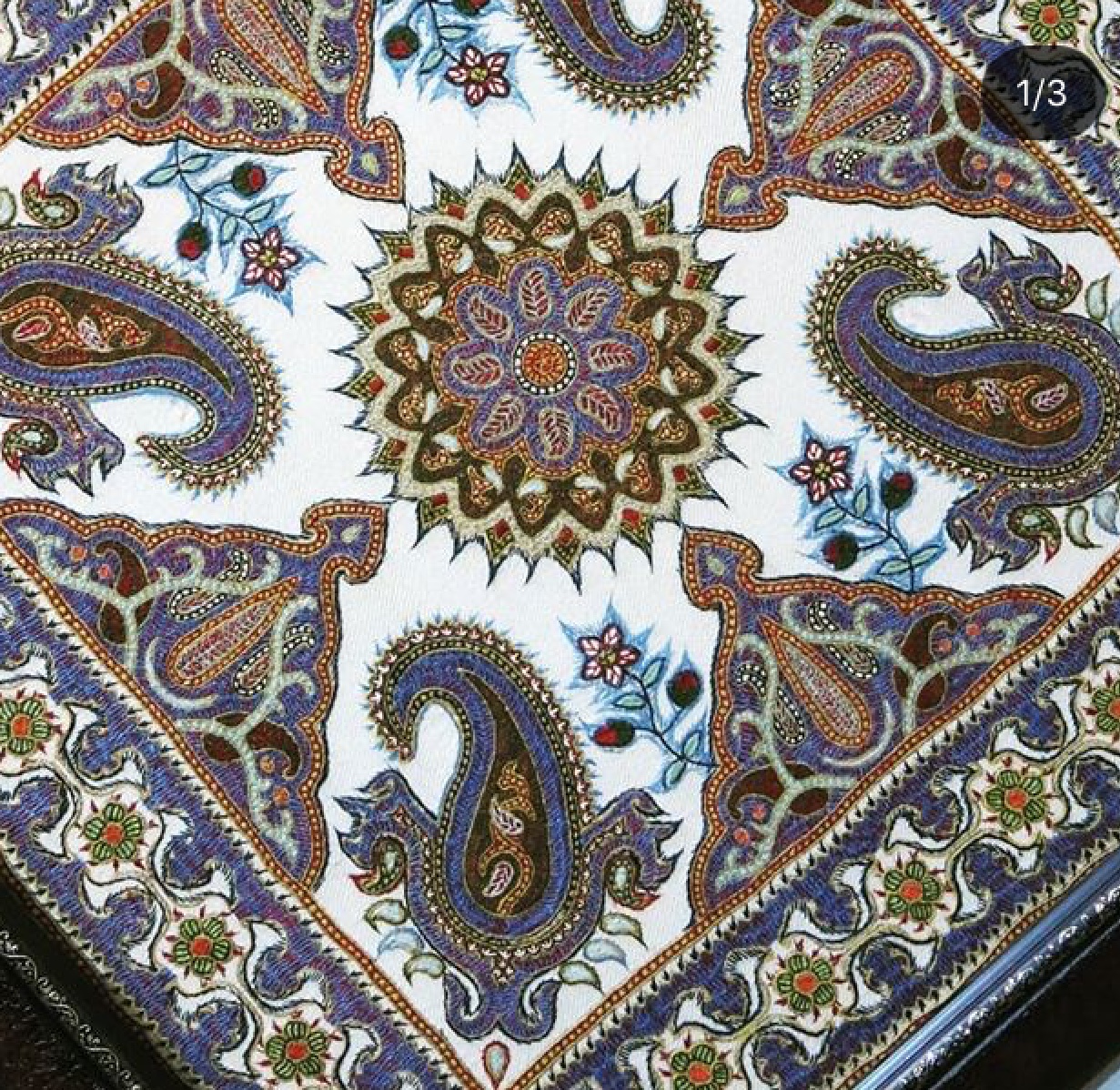
Traditional Design with naturally Dyed yarns stitched by Dastineh/ Botehs in the corners surrounding a sun mandala in the centre 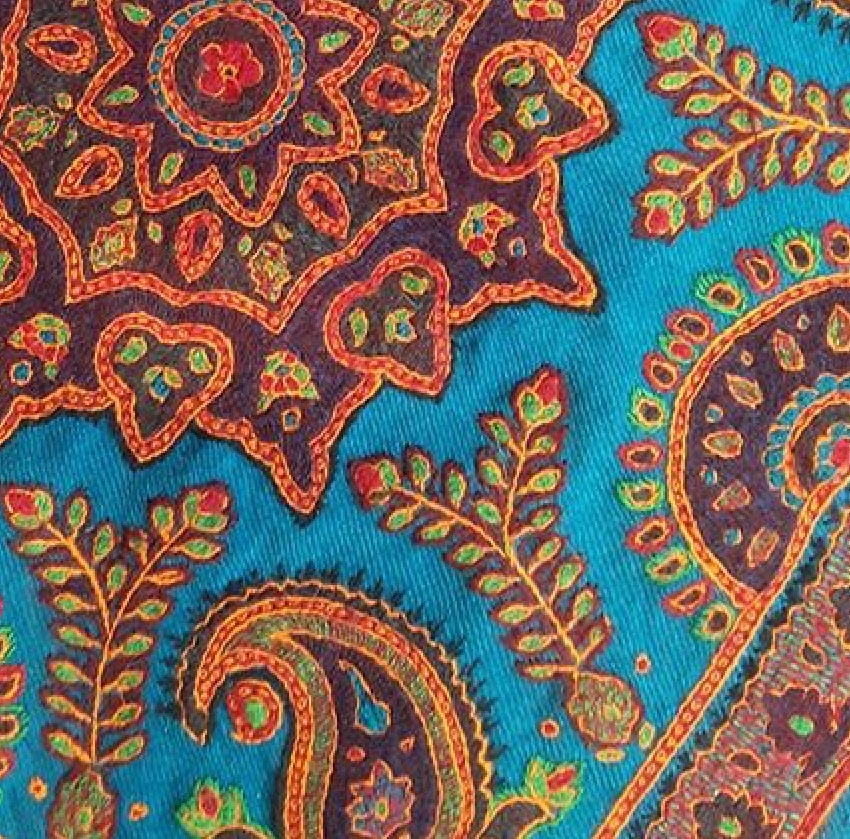
Traditional Design stitched by Dastineh with Botehs in each corner 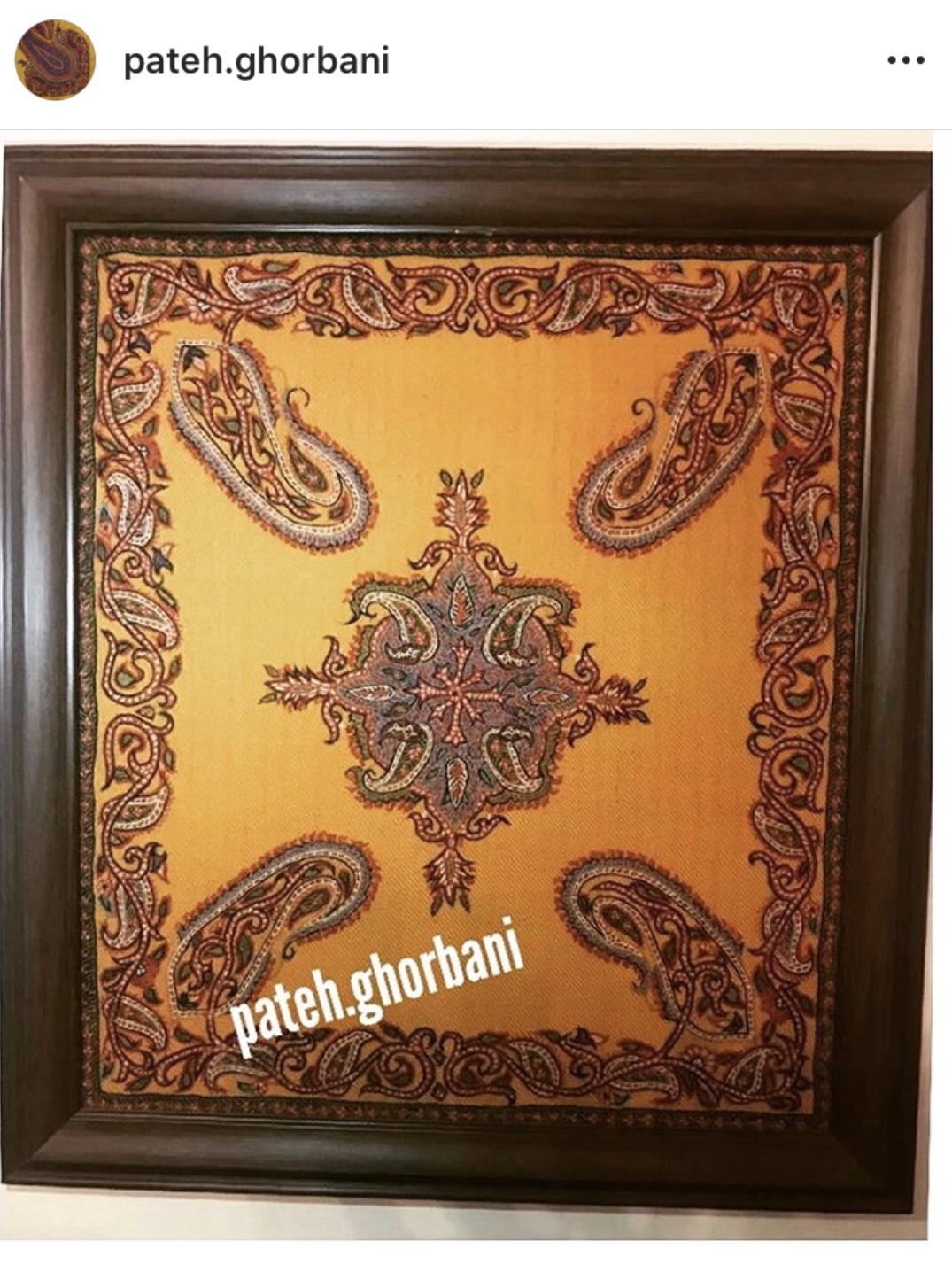
Traditional Design stitched by Fatemeh Ghorbani 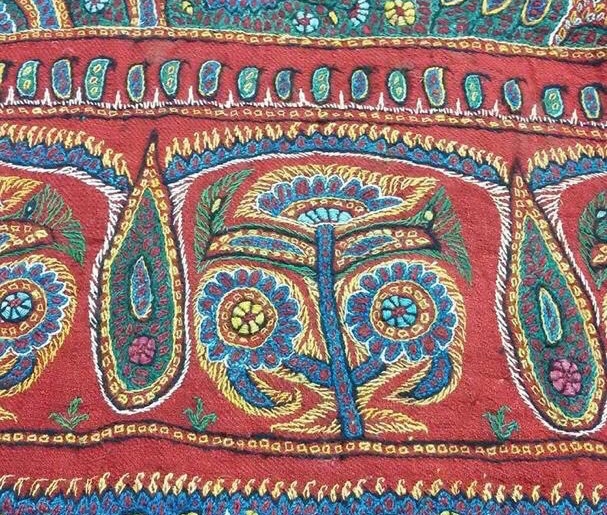

Border designs with Botehs
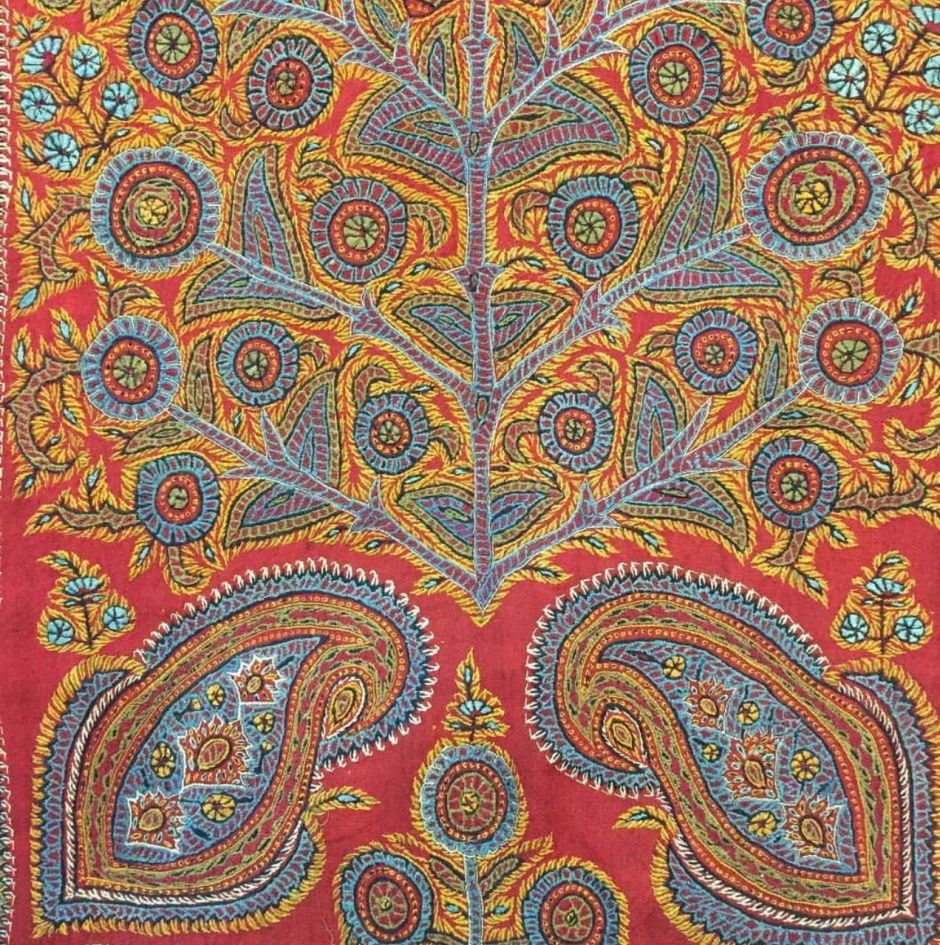
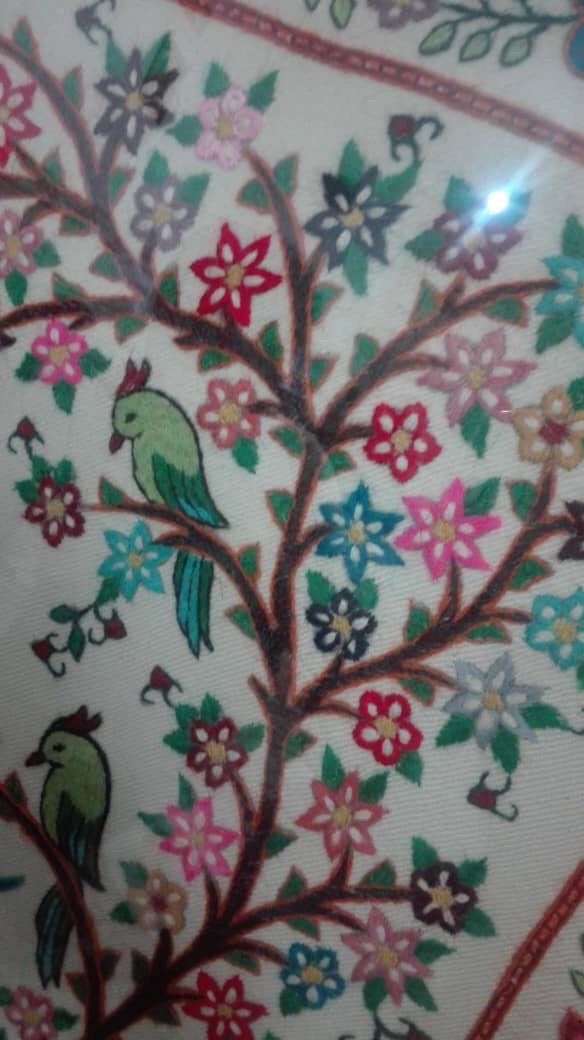
Trees are included in this section and are made up of the Cypress Tree and The Tree of Life . They are usually used for curtains or prayer mats and are rectagular in shape from 50×100 cm to 1 x 2.80 metres .
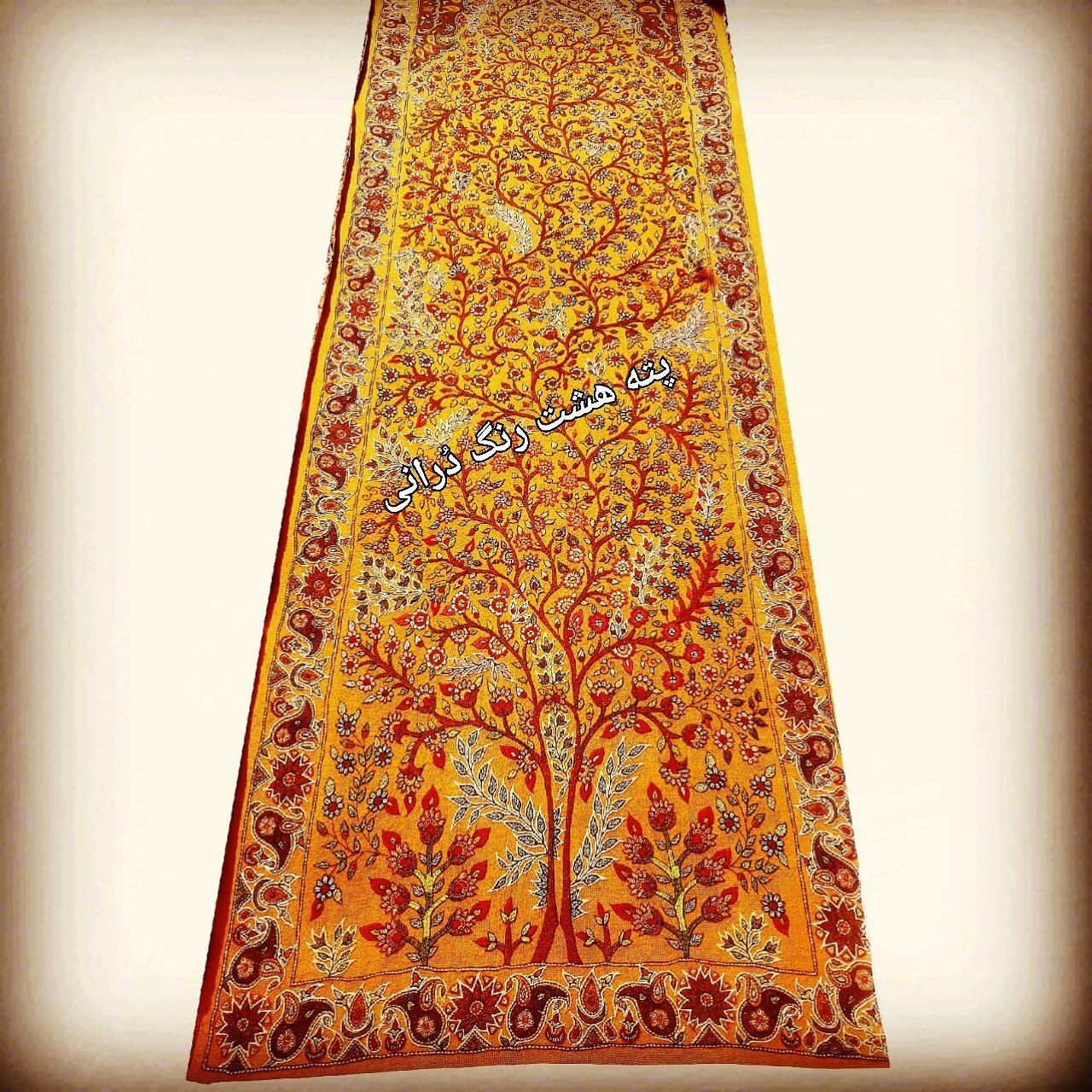
Antique curtain of the Tree of Life 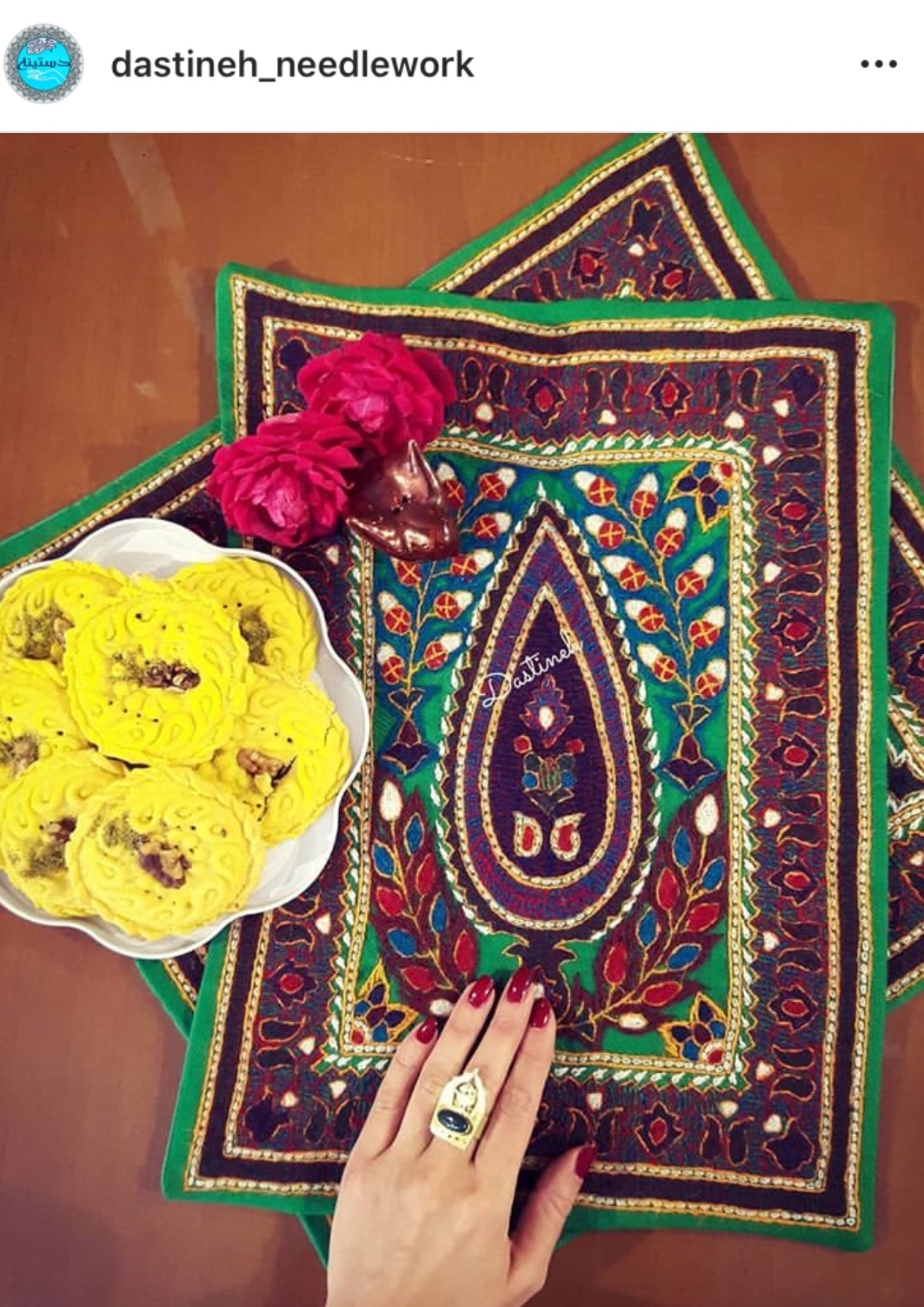
Boteh Baadami cypress Tree 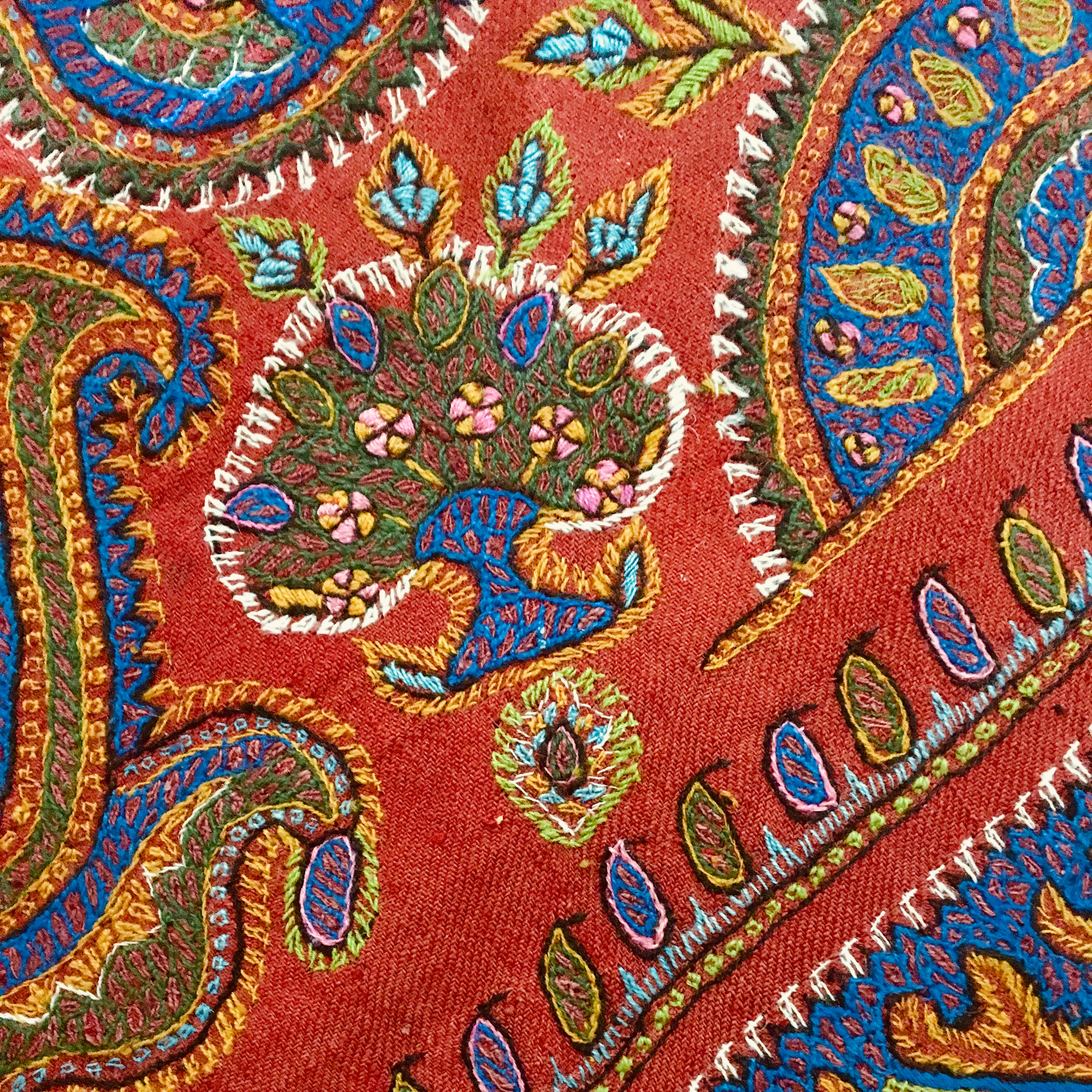
Antique Pateh 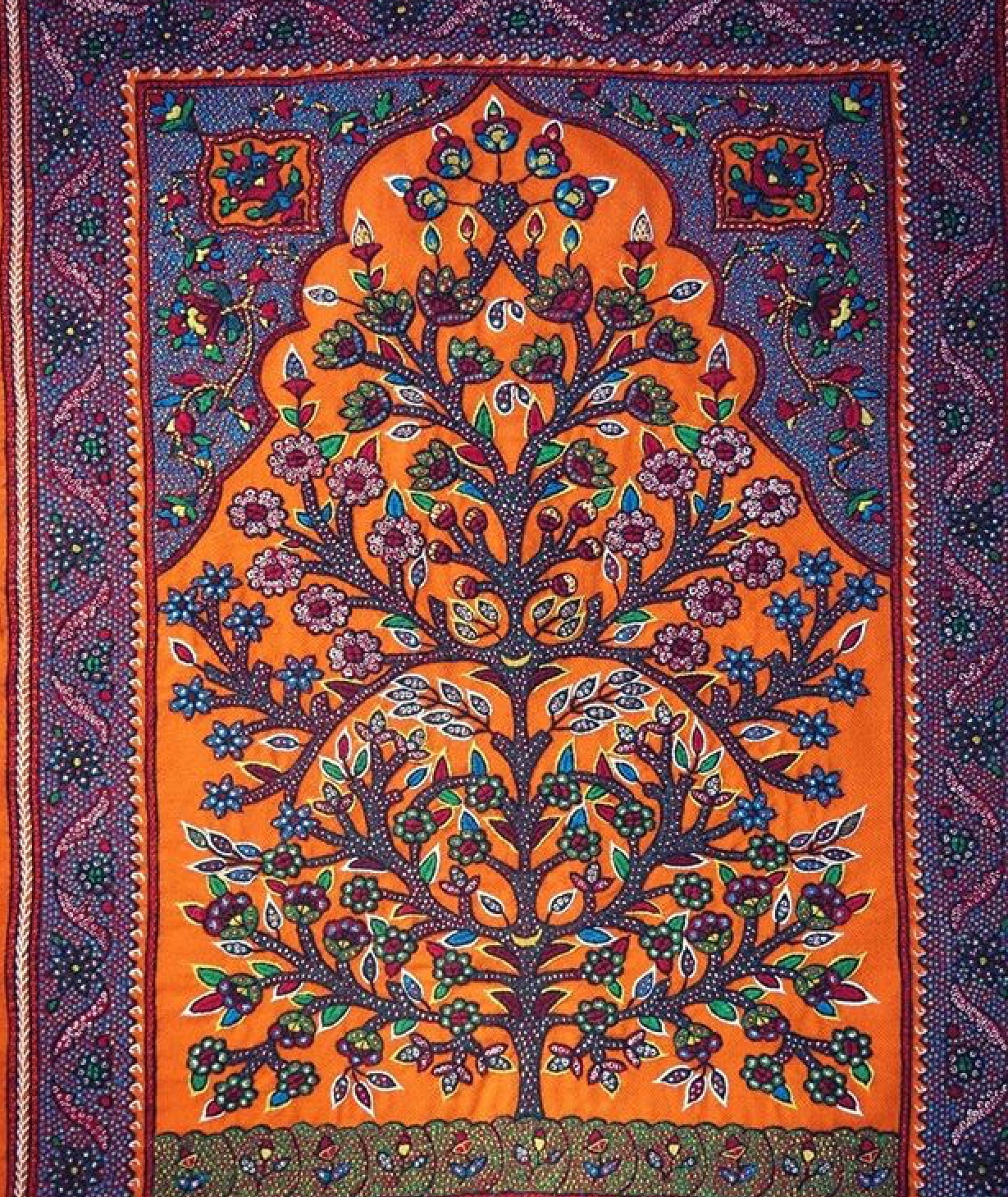
The Tree of Life stitched by Dastineh
2 – Katibé or Cornice Designs is another category of designs and is usually used for prayer mats , curtains or wall decoration. They are rectangular in shape . The designs are pre islamic and were used on pieces for religious and celebratory occasions .
3 – Geometrical Designs . These designs can be either square or oval and cover the majority of the design repeats in the borders .There are special motif borders called Baazobandi which is an armlet used to decorate a hero or a champion .
The circular designs are called Toranji and are either round or square pieces used for boghche , as wrap used for wedding gifts and for keeping precious things in . The pieces are also used as cushions, table cloths, especially for traditional occasions. Dark Pateh pieces are used for burial ceremonies either decoration or to place over the bodies.

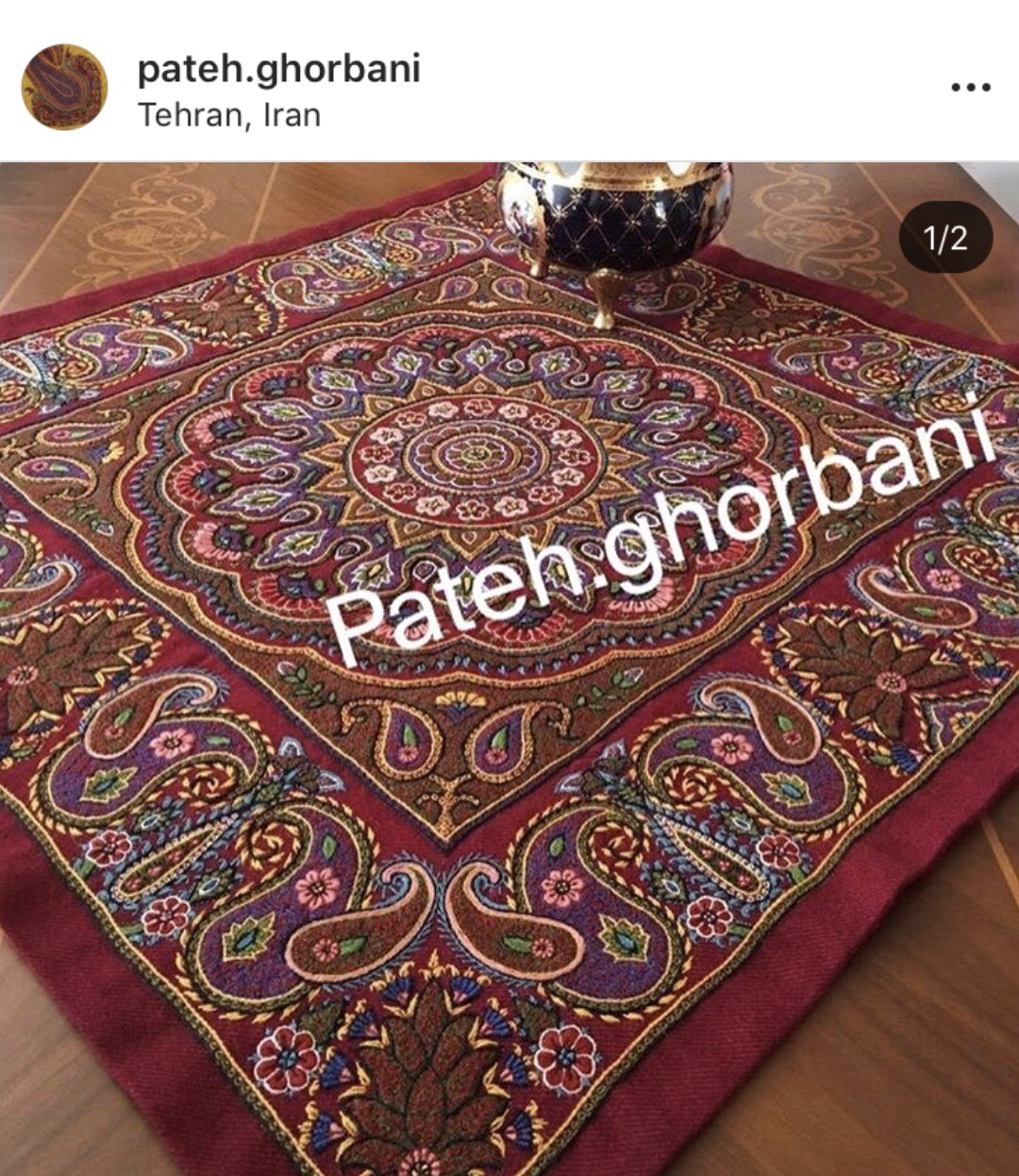
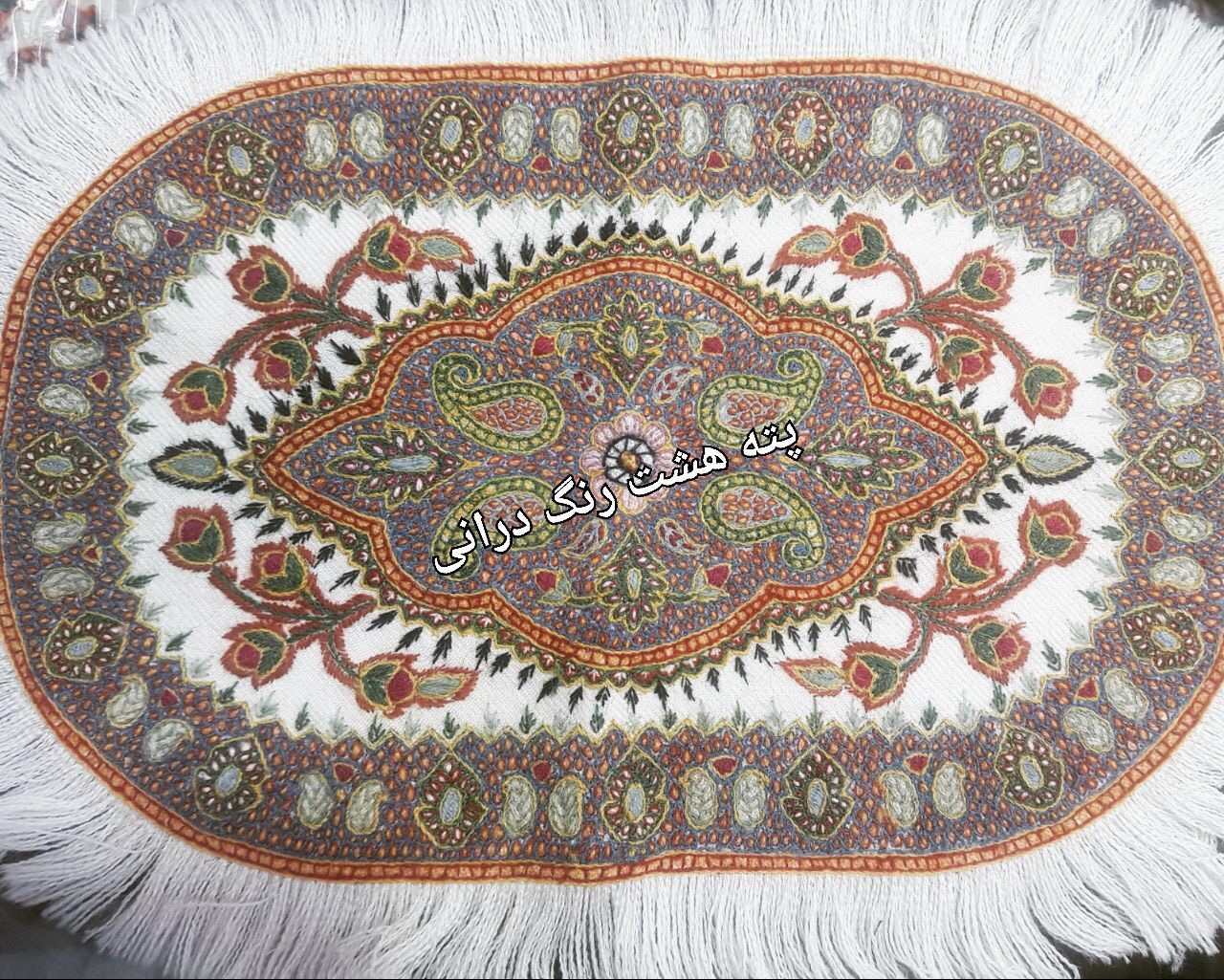

Traditional Design with naturally Dyed yarns stitched by Dastineh/ Botehs in the corners surrounding a sun mandala in the centre Traditional Design stitched by Dastineh 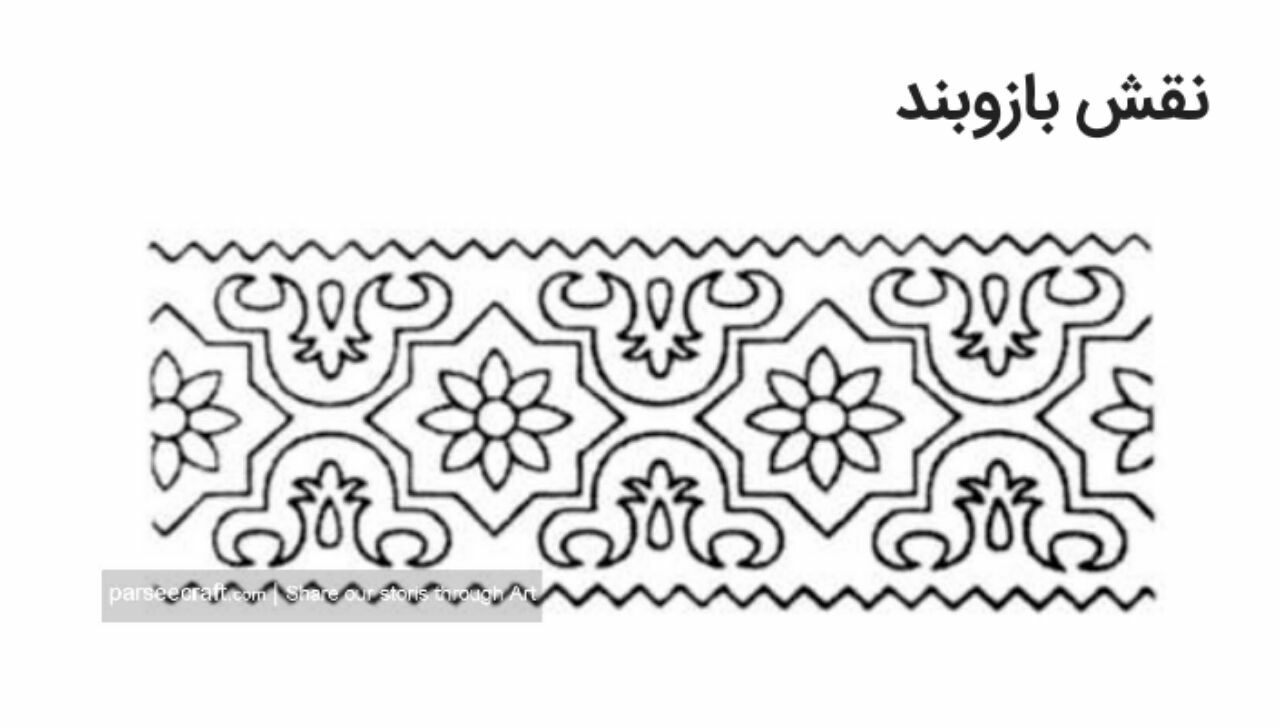
Baazobandi Motif for borders 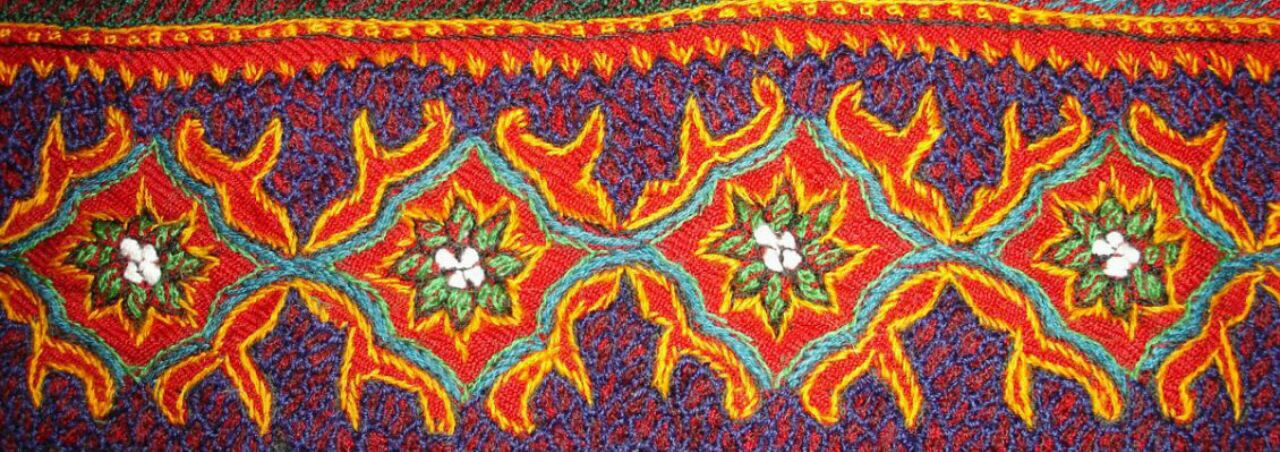
Baazobandi Pateh border 
Border design Pateh Doozi with Boteh and Floral Motifs
4 – Birds & Animals . Peacocks, parrots, love birds, nightingales and cocks as well as deer and fawns can be seen in antique Pateh Doozi especially from tthe Ghajar period and they are reappearing incorporated in a new calligraphy design Pateh Doozi.
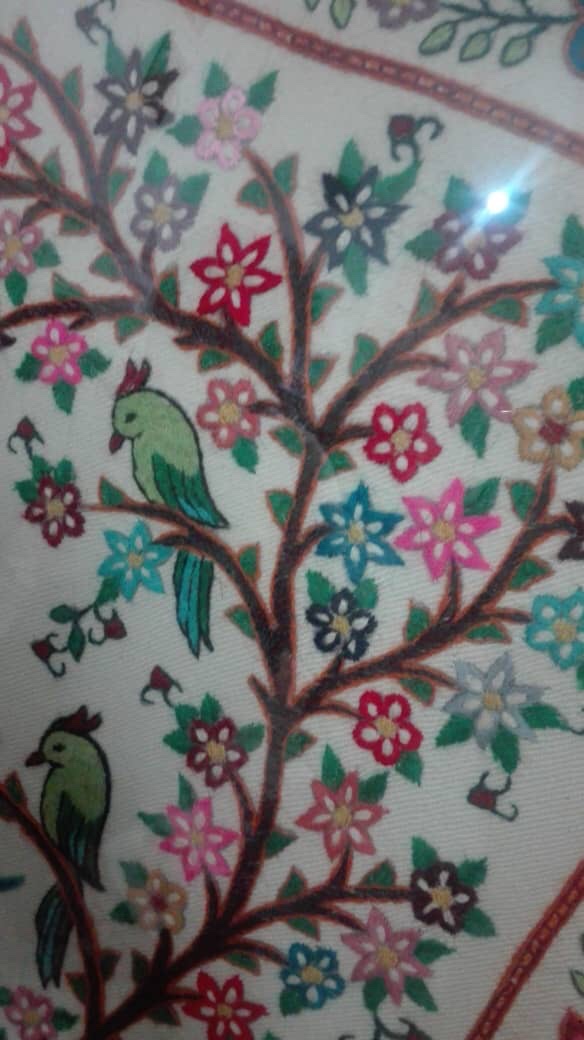


Peacock 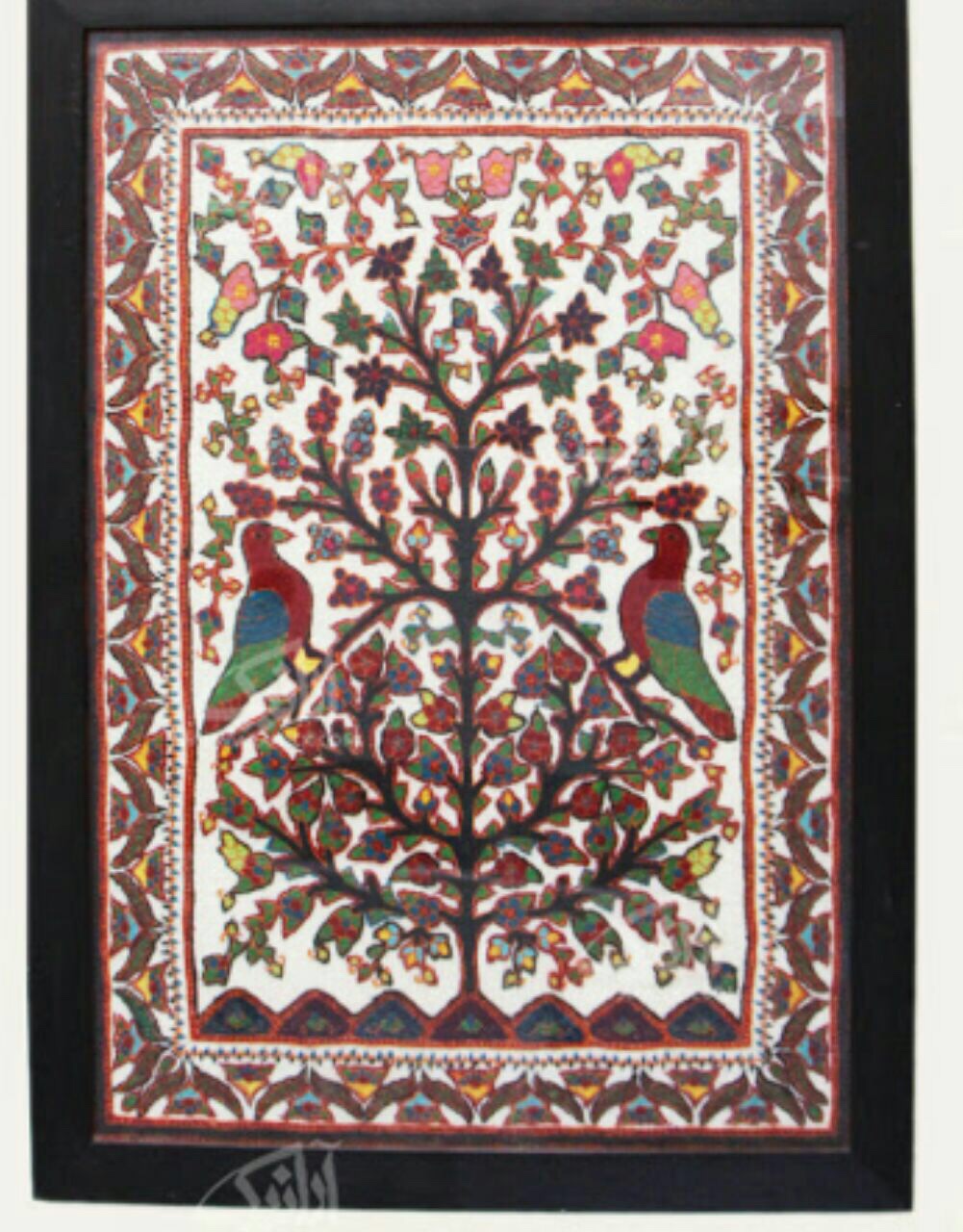

Parrots & Love Birds 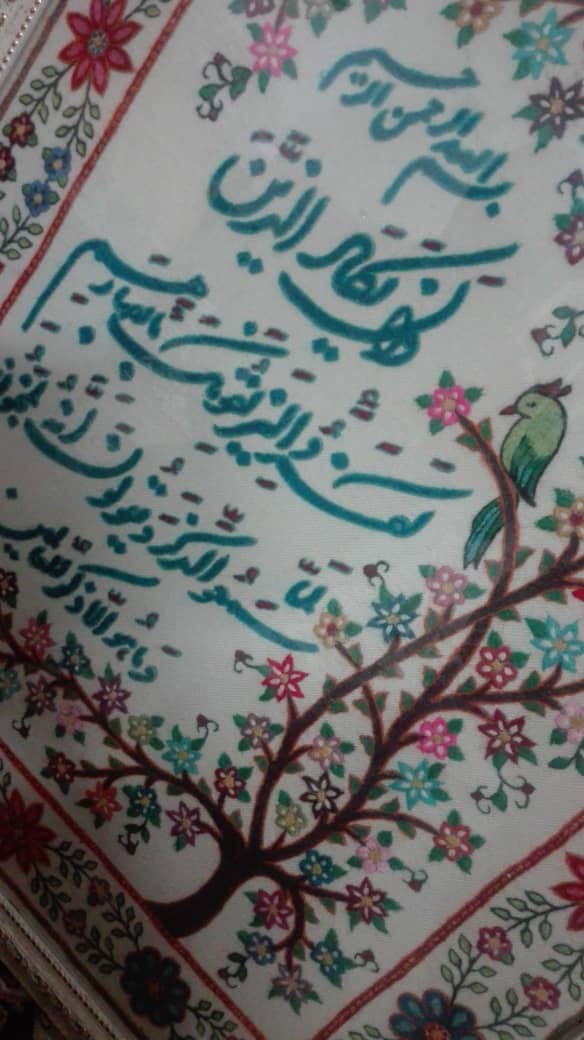
Calligraphy Pateh Doozi 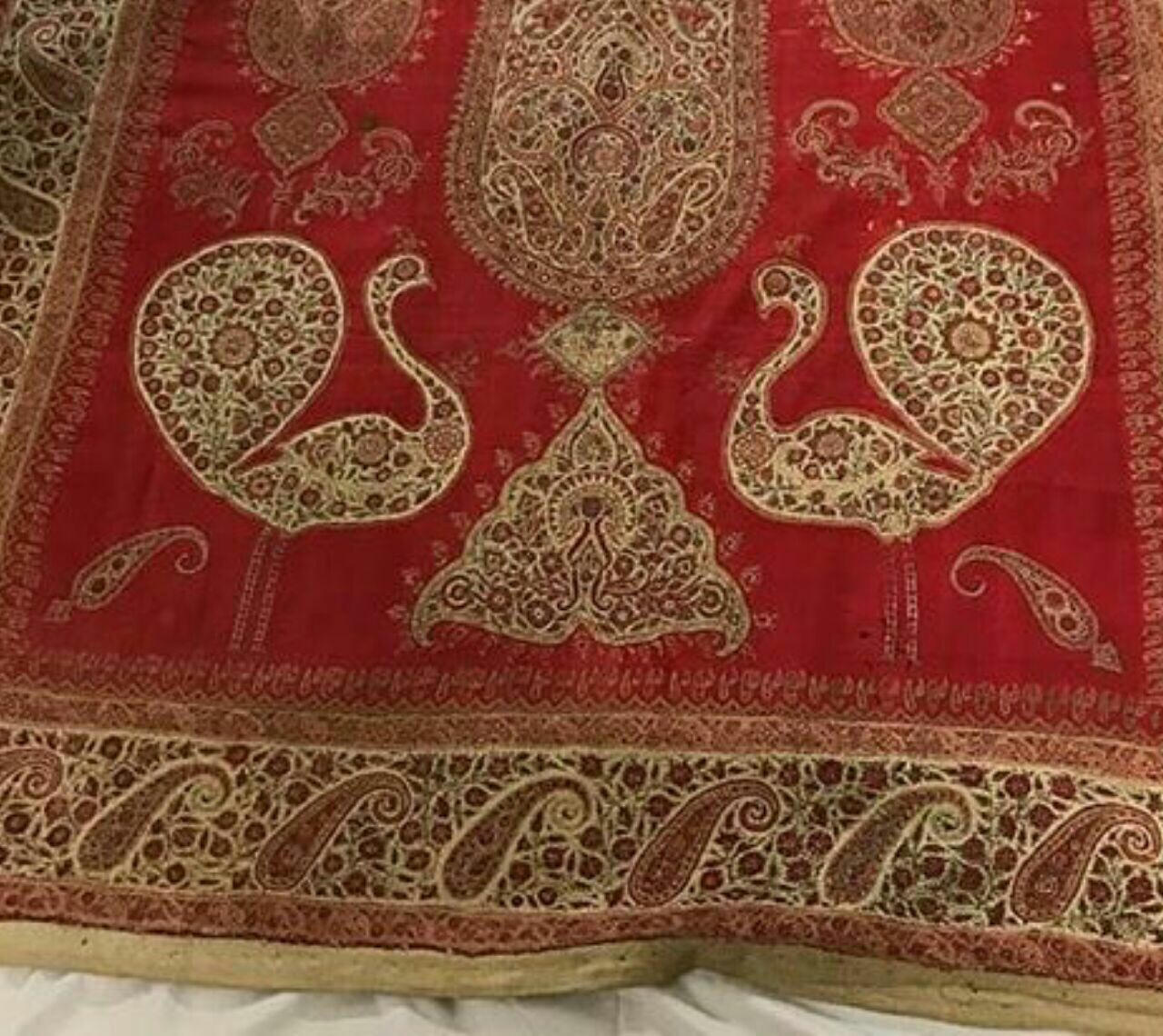
Peacocks 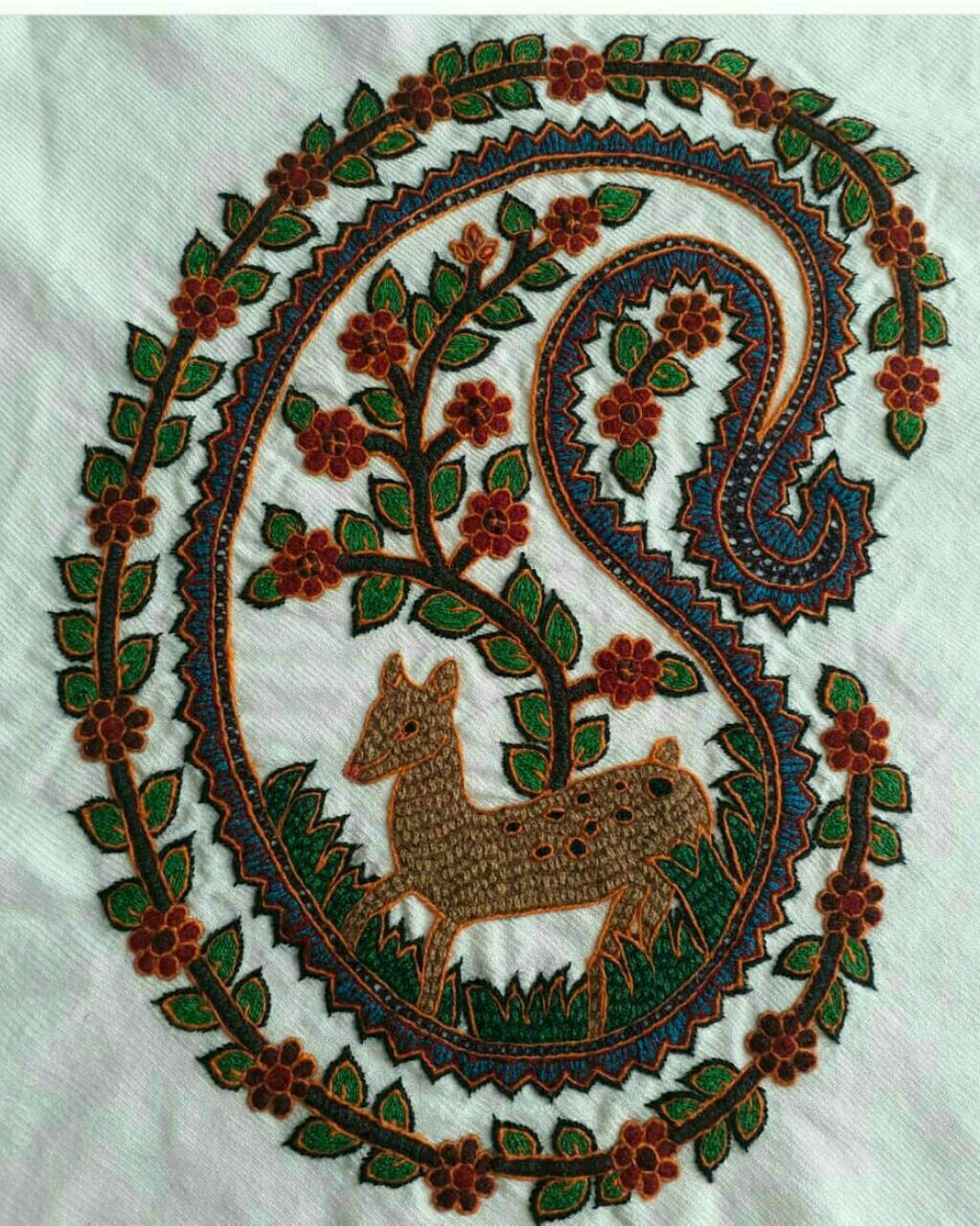
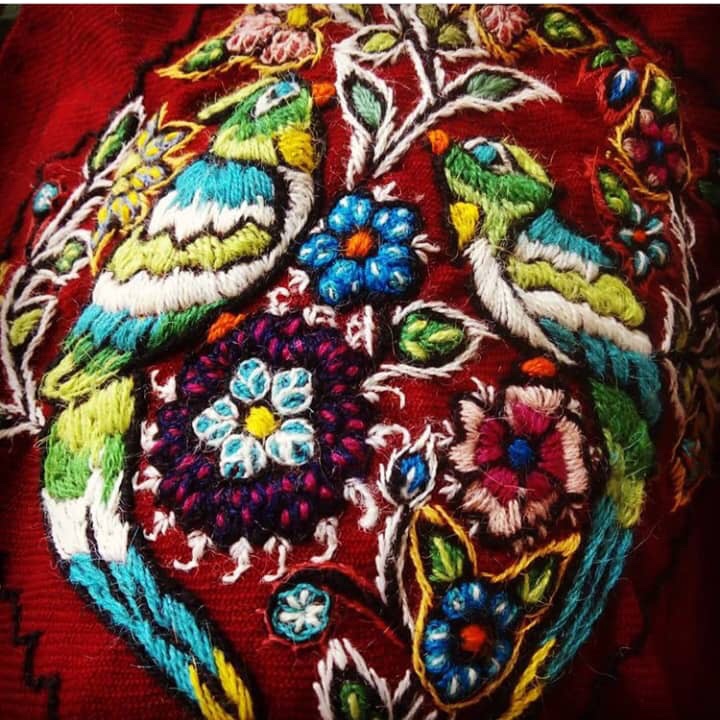

There are many new designs on the market in this modern renaissance.
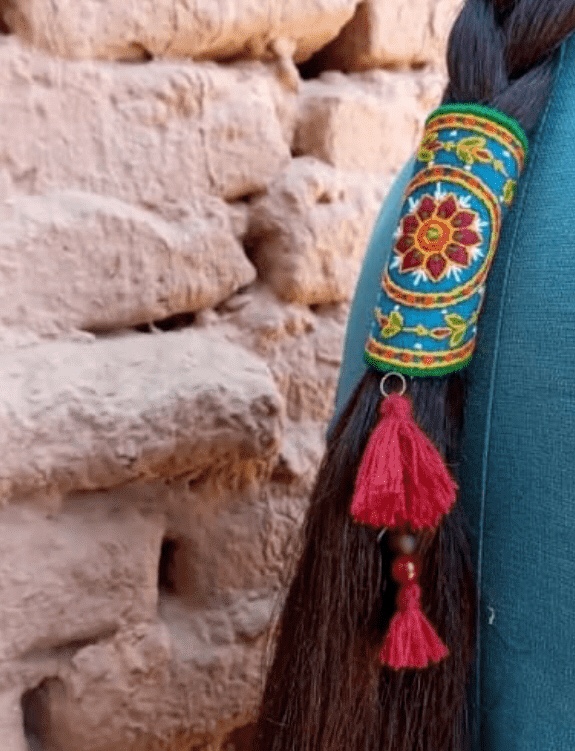
Hairbands 
Cube Sugar holder 
Home accessories 
Bags and purses 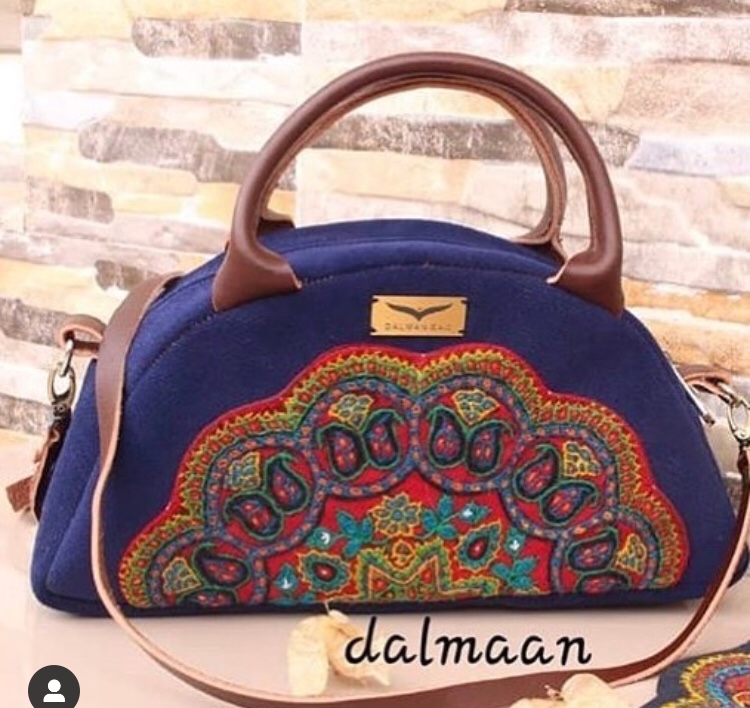
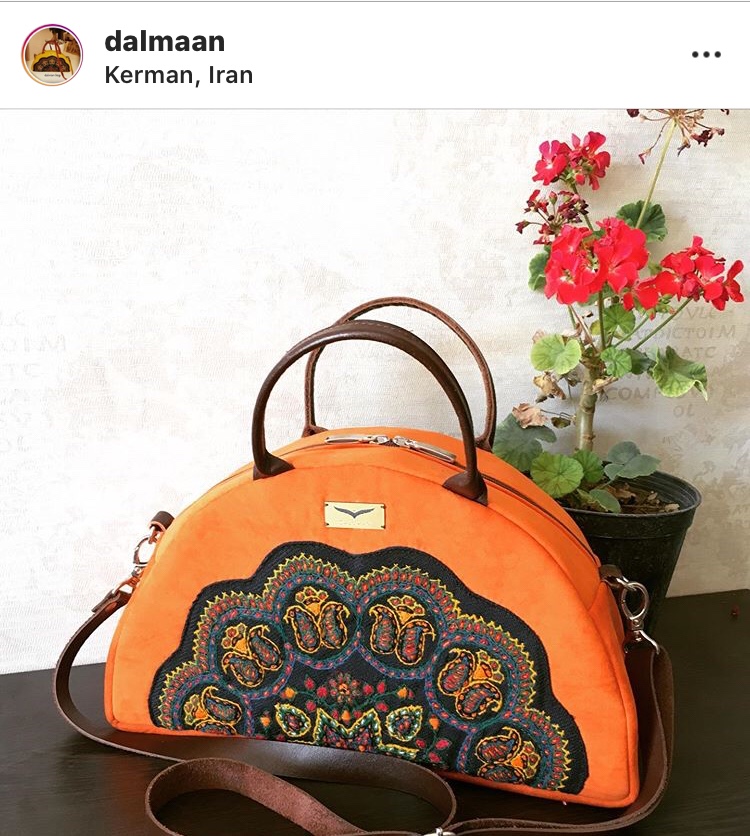
Links
https://instagram.com/pate8colors?igshid=d8q5mp3ew5ta
https://instagram.com/pateh.ghorbani?igshid=zehgihanr0ij
https://instagram.com/dastineh_needlework?igshid=1cir307b0ychf
 Dzignpatch